Many healthcare institutions have large archives of digital medical images. A shared dilemma is whether to purge or continue to store older radiology exams. We sought to determine if our institution's imaging exams > 10 years old were likely to be used for clinical purposes or if they could be deleted from storage without potential lost benefit to our patients. In compliance with our institutional review board, our institutional PACS database was queried to evaluate if old exams had been opened in the last 2 years. We analyzed by modality, body part, and subspecialty reading division. We performed a retrospective chart review of a random sampling (n = 100) of the identified studies to validate the assumption that many of the loaded studies were likely to have been viewed for clinical purposes. We found that over the recent past 2-year interval, our providers accessed 201,000 of 4 million (5%) imaging studies which were > 10 years of age at the time of access. We found evidence, some of it definitive, validating that many of these were viewed for clinical purposes. We conclude that if imaging studies > 10 years of age are readily available, they are commonly called upon to potentially contribute to medical decision-making. This potential value to the patient should be considered when determining whether to prune older archived imaging studies.
PURPOSE:To assess the attitudes of interventional radiologists (IRs) and diagnostic radiologists (DRs) toward exclusive contracts and independently practicing IRs who may request privileges at a hospital where an exclusive contract exists with a different group of radiologists.MATERIALS AND METHODS:A total of 22,400 survey instruments were distributed to 4,490 IRs and 17,910 DRs in the United States. Statistical evaluation included multivariate ordinal logistic regression analysis with calculation of the odds ratios and forest plots.RESULTS:Completed surveys were received from 525 (11.69%) IRs and 401 (2.23%) DRs. Given the low response rate of DRs, data analysis was focused on IRs. Early-career IRs and those in outpatient practices had a more positive attitude toward independent IRs who requested admitting and/or procedural privileges. A supermajority of both IRs and DRs who responded to the survey agreed that the importance of IR to hospital and health system contracts will increase.CONCLUSIONS:This survey identified many interrelated and complex variables that significantly affected the attitudes of IRs in various practice settings toward independent IRs requesting hospital admitting and/or procedural privileges. It will benefit independent IRs seeking admitting privileges to better understand some of the factors that impact the potential willingness of the radiology groups and other IRs with exclusive hospital contracts to work toward mutually beneficial practice paradigms, especially as more clinically oriented IRs complete their training in the new, integrated residency programs.
HomeRadiologyVol. 307, No. 1 Next CommunicationsSpecial CommunicationsMatthew A. Mauro, MD, President, Radiological Society of North America, 2023Alan H. MatsumotoAlan H. MatsumotoAuthor AffiliationsFrom the Department of Radiology and Medical Imaging, University of Virginia Health, 1215 Lee St, Box 800170, Charlottesville, VA 22908.Alan H. MatsumotoPublished Online:Feb 14 2023https://doi.org/10.1148/radiol.229035MoreSectionsFull textPDF ToolsImage ViewerAdd to favoritesCiteTrack CitationsPermissionsReprints ShareShare onFacebookTwitterLinked In Article HistoryPublished online: Feb 14 2023 FiguresReferencesRelatedDetailsRecommended Articles James P. Borgstede, MD, President, Radiological Society of North America, 2020Radiology2019Volume: 294Issue: 2pp. 243-244David C. Levin, MDRadiology2020Volume: 295Issue: 1pp. 251-252Chest CT Angiography for Acute Aortic Pathologic Conditions: Pearls and PitfallsRadioGraphics2021Volume: 41Issue: 2pp. 399-424David A. Bluemke, MD, PhD, Named Editor of RadiologyRadiology2016Volume: 282Issue: 1pp. 10-11David A. Bluemke, MD, PhD, Named Editor of RadiologyRadioGraphics2017Volume: 37Issue: 1pp. 5-6See More RSNA Education Exhibits Minimal Traumatic Aortic Injury: Disease Spectrum and Role of ImagingDigital Posters2019Aortic Calcifications As and Index to Disease: Spectrum of Pathologies & Imaging Findings in Various Conditions Causing Aortic CalcificationsDigital Posters2020The Silent Patients: How to Diagnose the Hereditary Thoracic Aortic AneurysmDigital Posters2019 RSNA Case Collection Thoracic Aortic PseudoaneurysmRSNA Case Collection2021Leriche syndromeRSNA Case Collection2021Takayasu ArteritisRSNA Case Collection2020 Vol. 307, No. 1 Metrics Altmetric Score PDF download
PURPOSE:To assess outcomes of planned pre-operative uterine artery embolization (UAE) in patients with uterine fibroids at high risk for bleeding prior to hysterectomy or myomectomy. MATERIALS & METHODS:A retrospective review of 53 consecutive patients who underwent planned UAE followed by surgery from 2004 to 2019 was performed in a subset of patients deemed high risk for bleeding by the referring surgeon due to bulky fibroids and/or adhesions. Characteristics of the largest fibroid, total number of fibroids, embolic agents, estimated blood loss (EBL), complications, and other factors were collected. RESULTS:53 patients (mean age = 41) had an elective UAE prior to a hysterectomy 24 (45%) or myomectomy 29 (55%). Median interval between UAE & surgery was 21.6 h (range 1.75 h-57 days). Of the myomectomies, 13 (45%) were open, 15 (52%) hysteroscopic and 1 laparoscopic. Mean number of fibroids/patient was 4.1 (SD 1.3), mean fibroid volume was 328 cm3 (range 11-741), and the mean fibroid diameter in longest dimension was 7.4 cm (range 3.2-15). Mean EBL was 90 (SD 99.5 mL). Three (10%) myomectomy patients required blood transfusion. All hysterectomies were via a laparotomy. Mean fibroid volume was 1699 cm3 (range 93-9099 cm3) with a mean maximum diameter of 16.2 cm (range 6.5-29.6) and an average of 2.4 (SD 1.7) fibroids. Mean EBL was 352 (SD 220 mL). Four (17%) hysterectomy patients required an intra- or post-operative blood transfusion. At a mean 1-year follow-up (range 1 month-14 years), 70% of UAE-myomectomy patients and 74% of UAE-hysterectomy patients reported symptom resolution. Three (6%) patients were readmitted: one for osteodiscitis, one wound dehiscence, and one for an infected retained fibroid after myomectomy. CONCLUSION:Planned pre-operative UAE resulted in intraoperative blood loss similar to "all-comer" myomectomy and hysterectomy patients in the literature. Further studies may elucidate which patients would be the best candidates for this staged treatment paradigm.
The recent awarding of primary specialty status to interventional radiology (IR) invites a re-examination of the long-standing relationship between IR and diagnostic radiology (DR). In this new era, it is important to evaluate how the organizations that represent these 2 specialties can best contribute to strengthening a growth in collaborations and partnerships that will benefit their members and patients. Areas of organizational focus with the potential to enhance the future for both groups include combining efforts directed toward advocacy and government relations, developing practice models to create successful IR and DR working relationships, and providing more data to demonstrate the value of IR above and beyond the work relative value units and professional revenues that IR generates.
To identify variables predictive of durable clinical success after MRI-guided focused ultrasound (MRgFUS) treatment of uterine fibroids. In this prospective, multicenter trial, 99 women with symptomatic uterine fibroids were treated using MRgFUS. Pelvic MRI was obtained at baseline and treatment day. The Uterine Fibroid Symptom-Quality of Life questionnaire was used to calculate a symptom severity score (SSS) at baseline and 6, 12, 24, and 36 months following treatment. Clinical, imaging, and treatment variables were correlated with symptom reduction sustained through the 12- and 24-month time points using univariable and multivariable logistic regression analyses. A novel parameter, the ratio of non-perfused volume to total fibroid load (NPV/TFL), was developed to determine association with durable outcomes. Post-treatment, mean symptom severity decreased at the 6-, 12-, 24-, and 36-month follow-ups (p < 0.001, all time points). In univariable analysis, three variables predicted treatment success (defined by ≥ 30-point improvement in SSS) sustained at both the 12-month and 24-month time points: increasing ratio of NPV/TFL (p = 0.002), decreasing total fibroid load (p = 0.04), and the absence of T2-weighted Funaki type 2 fibroids (p = 0.02). In multivariable analysis, the NPV/TFL was the sole predictor of durable clinical success (p = 0.01). Patients with ratios below 30
Radiology practices characterized as small and rural are challenged to recruit and retain interventional radiologists. Lack of access to interventional radiologic services results in a failure to meet the needs of patients, hospitals, and other community stakeholders. Acknowledging this challenge, the ACR's Commission on General, Small, Emergency and/or Rural Practice and Commission on Interventional and Cardiovascular Imaging and the Society of Interventional Radiology partnered to establish a joint task force to study this issue and identify strategies the ACR and the Society of Interventional Radiology should take to improve small and rural practice recruitment and retention of interventional radiologists. This report describes the deliberations and recommendations of the task force.
Purpose The aim of this study was to determine if a clinical decision support (CDS) tool could be used in partnership with a private payer to successfully expedite the prior authorization process for advanced (ie, MRI, CT, PET, nuclear medicine) imaging requests. Methods A single academic institution integrated a commercially available CDS tool utilizing the ACR Appropriateness Criteria into the ordering process for outpatient advanced imaging tests within the electronic health record. Ordering providers could elect to use the CDS tool or ignore the available technology. In partnership with a health care insurance company and a contracted radiology benefits management company, orders deemed as "usually indicated" by the CDS tool underwent expedited prior authorization in a pilot program from June 2018 to October 2019. Results Providers used the CDS tool for 15% (1,453 of 9,640) of outpatient advanced imaging orders. Of these orders with elective CDS scores, 69% (n = 997) qualified for an expedited prior authorization process. Conclusions Under specific circumstances, a commercially available CDS tool was used in partnership with a private payer and a radiology benefits management company to expedite prior authorization of outpatient advanced imaging examination orders deemed likely to be appropriate by multispecialty professional guidelines.
Cardiac implantable electronic devices establish proper therapy for the prevention of sudden cardiac death, significantly reducing the morbidity and mortality of patients with arrhythmias and heart failure. It is well-known that the number of electrodes increases the risk of complications. To preserve the benefit of atrial sensing without the need to implant an additional lead, a single-lead ICD system with a floating atrial dipole (DX ICD lead) has been developed. Besides all of the potential benefits, the necessity of a reliable and stable atrial sensing via the floating dipole could be the main concern against the use of this lead type. In the current generation of DX devices, the specially filtered atrial signal seems to be high enough and stable over time, which is crucial in the early detection of atrial arrhythmias, discrimination between different forms of tachycardias in order to prevent inappropriate ICD therapy, and achieving an optimal atrioventricular and interventricular synchrony in patients with a two-lead CRT-DX system.The present review summarizes the benefits and potential drawbacks of the DX ICD systems based on the available literature, furthermore, proposes an evidence-based algorithm of ICD type selection.
Fibromuscular dysplasia is a nonatherosclerotic, under-recognized disorder primarily seen in middle-aged women. It can lead to several complications, such as hypertension, headaches, dissections, aneurysms, myocardial infarctions, and cerebrovascular accidents, to name a few. This article provides a comprehensive review of current literature on epidemiology, etiology, diagnosis, treatment, and long-term surveillance and fibromuscular dysplasia management. In addition, it renders the role of education and prevention for patients living with this condition and family screening. Lastly, it emphasizes the importance of a comprehensive multidisciplinary care model and patient input, given the complexity of this disease and its systemic presence and protean manifestations.
BACKGROUND:The Clinical PeRformancE of the Valiant Thoracic Stent Graft with Capitvia Delivery System for the EndovaSCUlar treatment of Blunt Thoracic Aortic Injuries (RESCUE) study evaluating thoracic endovascular repair using the Valiant Captivia endograft for blunt thoracic aortic injury reported promising 30-day outcomes. We now describe 5 years of follow-up of this cohort. METHODS:Fifty patients (mean age 40.7 ± 17.4 years, 76% male, mean injury severity score 38 ± 14.4) were treated for blunt thoracic aortic injury (2010 to 2012) with this endograft. Seventy percent (n = 35) of blunt thoracic aortic injury extent was grade III or higher. Extent of arch repair required full (40%) or partial (18%) left subclavian artery coverage. At 5 years, clinical and imaging compliance was 90.3% (28 of 31) and 67.7% (21 of 31), respectively. RESULTS:Thirty-day mortality was 8%. Three additional patients died of non-device-related causes (respiratory failure, infection, metastatic cancer) through 5-year follow-up, yielding a Kaplan-Meier survival of 85.2% through 5 years. Neither stroke nor spinal cord ischemia was observed at 5 years. Two type II endoleaks seen at 30 days resolved spontaneously, and no additional endoleaks were described in the study cohort through 5 years. No secondary endovascular procedures or conversion to open surgery were reported through 5 years. Four subjects underwent left subclavian revascularization for symptomatic indications. Finally, complete exclusion of the traumatic injury was maintained with no incidences of stent graft kinking, fracture, loss of patency, or migration through 5 years in all patients. CONCLUSIONS:This multicenter clinical trial describes excellent 5-year outcomes and durable exclusion of blunt thoracic aortic injury using a novel stent graft system. Thoracic endovascular repair with this endograft appears to be a safe and effective treatment option for patients with blunt thoracic aortic injury.
In the current issue of the Journal of Vascular and Interventional Radiology, Feinberg et al ( 1 Feinberg N. Funaki B. Hieromnimon M. et al. Improved utilization following conversion of a fluoroscopy suite to a hybrid CT/angiographic system. J Vasc Interv Radiol. 2020; : 31 Google Scholar ) retrospectively assessed whether redesigning their workflow by adding a computed tomography (CT) scanner to an interventional radiology (IR) C-arm fluoroscopy unit to create an IR-dedicated hybrid CT/angiography unit improved departmental operational efficiencies. At baseline, the authors’ department had 20 diagnostic CT scanners, 7 C-arm fluoroscopy IR rooms, and 2 CT scanners that were being “shared” to perform a combination of diagnostic examinations and CT-guided IR procedures. By adding the CT/angiography unit into a preexisting IR room, the total complement of CT scanners increased from 22 to 23, but there was otherwise no addition of rooms, space, technical staffing, or angiographic equipment. With the hybrid CT/angiography IR room, the 2 shared CT scanners were used only for diagnostic examinations, and the CT/angiography IR unit was not used to perform any diagnostic CT scans. Improved Utilization Following Conversion of a Fluoroscopy Suite to Hybrid CT/Angiography SystemJournal of Vascular and Interventional RadiologyVol. 31Issue 11PreviewTo assess changes in operational utilization following conversion of a single IR suite to a hybrid CT/angiography (Angio-CT) system at an academic tertiary care center. Full-Text PDF
Tracheobronchial and proximal branch airway obstructions can be life-threatening. This chapter is a comprehensive overview of treatment options in both benign and malignant disease. Treatments discussed include surgical management and endoluminal techniques (e.g., use of balloons, stents, bronchoscopic debulking of tumor) The authors summarize the literature, discuss technique, review complications and outcomes, and illustrate the discussion with selected cases.
The health care landscape in the United States (US) has been significantly impacted by 4 specific factors in the past few decades. Recognizing the influential effect of these factors will provide context for why interventional radiologists need both patients and patience as we move forward in what has become the new normal for the practice of medicine. To frame this discussion, I pose the same question that one middle-aged New Yorker (played by Billy Crystal) in mid-life crisis at a dude ranch asked of an old time, hard-riding cowboy named Curly (played by Jack Palance) in the movie City Slickers: “What is the one thing that really matters?” ( 1 Underwood R. City Slickers [DVD]. Castle Rock Entertainment, New York, New York1991 Google Scholar ).
PURPOSE We aimed to investigate patients with lower gastrointestinal bleeding who presented to the emergency department requiring initial conventional angiography. We report risk-stratified and mesenteric conventional angiography outcomes. METHODS We retrospectively reviewed patients with lower gastrointestinal bleeding between 2001 and 2012. We included all consecutive patients with clinical lower gastrointestinal bleeding with a requirement of further angiography and possible embolization. Patients who had prior interventions or surgery were excluded. RESULTS A total of 88 patients (35 women, 53 men) with a median age of 71 years (range, 23-99 years) were included in the analysis. Conventional angiography was positive and endovascular treatment was intended in 35 patients. Once the source of bleeding was found angiographically, endovascular treatment had a technical success rate of 90.3% and clinical success rate of 71.4%. Overall early rebleeding rate (<30 days) was 14.8% and late rebleeding rate (>30 days) was 13.6%. CONCLUSION Identifying the source of lower gastrointestinal bleeding remains to be a clinical and angiographic challenge. Although we did not observe an association between mortality and clinical success, increased early rebleeding rates were associated with higher mortality rates.
Fibromuscular dysplasia (FMD) has recently been associated with spontaneous coronary artery dissection (SCAD). We sought to identify the clinical presentation of SCAD and examine the association of FMD with SCAD. We performed a retrospective review of patients admitted with SCAD at our institution
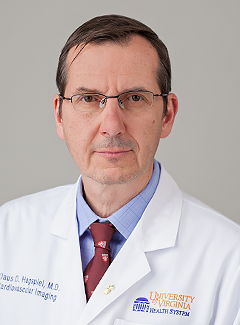 Klaus Hagspiel合作论文数Division of Non-invasive Cardiovascular Imaging, Department of Radiology and Medical Imaging, School of Medicine, University of Virginia65
 John Angle合作论文数Hospital Medical Center, University of Virginia;Department of Radiology and Medical Imaging, School of Medicine, University of Virginia60
 J.F. Angle合作论文数48
 David Spinosa合作论文数48Ulku C. Turba合作论文数38
 Wael E. A. Saad合作论文数Department of Radiology and Imaging Sciences, School of Medicine, University of Utah35J. Fritz Angle合作论文数21
 Sabri Shather合作论文数20
 Bulent Arslan合作论文数20Saher Sabri合作论文数18
 Ajvar Kern合作论文数14Michael D. Dake合作论文数13DA Leung合作论文数12Auh Whan Park合作论文数12
 Weibin Shi合作论文数12
 Daniel Leung合作论文数11
 Stephen H Caldwell合作论文数Division of Gastroenterology and Hepatology, School of Medicine, University of Virginia;Digestive Health at Primary Care Center, University of Virginia11Kenneth J. Cherry合作论文数11
 Michael R. Jaff合作论文数Boston Scientific;VasCore;Healthcare Inroads LLC11Murphy Timothy P合作论文数9Cage Dorothy L合作论文数9James R. Stone合作论文数9Gary D Hartwell合作论文数8
 Aditya Sharma合作论文数Dept Med, Univ Virginia8Mark G. Davies合作论文数8Henrich William L合作论文数8
 Klemens H Barth合作论文数Georgetown University Hospital8george p teitelbaum合作论文数7Allison Lippert合作论文数7A. Park合作论文数7WB Shi合作论文数7GA Helm合作论文数7
 Christopher B. Cooper合作论文数Department of Medicine, David Geffen School of Medicine, University of California;Exercise Research Phsyiology Laboratory, University of California, Los Angeles;Department of Physiology, David Geffen School of Medicine, University of California7
 Curtis G. Tribble合作论文数Division of Cardiothoracic Surgery, University of Virginia Medical Center;School of Medicine, University of Virginia7Lance D. Dworkin合作论文数7Kiran R. Nandalur合作论文数7Warren Swee合作论文数7
 John Rundback合作论文数7Nancy L. Harthun合作论文数6Hong Pei合作论文数6Zhimin Zhang合作论文数6Jamerson Kenneth A合作论文数6
 Khaja Minhaj S合作论文数Department of Radiology, University of Virginia6Mace Pamela D合作论文数6Yuhua Li合作论文数6
 James Barklow Froehlich合作论文数Department of Internal Medicine, University of Michigan Health System6
 Donald E. Cutlip合作论文数Cardiac Catherization Lab, Beth Israel Deaconess Medical Center;Harvard Medical School6
 Irving L. Kron合作论文数Department of Surgery, University of Virginia;School of Medicine, University of Virginia6




