We report on elastic and inelastic neutron scattering from single-grain isotopically-enriched samples to elucidate the local magnetic correlations between Tb^3+ moments in quasicrystalline i-Tb-Cd. The inelastic neutron scattering measurements of the CEF excitations demonstrated that the Tb^3+ moments are directed primarily along the local five-fold axes of the Tsai-type cluster as was found for the TbCd6 approximant phase. Based on the inelastic measurements, we consider of a simple Ising-type model for the moment configurations on a single Tb^3+ icosahedron and enumerate the lowest energy moment configurations. We then calculate the diffuse scattering from these configurations and compare with the experimental magnetic diffuse scattering measurements to identify the most likely single cluster moment configurations and find reasonable agreement between the broad features observed in our scattering simulations. We further consider the role of higher-order (longer range) intercluster correlations for the magnetic scattering.
Received 12 April 2022DOI:https://doi.org/10.1103/PhysRevB.105.179901©2022 American Physical SocietyPhysics Subject Headings (PhySH)Research AreasElectrical conductivityHall effectSuperconductivityPhysical SystemsPnictidesSingle crystal materialsSuperconductorsTechniquesCrystal growthMagnetization measurementsX-ray diffractionCondensed Matter, Materials & Applied Physics
We report the magnetic ordering and structural distortion in PrFeAsO crystals, the basis compound for one of the oxypnictide superconductors, using high-resolution x-ray diffraction, neutron diffraction, and x-ray resonant magnetic scattering (XRMS). We find the structural tetragonal-to-orthorhombic phase transition at TS=147K, the AFM phase transition of the Fe moments at TFe=72K, and the Pr AFM phase transition at TPr=21K. Combined high-resolution neutron diffraction and XRMS show unambiguously that the Pr moments point parallel to the longer orthorhombic a axis and order antiferromagnetically along the a axis but ferromagnetically along the b and c directions in the stripelike AFM order. The temperature-dependent magnetic order parameter of the Pr moments shows no evidence for a reorientation of moments.
We present neutron-diffraction data for the cubic-heavy-fermion YbBiPt that show broad magnetic diffraction peaks due to the fragile short-range antiferromagnetic (AFM) order persist under an applied magnetic-field H . Our results for H ⊥ [ 1 ¯ 1 0 ] and a temperature of T = 0.14 1 K show that 1 2 , 1 2 , 3 2 ) magnetic diffraction peak can be described by the same two-peak line shape found for μ 0 H = 0 T below the Néel temperature of T N = 0.4 K . Both components of the peak exist for μ 0 H ≲ 1.4 T , which is well past the AFM phase boundary determined from our new resistivity data. Using neutron-diffraction data taken at T = 0.13 ( 2 ) K for H ∥ 0 0 1 taken at or 1 1 0 , we show that domains of short-range AFM order change size throughout the previously determined AFM and non-Fermi liquid regions of the phase diagram, and that the appearance of a magnetic diffraction peak at 1 2 , 1 2 , 1 2 at μ 0 H ≈ 0.4 T signals canting of the ordered magnetic moment away from 1 1 1 . The continued broadness of the magnetic diffraction peaks under a magnetic field and their persistence across the AFM phase boundary established by detailed transport and thermodynamic experiments present an interesting quandary concerning the nature of YbBiPt's electronic ground state.
In search of a quantum phase transition between the two-dimensional ($2$D) ferromagnetism of CaCo$_{2-y}$As$_{2}$ and stripe-type antiferromagnetism in SrCo$_{2}$As$_{2}$, we rather find evidence for $1$D magnetic frustration between magnetic square Co layers. We present neutron diffraction data for Ca$_{1-x}$Sr$_{x}$Co$_{2-y}$As$_{2}$ that reveal a sequence of $x$-dependent magnetic transitions which involve different stacking of $2$D ferromagnetically-aligned layers with different magnetic anisotropy. We explain the $x$-dependent changes to the magnetic order by utilizing classical analytical calculations of a $1$D Heisenberg model where single-ion magnetic anisotropy and frustration of antiferromagnetic nearest- and next-nearest-layer exchange are all composition dependent.
A collection of articles from presentations at the Aperiodic 2018 conference is introduced.
We have used neutron powder diffraction to demonstrate the existence of long-range antiferromagnetic order of Ising-like Dy moments in the DyCd6 quasicrystal approximant phase. This cubic compound undergoes a slight distortion to a monoclinic cell at low temperatures. The Néel temperature is 18.0(2) K and the magnetic order of the Dy sublattice may be described in the parent cubic Im3¯ structure using a combination of two propagation vectors, k1 = [0 0 0] and k2 = [12 0 12], yielding ‘anti-I’ order. Alternatively, when referred to the monoclinic C2/c cell, the magnetic structure may be described by a single propagation vector: k = [1 0 0].
We report on the crystal and magnetic structures and magnetic and transport properties of SrMnSb2 single crystals grown by the self-flux method. Magnetic susceptibility measurements reveal an antiferromagnetic (AFM) transition at T-N = 295(3) K. Above T-N, the susceptibility slightly increases and forms a broad peak at T similar to 420 K, which is a typical feature of two-dimensional magnetic systems. Neutron diffraction measurements on single crystals confirm the previously reported C-type AFM structure below T-N. Both de Haas-van Alphen (dHvA) and Shubnikov-de Haas (SdH) effects are observed in SrMnSb2 single crystals. Analysis of the oscillatory component by a Fourier transform shows that the prominent frequencies obtained by the two different techniques are practically the same within error regardless of sample size or saturated magnetic moment. Transmission electron microscopy (TEM) reveals the existence of stacking faults in the crystals, which result from a horizontal shift of Sb atomic layers suggesting possible ordering of Sb vacancies in the crystals. Increase of temperature in susceptibility measurements leads to the formation of a strong peak at T similar to 570 K that upon cooling under magnetic field the susceptibility shows a ferromagnetic transition at T-C similar to 580 K. Neutron powder diffraction on crushed single crystals does not support a ferromagnetic phase above T-N. Furthermore, x-ray magnetic circular dichroism (XMCD) measurements of a single crystal at the L-2,(3) edge of Mn shows a signal due to induced canting of AFM moments by the applied magnetic field. All evidence strongly suggests that a chemical transformation at the surface of single crystals occurs above 500 K concurrently producing a minute amount of ferromagnetic impurity phase.
The magnetic structure of Nd in NdFeAsO compound has been investigated by x-ray resonant magnetic scattering at the Nd L-2. edge (E = 6.725 keV) at 1.7 <= T <= 15 K. At T = 1.7 K we find that the Nd moments are aligned along the crystallographic c direction with the (1, 0, 0) propagation vector, and are arranged antiferromagnetically along the a direction and ferromagnetically along the b and c directions. At 1.7 < T <= 15 K, we observe an unusual temperature dependence of the magnetic Bragg peaks that appear differently at Q = (h, 0, l) and (0, k, l). From the changes of magnetic intensities and our representation analysis, we find that the Nd moments are reoriented toward the a direction with a gradual decrease of the moment component in the c direction with increasing temperature. We conclude that the reorientation of the Nd moment is due to a strong interplay with the Fe moment which is fully ordered in this temperature range.
We present a microscopic study of nematicity and magnetism in FeSe over a wide temperature and pressure range using high-energy x-ray diffraction and time-domain Mossbauer spectroscopy. The low-temperature magnetic hyperfine field increases monotonically up to similar to 6 GPa. The orthorhombic distortion initially decreases under increasing pressure but is stabilized at intermediate pressures by cooperative coupling to the pressure-induced magnetic order. Close to the reported maximum of the superconducting critical temperature at p = 6.8 GPa, the orthorhombic distortion suddenly disappears and a new tetragonal magnetic phase occurs. The pressure and temperature evolution of the structural and magnetic order parameters suggests that they have distinct origins.
We report on the crystal and magnetic structures and magnetic and transport properties of SrMnSb2 single crystals grown by the self-flux method. Magnetic susceptibility measurements reveal an antiferromagnetic (AFM) transition at TN=295(3) K. Above TN, the susceptibility slightly increases and forms a broad peak at T∼420 K, which is a typical feature of two-dimensional magnetic systems. Neutron diffraction measurements on single crystals confirm the previously reported C-type AFM structure below TN. Both de Haas-van Alphen (dHvA) and Shubnikov-de Haas (SdH) effects are observed in SrMnSb2 single crystals. Analysis of the oscillatory component by a Fourier transform shows that the prominent frequencies obtained by the two different techniques are practically the same within error regardless of sample size or saturated magnetic moment. Transmission electron microscopy (TEM) reveals the existence of stacking faults in the crystals, which result from a horizontal shift of Sb atomic layers suggesting possible ordering of Sb vacancies in the crystals. Increase of temperature in susceptibility measurements leads to the formation of a strong peak at T∼570 K that upon cooling under magnetic field the susceptibility shows a ferromagnetic transition at TC∼580 K. Neutron powder diffraction on crushed single crystals does not support a ferromagnetic phase above TN. Furthermore, x-ray magnetic circular dichroism (XMCD) measurements of a single crystal at the L2,3 edge of Mn shows a signal due to induced canting of AFM moments by the applied magnetic field. All evidence strongly suggests that a chemical transformation at the surface of single crystals occurs above 500 K concurrently producing a minute amount of ferromagnetic impurity phase. Disciplines Condensed Matter Physics Authors Yong Liu, Tao Ma, Warren E. Straszheim, Farhan Islam, Brandt A. Jensen, Wei Tian, Thomas Heitmann, R. A. Rosenberg, John M. Wilde, Bing Li, Andreas Kreyssig, Alan I. Goldman, Benjamin G. Ueland, Robert J. McQueeney, and David Vaknin PHYSICAL REVIEW B 99, 054435 (2019) Crystal growth, microstructure, and physical properties of SrMnSb2 Yong Liu,1,* Tao Ma,1 Lin Zhou,1 Warren E. Straszheim,1 Farhan Islam,1 Brandt A. Jensen,1 Wei Tian,2 Thomas Heitmann,3 R. A. Rosenberg,4 J. M. Wilde,1,5 Bing Li,1,5 Andreas Kreyssig,1,5 Alan I. Goldman,1,5 B. G. Ueland,1,5 Robert J. McQueeney,1,5 and David Vaknin1,5,† 1Division of Materials Sciences and Engineering, Ames Laboratory, U.S. DOE, Ames, Iowa 50011, USA 2Neutron Scattering Division, Oak Ridge National Laboratory, Oak Ridge, Tennessee 37831, USA 3The Missouri Research Reactor, University of Missouri, Columbia, Missouri 65211, USA 4Advanced Photon Source, Argonne National Laboratory, Argonne, Illinois 60439, USA 5Department of Physics and Astronomy, Iowa State University, Ames, Iowa 50011, USA (Received 12 September 2018; published 28 February 2019) We report on the crystal and magnetic structures and magnetic and transport properties of SrMnSb2 single crystals grown by the self-flux method. Magnetic susceptibility measurements reveal an antiferromagnetic (AFM) transition at TN = 295(3) K. Above TN, the susceptibility slightly increases and forms a broad peak at T ∼ 420 K, which is a typical feature of two-dimensional magnetic systems. Neutron diffraction measurements on single crystals confirm the previously reported C-type AFM structure below TN. Both de Haas-van Alphen (dHvA) and Shubnikov-de Haas (SdH) effects are observed in SrMnSb2 single crystals. Analysis of the oscillatory component by a Fourier transform shows that the prominent frequencies obtained by the two different techniques are practically the same within error regardless of sample size or saturated magnetic moment. Transmission electron microscopy (TEM) reveals the existence of stacking faults in the crystals, which result from a horizontal shift of Sb atomic layers suggesting possible ordering of Sb vacancies in the crystals. Increase of temperature in susceptibility measurements leads to the formation of a strong peak at T ∼ 570 K that upon cooling under magnetic field the susceptibility shows a ferromagnetic transition at TC ∼ 580 K. Neutron powder diffraction on crushed single crystals does not support a ferromagnetic phase above TN. Furthermore, x-ray magnetic circular dichroism (XMCD) measurements of a single crystal at the L2,3 edge of Mn shows a signal due to induced canting of AFM moments by the applied magnetic field. All evidence strongly suggests that a chemical transformation at the surface of single crystals occurs above 500 K concurrently producing a minute amount of ferromagnetic impurity phase. DOI: 10.1103/PhysRevB.99.054435
In search of a quantum phase transition between the two-dimensional (2D) ferromagnetism of CaCo2-yAs2 and stripe-type antiferromagnetism in SrCo2As2, we instead find evidence for 1D magnetic frustration between magnetic square Co layers. We present neutron-diffraction data for Ca1-xSrxCo2-yAs2 that reveal a sequence of x-dependent magnetic transitions which involve different stacking of 2D ferromagnetically aligned layers with different magnetic anisotropy. We explain the x-dependent changes to the magnetic order by utilizing classical analytical calculations of a 1D Heisenberg model where single-ion magnetic anisotropy and frustration of antiferromagnetic nearest- and next-nearest-layer exchange interactions are all composition dependent.
In search of a quantum phase transition between the two-dimensional (2D) ferromagnetism of CaCo_2-yAs_2 and stripe-type antiferromagnetism in SrCo_2As_2, we rather find evidence for 1D magnetic frustration between magnetic square Co layers. We present neutron diffraction data for Ca_1-xSr_xCo_2-yAs_2 that reveal a sequence of x-dependent magnetic transitions which involve different stacking of 2D ferromagnetically-aligned layers with different magnetic anisotropy. We explain the x-dependent changes to the magnetic order by utilizing classical analytical calculations of a 1D Heisenberg model where single-ion magnetic anisotropy and frustration of antiferromagnetic nearest- and next-nearest-layer exchange are all composition dependent.
 Andreas Kreyssig合作论文数Department of Physics and Astronomy, Iowa State University248
 Paul C. Canfield合作论文数Department of Physics and Astronomy, College of Liberal Arts and Sciences, Iowa State University of Science and Technology204
 Robert Mcqueeney合作论文数Los Alamos National Laboratory140
 Sergey Budko合作论文数Department of Materials Sciences and Engineering, Ames Laboratory;Department of Physics and Astronomy, Iowa State University119
 Bruce N. Harmon合作论文数Department of Physics and Astronomy, College of Liberal Arts and Sciences, Iowa State University53
 Daniel Pratt合作论文数Ames Laboratory;Department of Physics and Astr onomy, Iowa State University;Ames Laboratory, Iowa State University50M. G. Kim合作论文数49David C. Johnston合作论文数49
 S. Nandi合作论文数Cornell University48
 Wei Tian合作论文数Oak Ridge National Laboratory43Alexander Thaler合作论文数Ames Lab, Iowa State Univ41
 A. Sapkota合作论文数Iowa State Univ, Ames Lab, US DOE, Ames, IA 50011 USA40
 Thomas Lograsso合作论文数Ames Laboratory, Iowa State University;Department of Materials Science and Engineering, Iowa State University37
 Matthew Kramer合作论文数College of Engineering, Iowa State University;Division of Materials Sciences and Engineering, Ames National Laboratory37
 Benjamin Ueland合作论文数Division of Materials Sciences and Engineering, Ames National Laboratory36
 Kenneth F. Kelton合作论文数Department of Physics, College of Arts & Sciences, Washington University in St. Louis;Laboratory for Materials Physics Research, College of Arts & Sciences, Washington University in St. Louis32
 Gregory S.Tucker合作论文数Department of Physics, Brown University30C. Stassis合作论文数30Jerel L. Zarestky合作论文数30Yongbin Lee合作论文数29N. Ni合作论文数27
 Ruslan Prozorov合作论文数Faculty of Science and Technology, Iowa State University;Department of Physics and Astronomy, College of Liberal Arts and Sciences, Iowa State University;Department of Material Science and Engineering, Ames National Laboratory26
 Jiaqiang Yan合作论文数Materials Science and Technology Division, Oak Ridge National Laboratory;Tickle College of Engineering, The University of Tennessee, Knoxville26
 Didier Wermeille合作论文数23
 Abhishek Pandey合作论文数21
 Jong-Woo Kim合作论文数20
 David Vaknin合作论文数Ames National Laboratory, Iowa State University;Department of Physics and Astronomy, College of Liberal Arts and Sciences, Iowa State University19Rustan G E合作论文数19
 J. C. Lang合作论文数Advanced Photon Source;Argonne National Laboratory;Argonne National Laboratory19
 Wageesha Jayasekara合作论文数Iowa State Univ, US DOE, Ames Lab, Ames, IA 50011 USA18Li Tan合作论文数18
 Gen Shirane (白根元)合作论文数Brookhaven National Laboratory18Robert W. Hyers合作论文数18Zahirul Islam合作论文数18
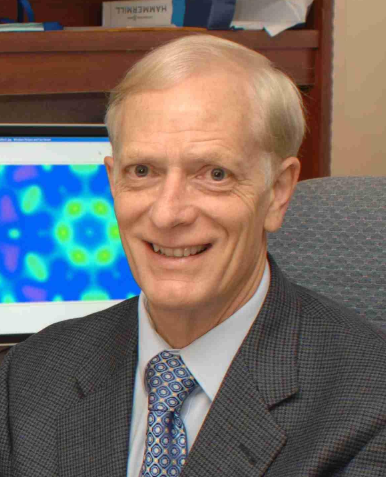 Jeffrey W Lynn (Fed)合作论文数Center for Neutron Research, National Institute of Standards and Technology;Quantum Materials Center, University of Maryland18
 Sheng Ran合作论文数Department of Physics, College of Arts & Sciences, Washington University in St.Louis17J. Rogers合作论文数17Jerel L Zarestky合作论文数17
 Anup K Gangopadhyay合作论文数Department of Physics;Washington University;Department of Physics, Washington University17
 Kong Tai合作论文数16
 Jagat Lamsal合作论文数Missouri Research Reactor;University of Missouri;University of Missouri16
 M. Ramazanoglu合作论文数16D.K. Finnemore合作论文数16
 Anna Böhmer合作论文数Faculty of Physics and Astronomy, Ruhr-University Bochum15
 Pinaki Das合作论文数Department of Physics, University of Notre Dame15
 Makariy Tanatar合作论文数Division of Material Science and Engineering, Ames National Laboratory;Clayton Swensson Low Temperature laboratory15
 Dimitri Argyriou合作论文数15
 N. S. Sangeetha合作论文数Indian Institute of Technology Guwahati14
 Ian Fisher合作论文数Department of Applied Physics, Stanford University14




