The efficient scheduling of independent computational tasks in a heterogeneous computing environment is an important problem that occurs in domains such as Grid and Cloud computing. Finding optimal schedules is an NP-hard problem in general, so we have to rely on approximate algorithms to come up schedules that are as near to optimal as possible. In our previous work on this problem, we applied a fast, effective local search to generate reasonably good schedules in a short amount of time and used ant colony optimisation (ACO) to incrementally improve those schedules over a longer time period. In this work, we replace the ACO component with a random disruption algorithm and find that this produces results which are competitive with the current state of the art over a 90 second execution time. We also ran our algorithm for a longer time period on 12 well-known benchmark instances and as a result provide new upper bounds for these instances.
In this paper we further explore the potential of a decentralised controller architecture that places multi-layer perceptrons within a subsumption hierarchy. Previous research exploring this approach proved successful in generating agents that could solve problems while coping with new reactive stimuli. However there were many unresolved questions that we wished to explore. In this paper we explore the use of our architecture with iterative training, increased controller modularity and conflicting goals. Results provide some interesting insights into the potential this method could have to agent designers.
The immensely popular video game Pac-Man has challenged players for nearly 30 years, with the very best human competitors striking a highly honed balance between the games two key factors; the 'chomping' of pills (or pac-dots) throughout the level whilst avoiding the ghosts that haunt the maze trying to capture the titular hero. We believe that in order to achieve this it is important for an agent to plan-ahead in creating paths in the maze while utilising a reactive control to escape the clutches of the ghosts. In this paper we evaluate the effectiveness of such a look-ahead against greedy and random behaviours. Results indicate that a competent agent, on par with novice human players can be constructed using a simple framework.
Local search depends on making small perturbations to can- didate solutions to arrive at new and potentially better can- didates. There are different schemes for managing the per- turbations and the selection of candidates, but in this work we focus on the neighbourhood defined by particular pertur- bations. Previous work has observed that the problem of lo- cal search becoming trapped in local optima is only experi- enced with respect to a particular neighbourhood. The Vari- able Neighbourhood Search strategy attempts to avoid these optima by linearly switching between neighbourhoods. We propose a new method where the selection of the neighbour- hoods is dynamic and based upon the violations of the prob- lem constraints, Constraint Directed Variable Neighbourhood Search. We compare this approach with Variable Neighbour- hood Search and demonstrate that the same search progress is achieved whilst exploring only a fraction of the states.
 John Levine合作论文数University of Strathclyde5
 Derek Long合作论文数Department of Informatics, Faculty of Natural, Mathematical & Engineering Sciences, King’s College London2
 Thomas Thompson合作论文数1
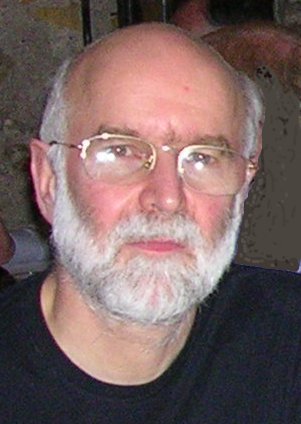 Graeme Ritchie合作论文数Department of Computing Science, University of Aberdeen1
 Tommy Thompson合作论文数University of Strathclyde1




