We use the two-flavor Linear Sigma Model with quarks as an effective description of QCD to investigate the nature of the chiral phase transition at finite baryon chemical potential and zero temperature. We work at one-loop order to set up and solve the system of self-consistent coupled equations for the particle pole masses. The chemical potential-dependent value of the chiral order parameter is obtained by minimizing the one-loop effective potential. This treatment goes beyond the conventional ring-diagram approximation and provides a description valid for arbitrary values of the chemical potential. We find that the phase transition is of first order, and occurs when the quark chemical potential reaches the value of the vacuum quark mass for the chosen set of parameters. The first order nature of the transition is signaled by the discontinuous behavior of the chiral condensate, the masses and the couplings. The thermodynamics of the system is readily implemented and in particular, we find that the square of the speed of sound exhibits a discontinuity at the phase transition and then smoothly approaches the conformal limit from below.
We compute the fermion-photon vertex in QED in the presence of a constant and uniform magnetic background up to one-loop order. We show that even at tree-level, the vertex is modified due to the loss of Lorentz invariance induced by the magnetic field, thus breaking into longitudinal and transverse pieces. Moreover, the radiative corrections induce the emergence of a rich tensor structure that includes the anomalous magnetic moments in the transverse, parallel, and mixed transverse/parallel directions. We concentrate on studying one of these anomalous magnetic moment components, the one in the purely transverse direction. We find the selection rules for transitions between a few low-lying Landau levels and show that the amplitudes for transitions from an initial to a final Landau level differ by a sign from the reverse process due to the loss of time reversal invariance induced by the presence of the field. Contrary to the vacuum case, the amplitudes are, in general, complex, and the phase factor can be interpreted in terms of a finite life-time of the decaying state. For the anomalous magnetic moment in the purely transverse direction, transitions between states occupying both the lowest Landau levels are forbidden. Moreover, for the computation of the allowed transitions, we find that it is not necessary to include a photon mass since the magnetic field acts as an infrared regulator.
The MexNICA Collaboration coordinates the activities of Mexican scientists, engineers, postdoctoral fellows and students in the Multi-Purpose Detector experiment at the Nuclotron-based Ion Collider fAcility of the Joint Institute for Nuclear Research in Dubna, Russia. Established in 2016, the collaboration brings together five Mexican institutions whose contributions span detector development as well phenomenological and theoretical studies, including modeling by means of Monte Carlo simulations. This work summarizes the main achievements of MexNICA, consisting of the development of the miniBeBe trigger detector as well of results of phenomenological investigations of the baryon-rich region in the QCD phase diagram accessible at NICA energies, and theoretical advances based on lattice QCD and effective models.
We compute the modification to the quark-neutral pion vertex, induced by a constant and uniform magnetic field, using the Linear Sigma Model with quarks as a low energy effective theory of QCD. The vertex is modified even at tree-level since, due to the loss of translational invariance, the calculation should be carried out in configuration space, with the quark described by Ritus wave functions instead of plane waves. We also compute the one-loop vertex modification. These modifications are found for arbitrary Landau levels occupied by the quark. We illustrate the result for the case where the quark occupies the lowest Landau level. To check the result, we also compute the one-loop vertex modification using the Schwinger proper-time method with the quark occupying the lowest Landau level and find the same result as in the case where the Ritus formalism is used.
We compute the yield and elliptic flow coefficient for photons produced during the pre-equilibrium stage of semi-central relativistic heavy-ion collisions from the gluon fusion and splitting processes induced by the presence of a magnetic field. The calculation is performed for arbitrary values of the field strength. The pre-equilibrium gluon distribution is modeled with a glasma-inspired Bose-Einstein occupation factor, as well as with an anisotropic distribution that accounts for the rapid initial expansion along the beam axis. In both cases, we find a very good agreement between the calculation and the experimental data from PHENIX. Most notably, the shape and strength of the elliptic flow coefficient are described quite well, representing a step towards solving the outstanding photon puzzle.
Magnetic fields are ubiquitous across different physical systems of current interest; from the early Universe, compact astrophysical objects, and heavy-ion collisions to condensed matter systems. A proper treatment of the effects produced by magnetic fields during the dynamical evolution of these systems can help to understand observables that otherwise show puzzling behavior. Furthermore, when these fields are comparable to or stronger than ΛQCD, they serve as excellent probes to help elucidate the physics of strongly interacting matter under extreme conditions of temperature and density. This work provides a detailed report that contains in-depth analysis and expert insights into the specific topic of the effects of strong magnetic fields on QED and QCD systems. In this sense, the report is intended as a white paper contribution to the field. The subjects developed include the modification of meson static properties such as masses and form factors, the chiral magnetic effect, the description of anomalous transport coefficients, superconductivity in extreme magnetic fields, the properties of neutron stars, the evolution of heavy-ion collisions, as well as effects on the QCD phase diagram. We describe recent theory and phenomenological developments using effective models as well as LQCD methods. The work was motivated by presentations and discussions during the “Workshop on Strongly Interacting Matter in Strong Electromagnetic Fields” that took place in the European Centre for Theoretical Studies in Nuclear Physics and Related Areas (ECT*) in the city of Trento, Italy, September 25–29, 2023.
In heavy-ion collisions, an excess in photon production, together with a larger than expected positive elliptic flow, has been observed, a phenomenon commonly referred to as the direct photon puzzle. In this work we study the mechanism of photon production arising from gluon splitting and fusion during the pre-equilibrium stage in the presence of magnetic fields in peripheral heavy-ion collisions. We begin by analyzing the general tensor structure of the two-gluon one-photon vertex, computing it at the one-loop level for magnetic fields of arbitrary strength without resorting to additional approximations. Using these expressions, we calculate the contribution of gluon fusion and splitting to the photon yield, revealing that splitting dominates over fusion at low photon energies. Our results are compared with experimental data from the PHENIX collaboration. Finally, we incorporate a longitudinal anisotropy into the initial gluon distribution and find that it does not significantly alter the photon yield compared to an isotropic distribution.
We compute the running of the mass of a neutral boson and of its self-coupling in a simple model describing the self-interaction of three scalars, one of them neutral and the other two electrically charged, subject to the effects of a magnetic field, as functions of the field strength, at one-loop order. We resort to the Environmentally Friendly Renormalization Group approach, where the flow variable is taken as that describing the environmental conditions, in this case the strength of the magnetic field. We find the magnetic field dependent mass and coupling beta functions and use them to set up the differential equations satisfied by the neutral scalar mass and coupling. We solve the resulting system of coupled equations both numerically, and also analytically in the small-mass approximation. We find that the neutral scalar mass increases, while the coupling decreases with increasing field strength. The study is intended to set up the ideas to later use them in more sophisticated theories such as QED and QCD.
We explore isospin imbalanced strongly interacting matter within the two-flavor Linear Sigma Model with quarks, an effective model for low-energy QCD. At one loop order, including quark, pion, and sigma fluctuations while respecting chiral symmetry, we find that the formation of an isospin condensate necessarily gives rise to a Goldstone mode. This mode enforces a nontrivial relation between the chiral and isospin condensates through the mixing of charged pions and the sigma field in the condensed phase. From the resulting thermodynamic potential, we compute the speed of sound and observe a pronounced peak as a function of the isospin chemical potential. Although the peak of the speed of sound may be described at tree-level and including only quarks in the analysis, meson dynamics introduces further constraints that influence the position and width of the peak which making it to align well with lattice QCD simulations. Therefore we identify that the shape and position of the peak is a consequence of the Goldstone mode dynamics and of the associated charged pion sigma mixing.
We show that a very clear signal of the presence of a strong magnetic field during the early stage of a high-energy heavy-ion collision is provided by the decay of the Z^0 into dimuon pairs. We find that the process is highly anisotropic, producing pairs mainly out of plane, as signaled by a negative value of v_2, and leads to a harder antimuon transverse momentum spectrum, compared with that of the muon transverse momentum spectrum. We also show that the process does not produce a significant distortion of the Z^0 spectral function. The signal can be identified by comparing the dimuon-invariant mass and the individual muon and antimuon spectra produced in semicentral heavy-ion collisions with the corresponding scaled spectra produced in p+p collisions at the Z^0 peak.
We compute the leading order modification to the quark-antiquark-W-boson vertex in the presence of a constant and uniform magnetic field, specifically for the case where the quark and antiquark are the u and d̅, respectively. We find the selection rules for transitions where the u, d̅, and W-boson occupy arbitrary Landau levels. We show that, for the particular case where the initial particles each occupy the lowest Landau level, the W^+ is also produced in the lowest Landau level with a single polarization aligned with the magnetic field. We also illustrate the general findings by computing the case of transitions between low lying Landau levels and show the correspondence between the polarization vectors for the W-boson and the polarization states for the quark and the antiquark.
We develop an effective kinetic description for the interaction of gluons and magnetic fields during the pre-equilibrium stage of relativistic heavy-ion collisions. For this purpose, we formulate the Boltzmann-Vlasov equation with the interaction term modeled by the effect of the magnetic field on the elements of an electrically charged and colored dipole originating from the quantum fluctuation of gluons into quark-antiquark pairs. We find the numerical solution of the collisionless Boltzmann-Vlasov equation with a time-dependent magnetic field profile to determine the time evolution of the directional pressures. The presence of the magnetic field tames the growth of the transverse to longitudinal pressure ratio compared with the case in the absence of the magnetic field; however, the system does not isotropize since collisions are not included. We study the cases of initial gluon distributions with longitudinal anisotropies, as well as the case of an initial isotropic gluon distribution. In both cases, we find that the magnetic field produces a non-monotonic early-time response for large values of the initial magnetic field strength.
We compute the excitation function of the global Λ polarization in semicentral heavy-ion collisions within a Core–Corona framework, where the interaction region is described as a dense core and a dilute corona separated by a critical value of the participant density. An important ingredient in the model are the intrinsic polarization functions in each of the two regions. These are computed from a field-theoretical approach where the vortical motion of the medium is included in an effective fermion propagator, which we derive explicitly. The interactions in the core and the corona are transmitted by suitable mediators at finite temperature and baryon chemical potential; gluons for the former and σ-mesons for the latter. The temperatures and baryon chemical potentials are related to the collision energies along the chemical freeze-out curve. By allowing the cross section for Λ production in the nuclear environment to take on values below the nucleon-nucleon threshold cross section, the calculation describes the lowest energy polarization data point. For the centralities corresponding to the experimental data, we find that the contribution from the corona is the dominant one and that a lifetime, and correspondingly a volume of this region, which becomes larger for the smaller energies due to stopping, is an essential ingredient in the calculation. Overall, the model provides a good description of the excitation function across the full experimental range and predicts a robust maximum near √(s_NN)∼ 3 GeV that remains stable under reasonable variations of the freeze-out curve and the proton-proton Λ production threshold to account for subthreshold production in a nuclear environment.
In the context of the description of how the vortical motion, produced in peripheral heavy-ion collisions, is transferred to the spin of hadrons, we compute the σ-meson propagator at finite temperature and baryon density. This propagator encodes the properties of a medium consisting mainly of nucleons, and can be used to model the main interactions between hadrons in the corona region of the reaction. We compute the one-loop σ self-energy in an approximation that accounts for the large nucleon mass. From the real part of the self-energy, we find the dispersion relation and show that the σ-mass receives a non-negligible thermal and baryon chemical dependent contribution. From the imaginary part, we also compute the spectral density, which we show to contain a piece coming from the branch cut associated with Landau damping. We also present approximations for the dispersion relation and the residue at the pole in the small- and large-momentum regimes and complement the calculation, providing the sum rules satisfied by the propagator. This study aims to determine one of the elements needed to compute how the vortical motion in the corona region of the reaction is transferred to the spin of Λ hyperons that can interact with nucleons by σ-meson exchange.
An accurate characterization of the quark-gluon plasma requires understanding of how electromagnetic effects affect the processes mediated by the strong force. All the scenarios in which the plasma emerges, either in nature or in the laboratory, involve strong electromagnetic fields. The early universe, compact astrophysical objects, or ultra-relativistic heavy-ion collisions harbor the most intense fields we know. Researches from the Latin America region have made a substantial contribution on this subject and the Latin American Network on Electromagnetic Effects in Strongly Interacting Matter" aims to cluster efforts to address open questions related to these systems, boosting collaborations and interaction among its members and connecting Latin American institutions with institutions from the rest of the world. In face of the upcoming experimental programs and new facilities, our mission is to bring together experimentalists, phenomenologists and theorists to better explore the properties of strongly interacting matter in the presence of intense electromagnetic fields. This document describes succinctly the recent contributions from researchers of the Latin American region to the subject, as well as our activities and perspectives for the future.
Motivated by the search of the way the vortical motion produced in peripheral heavy-ion collisions is transferred to the spin of hadrons in the baryon-rich zone of the reaction, we compute the o-meson propagator at finite tem-perature and baryon density. This propagator encodes the properties of a medium consisting mainly of nucleons and can be used to model the main interactions between hadrons in the corona. We compute the one-loop self-energy in an approximation that accounts for the large nucleon mass. From the real part of the self-energy, we find the dispersion relation and show that the o-mass receives a non-negligible thermal and baryon chemical dependent contribution. From the imaginary part, we also compute the spectral density, which we show to con-tain a piece coming from the branch cut associated with Landau damping. We also present approximations for the dispersion relation and the residue at the pole in the small- and large-momentum regimes and complement the calculation, providing the sum rules satisfied by the propagator. This study aims to determine one of the elements needed to compute how the vortical motion in the corona region of the reaction is transferred to the spin of A hyperons that can interact with nucleons by o-meson exchange.
We present the design of the mechanical structure of the mini Beam-Beam detector, a subsystem of the Multi-Purpose Detector, soon to enter into operation at the Nuclotron based Ion Collider fAcility of the Joint Institute for Nuclear Research. The miniBeBe detector was designed and is currently being developed by the Mexican team of the NICA Collaboration to contribute to the level-zero trigger of the Time of Flight Detector. The mechanical structure meets the requirements of minimizing the material budget and be free of ferromagnetic materials, without compromising its robustness. The design also allows for easy module replacement for maintenance and overall removal at the end of the first stage of the experiment, without affecting the rest of the subsystems, to leave room for the installation of the Inner Tracking System. In addition, a Finite Element Method analysis of the mechanical components under load was performed. Based on this analysis, it was determined that the design meets the space constraints within the Multi-Purpose Detector, as well as a deformation of less than 1 mm with overall stress of less than 2 MPa, such that no material used in the design is at risk of mechanical failure during operation. The heat transfer analysis of the cooling system revealed that the temperature of the cooling plate is maintained within a range of 19.00°C to 21.41°C, which is sufficient to ensure that the silicon photomultipliers operate below a temperature of 25.00°C, thereby optimizing their functionality.
We study the properties of a system composed of strongly interacting matter with an isospin imbalance, using as an effective description of QCD the two-flavor Linear Sigma Model with quarks. From the one-loop effective potential, including the two light quarks, pions and sigma contributions, and enforcing the restrictions imposed by chiral symmetry, we show that the development of an isospin condensate comes together with the emergence of a Goldstone mode that provides a constraint for the chiral and isospin condensates as a result of a non-trivial mixing between the charged pions and the sigma. We compute the thermodynamical quantities of interest and in particular the sound velocity squared, showing that it presents a maximum for an isospin chemical potential similar to the one reported by lattice QCD results and also with a similar height. Therefore, we attribute the origin of the peak of the sound velocity to the proper treatment of the Goldstone mode and to the non-trivial mixing of the charged pions and sigma in the isospin condensed phase.
We use the linear sigma model with quarks to study the magnetic-field-induced modifications on the longitudinal screening mass for the neutral pion at one-loop level. The effects of the magnetic field are introduced into the self-energy, which contains the contributions from all the model particles. We find that, to obtain a reasonable description for the behavior with the field strength, we need to account for the magnetic field dependence of the particle masses. We also find that the couplings need to decrease fast enough with the field strength to then reach constant and smaller values as compared to their vacuum ones. The results illustrate the need to treat the magnetic corrections to the particle masses and couplings in a self-consistent manner, accounting for the backreaction of the field effects for the magnetic field dependence of the rest of the particle species and couplings in the model.
The non-monotonic behavior of the speed of sound for isospin imbalanced strongly interacting matter, found by recent lattice QCD simulations, can be reproduced within the Nambu--Jona-Lasinio model and Linear Sigma Model with quarks when the couplings become isospin chemical potential-dependent. The introduction of medium-dependent couplings can potentially affect the equivalence between the thermodynamic relations and their definitions from statistical mechanics. We describe the procedure to compensate for the introduction of medium-dependent couplings to preserve the correct thermodynamic identities. We find the isospin chemical potential dependence for the couplings from the isospin density LQCD data and, after finding the compensating function to correctly describe the pressure, we show that the description of the square of the speed of sound reported by LQCD is well reproduced when using the found medium-dependent couplings in both models.
 Maria Elena Tejeda-Yeomans合作论文数Sonora U.49
 Luis Alberto Hernandez合作论文数44
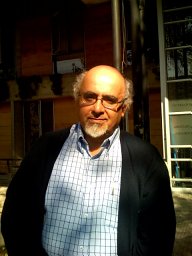 Marcelo Loewe合作论文数Institut für Theoretische Physik, Universität Hamburg32
 Alfredo Raya合作论文数Instituto de F ´ õsica y Matematicas;Universidad Michoacana de San Nicolas de Hidalgo;Instituto de F ´ õsica y Matematicas, Universidad Michoacana de San Nicolas de Hidalgo26
 Isabel Dominguez合作论文数Instituto de Ciencias Nucleares, Universidad Nacional Autónoma de México24
 Cesareo Dominguez合作论文数Department of Physics, University of Cape Town23
 Regino Zamora合作论文数Department of Ecology, Faculty of Sciences, University of Granada20
 Eleazar Cuautle Flores合作论文数Departamento de Altas Energías, Instituto de Ciencias Nucleares, Universidad Nacional Autónoma de México18
 Angel Sanchez合作论文数17
 Jorge Castano合作论文数Physics Institute, Pontificia Universidad Católica de Chile16
 Saul Hernandez Ortiz合作论文数14Javier Magnin合作论文数14
 Adnan Bashir合作论文数14Ivonne Maldonado合作论文数12
 Jamal Jalilian-Marian合作论文数Department of Natural Sciences, Weissman School of Arts and Sciences, Baruch College12Gabriella Piccinelli合作论文数12
 Ricardo Luciano Sonego Farias合作论文数12Cristian Villavicencio合作论文数11
 Ana Julia Mizher合作论文数11Luis Manuel Montaño合作论文数10
 Daryel Manreza合作论文数10
 Jesus Guillermo Contreras Nuno合作论文数Czech Technical University in Prague;Cinvestav10S. Hernandez-Ortiz合作论文数9
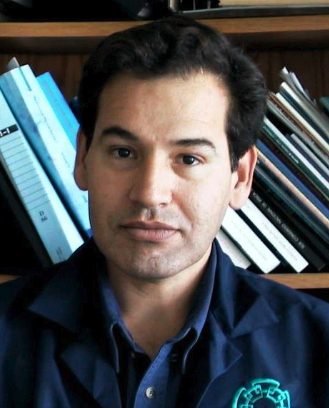 Gioconda Herrera合作论文数Ctr Invest & Estudios Avanzados, CINVESTAV9
 Guy Paic合作论文数Departamento de Física, Universidad Nacional Autónoma de México;Nuclear Research Institute, National Autonomous University of Mexico9J. C. Rojas合作论文数9Ildefonso Leon合作论文数7Santiago Bernal-Langarica合作论文数7Jordi Salinas合作论文数7
 Wolfgang Bietenholz合作论文数Institut fur Physik;Humboldt Universitat zu Berlin;Institut fur Physik, Humboldt Universitat zu Berlin7pedro podesta合作论文数6LM Montano合作论文数5Bruno S. Lopes合作论文数5
 Eduardo Rojas合作论文数ICN-UNAM5
 Genaro Toledo合作论文数5Gabriel Pallares合作论文数5J. J. Cobos-Martinez合作论文数4E. Moreno Barbosa合作论文数4Mauricio Alvarado合作论文数4C. H. Zepeda Fernández合作论文数4A. Ortiz Velasquez合作论文数4V. Z. Reyna Ortiz合作论文数4J. C. D'Olivo合作论文数4
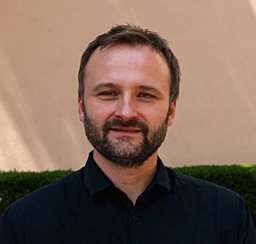 Martin Hentschinski合作论文数Brookhaven National Laboratory4Jaime Besprosvany合作论文数4Enif Gutierrez合作论文数Instituto de Física y Matemáticas;Universidad Michoacana de San Nicolás de Hidalgo;Instituto de Física y Matemáticas, Universidad Michoacana de San Nicolás de Hidalgo4Isabel Dominguez Jimenez合作论文数3Maria Elena Tejada‐Yeomans合作论文数3Benjamin Morales‐Ruiz合作论文数3




