Policy gradient algorithms have been a driver of much recent advancement in language model reasoning. One of their most appealing properties is the ability to learn from exploration on their own trajectories, a process crucial for discovering diverse approaches and fostering creative solutions. As we show in this paper, most policy gradient algorithms naturally reduce the entropy---and thus the diversity of explored trajectories---as part of training, yielding a policy increasingly limited in its ability to explore. However, not all algorithms exhibit this collapse in entropy equally. In this paper, we formally analyze the contributions of leading policy gradient objectives on entropy, show which mechanisms they employ to implicitly limit entropy collapse, and propose a new regularization method, REPO, that stabilizes entropy over training through the use of an adaptive controller. Models trained with REPO preserve entropy throughout training, yielding final policies that are, on average, more performant. By preserving entropy in the final policy, REPO-trained models can even be re-trained on evolving data distributions in new environments, unlike their non-entropy-preserving counterparts.
Interactive digital agents (IDAs) leverage APIs of stateful digital environments to perform tasks in response to user requests. While IDAs powered by instruction-tuned large language models (LLMs) can react to feedback from interface invocations in multi-step exchanges, they have not been trained in their respective digital environments. Prior methods accomplish less than half of tasks in sophisticated benchmarks such as AppWorld. We present a reinforcement learning (RL) approach that trains IDAs directly in their target environments. We formalize this training as a partially observable Markov decision process and derive M-PPO, a data- and memory-efficient variant of proximal policy optimization. M-PPO uses no value network and maintains exactly one copy of the underlying LLM in memory, making its implementation straightforward and as memory-efficient as fine-tuning a single LLM. A 32-billion-parameter agent trained with M-PPO in the AppWorld environment outperforms the much larger OpenAI o1 agent by 9 percentage points (15 relative). To our knowledge, this is the first reported application of RL to IDAs that interact with a stateful, multi-domain, multi-app environment via direct API calls. Our analysis sheds light on the effectiveness of RL in this area, showing that the agent learns to consult the API documentation, avoid unwarranted assumptions, minimize confabulation, and recover from setbacks.
Self-play has powered breakthroughs in two-player and multi-player games. Here we show that self-play is a surprisingly effective strategy in another domain. We show that robust and naturalistic driving emerges entirely from self-play in simulation at unprecedented scale -- 1.6 billion km of driving. This is enabled by Gigaflow, a batched simulator that can synthesize and train on 42 years of subjective driving experience per hour on a single 8-GPU node. The resulting policy achieves state-of-the-art performance on three independent autonomous driving benchmarks. The policy outperforms the prior state of the art when tested on recorded real-world scenarios, amidst human drivers, without ever seeing human data during training. The policy is realistic when assessed against human references and achieves unprecedented robustness, averaging 17.5 years of continuous driving between incidents in simulation.
Training generally capable agents that thoroughly explore their environment and learn new and diverse skills is a long-term goal of robot learning. Quality Diversity Reinforcement Learning (QD-RL) is an emerging research area that blends the best aspects of both fields -- Quality Diversity (QD) provides a principled form of exploration and produces collections of behaviorally diverse agents, while Reinforcement Learning (RL) provides a powerful performance improvement operator enabling generalization across tasks and dynamic environments. Existing QD-RL approaches have been constrained to sample efficient, deterministic off-policy RL algorithms and/or evolution strategies, and struggle with highly stochastic environments. In this work, we, for the first time, adapt on-policy RL, specifically Proximal Policy Optimization (PPO), to the Differentiable Quality Diversity (DQD) framework and propose additional improvements over prior work that enable efficient optimization and discovery of novel skills on challenging locomotion tasks. Our new algorithm, Proximal Policy Gradient Arborescence (PPGA), achieves state-of-the-art results, including a 4x improvement in best reward over baselines on the challenging humanoid domain.
Recent work has demonstrated the ability of deep reinforcement learning (RL) algorithms to learn complex robotic behaviours in simulation, including in the domain of multi-fingered manipulation. However, such models can be challenging to transfer to the real world due to the gap between simulation and reality. In this paper, we present our techniques to train a) a policy that can perform robust dexterous manipulation on an anthropomorphic robot hand and b) a robust pose estimator suitable for providing reliable real-time information on the state of the object being manipulated. Our policies are trained to adapt to a wide range of conditions in simulation. Consequently, our vision-based policies significantly outperform the best vision policies in the literature on the same reorientation task and are competitive with policies that are given privileged state information via motion capture systems. Our work reaffirms the possibilities of sim-to-real transfer for dexterous manipulation in diverse kinds of hardware and simulator setups, and in our case, with the Allegro Hand and Isaac Gym GPU-based simulation. Furthermore, it opens up possibilities for researchers to achieve such results with commonly-available, affordable robot hands and cameras. Videos of the resulting policy and supplementary information, including experiments and demos, can be found on the website.
In this work, we propose algorithms and methods that enable learning dexterous object manipulation using simulated one- or two-armed robots equipped with multi-fingered hand end-effectors. Using a parallel GPU-accelerated physics simulator (Isaac Gym), we implement challenging tasks for these robots, including regrasping, grasp-and-throw, and object reorientation. To solve these problems we introduce a decentralized Population-Based Training (PBT) algorithm that allows us to massively amplify the exploration capabilities of deep reinforcement learning. We find that this method significantly outperforms regular end-to-end learning and is able to discover robust control policies in challenging tasks. Video demonstrations of learned behaviors and the code can be found at https://sites.google.com/view/dexpbt
Reinforcement learning (RL) has shown promise in creating robust policies for robotics tasks. However, contemporary RL algorithms are data-hungry, often requiring billions of environment transitions to train successful policies. This necessitates the use of fast and highly-parallelizable simulators. In addition to speed, such simulators need to model the physics of the robots and their interaction with the environment to a level acceptable for transferring policies learned in simulation to reality. We present QuadSwarm, a fast, reliable simulator for research in single and multi-robot RL for quadrotors that addresses both issues. QuadSwarm, with fast forward-dynamics propagation decoupled from rendering, is designed to be highly parallelizable such that throughput scales linearly with additional compute. It provides multiple components tailored toward multi-robot RL, including diverse training scenarios, and provides domain randomization to facilitate the development and sim2real transfer of multi-quadrotor control policies. Initial experiments suggest that QuadSwarm achieves over 48,500 simulation samples per second (SPS) on a single quadrotor and over 62,000 SPS on eight quadrotors on a 16-core CPU. The code can be found in https://github.com/Zhehui-Huang/quad-swarm-rl.
The article discusses the features of modeling quantum cryptanalysis algorithms on a quantum scheme. Some engineering problems of the implementation of quantum cryptanalysis algorithms are shown and an analysis of possible ways of their solution is carried out. The uniqueness of quantum computation is shown due to the ability to carry out some non-trivial quantum computation using superposition, that is, it is possible to perform a series of mathematical operations, each of which operates with all stored data at the same time. The article discusses an algorithm for a quantum computer, which must initialize this vector in some specified form (depending on the model of the quantum computer). At each step of the algorithm, this vector is modified by a unitary matrix, which is determined by the physics of the device. It is proposed to consider the universal quantum gate as the quantum equivalent of the classical Boolean function from the universal set, which is a gate, and, acting on a qubit or their various combinations, can imitate the action of any other quantum gate. In the study of quantum algorithms, polynomial-time algorithms are found in problems for which no classical polynomial algorithms are known for their solution. For the required protection of quantum systems from decoherence errors and other quantum noise, methods of quantum error correction (QEC) have become widespread.
We demonstrate the possibility of learning drone swarm controllers that are zero-shot transferable to real quadrotors via large-scale multi-agent end-to-end reinforcement learning. We train policies parameterized by neural networks that are capable of controlling individual drones in a swarm in a fully decentralized manner. Our policies, trained in simulated environments with realistic quadrotor physics, demonstrate advanced flocking behaviors, perform aggressive maneuvers in tight formations while avoiding collisions with each other, break and re-establish formations to avoid collisions with moving obstacles, and efficiently coordinate in pursuit-evasion tasks. We analyze, in simulation, how different model architectures and parameters of the training regime influence the final performance of neural swarms. We demonstrate the successful deployment of the model learned in simulation to highly resource-constrained physical quadrotors performing station keeping and goal swapping behaviors. Code and video demonstrations are available on the project website at https://sites.google.com/view/swarm-rl.
Humans and other intelligent animals evolved highly sophisticated perception systems that combine multiple sensory modalities. On the other hand, state-of-the-art artificial agents rely mostly on visual inputs or structured low-dimensional observations provided by instrumented environments. Learning to act based on combined visual and auditory inputs is still a new topic of research that has not been explored beyond simple scenarios. To facilitate progress in this area we introduce a new version of VizDoom simulator to create a highly efficient learning environment that provides raw audio observations. We study the performance of different model architectures in a series of tasks that require the agent to recognize sounds and execute instructions given in natural language. Finally, we train our agent to play the full game of Doom and find that it can consistently defeat a traditional vision-based adversary. We are currently in the process of merging the augmented simulator with the main ViZDoom code repository. Video demonstrations and experiment code can be found at https://sites.google.com/view/sound-rl.
We accelerate deep reinforcement learning-based training in visually complex 3D environments by two orders of magnitude over prior work, realizing end-to-end training speeds of over 19,000 frames of experience per second on a single GPU and up to 72,000 frames per second on a single eight-GPU machine. The key idea of our approach is to design a 3D renderer and embodied navigation simulator around the principle of “batch simulation”: accepting and executing large batches of requests simultaneously. Beyond exposing large amounts of work at once, batch simulation allows implementations to amortize in-memory storage of scene assets, rendering work, data loading, and synchronization costs across many simulation requests, dramatically improving the number of simulated agents per GPU and overall simulation throughput. To balance DNN inference and training costs with faster simulation, we also build a computationally efficient policy DNN that maintains high task performance, and modify training algorithms to maintain sample efficiency when training with large mini-batches. By combining batch simulation and DNN performance optimizations, we demonstrate that PointGoal navigation agents can be trained in complex 3D environments on a single GPU in 1.5 days to 97% of the accuracy of agents trained on a prior state-of-the-art system using a 64-GPU cluster over three days. We provide open-source reference implementations of our batch 3D renderer and simulator to facilitate incorporation of these ideas into RL systems.
We present Megaverse, a new 3D simulation platform for reinforcement learning and embodied AI research. The efficient design of our engine enables physics-based simulation with high-dimensional egocentric observations at more than 1,000,000 actions per second on a single 8-GPU node. Megaverse is up to 70x faster than DeepMind Lab in fully-shaded 3D scenes with interactive objects. We achieve this high simulation performance by leveraging batched simulation, thereby taking full advantage of the massive parallelism of modern GPUs. We use Megaverse to build a new benchmark that consists of several single-agent and multi-agent tasks covering a variety of cognitive challenges. We evaluate model-free RL on this benchmark to provide baselines and facilitate future research. The source code is available at https://www.megaverse.info
Increasing the scale of reinforcement learning experiments has allowed researchers to achieve unprecedented results in both training sophisticated agents for video games, and in sim-to-real transfer for robotics. Typically such experiments rely on large distributed systems and require expensive hardware setups, limiting wider access to this exciting area of research. In this work we aim to solve this problem by optimizing the efficiency and resource utilization of reinforcement learning algorithms instead of relying on distributed computation. We present the "Sample Factory", a high-throughput training system optimized for a single-machine setting. Our architecture combines a highly efficient, asynchronous, GPU-based sampler with off-policy correction techniques, allowing us to achieve throughput higher than 10^5 environment frames/second on non-trivial control problems in 3D without sacrificing sample efficiency. We extend Sample Factory to support self-play and population-based training and apply these techniques to train highly capable agents for a multiplayer first-person shooter game. The source code is available at https://github.com/alex-petrenko/sample-factory
 Vladlen Koltun合作论文数Apple6
 Erik Wijmans合作论文数Apple5
 Gaurav Sukhatme合作论文数Thomas Lord Department of Computer Science, Viterbi School of Engineering, University of Southern California;Robotic Embedded Systems Laboratory, University of Southern California;Amazon4
 Zhehui Huang合作论文数Department of Computer Science, University of Southern California;Google3
 Sumeet Batra合作论文数Robotics Embedded Systems Laboratory, University of Southern California;Viterbi School of Engineering, University of Southern California3
 Brennan Shacklett合作论文数Department of Computer Science, Stanford University3
 Brody Huval合作论文数2
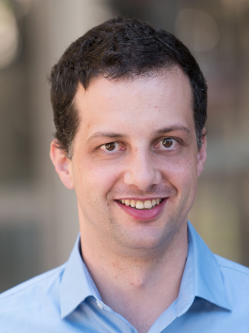 Philipp Krähenbühl合作论文数Department of Computer Science, College of Natural Sciences, University of Texas at Austin;Apple2
 Gavriel State合作论文数NVIDIA2
 Arthur Allshire合作论文数2
 Tushar Kumar合作论文数University of Southern California2
 Artem Molchanov合作论文数University of Southern California2
 Viktor Makoviychuk合作论文数Clone2
 Ankur Handa合作论文数NVIDIA Robotics2
 Kevin Chen合作论文数Apple2
 Ben Lipkin合作论文数Stealth1Philipp Kraehenbuehl合作论文数1Stuart Bowers合作论文数1Taylor Killian合作论文数1Alexander Hertzberg合作论文数1Alexander Zhurkevich合作论文数1
 Marco Cusumano-Towner合作论文数Apple1
 Dieter Fox合作论文数Paul G. Allen School of Computer Science & Engineering, University of Washington;Allen Institute for AI1
 Karl Van Wyk合作论文数NVIDIA Corporation1
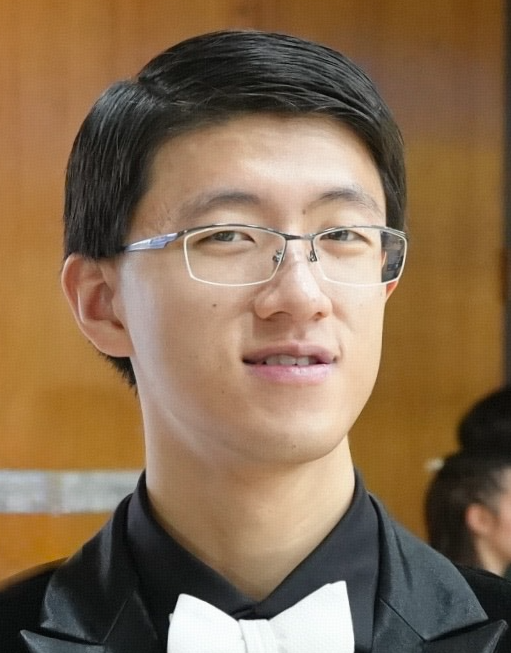 Bryon Tjanaka合作论文数Waymo1
 Zhaojing Yang合作论文数1
 Shashank Hegde合作论文数Robotics Embedded Systems Lab, University of Southern California;NVIDIA1Rahul Krupani合作论文数1Viktoriya Taran合作论文数1Jingzhou Liu合作论文数1Ritvik Singh合作论文数1Denys Makoviichuk合作论文数1
 Sergei A. Petrenko合作论文数Chair Informat Secur, St Petersburg Electrotech Univ LETI1
 Ozan Sener合作论文数Apple1Jean-Francois Lafleche合作论文数1
 Eugene Vinitsky合作论文数Tandon School of Engineering, New York University1
 Balakumar Sundaralingam合作论文数University of Utah1
 Anssi Kanervisto合作论文数University of Eastern Finland1
 James Alan Preiss合作论文数Computer Science Department, University of California, Santa Barbara1
 Satish Kumar Thittamaranahalli合作论文数Department of Computer Science, College of Letters, Arts and Sciences, University of Southern California;Department of Physics and Astronomy, College of Letters, Arts and Sciences, University of Southern California1
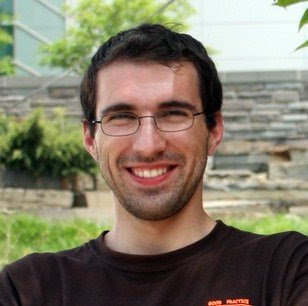 Manolis Savva合作论文数School of Computing Science, Simon Fraser University1
 Matthew C. Fontaine合作论文数University of Southern California1
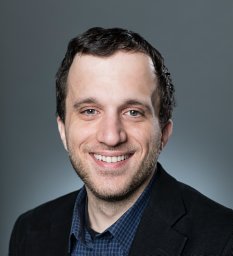 Stefanos Nikolaidis合作论文数Massachusetts Institute of Technology1
 David Hafner合作论文数1
 Kayvon Fatahalian合作论文数Computer Science Department, Stanford University1
 Raja Giryes合作论文数Department of EE - Systems, School of Electrical Engineering, Faculty of Engineering, Tel Aviv University1
 Yashraj Narang合作论文数Seattle Robotics Lab, NVIDIA Research1
 Dhruv Batra合作论文数Yutori1




