Since the onset of industrialisation, anthropogenic emissions have been the primary source of lead (Pb) to the surface ocean. Over time, this pollutant Pb has spread into the ocean interior, predominately through water mass transport, but also by reversibly scavenging off sinking particles, particularly in areas of high productivity. In the Southern Ocean, biogeochemical provinces with distinct particle flux conditions may variably influence the pathways of anthropogenic Pb to the deep ocean. To investigate this, this study determined the dissolved Pb concentrations and Pb isotope compositions of seawater depth profiles from GEOTRACES section GS01 between Australia and Antarctica. The meridional section reveals that the highest anthropogenic Pb signatures (Pb-206/Pb-207 = 1.147-1.152, Pb-208/Pb-207 = 2.423-2.426) occur at intermediate depths of the Subantarctic Zone (SAZ). This pollutant Pb enters the Southern Ocean interior via deep convection associated with Subantarctic Mode Water formation in the Southern Ocean and zonal advection of Antarctic Intermediate Water from the Indian Ocean. In the High Nutrient Low Chlorophyll region close to Antartica, strong vertical gradients in Pb isotope ratios suggest that low particle fluxes are insufficient to modify the natural Pb isotope composition of deep waters (Pb-206/Pb-207 = 1.168-1.179, Pb-208/Pb-207 = 2.443-2.463) advected by the Antarctic Circumpolar Current. In contrast, the SAZ exhibits near-homogeneous isotope depth profiles with deep-sea Pb isotope compositions (Pb-206/Pb-207 = 1.150-1.163, Pb-208/Pb-207 = 2.426-2.440) that cannot be explained by circulation. Mixing models that consider the Pb isotope signatures of SAZ surface waters and advected deep waters from the Indian Ocean suggest that vertical particle transport may account for similar to 5-75% of the SAZ deep-water Pb inventory. Paradoxically, no deep-sea Pb isotope anomalies are observed in the Polar Frontal Zone despite higher rates of primary production in this region compared to the SAZ. This discrepancy may reflect differences in the nature of the sinking particles between the two regions. In the SAZ, carbonate-rich particles produced by coccolithophores undergo dissolution below the calcite saturation horizon in the deep ocean, while in the Polar Frontal Zone, diatom-dominated production generates opal ballast that rapidly remineralises its Pb inventory in the water column, thereby restricting the vertical transport of Pb to shallower depths. These findings highlights that particle composition can play a key role in determining the pathways of pollutant Pb to the deep ocean.
Trace metal homeostasis is critical for cellular function and often disrupted in diseases such as cancer. Spatially resolved techniques enable mapping of metal distributions within complex cellular environments, surpassing the limitations of bulk analyses. Formalin-fixed, paraffin-embedded (FFPE) tissues are widely used in research, yet the impact of FFPE processing on endogenous elemental contents and distributions remains unclear, with conflicting findings across sample types. This study evaluates the suitability of FFPE human breast carcinoma tissue sections for multielemental bioimaging by direct comparison with paired fresh frozen (FF) tissues and assesses potential sources of contamination or elemental losses during processing. Three FF human breast carcinoma specimens were bisected and processed as either FF or FFPE. Serial sections underwent analyses by laser ablation inductively coupled plasma mass spectrometry (LA-ICP-MS), alongside hematoxylin and eosin (H&E)-staining, to compare elemental profiles in whole sections and morphologically distinct regions. In parallel, FFPE processing reagents encompassing tissue-marking dyes, formalin, paraffin wax, xylene, and ethanol were analyzed via solution ICP-MS to contextualize the in situ findings. The multielemental imaging results revealed that Zn, Mn, and Fe were largely preserved in FFPE sections, supporting the continued use of such tissues for in situ metal analyses. Addition of Cu was observed for all FFPE samples, most likely caused by exposure to blue tissue-marking dye. Formalin induced variable elemental leaching, most notably affecting Mg. Paraffin wax, ethanol, and xylene contained minimal trace metal levels both before and after contact with tissues.
Circumpolar Deep Water (CDW) and Antarctic Bottom Water (AABW) play key roles in the Earth's climate system. Both water masses form critical components of the Antarctic Circumpolar Current and Meridional Overturning Circulation and therefore directly influence the large-scale redistribution of heat, nutrients and carbon. Reconstruction of past CDW transport and AABW production and export has been a key target in palaeoceanography. One promising proxy to achieve this has been the neodymium (Nd) isotope composition of seawater. The biogeochemical processes controlling Nd in the ocean, however, remain underconstrained, and modern observations of Nd isotopes in the Southern Ocean are still geographically limited. To overcome this limitation, 61 seawater samples were collected for Nd isotope and rare earth element (REE) analysis at nine stations along the Wilkes Land continental margin and in the Australian-Antarctic Basin (65 degrees S 125 degrees E) near East Antarctica. The results show that the different water masses have the following Nd isotope characteristics: Antarctic Surface Water (AASW), e Nd = -9.0 +/- 1.0 (2SD; n = 22); Modified CDW (MCDW), e Nd = -8.8 +/- 0.8 (2SD; n = 22); AABW, e Nd = -8.3 +/- 0.5 (2SD; n = 17). There is no evidence of continental REE inputs to surface waters on the Wilkes Land margin. Observed zonal variability of Nd isotope composition in AASW can be attributed to seasonal competition between the poleward flow of warm AASW from the AAG and the westward export of cold surface shelf waters by the Antarctic Slope Current. In terms of deep and bottom waters, mixing of upwelled CDW with AASW and AABW exclusively controls the Nd isotope composition of MCDW, with no indication of boundary processes modifying the Nd isotope composition of MCDW as it encroaches the shelf or slope. The regional Nd isotope signature for AABW is intermediate between published data for the Atlantic sector AABW (e Nd = -9.1 +/- 0.7) and Pacific sector AABW (e Nd = -7.4 +/- 0.9). In the absence of active convection, this Nd isotope signature can be explained by a mixture of advected AABW from the Ade lie Land coast with a more dominant component of local MCDW and CDW. The data presented in this study constitute the first Nd isotope data set in this part of the Southern Ocean and suggest conservative behaviour of Nd in proximity to the old East Antarctic continent.
The application of Pb isotopes to marine geochemistry is currently hindered by challenges associated with the analysis of Pb isotopes in seawater. The current study evaluates the performance of multiple collector inductively coupled plasma mass spectrometry (MC-ICP-MS) measurements of seawater Pb isotope compositions following Pb separation by either solid-phase extraction with Nobias Chelate PA-1 resin or coprecipitation with Mg(OH)2 and using either a Pb double spike or external normalization to Tl for mass bias correction. The four analytical combinations achieve results of similar quality when measuring 1-7 ng of seawater Pb, with reproducibilities (two standard deviations, 2SD) of 100-1200 ppm for 206Pb/207Pb and 208Pb/207Pb and 300-1700 ppm for ratios involving the minor 204Pb isotope. All four procedures enable significantly improved sample throughput compared to an established thermal ionization mass spectrometry (TIMS) double-spike method and produce unbiased seawater Pb isotope compositions with similar or improved precision. Nobias extraction is preferable to coprecipitation due to its greater analytical throughput and suitability for analyses of large seawater samples with high Si(OH)4 contents. The most accurate Pb isotope data are produced following Nobias extraction and double-spike correction as such analyses are least susceptible to matrix effects. However, Nobias extraction with Tl normalization constitutes an attractive alternative as, unlike the double-spike procedure, only a single mass spectrometric measurement is required, which improves analytical throughput and optimizes Pb consumption for analysis. Despite the advantages of solid-phase extraction, coprecipitation represents a useful Pb separation technique for samples with low to moderate Si contents as it is inexpensive, simple to implement, and the data are only marginally less accurate, especially when combined with a Pb double spike for mass bias correction.
Continental shelf seas may have a significant role in oceanic uptake and storage of carbon dioxide (CO2) from the atmosphere through a 'continental shelf pump' mechanism. The northwest European continental shelf, in particular the Celtic Sea (50 degrees N 8 degrees W), was the target of extensive biogeochemical sampling from March 2014 to , September 2015 as part of the UK Shelf Sea Biogeochemistry research programme (UK-SSB). Here, we use the UK-SSB carbonate chemistry and macronutrient measurements to investigate the biogeochemical seasonality in this temperate, seasonally stratified system. Following the onset of stratification, near-surface biological primary production during spring and summer removed dissolved inorganic carbon and nutrients, and a fraction of the sinking particulate organic matter was subsequently remineralised beneath the thermocline. Water column inventories of these variables throughout 1.5 seasonal cycles, corrected for air-sea CO2 exchange and sedimentary denitrification and anammox, isolated the combined effect of net community production (NCP) and remineralisation on the inorganic macronutrient inventories. Overall inorganic inventory changes suggested that a significant fraction ( > 50%) of the annual NCP of around 3 mol-C m(-2) yr(-1) appeared to be stored within a long-lived organic matter (OM) pool with a lifetime of several months or more. Moreover, transfers into and out of this pool appeared not to be in steady state over the one full seasonal cycle sampled. Accumulation of such a long-lived and potentially C-rich OM pool is suggested to be at least partially responsible for the estimated net air-to-sea CO2 flux of similar to 1.3 mol-C m(-2)yr(-1) at our study site, while providing a mechanism through which a nutrient-conserving continental shelf pump for CO2 could potentially operate in this and other similar regions.
In 2014-5 the UK NERC sponsored an 18 month long Shelf Sea Biogeochemistry research programme which collected over 1500 nutrient and carbonate system samples across the NW European Continental shelf, one of the largest continental shelves on the planet. This involved the cooperation of 10 different Institutes and Universities, using 6 different vessels. Additional carbon dioxide (CO2) data were obtained from the underway systems on three of the research vessels. Here, we present and discuss these data across 9 ecohydrodynamic regions, adapted from those used by the EU Marine Strategy Framework Directive (MSFD). We observed strong seasonal and regional variability in carbonate chemistry around the shelf in relation to nutrient biogeochemistry. Whilst salinity increased (and alkalinity decreased) out from the near-shore coastal waters offshore throughout the year nutrient concentrations varied with season. Spatial and seasonal variations in the ratio of DIC to nitrate concentration were seen that could impact carbon cycling. A decrease in nutrient concentrations and a pronounced under-saturation of surface pCO(2) was evident in the spring in most regions, especially in the Celtic Sea. This decrease was less pronounced in Liverpool Bay and to the North of Scotland, where nutrient concentrations remained measurable throughout the year. The near-shore and relatively shallow ecosystems such as the eastern English Channel and southern North Sea were associated with a thermally driven increase in pCO(2) to above atmospheric levels in summer and an associated decrease in pH. Non-thermal processes (such as mixing and the remineralisation of organic material) dominated in winter in most regions but especially in the northwest of Scotland and in Liverpool Bay. The large database collected will improve understanding of carbonate chemistry over the North-Western European Shelf in relation to nutrient biogeochemistry, particularly in the context of climate change and ocean acidification.
Marine carbonate chemistry measurements have been carried out annually since 2009 during UK research cruises along the Extended Ellett Line (EEL), a hydrographic transect in the northeast Atlantic Ocean. The EEL intersects several water masses that are key to the global thermohaline circulation, and therefore the cruises sample a region in which it is critical to monitor secular physical and biogeochemical changes. We have combined results from these EEL cruises with existing quality-controlled observational data syntheses to produce a hydrographic time series for the EEL from 1981 to 2013. This reveals multidecadal increases in dissolved inorganic carbon (DIC) throughout the water column, with a near-surface maximum rate of 1.800.45 mu molkg(-1)yr(-1). Anthropogenic CO2 accumulation was assessed, using simultaneous changes in apparent oxygen utilization (AOU) and total alkalinity (TA) as proxies for the biogeochemical processes that influence DIC. The stable carbon isotope composition of DIC (C-13(DIC)) was also determined and used as an independent test of our method. We calculated a volume-integrated anthropogenic CO2 accumulation rate of 2.80.4mgCm(-3)yr(-1) along the EEL, which is about double the global mean. The anthropogenic CO2 component accounts for only 316% of the total DIC increase. The remainder is derived from increased organic matter remineralization, which we attribute to the lateral redistribution of water masses that accompanies subpolar gyre contraction. Output from a general circulation ecosystem model demonstrates that spatiotemporal heterogeneity in the observations has not significantly biased our multidecadal rate of change calculations and indicates that the EEL observations have been tracking distal changes in the surrounding North Atlantic and Nordic Seas.
The neodymium (Nd) isotopic composition of seawater has been used extensively to reconstruct ocean circulation on a variety of time scales. However, dissolved neodymium concentrations and isotopes do not always behave conservatively, and quantitative deconvolution of this non-conservative component can be used to detect trace metal inputs and isotopic exchange at ocean-sediment interfaces. In order to facilitate such comparisons for historical datasets, we here provide an extended global database for Nd isotopes and concentrations in the context of hydrography and nutrients. Since 2010, combined datasets for a large range of trace elements and isotopes are collected on international GEOTRACES section cruises, alongside classical nutrient and hydrography measurements. Here, we take a first step towards exploiting these datasets by comparing high-resolution Nd sections for the western and eastern North Atlantic in the context of hydrography, nutrients and aluminium (Al) concentrations. Evaluating those data in tracer-tracer space reveals that North Atlantic seawater Nd isotopes and concentrations generally follow the patterns of advection, as do Al concentrations. Deviations from water mass mixing are observed locally, associated with the addition or removal of trace metals in benthic nepheloid layers, exchange with ocean margins (i.e. boundary exchange) and/or exchange with particulate phases (i.e. reversible scavenging). We emphasize that the complexity of some of the new datasets cautions against a quantitative interpretation of individual palaeo Nd isotope records, and indicates the importance of spatial reconstructions for a more balanced approach to deciphering past ocean changes.This article is part of the themed issue 'Biological and climatic impacts of ocean trace element chemistry'.
The stable carbon isotope composition of dissolved inorganic carbon (δ13CDIC) in seawater was measured in samples collected during June–July 2014 in the subpolar North Atlantic. Sample collection was carried out on the RRS James Clark Ross cruise JR302, part of the “Radiatively Active Gases from the North Atlantic Region and Climate Change” (RAGNARoCC) research programme. The observed δ13CDIC values for cruise JR302 fall in a range from −0.07 to +1.95 ‰, relative to the Vienna Pee Dee Belemnite standard. From duplicate samples collected during the cruise, the 1σ precision for the 341 results is 0.08 ‰, which is similar to our previous work and other studies of this kind. We also performed a cross-over analysis using nearby historical δ13CDIC data, which indicated that there were no significant systematic offsets between our measurements and previously published results. We also included seawater reference material (RM) produced by A. G. Dickson (Scripps Institution of Oceanography, USA) in every batch of analysis, enabling us to improve upon the calibration and quality-control procedures from a previous study. The δ13CDIC is consistent within each RM batch, although its value is not certified. We report δ13CDIC values of 1.15 ± 0.03 ‰ and 1.27 ± 0.05 ‰ for batches 141 and 144 respectively. Our JR302 δ13CDIC data can be used – along with measurements of other biogeochemical variables – to constrain the processes that control DIC in the interior ocean, in particular the oceanic uptake of anthropogenic carbon dioxide and the biological carbon pump. Our δ13CDIC results are available from the British Oceanographic Data Centre – doi:10.5285/22235f1a-b7f3-687f-e053-6c86abc0c8a6.
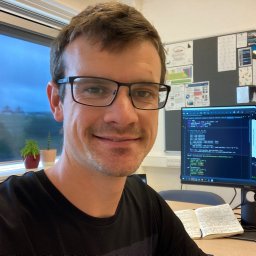 Matthew P. Humphreys合作论文数Dept Ocean Syst, NIOZ Royal Netherlands Inst Sea Res7
 Susan E Hartman合作论文数Southampton Oceanography Centre (SOC), UK6
 Eric Achterberg合作论文数Chemical Oceanography Unit, Geomar Helmholtz Centre for Ocean Research Kiel;Division of Marine Biogeochemistry, Geomar Helmholtz Centre for Ocean Research Kiel;University of Kiel5
 E. Malcolm S. Woodward合作论文数5
 Mark Rehkämper合作论文数Department of Earth Science & Engineering, Faculty of Engineering, Imperial College London4
 Tina Van De Flierdt合作论文数Institute for Isotope Geology and Mineral Resources, ETH-Zentrum4
 Caroline Kivimäe合作论文数3
 Alex Morrell合作论文数3myriam lambelet合作论文数3Tom Hull合作论文数Centre for Environment, Fisheries and Aquaculture Science3
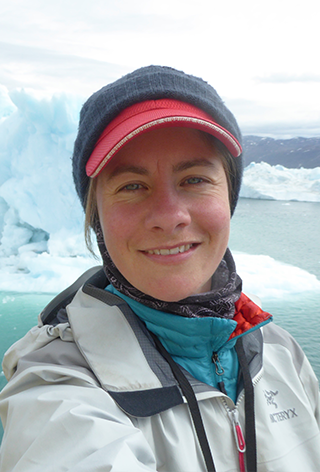 Susan Little合作论文数Earth Sciences, Faculty of Mathematical & Physical Sciences, University College London3
 Mark Moore合作论文数School of Ocean and Earth Science, National Oceanography Centre Southampton, Faculty of Environmental and Life Sciences, University of Southampton3Joanne Hopkins合作论文数3
 Katharina Kreissig合作论文数3
 David B. Sivyer合作论文数Centre for Environment, Fisheries and Aquaculture Science3Pamela Walsham合作论文数2Juliane U. Wihsgott合作论文数2David Wilson合作论文数Earth Sciences, Faculty of Mathematical & Physical Sciences, University College London2
 Ostle Clare合作论文数2
 Charles Coombes合作论文数Department of Surgery & Cancer, Faculty of Medicine, Imperial College London2
 David J. Pearce合作论文数Victoria University of Wellington2
 Richard David Sanders合作论文数National Oceanography Centre, Southampton, UK2Barry J. Coles合作论文数Department of Geology, Imperial College2
 Evin Mcgovern合作论文数The Marine Institute2David J Hydes合作论文数2
 Naomi Greenwood合作论文数Centre for Environment, Fisheries and Aquaculture Science2
 Philip D Nightingale合作论文数Plymouth Marine Laboratory2
 Stuart C. Painter合作论文数National Oceanography Centre, Southampton, SO14 3ZH, UK2
 Adrian Boyce合作论文数Centre for the Isotope Sciences, Scottish Universities Environmental Research Centre, University of Glasgow2
 Vassilis Kitidis合作论文数Plymouth Marine Laboratory2
 Torben Stichel合作论文数IFM-GEOMAR),, Leibniz-Institut für Meereswissenschaften an der Universität Kiel2brian m stewart合作论文数1
 Hollie Packman合作论文数1Jennifer S. Clarke合作论文数1
 Davide Alessandro Martella合作论文数Centre for Craniofacial and Regenerative Biology, King’s College London1Mario Esposito合作论文数1
 Theodora Janina Stewart合作论文数1Claudia H. Fry合作论文数1
 Triona Mcgrath合作论文数1Jan-Lukas Menzel Barraqueta合作论文数GEOMAR Helmholtz Centr Ocean Res Kiel1
 Clare Davis合作论文数Department of Earth, Ocean and Ecological Sciences, University of Liverpool1
 kirsty c crocket合作论文数Dounreay1
 Paul Fraser合作论文数School of Cardiovascular Medicine & Sciences, Faculty of Life Sciences & Medicine, King’s College London1
 Rebekah Moore合作论文数Department of Earth Science and Engineering, Faculty of Engineering, Imperial College London1
 Rebecca Garley合作论文数1
 Giovanni E. Mann合作论文数School of Cardiovascular Medicine & Sciences, Faculty of Life Sciences & Medicine, King’s College London;Department of Physiology, Faculty of Life Sciences & Medicine, King’s College London1
 Matthew P Couldrey合作论文数National Oceanography Centre, University of Southampton1Victoire Marie Chloe Rerolle合作论文数1Abell Richard合作论文数1




