We consider a number of examples of groups together with an infinite conjugation invariant generating set, including: the free group with the generating set of all separable elements; surface groups with the generating set of all non-filling curves; mapping class groups and outer automorphism groups of free groups with the generating sets of all reducible elements; and groups with suitable actions on Gromov hyperbolic spaces with a generating set of elliptic elements. In these Cayley graphs we show that there are quasi-isometrically embedded copies of $\mathbb{Z}^m$ for all $m \geq 1$. A corollary is that these Cayley graphs have infinite asymptotic dimension. By additionally building a new subsurface projection analogue for the free splitting graph, valued in the above Cayley graph of the free group, we are able to recover Sabalka-Savchuk's result that the edge-splitting graph of the free group has quasi-isometrically embedded copies of $\mathbb{Z}^m$ for all $m \geq 1$. Our analysis for Cayley graphs builds on a construction of Brandenbursky-Gal-Kȩdra-Marcinkowski using quasi-morphisms. We observe in particular that the Cayley graph of a closed surface group with the generating set of all simple closed curves is not hyperbolic, answering a question of Margalit-Putman.
We prove a semi-simplicity result for the boundary, in the corresponding Deligne-Mumford compactification, of totally geodesic subvarieties of moduli spaces of Riemann surfaces. Phrased at the level of Teichmüller space, this semi-simplicity theorem gives that each component of the boundary is a product of simple factors, each of which behaves metrically like a diagonal embedding. We use this to show that the associated totally geodesic submanifolds of Teichmüller space and orbifold fundamental groups are hierarchically hyperbolic.
We introduce and study diamonds of GL + (2 , R )-invariant subvarieties of Abelian and quadratic differentials, which allow us to recover information on an invariant subvariety by simultaneously considering two degenerations, and which provide a new tool for the classification of invariant subvarieties. We classify a surprisingly rich collection of diamonds where the two degenerations are contained in "trivial" invariant subvarieties. Our main results have been applied to classify large collections of invariant subvarieties; the statement of those results do not involve diamonds, but their proofs rely on them.
We show that Thurston's earthquake flow is strongly asymmetric in the sense that its normalizer is as small as possible inside the group of orbifold automorphisms of the bundle of measured geodesic laminations over moduli space. (At the level of Teichm\"uller space, such automorphisms correspond to homeomorphisms that are equivariant with respect to an automorphism of the mapping class group.) It follows that the earthquake flow does not extend to an $\mathrm{SL}(2,\mathbf{R})$-action of orbifold automorphisms and does not admit continuous renormalization self-symmetries. In particular, it is not conjugate to the Teichm\"uller horocycle flow via an orbifold map. This contrasts with a number of previous results, most notably Mirzakhani's theorem that the earthquake and Teichm\"uller horocycle flows are measurably conjugate.
We consider the curve graph in the cases where it is not a Farey graph, and show that its Gromov boundary is linearly connected. For a fixed center point c and radius r, we define the sphere of radius r to be the induced subgraph on the set of vertices of distance r from c. We show that these spheres are always connected in high enough complexity, and prove a slightly weaker result for low complexity surfaces.
We show that the Weil-Petersson probability that a random surface has first eigenvalue of the Laplacian less than $3/16-\epsilon$ goes to zero as the genus goes to infinity.
We classify GL(2, R) orbit closures of translation surfaces of rank at least half the genus plus 1.
We classify a natural collection of GL(2,R)-invariant subvarieties, which includes loci of double covers, the orbits of the Eierlegende-Wollmilchsau, Ornithorynque, and Matheus-Yoccoz surfaces, and loci appearing naturally in the study of the complex geometry of Teichmuller space. This classification is the key input in subsequent work of the authors that classifies "high rank" invariant subvarieties, and in subsequent work of the first author that classifies certain invariant subvarieties with "Lyapunov spectrum as degenerate as possible". We also derive applications to the complex geometry of Teichmuller space and construct new examples, which negatively resolve two questions of Mirzakhani and Wright and illustrate previously unobserved phenomena for the finite blocking problem.
We consider the derivative \begin{document}$ D\pi $\end{document} of the projection \begin{document}$ \pi $\end{document} from a stratum of Abelian or quadratic differentials to Teichmüller space. A closed one-form \begin{document}$ \eta $\end{document} determines a relative cohomology class \begin{document}$ [\eta]_\Sigma $\end{document}, which is a tangent vector to the stratum. We give an integral formula for the pairing of \begin{document}$ D\pi([\eta]_\Sigma) $\end{document} with a cotangent vector to Teichmüller space (a quadratic differential). We derive from this a comparison between Hodge and Teichmüller norms, which has been used in the work of Arana-Herrera on effective dynamics of mapping class groups, and which may clarify the relationship between dynamical and geometric hyperbolicity results in Teichmüller theory.
Let Gamma < PSL_2(C) be discrete, cofinite volume, and noncocompact. We prove that for all K > 1, there is a subgroup H < Gamma that is K-quasiconformally conjugate to a discrete cocompact subgroup of PSL_2(R). Along with previous work of Kahn and Markovic, this proves that every finite covolume Kleinian group has a nearly Fuchsian surface subgroup.
We show that all GL(+) (2, R) equivariant point markings over orbit closures of translation surfaces arise from branched covering constructions and periodic points, completely classify such point markings over strata of quadratic differentials, and give applications to the finite blocking problem.
We show that the partial compactification of a stratum of Abelian differentials previously considered by Mirzakhani and Wright is not an algebraic variety. Despite this, we use a combination of algebro-geometric and other methods to provide a short, unconditional proof of Mirzakhani and Wright's formula for the tangent space to the boundary of a GL(2,R) orbit closure, and give new results on the structure of the boundary.
We consider the derivative $D\pi$ of the projection $\pi$ from a stratum of Abelian or quadratic differentials to Teichmuller space. A closed one-form $\eta$ determines a relative cohomology class $[\eta]_\Sigma$, which is a tangent vector to the stratum. We give an integral formula for the pairing of of $D\pi([\eta]_\Sigma)$ with a cotangent vector to Teichmuller space (a quadratic differential). We derive from this a comparison between Hodge and Teichmuller norms, which has been used in the work of Arana-Herrera on effective dynamics of mapping class groups, and which may clarify the relationship between dynamical and geometric hyperbolicity results in Teichmuller theory.
Totally geodesic subvarieties. Let Mg denote the moduli space of Riemann surfaces X of genus g. If we also record n unordered marked points on X, we obtain the moduli space Mg,n. A subvariety V of moduli space is totally geodesic if it contains every Teichmüller geodesic that is tangent to it. It is primitive if it does not arise from a lower– dimensional moduli space via a covering construction. The first family of primitive, totally geodesic varieties of dimension one in Mg was discovered by Veech in the 1980s [V2]. These rare and remarkable Teichmüller curves are related to Jacobians with real multiplication and polygonal billiard tables with optimal dynamical properties. A second family was discovered shortly thereafter [Wa]. To date only a handful of families of Teichmüller curves are known. The first known primitive, totally geodesic variety of dimension larger than one is the recently discovered flex surface F ⊂ M1,3 [MMW]. The surface F is closely related to a new type of SL2(R)–invariant subvariety ΩG in the moduli space of
We show that any totally geodesic submanifold of Teichmuller space of dimension greater than one covers a totally geodesic subvariety, and only finitely many totally geodesic subvarieties of dimension greater than one exist in each moduli space.
We survey Mirzakhani's work relating to Riemann surfaces, which spans about 20 papers. We target the discussion at a broad audience of nonexperts.
We construct a smooth, area preserving, mixing flow with finitely many non-degenerate fixed points and no saddle connections on a closed surface of genus 5. This resolves a problem that has been open for four decades.
We compute the algebraic hull of the Kontsevich-Zorich cocycle over any GL^+_2(R) invariant subvariety of the Hodge bundle, and derive from this finiteness results on such subvarieties.
We show that every GL(2,R) orbit closure of translation surfaces is a connected component of a stratum, the hyperelliptic locus, or consists entirely of surfaces whose Jacobians have extra endomorphisms. We use this result to give applications related to polygonal billiards. For example, we exhibit infinitely many rational triangles whose unfoldings have dense GL (2,R) orbit.
The Teichmuller unipotent flow can be defined concretely on certain moduli spaces of singular flat surfaces by shearing polygonal presentations of the surfaces. Thurston's earthquake flow on moduli spaces of hyperbolic surfaces is more mysterious. Both flows have deep and important connections to other areas of mathematics. In this expository survey we give a geometric account of the main ideas behind Mirzakhani's theorem relating these two flows. Our presentation avoids some technical prerequisites that featured in the original more analytic presentation.
 Duc-Manh Nguyen合作论文数6Paul Apisa合作论文数4
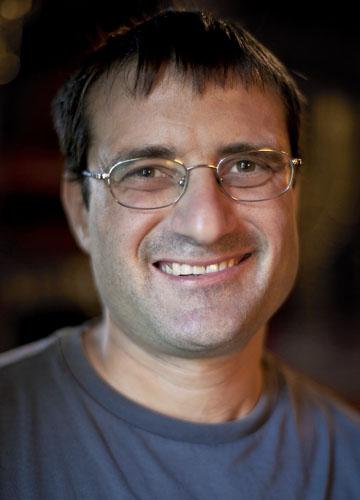 Jeremy Kahn合作论文数Department of Mathematics, Brown University3Francisco Arana-Herrera合作论文数2Ronen E. Mukamel合作论文数2David Aulicino合作论文数2
 Maryam Mirzakhani合作论文数Stanford University2
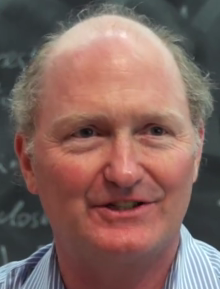 Curtis T. McMullen合作论文数Department of Mathematics, Harvard University2
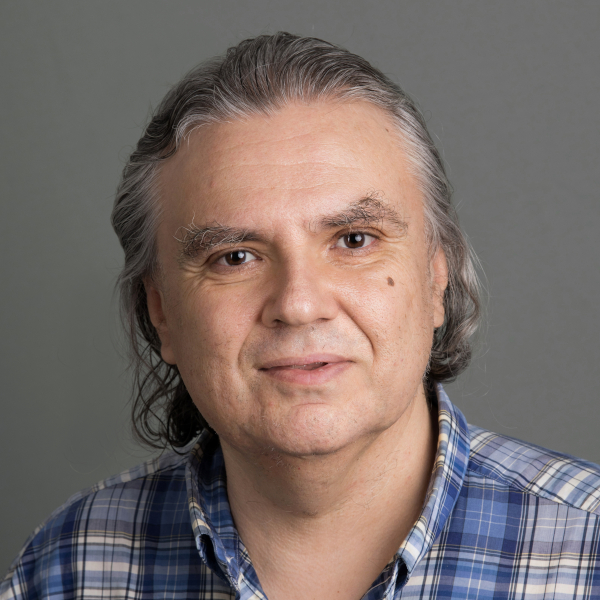 Alex Eskin合作论文数Department of Mathematics, The University of Chicago2George Domat合作论文数1
 Michael Lipnowski合作论文数Department of Mathematics, Ohio State University1
 Simion Filip合作论文数Department of Mathematics, The University of Chicago1
 Kenneth R. Davidson合作论文数University of Waterloo,Department of Pure Mathematics1
 Carlos Matheus合作论文数1Erwan Lanneau合作论文数1Jon Chaika合作论文数1
 Dawei Chen合作论文数1




