In this contribution, a case study of a German machine and tool manufacturer is presented, depicting the requirements placed on assembly planners by disruptive product-related innovations. The case study initially outlines the current state of tasks ahead of the introduction of disruptive products, demonstrates how the new requirements were systematically identified, and illustrates how the new job role was shaped in terms of tasks and competences. This was done, in particular, by addressing the novel demands related to electronics, sensors, AI, software solutions, and associated planning aspects throughout the product development, line and workplace planning, series planning, and even in new concepts for the overhaul of products. Thus, the contribution shows on the example of the assembly planners, how job roles transform under challenging conditions and how this can be systematically identified and made usable for competence development.
This contribution tackles the effects of digitalisation on leadership in production work. Based on the assumption that production work in the future will be characterised as more flexible, networked and digitalised, the digital transformation will lead to changes in business models, organisations and work design. Accordingly, changed and new competences are needed by executives. There is a new generation of executives who have to view business differently and use different sets of competences to lead employees. In this paper, an overview will be given about digital trends and their impact on leadership. Secondly, definitions of terms about leadership and the difference between traditional management and digital leadership will be illustrated. Furthermore, competence sets for leadership in digital transformation in production work will be outlined. These competence sets can be described both by several competences subsumed under the term "interactional competences" and by competences needed to establish a work design conducive to learning, facilitating and enabling competence development of employees. We think that these two competence bunches depict the core of future competences of executives in production.
In times of organizational transformation, e.g. with regard to increased digitization or the development of new business models to improve value creation, it is necessary to identify competence requirements at an early stage. Therefore, trends and technologies require organizations to deal with the existing competences within the organization and to carry out early identification of competences in order to be able to react early to changing competence requirements.The Fraunhofer competence compass, which covers all process steps of a strategy-oriented competence management, is used as the basis for determining competence requirements. Competence management and the determination of competence requirements contained therein aim to make individual and organizational competences in the company tangible in order to be able to use them profitably (e.g. with regard to competitiveness and value creation) and to be able to develop them systematically and in a targeted manner. In combination with the results of the trend and technology analysis, job profiles of the future with new competence requirements then can be developed or new job profiles can be identified. What is the challenge then for HR? The challenge is to establish a data driven competence management, hence to make use of HR/People Analytics. This requires a consistently data-based architecture that anticipates new business requirements and identifies the resulting necessities for developing new competences. Subsequently, learning offers adapted to the needs of the employees and their requirements are proposed, implemented and evaluated. For this purpose, existing data models have to be evaluated and possibly redefined, data sources have to be newly developed and in a "control center" e.g. in the form of an AI-based dashboard. In the context of data-based competence management activities, practical data analytics procedures must also be identified, implemented as prototypes and tested. Thus, HR is faced with new requirements in the field of HR/people analytics. HR should be able to carry out or support well-founded data analyses, how these and corresponding hypotheses relate to business-relevant questions (such as the development of value creation) and what actions can be taken based on the analyses. This requires more than just IT competence, it also requires specialist technical knowledge. However, what is needed is the ability to translate strategic questions of corporate development into relevant hypotheses, to obtain the relevant data and to analyze them. Finally, the contribution tries to relate the approach of a strategy-oriented competence management and the characteristics of workforce ecosystems, a new strategic approach to the future of work, and to draw corresponding conclusions for HR/people analytics.
Recent years have seen the growing digitisation of cultural heritage, leveraged by innovative information technologies (imaging technologies, multimedia, virtual reality etc.). Advanced digitisation technologies have been instrumental in transforming conservation and scientific research methods regarding cultural heritage, as well as people’s experience of cultural heritage relics, monuments and events, thus paving the way for novel consumer services. The present paper revolves around the use of advanced 2D/3D digital scanning of large scale objects and surroundings and the valorisation of the digital spatial models produced, in order to advance preservation efforts, to enhance scientific research work and to create unique, immersive cultural experiences, using affordable consumer electronics. With regards to the latter, the proposed DiscoVRCoolTour prototype specifically targets the production, marketing and consumption of cultural tourism. Digitisation technologies are already in use in the context of cultural tourism (e.g. in museums and monuments). However, limited research and solutions can be found with respect to the interaction between cultural heritage, scan/photo and immersive technologies, potential customers’ and visitors’ experiences in the cultural tourism locations, events and attractions. Physical as well as virtual customer services based on digitisation technologies for cultural tourism attractions, locations and entire destinations are still not exploited properly. Overall, a manifold of applications and services can be generated from the adoption and adaptation of relevant 2D/3D digital scanning technologies already applied in other sectors (e.g. construction industry). In this context, the paper first presents relevant digital technologies for digital data acquisition of large scale objects and surroundings and discusses critical aspects of the proposed solution, namely with regards to digital imaging, scan/photographing methods, virtual reality experience, secure metadata storage, etc. Subsequently, the applications and expected benefits of the DiscoVRCoolTour prototype for cultural heritage conservation and valorisation are discussed, including new emerging forms of cooperation and novel “technology-induced” business models.
Privacy provision and data protection are becoming more and more important for technology-enhanced learning (TEL). In this paper we present results of a Survey that aimed at collecting requirements of end-users and learning technology, service and content providers on this issue. In total 147 people from 17 countries participated in the survey. The majority of the respondents are not satisfied With the Current level of data protection and privacy in TEL, and they believe that the related problems will increase in the next 5 years. From the list of presented protection measures they perceive awareness raising about potential security and privacy threats and protection of personal data to be the most urgent measures, while the least urgent (but still relevant) is anonymous use of learning resources.
Given the importance of an organisations human capital to business success, aligning training and competency development with business needs is a key challenge. Many companies did initiate in the past knowledge management activities or founded corporate universities as the organization intended to help companies to face this challenge. In this deliverable, we talk about knowledge work and learning management as a concept to increase business performance through a better short- and long-term learning approach for people at management level. The aim is to provide a guideline for corporate users based on our and others' experiences of implementing solutions for knowledge work and learning. This is connected to many forms and methods of learning: formal learning processes, informal learning, team learning, collaboration, social networking, community building etc. In many companies, managers think that knowledge work can be supported solely by offering courses and enabling to access content on demand. In this deliverable this aspect (ACQUIRING knowledge) will not be in focus as it is more the job of a training department to manage courses and catalogues. Instead we focus on APPLYING knowledge. The concept of knowledge work management comes into place, when companies see the ability of their employees to APPLY their education and knowledge as a strategic instrument to create competitiveness and look for tools to provide learning and knowledge at workplace on demand and fitting to the individual needs. And this objective is very actual as the globalization creates pressure on companies and the knowledge and experience of the employees gets the most important differentiator to competitors leading to better innovation, faster processes, higher productivity and lower costs. In this deliverable, an overall approach and guideline for companies will be provided on how to implement knowledge work management and provide learning according to the needs in business and resulting from business processes.
Report based on analyzed and verified requirements in the area of professional training and qualification.
The aim of this paper is to provide insight in the important role simulation technologies can play in the context of effective business process-oriented learning. The gap between business processes and HR carrying out concrete tasks could be bridged by integrating knowledge management and learning needs with respect to business processes. First, the importance between business processes, learning and simulations is illustrated. Second, simulations and their impact for company efficiency is outlined. Third, the benefits of the PROLIX e-simulation are described according to specific requirements out of a business process perspective. A company case study is also presented. The conclusion is that decision support for management under specific performance conditions and the learning environment itself are key elements that contemporary e-simulations bring together for the benefit of work performance and effectiveness as well as efficiency of companies.
In an economy in which knowledge becomes more and more important as the main resource of economical success, workers, teams and companies need to develop the necessary competencies to be able to participate in a work life that is mainly based on knowledge productivity. In this paper we first outline knowledge work and its key issue areas. Second, we stress the necessity to combine work processes with training processes in the context of knowledge work. In the third part of this paper, we outline one approach developed by a consortium of research institutes and companies to overcome the gap between knowledge requested and content provided by a tool-based service to improve the skills of employees at the workplace.
Industry product life cycles and their technological life cycles are getting shorter and shorter. At the same time these products are getting more and more complex. In consequence, this causes faster innovation processes, new production concepts and client-oriented products. The share of knowledge work increases. There are different concepts to support companies in managing the changes and the higher part of knowledge work using new technologies. One is the idea of knowledge products. They take care of different user groups and give support to search and find of information. They help to improve the product, allow faster and smarter updates for product changes, make product presentations more effective and give the staff more orientation in their highly complex work environment. Another concept is to learn by “Instant-Qualification” just in time. The employee pools special information with his own expertise and can handle the actual specific work tasks immediately. The idea is the combination of knowledge management and learning in one real-time system. The surroundings of the employee are the interface of the learning application. It facilitates intuitive use of information. Learning is integrated into a real working process by using new technologies.
All rights reserved. No part of this book may be reproduced or utilized in any form or by any means, electronic or mechanical, including photocopying, recording, or by any information storage and retrieval system, without permission in writing from the publisher.
What is CoMedia-Cooperation Multimedia? CoMedia is a multi-disciplinary and international research project between the Rogers Communications Center at Ryerson Polytechnic University, Toronto, Canada and the Fraunhofer- Institute for Industrial Engineering (IAO), Stuttgart, Germany. Its aim is to develop an Internet-based cooperation platform for multimedia companies and to develop a Knowledge-Product for an end user manufacturing company as a business case using the platform. Partnering with the research institutes in Canada and Germany are small multimedia production companies and a large manufacturing organization. CoMedia intends to strengthen the competitiveness of multimedia companies in building up a client oriented cooperation network and testing several collaborative multimedia production services (storage, e-commerce, video shaping rendering). In this case study we also trace the history of the CoMedia project including the starting conditions and how and in which way the partners initiated successful collaborative work packages without being trapped in their previous context. This case study also demonstrates that international cooperation (between both industrial companies and research institutions) can be strengthened on the basis of WIN-WIN oriented cooperation strategies and concepts
Knowledge work management give solutions to cope with the consequences of the migration to a "knowledge based economy". The key issues are: New work organisation: new forms of work division; Knowledge product management: Selection, design and implementation of KM tools to support knowledge work as key elements; Organisational learning: Regarding the interaction between competence development and the mutability of companies; Competence development: Design of new HR management for knowledge workers including new career concepts, skill management and life-long learning; Performance & Productivity: Definition of knowledge e-work including quality criteria and standardization of knowledge e-work processes; Performance Management: Establishing an evaluation and benchmarking model
The increasing need for a fast development of new and high-quality services has led to structured approaches like service engineering. While some important dimensions like knowledge management have found their way into service development and service delivery as a separate domain, an integration of creativity, knowledge management and learning into the complete service engineering process and lifecycle has not been considered in theory or practice. The LIKE project aims at overcoming this shortcoming by integrating creativity, knowledge and learning as inherent dimensions into the process and supports this with a platform underpinning the complete process.
 Till Becker合作论文数4Bernd Dworschak合作论文数4
 Walter Ganz合作论文数3
 Tomaž Klobučar合作论文数Laboratory for Open Systems and Networks, Jozef Stefan Institute;DOBA Faculty of Applied Business and Social Studies;Jozef Stefan International Postgraduate School2Andreas Kaibel合作论文数2
 Lucia Pannese合作论文数2Dimitra Pappa合作论文数Division of Applied Technologies, National Centre for Scientific Research, (NCSR) “Demokritos”,2Mauro Santalmasi合作论文数2Volker Zimmermann合作论文数2norbert froschle合作论文数1
 Constantin Makropoulos合作论文数1Helmut Zaiser合作论文数1
 Florian Wehner合作论文数1
 Thomas Schlegel合作论文数1rer pol annesophie tombeil合作论文数1jochen pack合作论文数1
 Rene Hellmuth合作论文数Grad Sch Excellence Adv Mfg Engn GSaME, Univ Stuttgart1
 Rainer Nagele合作论文数Fraunhofer Inst Ind Engn IAO1
 Stefanie N. Lindstaedt合作论文数Know-Center1Stephan Wilhelm合作论文数Fraunhofer-Institut für Arbeitswirtschaft und Organisation1
 Gunnar Martin合作论文数1
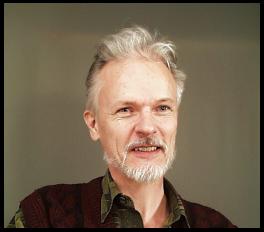 Ambjörn Naeve合作论文数Centre for user oriented,Royal Institute of Technology1H. Holger Rath合作论文数1Josephine Hofmann合作论文数1Guido Grohmann合作论文数1Wolfgang Volz合作论文数1Mahsa Jenabi合作论文数1
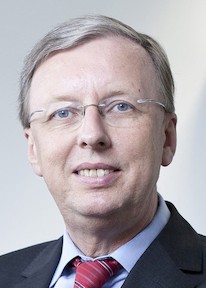 Matthias Jarke合作论文数Internet of Production, RWTH Aachen University1
 Ralf Klamma合作论文数Knowledge-Based Systems Group, Department of Computer Science, Faculty of Mathematics, Computer Science and Natural Sciences, RWTH Aachen University;WEKIT ECS;WEKIT Experience Capturing Solutions Limited1
 Helge Fredrich合作论文数imc - information multimedia communication AG1Paul Lefrere合作论文数the Open University1
 Peter Loos合作论文数Institut f??r Wirtschaftsinformatik1
 Mohamed Amine Chatti合作论文数Social Computing Group, Department of Computer Science and Applied Cognitive Science, Faculty of Engineering, University of Duisburg-Essen1Fraunhofer IAO合作论文数1Carsten Ritterskamp合作论文数1
 Vasilis Pitsilis合作论文数NCSR DEMOKRITOS1




