Quiescent skeletal muscle satellite cells (SCs) located on myofibers activate in response to muscle injury to regenerate muscle; however, identifying the role of specific matrix signals on SC behavior in vivo is difficult. Therefore, we developed a viscoelastic hydrogel with tunable properties to encapsulate myofibers while maintaining stem cell niche polarity and SC-myofiber interactions to investigate how matrix signals, including viscoelasticity and the integrin-binding ligand arginyl-glycyl-aspartic acid (RGD), influence SC behavior during muscle regeneration. Viscoelastic hydrogels support myofiber culture while preserving SC stemness for up to 72 hours post-encapsulation, minimizing myofiber hypercontraction and SC hyperproliferation compared to Matrigel. Pax7 is continuously expressed in SCs on myofibers embedded in hydrogels with higher stress relaxation while SCs differentiate when embedded in elastic hydrogels. Increasing RGD concentrations activates SCs and translocates YAP/TAZ to the nucleus as revealed by photo-expansion microscopy. Deleting YAP/TAZ abrogates RGD-mediated activation of SCs, and thus, YAP/TAZ mediates RGD ligand-induced SC activation and subsequent proliferation. Statement of significance Satellite cells (SCs) are responsible for muscle maintenance and regeneration, but how the extracellular matrix regulates SC function is less understood and would benefit from new biomaterial models that can recapitulate the complexity of SC niche in vitro. Upon isolation of myofibers, SCs exit quiescence, becoming activated. To circumvent this issue, we developed a viscoelastic hydrogel for encapsulating myofibers, which maintains SC quiescence and limits differentiation, allowing the study of RGD effects. We showed that increasing RGD concentration promotes activation and suppresses differentiation. Finally, to allow high resolution imaging for resolving the subcellular localization of YAP/TAZ transcriptional co-activators, we applied photo-expansion microscopy and gel-to-gel transfer techniques to quantify YAP/TAZ nuclear-cytoplasmic ratio, revealing that RGD-mediated activation relies on YAP/TAZ nuclear translocation.
Cell interactions with the extracellular matrix (ECM) influence intracellular signaling pathways related to proliferation, differentiation, and secretion, amongst other functions. Herein, bone-marrow derived mesenchymal stromal cells (MSCs) are encapsulated in a hydrazone crosslinked hyaluronic acid (HA) hydrogel, and the extent of stress relaxation is controlled by systemic introduction of irreversible triazole crosslinks. MSCs form elongated multicellular structures within hydrogels containing RGD peptide and formulated with elastic composition slightly higher than the hydrogel percolation threshold (12 % triazole, 88 % hydrazone). A scaling analysis is presented (12 ∼Nα) to quantify cell-material interactions within these structures with the scaling exponent (α) describing either elongated (0.66) or globular (0.33) structures. Cellular interactions with the material were controlled through peptides to present integrin binding ECM cues (RGD) or cadherin binding cell-cell cues (HAVDI) and MSCs were observed to form highly elongated structures in RGD containing hydrogels (α=0.56±0.05), whereases collapsed structures were observed within HAVDI containing hydrogels (α=0.39±0.04). Finally, cytokine secretion was investigated, and a global increase in secreted cytokines was observed for collapsed structures compared to elongated. Taken together, this study presents a novel method to characterize cellular interactions within a stress relaxing hydrogel where altered cluster morphology imparts changes to cluster secretory profiles.
Covalent adaptable crosslinks, such as the alkyl-hydrazone, endow hydrogels with unique viscoelastic properties applicable to cell delivery and bioink systems. However, the alkyl-hydrazone crosslink lacks stability in biologically relevant environments. Furthermore, when formed with biopolymers such as hyaluronic acid (HA), low molecular weight polymers (<60 kDa), or low polymer content (<2 wt%) hydrogels are typically employed as entanglements reduce injectability. Here, a high molecular weight (>60 kDa) HA alkyl-hydrazone crosslinked hydrogel is modified with benzaldehyde-poly(ethylene glycol)(3)-azide to incorporate azide functional groups. By reacting azide-modified HA with a multi-arm poly(ethylene glycol) (PEG) functionalized with bicyclononyne, stabilizing triazole bonds are formed through strain-promoted azide-alkyne cycloaddition (SPAAC). Increasing the fraction of triazole bonds within the hydrogel network from 0% to 12% SPAAC substantially increases stability. The slow gelation kinetics of the SPAAC reaction in the 12% SPAAC hydrogel enables transient self-healing properties and a similar extrusion force as the 0% SPAAC hydrogel. Methyl-PEG(4)-hydrazide is then introduced to further slowdown network evolution, which temporarily lowers the extrusion force, improves printability, and increases post-extrusion mesenchymal stem cell viability and function in the 12% SPAAC hydrogel. This work demonstrates improved stability and temporal injectability of high molecular weight HA-PEG hydrogels for extrusion-based printing and cell delivery.
The extracellular matrix plays a critical role in mechanosensing and thereby influences the secretory properties of bone‐marrow‐derived mesenchymal stem/stromal cells (MSCs). As a result, interest has grown in the development of biomaterials with tunable properties for the expansion and delivery of MSCs that are used in cell‐based therapies. Herein, stress‐relaxing hydrogels are synthesized as hybrid networks containing both biopolymer and synthetic macromer components. Hyaluronic acid is functionalized with either aldehyde or hydrazide groups to form covalent adaptable hydrazone networks, which are stabilized by poly(ethylene glycol) functionalized with bicyclononyne and heterobifunctional small molecule crosslinkers containing azide and benzaldehyde moieties. Tuning the composition of these gels allows for controlled variation in the characteristic timescale for stress relaxation and the amount of stress relaxed. Over this compositional space, MSCs are observed to spread in formulations with higher degrees of adaptability, with aspect ratios of 1.60 ± 0.18, and YAP nuclear:cytoplasm ratios of 6.5 ± 1.3. Finally, a maximum MSC pericellular protein thickness of 1.45 ± 0.38 µm occurred in highly stress‐relaxing gels, compared to 1.05 ± 0.25 µm in non‐adaptable controls. Collectively, this study contributes a new understanding of the role of compositionally defined stress relaxation on MSCs mechanosensing and secretion.
The therapeutic benefits of exogenously delivered mesenchymal stromal/stem cells (MSCs) have been largely attributed to their secretory properties. However, clinical translation of MSC-based therapies is hindered due to loss of MSC regenerative properties during large-scale expansion and low survival/retention post-delivery. These limitations might be overcome by designing hydrogel culture platforms to modulate the MSC microenvironment. Hydrogel systems could be engineered to i) promote MSC proliferation and maintain regenerative properties (i.e., stemness and secretion) during ex vivo expansion, ii) improve MSC survival, retention, and engraftment in vivo, and/or iii) direct the MSC secretory profile using tailored biochemical and biophysical cues. Herein, it is reviewed how hydrogel material properties (i.e., matrix modulus, viscoelasticity, dimensionality, cell adhesion, and porosity) influence MSC secretion, mediated through cell-matrix and cell-cell interactions. In addition, it is highlighted how biochemical cues (i.e., small molecules, peptides, and proteins) can improve and direct the MSC secretory profile. Last, the authors' perspective is provided on future work toward the understanding of how microenvironmental cues influence the MSC secretome, and designing the next generation of biomaterials, with optimized biophysical and biochemical cues, to direct the MSC secretory profile for improved clinical translation outcomes.
User-defined mutagenic libraries are fundamental for applied protein engineering workflows. Here we show that unamplified oligo pools can be used to prepare site saturation mutagenesis libraries from plasmid DNA with near-complete coverage of desired mutations and few off-target mutations. We find that oligo pools yield higher quality libraries when compared to individually synthesized degenerate oligos. We also show that multiple libraries can be multiplexed into a single oligo pool, making preparation of multiple libraries less expensive and more convenient. We provide software for automatic oligo pool design that can generate mutagenic oligos for saturating or focused libraries.
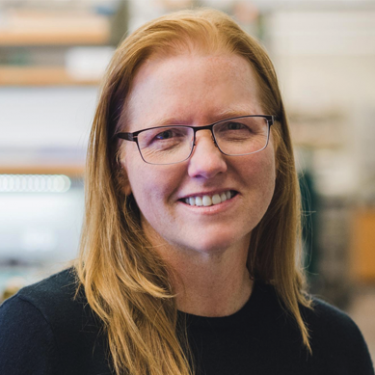 Kristi Anseth (克里斯蒂·安塞斯)合作论文数Department of Chemical and Biological Engineering, College of Engineering and Applied Science, University of Colorado, Boulder;The BioFrontiers Institute, University of Colorado, Boulder5
 Mark W. Young合作论文数2
 Varsha V Rao合作论文数BioFrontiers Institute, University of Colorado – Boulder2
 Matthew W Jaeschke合作论文数Dept Chem & Biol Engn, Univ Colorado Boulder2
 Bruce Edward Kirkpatrick合作论文数BioFrontiers Institute, University of Colorado Boulder2Angélica V Medina-Cucurella合作论文数1Jesús Beltrán合作论文数1Monica B Kirby合作论文数1
 Alicia A Cutler合作论文数1Marissa E Wechsler合作论文数Department of Biomedical Engineering and Chemical Engineering, University of Texas at San Antonio1
 Paul J Steiner合作论文数Dept Chem & Biol Engn, Univ Colorado1
 Nathaniel Skillin合作论文数Harvard Med Sch, Brigham & Womens Hosp, Ann Romney Ctr Neurol Dis, Evergrande Ctr Immunol Dis, Boston, MA 02115 USA1
 Sridhar Balaji V合作论文数Department of Chemical and Biological Engineering, University of Colorado at Boulder;Biofrontiers Institute, University of Colorado at Boulder;University of Colorado at Boulder, University of Colorado at Boulder1
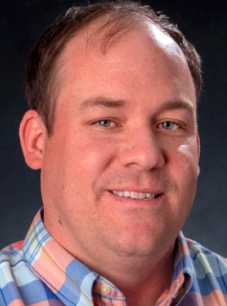 Timothy J. White合作论文数Department of Chemical and Biological Engineering, College of Engineering and Applied Science, University of Colorado Boulder1
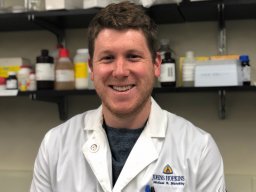 Blatchley Michael R合作论文数Johns Hopkins Physical Sciences-Oncology Center and Institute for NanoBioTechnology, Johns Hopkins University1
 Faber Matthew S合作论文数Department of Physiology, Michigan State University1
 Bradley Olwin合作论文数1
 Sean Cutler合作论文数Department of Botany & Plant Sciences, University of California, Riverside1




