This paper features SEASALT, an intelligent information system architecture that follows the example of collaborating human experts. Modular- ised knowledge is provided in a number of case bases that offer their topic ex- pertise which is used to combine knowledge for individual queries. We describe how collaborative multi-expert systems can be instantiated using CBR technology to cover the experts' roles and agent technology in order to enable their collaboration. We focus on the maintenance of cases in such multi-case- base systems regarding inter-case base dependencies. We evaluate our approach based on the real-life application of travel medicine and show how the requirements of an information system on travel medicine can be fulfilled using our hybrid, agent based CBR system architecture.
The third version of CookIIS, our candidate for the third Computer Cooking Contest (CCC) is focusing on pre-processing and en- riching the source data for a better performance of the 4R processes. Our goal for this year is to improve the retrieval process by considering the ingredients' weights, strengthen the reuse phase by enhancing the knowledge model and further developing the adaptation methods, intro- ducing light revision approaches of retrieval results. This paper presents the improvement of CookIIS in preparation for the CCC-2010.
CookIIS is a successful Case-Based Reasoning web ap- plication that recommends and adapts recipes or creates a complete menu regarding to the user's preferences like explicitly excluded in- gredients or previously defined diets. The freely available application CookIIS won the 2nd Computer Cooking Contest (CCC) in 2009 af- ter winning the Menu Challenge at the 1st Computer Cooking Con- test in 2008. The chapter explains the realisation of CookIIS starting with the requirements of the first CCC until the final CCC'09 ver- sion. CookIIS uses a an industrial strength CBR tool, the empolis Information Access Suite (e:IAS). However, it goes beyond the stan- dard way of building a CBR application based on e:IAS. This chapter will describe the CookIIS system in detail, especially the knowledge modelling, case representation and adaptation processes.
CookIIS is a successful Case-Based Reasoning web application that recommends and adapts recipes or creates a complete menu regarding to the user's preferences like explicitly excluded ingredients or previously defined diets The freely available application CookIIS won the 2nd Computer Cooking Contest (CCC) in 2009 after winning the Menu Challenge at the 1st Compute! Cooking Contest in 2008 The chapter explains the realisation of CookIIS stinting with the requirements of the first CCC until the final CCC'09 version CookIIS uses a an industrial strength curt tool, the empolis Information Access Suite (e IAS) However it goes beyond the standard way of building a CBR application based on e IAS This chapter will describe the CookIIS system ill detail, especially the knowledge modelling. case representation and adaptation processes
A method of cleaning a filter having a plurality of elastic, porous hollow fibers with lumens within a shell or housing and in which filtration is carried out by applying a liquid suspension feedstock to the outer surface of the fibers whereby a portion of feedstock passes through the walls of the fiber to be drawn from the fiber lumens as a filtrate or permeate, and a portion of the solids in the feedstock are retained on or in the pores of the fibers, with the non-retained solids being removed from the shell or housing with the remainder of the feedstock, said method entailing introducing a pressurized gas into the fiber lumens which passes through the walls of the fibers to dislodge the retained solids, the gas being applied at a pressure which is sufficient to overcome the effect of the surface tension of the continuous phase of the feedstock within the pores of the membrane.
In this paper we present parts of our CookIIS system, a CBR-based application which provides and modifies cooking recipes. We participated at the 1 Computer Cooking Contest and won the menu challenge with CookIIS. After introducing the workflows used in this application, we show how the different tasks can be refined in order to improve the processes of the retrieval with custom components and the modification of recipes with sequential adaptation. We intend to participate at the next computer cooking contest with the improved application.
1 Acquiring knowledge for adaptation in CBR is an demanding task. This paper describes an approach to make user experiences from an Internet community available for the adaptation. We worked in the cooking domain, where a huge number of Internet users share recipes, opinions on them and experiences with them. Because this is often expressed in informal language, in our approach we did not semantically analyze those posts, but used our already existing knowledge model to find relevant information. We classified the comments to make the extracted and classified items usable as adaptation knowledge. The first results seem promising.
We describe a new research effort for developing knowledge-based systems using a combination of methods from Software Engineering and Artificial Intelligence: software product-lines, experience factory, case-based reasoning, multi-agent-systems, and semantic web technology. We motivate our approach, shortly describe three different application scenarios, and provide our current ideas of how to implement our approach, which we call “collaborative multi-expert-systems” (CoMES).
Domain knowledge is a prerequisite to build a CBR-System. Especially handling unknown application domains requires preprocessing of the raw data to assure that relevant information is accessible. This approach uses the lexical-semantic net GermaNet to recognize terms in unstructured text sections. Furthermore we explain how to deal with complex inflections in the German language and we present the integration heterogeneous sources to enrich our vocabulary for the German language. Analyzing the source data of large text passages facilitates supporting the knowledge engineer filtering unknown words and describing them in a proper way so they can be used for actual and future application domains. According to assure a certain quality of the domain model we present the Textual Coverage Rate (TCR) which measures the coverage of text sections in cases with modeled terms.
In this paper we will introduce a measure of saturation for unstructured texts of unknown domains. Therefore we will present the Textual Coverage Rate (TCR), a method to determine the IE coverage of unstructured texts using a given vocabulary. We advance efficiency while building vocabulary repositories tailored for given problems and ensure a certain quality of representation. Our approach, which will be evaluated using a large case base, concentrates on the development of the TCR and will motivate its application for textual Case-Based Reasoning.
We propose the implementation of an intelligent information system on free and open source software. This system will consist of a case-based reasoning (CBR) system and several machine learning modules to maintain the knowledge base and train the CBR system thus enhancing its performance. Our knowledge base will include data on free and open source software provided by the Debian project, the FLOSSmole project, and other public free and open source software directories. We plan to enrich these data by learning additional information such as concepts and different similarities. With this knowledge base, we hope to be able to create an information system that will be capable of answering queries based on precise as well as vague criteria and give intelligent recommendations on software based on the preferences of the user.
Our society needs and expects more high-value services. Such "knowledge-intensive" services can only be delivered if the necessary organizational and technical requirements are fulfilled. In addition, the cost-benefit analysis from the service provider point of view needs to be positive. Continuous improvement and goal-directed (partial) automation of such services is therefore of crucial importance. As a contribution to this we describe our current research vision for (partially) automated support of knowledge work(ers) based on intelligent information systems focusing on the use of experience. For the implementation of such a vision we base on the integration of approaches from artificial intelligence and software engineering. A "deep" integration of case-based reasoning and experience factory is a first successful step in this direction [33,28]. We envision the further integration of software product-lines and multi-agent systems as the next one.
In this paper, we outline our vision of a case factory that deals with developing (future) knowledge-based systems. The functionality of such a system is provided by different kinds of agents. We focus especially on case-based-reasoning agents, which play an important part within our vision and the corresponding architecture. Our method of constructing a case-based reasoning system using agents is based on integration with the experience factory approach. We define a single architecture adopting ideas from the concept of software product-lines with a focus on combining technical and organizational knowledge. Finally, the paper closes with a brief overview of the current state of our work and a conceptual evaluation of its components with respect to related work.
In this article, a case-based approach for managing cases with a life cycle is introduced. The authors present an application for the accompaniment and support of software engineers in their work of specifying test cases. Some general aspects of corporate knowledge editing are discussed. The model of life cycles provides a solution for editing and retrieving cases with several degrees of maturity. It is realised by persistent case numbers, explicit revision states, and a multi-layered similarity function. Some experiments are performed with a prototypical system.
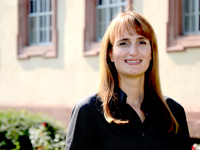 Kerstin Bach合作论文数Department of Computer and Information Science ,Faculty of Information Technology, Mathematics and Electrical Engineering9
 Klaus-Dieter Althoff合作论文数University of Hildesheim8
 Régis Newo合作论文数7Norman Ihle合作论文数6Martin Schaaf合作论文数4
 Mirjam Minor合作论文数Department of Computer Science, Goethe University of Frankfurt4Jens Mänz合作论文数4Meike Reichle合作论文数3
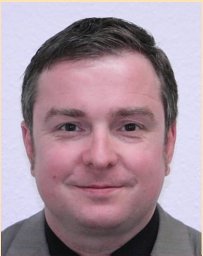 Bjorn Decker合作论文数Fraunhofer IESE2
 Jörg Rech合作论文数PayDevs UG;Techmap GmbH;Rech Ventures UG2Renate Gerstl合作论文数2
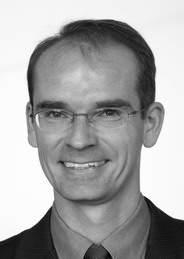 Markus Nick合作论文数Fraunhofer Institute for Experimental2Thomas Müller合作论文数1Klausdieter Althoff合作论文数University of Hildesheim1Jan-Oliver Deutsch合作论文数1Matthias Ringe合作论文数1Dagmar Monett Diaz合作论文数1
 Karl-Heinz Weis合作论文数Department of Computer Science, Universität Koblenz-Landau1Ralph Bergmann合作论文数Universitat Trier1
 Sebastian Müller合作论文数Faculty of Mathematics and Physics, Charles University1
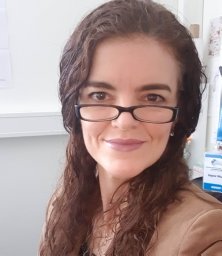 Dagmar Monett合作论文数Computer Science Department and Department of Cooperative Studies, Berlin School of Economics and Law, Berlin, Germany 103151




