• The first triple referendum in history of Lithuania as it asked to vote on amendment of three different articles -- 9, 47 and 147 -- of the Constitution of the Republic of Lithuania in one referendum question.• A real issue of referendum -- a ban of sale of agricultural land to foreigners in Lithuania. • A referendum without campaign led to invalid results. • A record-low turnout as only 15 percent of eligible electorate voted.• A failure of mainstream political parties to convince citizens that the whole referendum initiative had no clear rationale.
A number of recent research works have used supervised machine learning approaches with a bag-of-words to classify political texts –in particular, speeches and debates– by their ideological position, expressed with a party membership. However, our classification task is more complex due to the several reasons. First, we deal with the Lithuanian language which is highly inflective, has rich morphology, vocabulary, word derivation system, and relatively free-word-order in a sentence. Besides, we have more classes, as the Lithuanian Parliament consists of more party groups if compared to e.g. the European Parliament or the US Senate. Moreover, classes are not stable, because a considerable number of the Lithuanian parliamentarians migrate from one party group to another even within the same parliamentary term. In this research we experimentally investigated the influence of different pre-processing techniques and feature types on two datasets composed of the texts taken from two parliamentary terms. A classifier based on the bag-of-words and token bigrams interpolation gave the best results: i.e. it outperformed random and majority baselines by more than 0.13 points and achieved 0.54 and 0.49 accuracy on the 1st and the 2nd dataset, respectively. The error analysis revealed that the same confusion patterns stand for both datasets, besides, majority of these confusions can be explained on the basis of the ideological or pragmatic similarities between those party groups. DOI: http://dx.doi.org/10.5755/j01.itc.43.3.5871
We present the first statistical dependency parsing results for Lithuanian, a morphologically rich language in the Baltic branch of the Indo-European family. Using a greedy transition-based parser, we obtain a labeled attachment score of 74.7 with gold morphology and 68.1 with predicted morphology (77.8 and 72.8 unlabeled). We investigate the usefulness of different features and find that rich morphological features improve parsing accuracy significantly, by 7.5 percentage points with gold features and 5.6 points with predicted features. As expected, CASE is the single most important morphological feature, but virtually all available features bring some improvement, especially under the gold condition.
Despite many methods that effectively solve sentiment classification task for such widely used languages as English, there is no clear answer which methods are the most suitable for the languages that are substantially different. In this paper we attempt to solve Internet comments sentiment classification task for Lithuanian, using two classification approaches ‐ knowledge-based and supervised machine learning. We explore an influence of sentiment word dictionaries based on the different parts-of-speech (adjectives, adverbs, nouns, and verbs) for knowledge-based method; different feature types (bag-ofwords, lemmas, word n-grams, character n-grams) for machine learning methods; and pre-processing techniques (emoticons replacement with sentiment words, diacritics replacement, etc.) for both approaches. Despite that supervised machine learning methods (Support Vec
Despite the existence of effective methods that solve named entity recognition tasks for such widely used languages as English, there is no clear answer which methods are the most suitable for languages that are substantially different. In this paper we attempt to solve a named entity recognition task for Lithuanian, using a supervised machine learning approach and exploring different sets of features in terms of orthographic and grammatical information, different windows, etc. Although the performance is significantly higher when language dependent features based on gazetteer lookup and automatic grammatical tools (part-of-speech tagger, lemmatizer or stemmer) are taken into account; we demonstrate that the performance does not degrade when features based on grammatical tools are replaced with affix information only. The best results (micro-averaged F-score=0.895) were obtained using all available features, but the results decreased by only 0.002 when features based on grammatical tools were omitted.
Įvadas -- I. Esminės viesojo valdymo ir viesosios politikos koncepcijos. Viesojo valdymo samprata ir geras valdymas / Algis Krupavicius. Viesoji politika ir jos formavimas / Anželika Serikova. Viesasis valdymas ir sprendimų priėmimas / Ligita Sarkutė -- II. Viesojo valdymo kaitos veiksniai. Demokratija ir piliecių dalyvavimas / Rigita Tijūnaitienė. Nuo e. valdžios link e. valdymo: atvirumas, partnerystė ir demokratija / Diana Saparnienė. Lyderystė viesajame valdyme / Laima Liukinevicienė. Skaidrumas, administracinė diskrecija ir korupcija / Hendryk Malevski, Gintarė Satienė. Europos Sąjungos regioninė politika: socioekonominė ir teritorinė sanglauda / Henrikas Karpavicius -- III. Viesojo valdymo dimensijos. Strateginis valdymas viesajame sektoriuje / Teodoras Tamosiūnas. Žmogiskųjų isteklių valdymas / Vilma Tubutienė. Viesojo sektoriaus finansų valdymas / Dalia Rudytė. Regionų plėtra ir valdymas / Teodoras Tamosiūnas, Remigijus Ciegis. Vietos savivalda / Aistė Lazauskienė -- IV. Viesojo valdymo instrumentai. Viesojo ir privataus sektoriaus partnerystė / Kestutis Navickas. Viesojo sektoriaus projektų, programų ir portfelių valdymas / Alfredas Chmieliauskas, Aistė Pilkaitė. Rinkodaros sprendimai ir viesasis valdymas: vietos rinkodara / Milda Damkuvienė, Evandželina Petukienė, Rigita Tijūnaitienė. Nevyriausybinių organizacijų vaidmuo viesajame valdyme / Oksana Mejerė, Jurgita Mikolaitytė. Etikos vadyba viesojo sektoriaus organizacijose / Rita Toleikienė -- Summary -- Apie autorius
Citizen participation in decision-making is a key element in the understanding and practice of contemporary democracy. However, 'while there is agreement that citizens should play an informed and active role in the governance system, there is wide disagreement as to the forms and the extent that citizen participation should take' (Zimmerman, 1986, p. 1). In newer democracies, conventional forms of political participation are neither well established from a legal point of view nor deeply rooted in the political culture of these countries. Lithuania is not an exception to this rule. Protest and direct political actions has flourished in Lithuania especially in the early phases of democratization and the regime change. Two decades after the collapse of communism, direct-democratic instruments of law- and decision-making, as referendum, popular legislative initiative, local polls and so on, are legally recognized in the domestic political framework. However, the political impact of these instruments is highly questionable.
In den späten 1980er und frühen 1990er Jahren stellte Claus Offe fest, dass das postkommunistische Europa eine „dreifachen Transition“ erlebte: Demokratisierung, ökonomische Transition sowie der Prozess des State Building (Offe 1992, S. 14). Die baltischen Staaten stellen Beispiele für eine erfolgreiche demokratische Transition nach 1989 dar. Sie gehörten zu den ersten Republiken der ehemaligen Sowjetunion, die bereits Anfang 1988 durch die friedliche „Singenden Revolution“ Schritte in Richtung Demokratie unternahmen.Anders als andere Sowjetrepubliken konnten sie dabei an die erste Demokratisierungswelle der frühen 1920er Jahre anknüpfen, als sich dort demokratische politische Systeme etabliert hatten. Diese Erfahrung spielte eine wichtige Rolle während des Wiederaufbaus der Nationalstaaten in den frühen 1990er Jahren, vielfach wurde an Erfahrungen aus der Zwischenkriegszeit angeknüpft. Dies gilt auch für die Wahl- und Parteiensysteme, auf die der vorliegende Beitrag fokussiert. Der Verfassungsgebungsprozess in Litauen, Estland und Lettland veranschaulicht dabei die Bedeutung der Pfadabhängigkeit und des historischen Erbes für die Auswahl eines Wahlsystems und sogar die Form des Parteiensystems.
Despite the existence of many effective methods to solve topic classification tasks for such widely used languages as English, there is no clear answer whether these methods are suitable for languages that are substantially different. We attempt to solve a topic classification task for Lithuanian, a relatively resource-scarce language that is highly inflective, has a rich vocabulary, and a complex word derivation system. We show that classification performance is significantly higher when the inflective character of the language is taken into account by using character ngrams as opposed to the more common bag-of-words approach. These results are not only promising for Lithuanian, but also for other languages with similar properties. We show that the performance of classifiers based on character n-grams even surpasses that of classifiers built on stemmed or lemmatized text. This indicates that topic classification is possible even for languages for which automatic grammatical tools are not available. TITLE AND ABSTRACT IN LITHUANIAN Klasifikavimo į temas gerinimas stipriai kaitomoms kalboms Nepaisant to, jog tokioms placiai naudojamoms kalboms kaip anglų yra sukurta daug efektyvių metodų, sprendžiancių klasifikavimo į temas uždavinius, neaisku ar sie metodai yra tinkami visiskai skirtingoms kalboms. Siekiame isspresti klasifikavimo į temas uždavinį gana mažai isteklių sioje srityje turinciai lietuvių kalbai, kuri yra stipriai kaitoma, turi turtingą žodyną, sudėtingą žodžių darybos sistemą. Pademonstruosime, kad galima pasiekti ženkliai geresnius klasifikavimo rezultatus, kuomet atsižvelgiama į kaitomą kalbos pobūdį: naudojamos simbolių ngmamos vietoj labiau įprasto žodžių rinkinio. Gauti rezultatai perspektyvūs ne tik lietuvių kalbai, bet taip pat ir kitoms, panasiomis savybėmis pasižymincioms, kalboms. Pademonstruosime, kad klasifikatorių, naudojancių simbolių n-gramas veikimas netgi efektyvesnis, palyginus su klasifikatoriais, naudojanciais į žodžių kamienus arba lemas transformuotą tekstą. O tai reiskia, kad sį klasifikavimo į temas metodą galima taikyti netgi toms kalboms, kurios neturi specializuotų automatinių gramatinių įrankių.
European Journal of Political Research Political Data YearbookVolume 51, Issue 1 p. 187-200 Original Article Lithuania Algis Krupavicius, Algis Krupavicius Policy and Public Administration Institute, Kaunas University of Technology, LithuaniaSearch for more papers by this author Algis Krupavicius, Algis Krupavicius Policy and Public Administration Institute, Kaunas University of Technology, LithuaniaSearch for more papers by this author First published: 06 December 2012 https://doi.org/10.1111/j.2047-8852.2012.00021.xCitations: 3Read the full textAboutPDF ToolsRequest permissionExport citationAdd to favoritesTrack citation ShareShare Give accessShare full text accessShare full-text accessPlease review our Terms and Conditions of Use and check box below to share full-text version of article.I have read and accept the Wiley Online Library Terms and Conditions of UseShareable LinkUse the link below to share a full-text version of this article with your friends and colleagues. Learn more.Copy URL Share a linkShare onFacebookTwitterLinkedInRedditWechat Citing Literature Volume51, Issue1December 2012Pages 187-200 RelatedInformation
Magistro baigiamajame darbe atskleista savivaldybės institucinės struktūros samprata, apžvelgti savivaldybių institucijų teoriniai aspektai, bei remiantis Lietuvos ir užsienio autorių moksliniais darbais pateikta pagrindinių savivaldybės institucinės struktūros modelių analizė; apžvelgiama Lietuvos savivaldybių institucinės struktūros modelių kaita nuo 1990- 2003 m., trumpai apibūdinami ir analizuojami tuo laikotarpiu taikyti pagrindiniai vietos savivaldos modeliai. Pateikiami dabartinio modelio, taikomo nuo 2003 m. vasario 25 d. probleminiai aspektai. Darbe taip pat atlikta Europos Sąjungos salyse taikomų vietos savivaldos modelių analizė ir pateikiamos jų taikymo perspektyvos Lietuvoje. Kitas svarbus sio darbo aspektas– tiesioginių merų rinkimų aptarimas, privalumų ir trūkumų analizė. Taip pat pateikiami pasiūlymai dėl Lietuvoje taikytino vietos savivaldos modelio ir tiesioginių merų rinkimo formos. Atlikus savivaldybių institucinės struktūros modelių analize paaiskėjo, kad nėra vieno modelio, kuris būtų tinkamas visoms salims. Renkantis vietos savivaldos modelį reikia atsižvelgti į salies tradicijas, sukauptą įvairių institucinės struktūros modelių taikymo patirtį.%%%%The Master’s final thesis describes the concept of municipal institutional structure, overviews the theoretical aspects of the municipality authorities and analyses the main principal models of municipal institutional structure in accordance with scientific works of Lithuanian and foreign authors. Reviews the change of municipal institutional structure models of Lithuania during 1990- 2003 year, briefly defined and analyzed the main local government models during this time. Analyzed the issues of the current model. It is also analyzed the EU models and perspectives of their practice in Lithuania. Another important aspect of this work- discussion of the direct election of mayor, analysis of advantages and disadvantages. Suggestions is made for the applicable model and direct election of mayor. Research showed that there is no model which could be applicable to any state. The choice of institutional structure must be taken after analyse of national tradition and used institucional structure models.
 Diana Saparniene合作论文数13
 Zdenka Mansfeldova合作论文数12irina žalienė合作论文数12
 Erik Sootla合作论文数12Georg Sootla合作论文数12Andris Runcis合作论文数12Matej Kovacic合作论文数12Dobrinka Kostova合作论文数12Gabriela Ilonszki合作论文数12Katja Fettelschoss合作论文数12Ferdinand Mueller-Rommel合作论文数12jean blondel合作论文数12Darina Malová合作论文数Department of Political Science, Comenius University Bratislava12Alenka Krasovec合作论文数12laima liukinevicienė合作论文数10rimantas krankalis合作论文数10aistė lazauskienė合作论文数5laura ledžiūtė合作论文数5
 Teodoras Tamosiunas合作论文数5Jurgita Kapociute-Dzikiene合作论文数5hendryk malevski合作论文数4lina sapiegienė合作论文数2algimantas gaubas合作论文数2
 Krzysztof Jasiewicz合作论文数Washington & Lee Univ2Paul Lucardie合作论文数2
 Piero Ignazi合作论文数Univ Bologna2Irene Delgado Sotillos合作论文数2
 Dominic Fenech合作论文数2
 Jack Vowles合作论文数Department of Political Studies;University of Auckland;Department of Political Studies, University of Auckland2Peter Učeň合作论文数2
 Ingrid van Biezen合作论文数Leiden University2Juozas Matakas合作论文数2
 Thomas Poguntke合作论文数Instituts für Deutsches und Internationales Parteienrecht und Parteienforschung, Heinrich-Heine-Universität Düsseldorf2
 Gerrit Voerman合作论文数Documentation Center for Dutch Political Parties, University of Groningen2
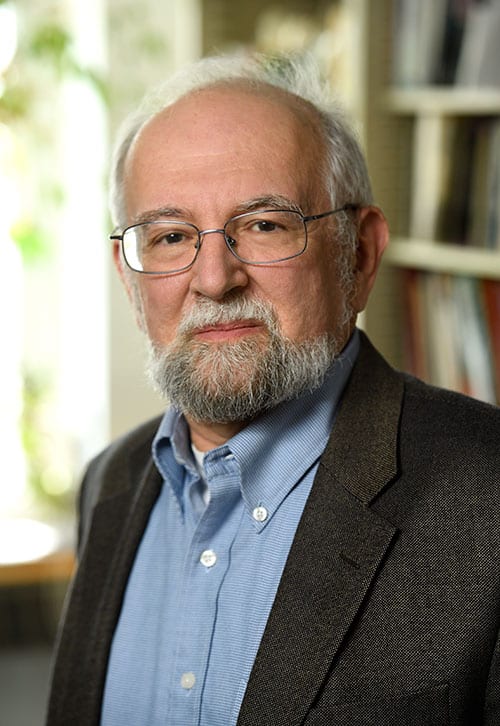 Richard S. Katz合作论文数Department of Political Science, Zanvyl Krieger School of Arts & Sciences, The Johns Hopkins University2C Ysmal合作论文数1JM Magone合作论文数1A Widfeldt合作论文数1LL Nieto合作论文数1OT Hardarson合作论文数1G Ilonszki合作论文数1S Kurtan合作论文数1Jueri Ruus合作论文数1gintarė satienė合作论文数1
 Irmina Matonyte合作论文数1vincas laurutis合作论文数1kestutis krisciūnas合作论文数1
 Olafur Þ. Harðarson合作论文数Fac Polit Sci, Univ Iceland1
 Gintare Vaznoniene合作论文数1




