The paper presents the numerical implementation of the state-variable model of the high current arc interruption.
Steep fronted transients such as switching surges can cause severe stress on motor turn insulation. Failure of many large ac motors in generating stations have been blamed on switching surges. The introduction of vacuum switchgear has caused particular concern since multiple surges can be generated in each switching operation. This project is aimed at determining the actual surge environment in typical power plants as well as the capability of modern turn insulation to withstand these surges. Laboratory work included studies of the surge distribution within the windings of eleven motor stators, the impulse strength measurements of fifty-three new coils and eighteen motor stators, and testing of vacuum interrupts from five manufacturers. Switching surges were measured on thirty-three motors in sixteen utility plants, covering over 700 normal switching operations. Analytical models for the motor supply system and the motor winding were developed, and validated against the measured results. Switching surges measured on the motors were significantly below the withstand strength of most utility motors. In normal motor switching operations, the risetimes and magnitudes of surges are similar for air-magnetic and vacuum breakers. Although deleterious surge levels cannot be totally ruled out for vacuum switchgear when interrupting motor starting current, it appearsmore » that voltage escalation is not a problem for modem vacuum devices applied as recommended by the breaker manufacturers. Practical guidelines are provided for improving motor reliability in new and existing motor installations and for analyzing premature motor failures.« less
Steep fronted transients such as switching surges can cause severe stress on motor turn insulation. Failure of many large ac motors in generating stations have been blamed on switching surges. The introduction of vacuum switchgear has caused particular concern since multiple surges can be generated in each switching operation. This project is aimed at determining the actual surge environment in typical power plants as well as the capability of modern turn insulation to withstand these surges. Laboratory work included studies of the surge distribution with the windings of eleven motor stators, the impulse strength measurements of fifty-three new coils and eighteen motor stators, and testing of vacuum interrupters from five manufacturers. Switching surges were measured on thirty-three motors in sixteen utility plants, covering over 700 normal switching operations. Analytical models for the motor supply system and the motor winding were developed, and validated against the measured results. Switching surges measured on the motors were significantly below the withstand strength of most utility motors. In normal motor switching operations, the risetimes and magnitudes of surges are similar for air-magnetic and vacuum breakers. Although deleterious surge levels cannot be totally ruled out for vacuum devices applied as recommended by the breaker manufacturers.
This paper discusses some computer graphics options useful for both computation and display of three-dimensional motions within buried high-voltage power transmission lines as they undergo temperature changes (load cycling).
This paper examines the simulation of the motion of three power cables (three-dimensional nonlinear beams) which are constrained to move within a pipe under thermal loads. The cables are represented by beam segments which are initially straight between modes; a bilinear constitutive equation is used and changing geometry is accomodated. An example is included. Applications to the pheneomenon of thermo-mechanical bending are covered.
Initiation of electrical treeing in polyethylene is discussed with the emphasis of a charge injection and extraction process, which is considered to feature the incubation period during which there are no apparently visual change and no detectable partial discharges. Some evidences for the process are shown by electrical, thermal and optical liberation of charge injected from a metal electrode into polyethylene. Effects of metal work functions on tree formation are demonstrated. On the basis of the above find- ings, a field emission and equi-energy theory is proposed for tree initiation and a derived V-t characteristic explains experimental results better than the common power law (t ¿V-n) for lifetime.
A physicist, wishing to make innovative contributions to the field of electric power delivery can approach the subject in at least two ways. He may familiarize himself with what his experienced engineering colleagues believe to be the barriers impeding progress and attempt to apply his talents to those areas closest to his personal expertise. Alternatively, he can acquaint himself with the overall functions and goals of transmission systems and attempt to devise quite new and different solutions to fulfill these functions and attain these goals, unimpeded by preconceived notions. Both approaches are considered.A power delivery system is described in a quite fundamental way, in terms of function rather than hardware so as to point up the limitations of present methods of energy transmission and hopefully stimulate thought on new methods.A spectrum of physical problems are cited which obstruct progress towards such goals as higher transmission efficiency, lessening of environmental intrusion and improving system reliability. Potential solutions ranging from solid state physics to plasma physics are discussed. The important area of materials, a traditional frontier in almost any circle of engineering, is examined.The point is made that a strong dialogue must be established between physicists and engineers if the essential relevance of their work is to be achieved.
 William R. Spillers合作论文数4t s lauber合作论文数3EP DICK合作论文数3russell eaton合作论文数2henry chu合作论文数2B. K. Gupta合作论文数2Greg C. Stone合作论文数2A. Narang合作论文数2
 B. A. Lloyd合作论文数2Mt Glinkowski合作论文数1Paul Stoving合作论文数1P. Pillai合作论文数1Kurtz, M.合作论文数1Dhirani, H.合作论文数1Cheung, R.W.合作论文数1
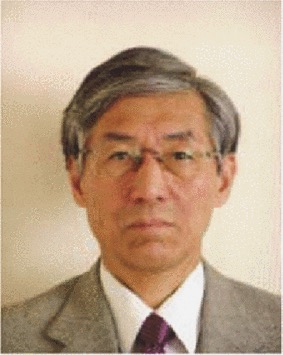 Toshikatsu Tanaka合作论文数Graduate School of Information, Production and Systems, Waseda University1
 Jason Anderson合作论文数The Edward S. Rogers Sr. Department of Electrical and Computer Engineering, Faculty of Applied Science and Engineering, University of Toronto1Wm.Randolph Franklin合作论文数Electrical, Computer, and Systems Engineering Dept, RPI1Thomas F. Garrity合作论文数1Ghaleb Wazzan合作论文数1W.R. Spillers合作论文数1John S Sullivan合作论文数1




