Flexible fibers at the microscopic scale, such as flagella and cilia, play essential roles in biological and synthetic systems. The dynamics of these slender filaments in viscous flows involve intricate interactions between their mechanical properties and hydrodynamic drag. In this paper, considering a 1D, planar, inextensible Euler-Bernoulli rod in a viscous fluid modeled by Resistive Force Theory, we establish the existence and uniqueness of solutions for the N-link model, a mechanical model, designed to approximate the continuous filament with rigid segments. Then, we prove the convergence of the N-link model's solutions towards the solutions to classical elastohydrodynamics equations of a flexible slender rod. This provides an existence result for the limit model, comparable to those by Mori and Ohm [Nonlinearity, 2023], in a different functional context and with different methods. Due to its mechanical foundation, the discrete system satisfies an energy dissipation law, which serves as one of the main ingredients in our proofs. Our results provide mathematical validation for the discretization strategy that consists in approximating a continuous filament by the mechanical N-link model, which does not correspond to a classical approximation of the underlying PDE.
This paper focuses on studying a model for dyneins, cytoskeletal motor proteins responsible for axonemal activity. The model is a coupled system of partial differential equations inspired by [F. Julicher and J. Prost, Cooperative molecular motors, Phys. Rev. Lett. 75 (1995) 2618-2621; F. Julicher and J. Prost, Molecular motors: From individual to collective behavior, Prog. Theor. Phys. Suppl. 130 (1998) 9-16] and incorporating two rows of molecular motors between microtubules filaments. Existence and uniqueness of a solution are proved, together with the presence of a supercritical Hopf bifurcation. Additionally, numerical simulations are provided to illustrate the theoretical results. A brief study on the generalization to N-rows is also included.
It has been recently shown that it is possible to design simple artificial swimmers at low Reynoldsnumber that possess only one degree of freedom and, nevertheless, can overcome Purcell's celebratedscallop theorem. One of the few examples is given by Montino and DeSimone, Eur. Phys. J. E, vol.38, 2015, who consider the three-sphere Swimmer of Najafi and Golestanian, replacing one active armwith a passive elastic spring. We further generalize this idea by increasing the number of springs andshow that it is possible to invert the swimming direction using the frequency of the single actuatedarm.
The modeling of the beating of cilia and flagella in fluids is a particularly active field of study, given the biological relevance of these organelles. Various mathematical models have been proposed to represent the nonlinear dynamics of flagella, whose motion is powered by the work of molecular motors attached to filaments composing the axoneme. Here, we formulate and solve a nonlinear model of activation based on the sliding feedback mechanism, capturing the chemical and configurational changes of molecular motors driving axonemal motion. This multiscale model bridges microscopic motor dynamics with macroscopic flagellar motion, providing insight into the emergence of oscillatory beating. We validate the framework through linear stability analysis and fully nonlinear numerical simulations, showing the onset of spontaneous oscillations. To make the analysis more comprehensive, we compare our approach with two established sliding feedback models.
We propose preconditioners for the Helmholtz scattering problems by a planar, disk-shaped screen in ℝ 3 . Those preconditioners are approximations of the square-roots of some partial differential operators acting on the screen. Their matrix-vector products involve only a few sparse system resolu- tions and can thus be evaluated cheaply in the context of iterative methods. For the Laplace equation ( i.e . for the wavenumber k = 0) with Dirichlet condition on the disk and on regular meshes, we prove that the preconditioned linear system has a bounded condition number uniformly in the mesh size. We further provide numerical evidence indicating that the preconditioners also perform well for large values of k and on locally refined meshes.
We use the Landau-de Gennes energy to describe a particle immersed into nematic liquid crystals with a constant applied magnetic field. We derive a limit energy in a regime where both line and point defects are present, showing quantitatively that the close-to-minimal energy is asymptotically concentrated on lines and surfaces nearby or on the particle. We also discuss regularity of minimizers and optimality conditions for the limit energy.
We consider a low Reynolds number artificial swimmer that consists of an active arm followed by $ N $ passive springs separated by spheres. This setup generalizes an approach proposed in Montino and DeSimone, Eur. Phys. J. E, vol. 38, 2015. We further study the limit as the number of springs tends to infinity and the parameters are scaled conveniently, and provide a rigorous proof of the convergence of the discrete model to the continuous one. Several numerical experiments show the performances of the displacement in terms of the frequency or the amplitude of the oscillation of the active arm.
The paper deals with the optimal control problem that arises when one studies the 4 sphere artificial swimmer at low Reynolds number. Composed of four spheres at the end of extensible arms, the swimmer is known to be able to swim in all directions and orientations in the 3D space. In this paper, optimal strokes, in terms of the energy expended by the swimmer to reach a prescribed net displacement, are fully described in the regime of small strokes. In particular, we introduce a bivector formalism to model the displacements that turns out to be elegant and practical. Numerical simulations are also provided that confirm the theoretical predictions.
Résumé. Le critère de Nyman–Beurling, équivalent à l’hypothèse de Riemann (HR), est un problème d’approximation dans l’espace des fonctions de carré intégrable sur (0 , ∞ ), par des dilatations de facteurs θ k ∈ (0 , 1), k ≥ 1, de la fonction partie fractionnaire. Prendre les θ k alétoires génère de nouvelles structures et de nouveaux critères. L’un d’eux est une condition suffisante pour HR qui revient à
Helmholtz wave scattering by open screens in 2D can be formulated as first-kind integral equations which lead to ill-conditioned linear systems after discretization. We introduce two new preconditioners in the form of square-roots of on-curve differential operators both for the Dirichlet and Neumann boundary conditions on the screen. They generalize the so-called “analytical” preconditioners available for Lipschitz scatterers. We introduce a functional setting adapted to the singularity of the problem and enabling the analysis of those preconditioners. The efficiency of the method is demonstrated on several numerical examples.
In this work we consider the Landau–de Gennes model for liquid crystals with an external magnetic field to model the occurrence of the Saturn ring effect under the assumption of rotational equivariance. After a rescaling of the energy, a variational limit is derived. Our analysis relies on precise estimates around the singularities and the study of a radial auxiliary problem in regions, where a continuous director field exists. Studying the limit problem, we explain the transition between the dipole and Saturn ring configuration and the occurence of a hysteresis phenomenon, giving a rigorous explanation of what was derived and simulated previously by [H. Stark, Eur. Phys. J. B 10, 311–321 (1999)].
In this paper we are interested in optimizing the shape of multi-flagellated helical microswimmers. Mimicking the propagation of helical waves along the flagella, they self-propel by rotating their tails. The swimmer's dynamics is computed using the Boundary Element Method, implemented in the open source Matlab library Gypsilab. We exploit a Bayesian optimization algorithm to maximize the swimmer's speeds through their shape optimization. Our results show that the optimal tail shapes are helices with large wavelength, such that the shape periodicity is disregarded. Moreover, the best propulsion speed is achieved for elongated heads when the swimmer has one or two flagella. Surprisingly, a round head is obtained when more flagella are considered. Our results indicate that the position and number of flagella modify the propulsion pattern and play a significant role in the optimal design of the head. It appears that Bayesian optimization is a promising method for performance improvement in microswimming.
Following the ideas of Zhikov and Piatnitski (Izv Math 70(1):19–67, 2006), and more precisely the stochastic two-scale convergence, this paper establishes a homogenization theorem in a stochastic setting for two nonlinear equations: the equation of harmonic maps into the sphere and the Landau–Lifschitz–Gilbert equation. These equations have strong nonlinear features, and in general their solutions are not unique.
This work investigates the Sparse Cardinal Sine Decomposition (SCSD) method ability to efficiently deal with a Stokes flow about a solid particle immersed in a liquid. In contrat to Alouges and Aussal (Numer Algorithms 70:1–22, 2015), the liquid domain is bounded by a solid and motionless wall. The advocated procedure inverts on the particle and truncated wall boundaries the boundary-integral equation governing the stress there. This is numerically achieved by implementing a Galerkin method. The resulting linear system, with fully-populated and non-symmetric influence matrix, is both compressed and solved by the new SCSD method which allows to accurately deal with a large number of unknowns. Both analytical and numerical comparisons are reported for a spherical particle and several bounded liquid domains. Moreover, the rigid-body motion of spheroidal particles settling in a cylindrical tube is examined.
The paper carries on our previous investigations on the complementary version of Purcell’s rotator (sPr3): a low-Reynolds-number swimmer composed of three balls of equal radii. In the asymptotic regime of very long arms, the Stokes-induced governing dynamics is derived, and then experimented in the context of energy-minimizing self-propulsion characterized in the first part of the paper.
Blind people can locate and track a sound source with remarkable efficiency. Following this principle, we have developed an autonomous embedded device capable of guiding people using a spatialized virtual sound source. In this device, we use both the information provided by an accurate and low-latency real-time location system (RTLS) and the head orientation data provided by a low-cost inertial unit (IMU) to produce in real-time spatialized sound by bin-aural filtering. The system described in this paper has been designed to minimize the overall latency for both the location system and the binaural audio rendering engine. It demonstrates that it is possible to guide people by tracking spatial sound accurately, naturally, and with minimal training.
We propose a novel method of localization based on low-cost continuous-wave unmodulated doppler microwave radar sensors. We use both velocity measures and distance estimations with RSS from radar sensors. We also implement a particle filter for real time localization. Experiments show that, with a reasonable initial estimate, it is possible to track the movements of a person in a room with enough accuracy for considering using this type of devices for monitoring a person or indoor guiding applications.
The numerical resolution of wave scattering problems by open curves leads to ill-conditioned linear systems which are difficult to precondition due to the geometrical singularities at the edges. We introduce two new preconditioners to tackle this problem respectively for Dirichlet or Neu-mann boundary data, that take the form of square roots of local operators. We describe an adapted analytical setting to analyze them and demonstrate the efficiency of this method on several numerical examples. A complete new pseudo-differential calculus suited to the study of such operators is postponed to the second part of this work.
Micron-scale swimmers move in the realm of negligible inertia, dominated by viscous drag forces. In this paper, we formulate the leading-order dynamics of a slender multi-link (N-link) microswimmer assuming small-amplitude undulations about its straight configuration. The energy-optimal stroke to achieve a given prescribed displacement in a given time period is obtained as the largest eigenvalue solution of a constrained optimal control problem. Remarkably, the optimal stroke is an ellipse lying within a two-dimensional plane in the (N - 1)-dimensional space of joint angles, where N can be arbitrarily large. For large N, the optimal stroke is a traveling wave of bending, modulo edge effects. If the number of shape variables is small, we can consider the same problem when the prescribed displacement in one time period is large, and not attainable with small variations of the joint angles. The fully nonlinear optimal control problem is solved numerically for the cases N = 3 (Purcell's three-link swimmer) and N = 5 showing that, as the prescribed displacement becomes small, the optimal solutions obtained using the small-amplitude assumption are recovered. We also show that, when the prescribed displacements become large, the picture is different. For N = 3 we recover the non-convex planar loops already known from previous studies. For N = 5 we obtain non-planar loops, raising the question of characterizing the geometry of complex high-dimensional loops.
We develop a device to guide blind people using binaural sound obtained by HRTF convolutions and reproduced by headphones. We have obtained good results in terms of user experience, but for guidance precision, the contribution of HRTFs compared to panning remained to be demonstrated. In this study, we design different binaural filters and we ask the subjects to orient themselves in the direction of a sound source. We compare their performances with two HRTFs and two panning filters, both for static and continuously moving sound sources. We show that HRTFs filtering allows the user to orient him/herself more precisely towards a sound source compared to a panning both in the static and the dynamic cases.
 Matthieu Aussal合作论文数18
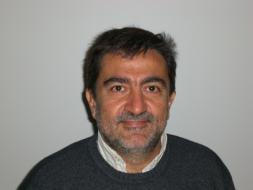 Antonio De Simone合作论文数Istituto di BioRobotica, Scuola Superiore Sant'Anna14Aline Lefebvre-Lepot合作论文数10
 Laetitia Giraldi合作论文数Centre de Mathématiques Appliquées de l'Ecole Polytechnique CMAP, Ecole Polytechnique9Sylvain Ferrand合作论文数6
 Giovanni Di Fratta合作论文数Dipartimento Matemat & Applicaz R Caccioppoli, Univ Napoli Federico II5
 Florian De Vuyst合作论文数Laboratoire MAS;Ecole Centrale de Paris;Laboratoire MAS, Ecole Centrale de Paris5
 Marta Zoppello合作论文数5A. DeSimone合作论文数4Benoît Merlet合作论文数Institut Galilée, université Paris 13,4
 David P. Levadoux合作论文数4E. Kritsikis合作论文数3Martin Averseng合作论文数3
 Emile Parolin合作论文数Institut Polytechnique de Paris3
 Luca Heltai合作论文数Mathematics Department, University of Pisa3Gérard Le Coq合作论文数3G. Le Coq合作论文数3
 Brian F. G. Katz合作论文数Institut Jean le Rond d'Alembert, Sorbonne University3Anne De Bouard合作论文数CNRS et Université Paris-Sud, Université Paris-Sud3E. Lorin合作论文数2Emmanuel Lorin合作论文数2Léa Nicolas合作论文数2Stantejsky Dominik合作论文数2Bd Coleman合作论文数2Oren Wiezel合作论文数2
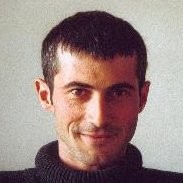 Antonin Chambolle合作论文数Paris-Dauphine (PSL) et CNRS2
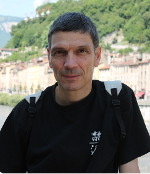 Andre Thiaville合作论文数Laboratoire de physique des Solid, Université Paris Sud2
 Yizhar Or合作论文数2
 Arnaud Debussche合作论文数Institut de recherche mathématique de Rennes, Université de Rennes 12
 Franck Pigeonneau合作论文数Laboratoire Surface du Verre et Interfaces, UMR125 CNRS/Saint-Gobain 39, Quai Lucien Lefranc, BP 135, F-93303 Aubervilliers cedex, France2Antoine Sellier合作论文数2Jean-Christophe Toussaint合作论文数NEEL2Jacques Miltat合作论文数2
 Liliana Buda-Prejbeanu合作论文数Grenoble INP-UGA;SPINTEC2
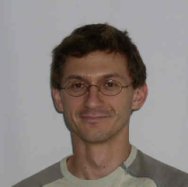 Christophe Audouze合作论文数CEA-DAM/DIF/DSSI/SNEC2J.M Garcı́a合作论文数1S. M. Mefire合作论文数1J. Laminie合作论文数1english french summaries合作论文数1jennifer bourguignonmirebeau合作论文数1J. Mathiaud合作论文数1Luca Berti合作论文数1
 Antoine Hocquet合作论文数1Marc Bakry合作论文数1
 Sylvain Faure合作论文数1Daniele Agostinelli合作论文数1
 Akash Choudhary合作论文数Inst Theoret Phys, Tech Univ Berlin1Sankalp Nambiar合作论文数Stockholm Univ1




