In rural communities basic human needs are essentially the same as in urban areas, so there should be no a priori expectation of differences in necessary community services. In a spatial or geographic sense, the demographic reality of low population density in rural areas means that potential demand for services delivered from discrete facilities is dispersed and that the provision of network services may be prohibitively expensive. Citizen opinion on service provision can influence decisions on services and their funding via a number of routes. Many would hold that community input on public service provision is appropriately effected by the election of community representatives to local government councils or authorities. A study in Canada, which set out to measure the preferences of residents for service improvements and cuts, employed an approach which may have application to the service provision dilemma in other rural communities.
Abstract Voluntarism has been portrayed as a productive and even transformative process whereby rural communities, households and older residents are able to meet the challenges of changing rural demographics. Yet, little attention has been paid to building a critical perspective on the complex and often-contested expectations placed on older rural volunteers. This paper focuses on the particular gap in understanding the contributions of older rural adults as a crucial resource in creating opportunities for aging in place and sustainable rural community development. Drawing on research into voluntarism in Canada’s aging resource communities, this paper presents qualitative findings from innovative ‘volunteer leadership biographies’ with older residents who were involved in key voluntary sector initiatives to improve community development. The findings show how older volunteer leadership is embedded in both place (residency) and time (life course), revealing new dimensions to the problem of understanding volunteer leadership in an era of rural population change.
This paper challenges traditional definitions of work and leisure as separate concepts by suggesting that a space where individuals engage in employment (paid work) can, at the same time, be a space of respite (leisure) for employees who are also family caregivers. The research aims to better understand what caregivers perceive as ideal respite space, what that space means to them, how the space where employment takes place fits that ideal and what forces restrict caregivers' ability to engage with employment as a space of respite. The term space is used because a caregiver's presence in a particular space (inside or outside of a place) gives it meaning that is simultaneously social, political and emotional. We report on a qualitative intrinsic case study of primary caregivers who are both employed and providing care to relatives with dementia. Using a reflective iterative process, 12 participants were recruited and interviewed from two Canadian provinces in 2013/14. Using a non-temporal view of respite facilitated the identification of employment as an important space for caregivers to experience effective respite. Although this connection has been noted by other scholars, our research goes beyond this to identify four forces that create challenges for caregivers who want to maintain engagement with employment as a space of respite. These forces are internalised socialisation, family and organisational pressures and government policy. In addition, this research is one of the first to suggest ways that caregivers resist these forces. In concluding remarks, we reflect on the limitations of the study and offer suggestions for further research aimed at elucidating the spatiality of caregiver respite and the complex and dynamic aspects of resistance.
Focusing on the embodied experiences of employed family caregivers of the elderly addresses important gaps in the geographical gerontology literature. In Canada, a rapidly aging population has made informal caregiving an increasingly important issue. Cuts in government funding, the increasing complexity of care and a shortage of health professionals have shifted responsibility for many aspects of eldercare from declining formal services to the 'community'–in other words, to families and friends. In North America, respite has long been the number one item on a family caregiver's 'wish list' of supports that are urgently needed. Even if caregivers do not hold internalized sexist beliefs, there are powerful forces in the employment sphere that make employment precarious for both female and male caregivers. In some cases caregivers have even been terminated because of their family commitment. The employment/respite space in which caregivers' bodies are situated has meaning that lies far beyond the boundaries of the four walls of a workplace.
This paper examines the evolving role of volunteers and the voluntary sector in shaping community responses to structural change in health care systems. It contributes to the emerging understanding of the different forms voluntarism can take within and among places, including as a space of resistance to contemporary restructuring initiatives such as regionalization. Within the geographies of voluntarism literature, however, little attention has been directed towards interrogating the local dynamics of such voluntarism, especially as it is reflected in public discourse. We address this deficiency through a media-based case study of public reaction to the recent implementation of Ontario's Local Health Integration Networks (a type of regional health authority). Specifically, we examine a decade of newspaper coverage in a mid-size Canadian city region to document and characterize how the activities of volunteers and voluntary sector organizations in the community are portrayed in light of the structural imperatives to integrate health care services and regionalize health care governance. The media findings reveal a suite of public concerns and related activities, with the voluntary sector called upon in various ways to defend the autonomy of the community against the perceived threats to local services, employment and vulnerable populations. We interpret the evident complexity of voluntary sector resistance as a form of 'defensive localism' and discuss implications for developing informed policy on health care restructuring and for advancing knowledge on the local geographies of voluntarism. (C) 2016 Elsevier Ltd. All rights reserved.
The last 40 years has seen a significant shift from state commitment to asylum-based mental health care to a mixed economy of care in a variety of locations. In the wake of this deinstitutionalisation, attention to date has focussed on users and providers of care. The consequences for the idea and fabric of the psychiatric asylum have remained 'stones unturned'. This book address an enduring yet under-examined question: what has become of the asylum? Focussing on the 'recycling' of both the idea of the psychiatric asylum and its sites, buildings and landscapes, this book makes theoretical connections to current trends in mental health care and to ideas in cultural/urban geography. The process of closing asylums and how asylums have survived in specific contexts and markets is assessed and consideration given to the enduring attraction of asylum and its repackaging as well as to retained mental health uses on former asylum sites, new uses on former sites, and interpretations of the derelict psychiatric asylum. The key questions examined are the challenges posed in seeking new uses for former asylums, the extent to which re-use can transcend stigma yet sustain memory and how location is critical in shaping the future of asylum and asylum sites
Resource-dependent communities in hinterland regions of Australia, Canada and elsewhere are rapidly aging, yet many features that distinguish them (e.g., geographic remoteness, small populations, infrastructure built with younger persons in mind) also pose significant challenges for healthy aging. These challenges can lead to substantial gaps in access to formal health and social services, with negative implications for older residents aging-in-place and the development aspirations of resource frontier communities. In this paper, we explore the efforts of voluntary sector leaders to transform resource communities into more livable and supportive places for older adults. We offer a case study of two small towns in Canada׳s aging resource frontier; one forestry-dependent and the other dependent on coal mining. Our findings suggest that place integration develops through volunteer work and explains how voluntarism works as both a process and outcome of 'placemaking'. We argue that greater attention to place integration is needed to bring into focus the transformative potential of the voluntary sector in creating supportive and sustainable environments for healthy aging.
This article addresses the implications of resource frontier aging with a particular emphasis on understanding the role of the voluntary sector in supporting older people living in resource hinterland regions, and in sustaining economic and social development in their communities. Informed by recent calls for greater attention to the diverse experiences of rural aging, individually and collectively, and drawing on previous research on voluntarism in aging rural communities and on community development in Canada's resource hinterland, we conceptualize voluntarism as a multifaceted process that both shapes and is shaped by the interactions between older people and aging places. We articulate an approach for interrogating initiatives that link voluntarism, aging, and community development together, and present findings from an exploratory analysis of local media from two resource towns in northern British Columbia to identify and describe the interrelationship between voluntary sector activities in support of community development and those in support of aging in place. The findings provide evidence of the multiple, nuanced, and reciprocal ways in which voluntarism creates and reinforces the connections between aging and community development, often via the leadership and participation of older residents. Avenues for further research aimed at developing an in-depth understanding of voluntarism as a potentially transformative process in resource frontier communities are discussed.ResumeCet article a pour objet d'etudier les consequences du << vieillissement dans les regions ressources eloignees >> et s'interesse tout particulierement au role du benevolat a la fois dans le soutien aux personnes agees vivant dans des regions ressources de l'arriere pays et dans l'essor du developpement economique et social au sein de leurs communautes. S'inspirant des appels recents visant a porter davantage attention a la diversite des experiences du vieillissement rural autant sur les plans individuels que collectifs et tirant parti des travaux de recherche sur le benevolat dans les communautes rurales vieillissantes et sur le developpement communautaire dans les regions ressources de l'arriere pays du Canada, le concept du benevolat que nous avons elabore renvoie a un processus aux multiples dimensions qui faconne et est faconne par les interactions entre les personnes agees et les lieux vieillissants. Notre demarche est definie dans le but de sonder des initiatives qui integrent le benevolat, le vieillissement et le developpement communautaire. Les constats que nous degageons d'une etude exploratoire menee sur les medias locaux dans deux villes ressources du nord de la Colombie-Britannique permettent d'identifier et de decrire les relations entre les activites du secteur benevole qui soutiennent le developpement communautaire et celles qui soutiennent le vieillissement sur place. Ces constats revelent que le benevolat participe de multiples facons et de maniere nuancee et reciproque a la creation et au renforcement des liens etablis entre le vieillissement et le developpement communautaire qui resultent souvent de la prise en charge par des residents plus ages eux-memes. L'article se termine par des elements de reflexion pour orienter les nouvelles recherches en vue de contribuer a l'approfondissement de nos connaissances sur le benevolat en tant que processus de transformation possible dans les communautes ressources eloignees.
 Robin Kearns合作论文数Faculty of Science, University of Auckland16
 Graham Moon合作论文数Institute for the Geography of Health, University of Portsmouth15
 Mark Skinner合作论文数Department of Geography, School of the Environment, Trent University12
 John Smithers合作论文数Univ Guelph9
 Barry Smit合作论文数Department of Geography, Environment and Geomatics, College of Social & Applied Human Sciences, University of Guelph7
 Lex Chalmers合作论文数5
 Neil T. Hanlon合作论文数Department of Geography, Queen's University5A.I.(Lex) Chalmers合作论文数5
 Bonnie C. Hallman合作论文数5Philip D. Keddie合作论文数5Greg Halseth合作论文数4
 Laura Ryser合作论文数4
 Richard Bedford合作论文数University of Waikato3Rachel V Herron合作论文数2
 Denise Suzanne Cloutier合作论文数2
 Michael Webber合作论文数McMaster University2A. I. Chalmers合作论文数2Jacqueline Lidgard合作论文数2
 Gillian M Joseph合作论文数2Peter R. Bantock合作论文数2lawrence john boeckh合作论文数1alison poyner合作论文数1
 zhijian yang合作论文数1C DUNCAN合作论文数1antonio caballer miedes合作论文数Dept Dev Educ & Social Psychol & Methodol, Univ Jaume 11
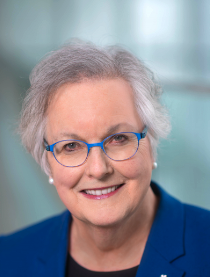 Anne Martin-Matthews合作论文数Department of Sociology, Faculty of Arts, The University of British Columbia1Gregory G Freeman合作论文数1
 Jae-Sung Rieh合作论文数High Speed Integrated Systems Lab, School of Electrical Engineering, Korea University1David R. Phillips合作论文数Lingnan University1Helen Flynn合作论文数1S Gleave合作论文数1Ross Barnett合作论文数1
 Ann Forsyth合作论文数Department of Urban Planning and Design, Harvard University;Graduate School of Design, Harvard University1
 Christopher Robin Bryant合作论文数Département de Géographie, Université de Montréal1
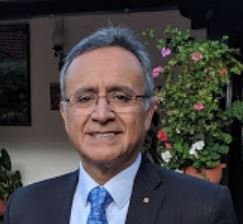 Fernando Guarin合作论文数ibm1R.Grant Hollett合作论文数1Jeremy Lamarche合作论文数1Quentin Chiotti合作论文数Air Programme Director1Basanth Jagannathan合作论文数1G. Brent Hall合作论文数Esri Canada;Toronto Metropolitan University;OCAD University1Richard G. Kuhn合作论文数1
 David Connell合作论文数1Matthew Armstrong合作论文数1
 David B. Knight合作论文数Guelph College of Social Sciences, University of Guelph1
 Caroline Knowles合作论文数Sociology at Goldsmiths1Denise Cloutier-Fisher合作论文数1




