The development of noble metal-free catalysts capable of electrochemically converting carbon dioxide (CO 2 ) selectively into value added compounds remains one of the central challenges in sustainable energy science. Here, we present a systematic study of Fe(II) complexes of the functionalized ligands bpy R PY2Me (bpyPY2Me = 6-(1,1-di(pyridin-2-yl)ethyl)-2,2′-bipyridine) in pursuit of water-stable molecular Fe complexes that are selective for the catalytic formation of CO from CO 2 . Taking advantage of the inherently high degree of tunability of this ligand manifold, we followed a bio-inspired approach by installing protic functional groups of varying acidities (–H, –OH, –OMe, –NHEt, and –NEt2) into the ligand framework to systematically modify the second coordination sphere of the Fe center. This family of [(bpy R PY2Me)Fe(II)] complexes was characterized using single-crystal X-ray analysis, 1H NMR spectroscopy, and mass spectrometry. Comparative catalytic evaluation of this set of compounds via voltammetry and electrolysis experiments identified [(bpy NHEt PY2Me)Fe] 2+ in particular as an efficient, iron-based, non-heme CO 2 electro-reduction catalyst that displays significant selectivity for the conversion of CO 2 to CO in acetonitrile solution with 11 M H 2 O. We propose that the NH group acts as a local proton source for cleaving the C–O bond in CO 2 to form CO. Interestingly, the complex with the most acidic functional group in the second coordination sphere, [(bpy OH PY2Me)Fe] 2+ , favors formation of H 2 over CO. Our results correlate the selectivity of water versus carbon dioxide reduction to the acidity of the second coordination sphere functional group and emphasize the continued untapped potential that synthetic molecular chemistry offers in the pursuit of next-generation CO 2 reduction electrocatalysts.
The catalytic hydroboration of ketones, aldehydes, and imines with pinacol borane and Ni(bpy)(cod) has been demonstrated in benzene at room temperature and low catalyst loadings (0.03-0.3 mol-%). Spectroscopic and structural evidence support the formulation of Ni(bpy)(cod) as containing a NiI cation and a bpy(center dot-) ligand. The Ni(bpy)(cod) complex reacts quickly with ketonic substrates to form an adduct that appears to function as an entryway into catalytic activity.
The title reaction is investigated under NMR conditions resulting in the formation of products from the hydroboration of the C=O and C=N bond.
An entry from the Cambridge Structural Database, the world’s repository for small molecule crystal structures. The entry contains experimental data from a crystal diffraction study. The deposited dataset for this entry is freely available from the CCDC and typically includes 3D coordinates, cell parameters, space group, experimental conditions and quality measures.
An entry from the Cambridge Structural Database, the world’s repository for small molecule crystal structures. The entry contains experimental data from a crystal diffraction study. The deposited dataset for this entry is freely available from the CCDC and typically includes 3D coordinates, cell parameters, space group, experimental conditions and quality measures.
Although we can efficiently convert bioderived furans into linear alkanes, the most energy-intensive step in this approach is the hydrodeoxygenation of the intermediate polyketone. To fully understand this process, we have examined the hydrodeoxygenation of a model compound, 3-pentanone, which allows us to follow this process stepwise using Pd/C, H-2 (200 psi), and La(OTf)(3) in acetic acid to remove the oxygen atom at temperatures between 25 and 200 degrees C. We have found that ketone reduction to an alcohol is followed by acetoxylation, which provides a more facile route to C-O bond cleavage relative to the parent alcohol.
Numerous visible-light absorbing homogeneous photocatalytic compositions are shown to produce copious amounts of hydrogen gas from pure water.
The ubiquity of vanadium oxo complexes in the V+ and IV+ oxidation states has contributed to a comprehensive understanding of their electronic structure and reactivity. However, despite being predicted to be stable by ligand-field theory, the isolation and characterization of a well-defined terminal mononuclear vanadium(III) oxo complex has remained elusive. We present the synthesis and characterization of a unique terminal mononuclear vanadium(III) oxo species supported by the pentadentate polypyridyl ligand 2,6-bis[1,1-bis(2-pyridyl)ethyl]pyridine (PY5Me2). Exposure of [VII(NCCH3)(PY5Me2)]2+ (1) to either dioxygen or selected O-atom-transfer reagents yields [VIV(O)(PY5Me2)]2+ (2). The metal-centered one-electron reduction of this vanadium(IV) oxo complex furnishes a stable, diamagnetic [VIII(O)(PY5Me2)]+ (3) species. The vanadium(III) oxo species is unreactive toward H- and O-atom transfer but readily reacts with protons to form a putative vanadium hydroxo complex. Computational results predict that further one-electron reduction of the vanadium(III) oxo species will result in ligand-based reduction, even though pyridine is generally considered to be a poor π-accepting ligand. These results have implications for future efforts toward low-valent vanadyl chemistry, particularly with regard to the isolation and study of formal vanadium(II) oxo species.
The pentapyridine cobalt complex [Co(PY5Me2)]2+ and its congeners have been shown to catalyze proton reduction to hydrogen in aqueous solution over a wide pH range using electrical or solar energy input. Here, we employ electrochemical and spectroscopic studies to examine the mechanisms of proton reduction by this parent complex under soluble, diffusion-limited conditions in acetonitrile with acetic acid as the proton donor. Two pathways for proton reduction are identified via cyclic voltammetry: one pathway occurring from an acetonitrile-bound CoII/I couple and the other pathway operating from an acetate-bound CoII/I couple. Kinetics studies support protonation of a CoI species as the rate-determining step for both processes, and additional electrochemical measurements further suggest that the onset of catalysis from the acetonitrile-bound CoII/I couple is highly affected by catalyst electronics. Taken together, this work not only establishes the CoPY5Me2 unit as a unique molecular platform that catalyzes the reduction of protons under soluble, diffusion-limited conditions in both aqueous and organic media, but also highlights the participation of anation processes that are likely relevant for a wide range of hydrogen-producing and related catalytic systems.
The synthesis and characterization of a series of manganese nitrides in a tripodal chelating tris(carbene) ligand framework is described. Photolysis of [(TIMENxyl)Mn(N-3)](+) (where TIMENxyl = tris[2-(3-xylylimidazol-2-ylidene)ethyl]amine) yields the isolable molecular Mn-IV nitride, [(TIMENxyl)Mn(N)](+). Spectroscopic and DFT studies indicate that this Mn-IV d(3) complex has a doublet electronic ground state. The metal-centered one-electron oxidation of this Mn-IV species results in formation of the pentavalent Mn-V nitride, [(TIMENxyl))Mn(N)](2+). Unlike previously reported, tetragonal Mn-V nitrides with a d(2), nonmagnetic S = 0 ground state, this trigonal bipyramidal complex has a triplet ground state S = 1. One-electron reduction of [(TIMENxyl)Mn(N)](+) produces the neutral, nonmagnetic trivalent [(TIMENxyl)Mn(N)] species with a d(4) low-spin, S = 0, ground state.
We previously reported a preliminary mechanistic study of aerobic Cu(OAc)(2)-catalyzed methoxylation of 4-tolylboronic ester (King, et al. J. Am. Chem. Soc., 2009, 131, 5044-5045), which revealed that aryl transmetalation from the boronic ester to Cu(II) is the turnover-limiting step. In the present study, more-thorough kinetic and spectroscopic studies provide additional insights into transmetalation pathway and the identity of the Cu(II) catalyst resting state(s). EPR spectroscopic studies show that at least two copper(II) species are present under catalytic conditions and their relative populations vary as a function of reaction time and acidity of the arylboronic ester, and are influenced by addition of acetic acid or acetate to the reaction mixture. Analysis of kinetic data and (11)B NMR and EPR spectra under diverse reaction conditions suggests that aryl transmetalation occurs from a tetracoordinate, anionic boronate to a cationic Cu(II) species, mediated by a methoxide-bridge.
Recent studies have highlighted the ability of Cu(II) to catalyze the aerobic oxidative functionalization of C-H bonds; however, very little is known about the mechanisms of these reactions. Here, we describe the Cu(II)-catalyzed C-H methoxylation and amidation of a macrocylic arene substrate with O(2) as the stoichiometric oxidant. Kinetic and in situ spectroscopic studies demonstrate the involvement of three different oxidation states of Cu in the catalytic mechanism, including an aryl-Cu(III) intermediate. These observations establish a novel mechanistic pathway that has implications for numerous other Cu-catalyzed aerobic oxidation reactions.
A series of aryl–copper(III)-halide complexes have been synthesized and characterized by NMR and UV-visible spectroscopy, cyclic voltammetry and X-ray crystallography. These complexes closely resemble elusive intermediates often invoked in catalytic reactions, such as Ullmann–Goldberg cross-coupling reactions, and their preparation has enabled direct observation and preliminary characterization of aryl halide reductive elimination from CuIII and oxidative addition to CuI centers. In situ spectroscopic studies (1H NMR, UV-visible) of a Cu-catalyzed C–N coupling reaction provides definitive evidence for the involvement of an aryl-copper(III)-halide intermediate in the catalytic mechanism. These results provide the first direct observation of the CuI/CuIII redox steps relevant to Ullmann-type coupling reactions.
 Christopher J. Chang合作论文数College of Chemistry, University of California, Berkeley;Department of Molecular and Cell Biology, University of California, Berkeley;Princeton University8
 Andrew Sutton合作论文数Department of Chemistry, University of California, Davis8
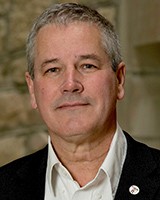 John R. Gordon合作论文数Department of Medicine, College of Medicine, University of Saskatchewan7
 Michael Nippe合作论文数Department of Chemistry;University of Wisconsin-Madison;Department of Chemistry, University of Wisconsin-Madison7
 Shannon S. Stahl合作论文数Department of Chemistry, College of Letters & Science, University of Wisconsin-Madison6
 Jeffrey R. Long合作论文数College of Chemistry, University of California, Berkeley;Materials Sciences Division, Lawrence Berkeley National Laboratory5
 Smythe Nathan C合作论文数3Brian L. Scott合作论文数Los Alamos National Laboratory3Chantarojsiri Teera合作论文数Department of Chemistry, University of California3
 Eckhard Bill合作论文数Max Planck Institute for Chemical Energy Conversion3
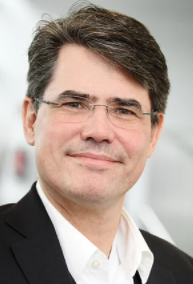 Frank Neese合作论文数Max-Planck-Institut fur Kohlenforschung3
 Thomas Brunold合作论文数Department of Chemistry, College of Letters & Science, University of Wisconsin–Madison3Curtis A. Wray合作论文数3Neil J. Henson合作论文数Div Theoret, Los Alamos Natl Lab3
 David Z Zee合作论文数These authors contributed equally.2
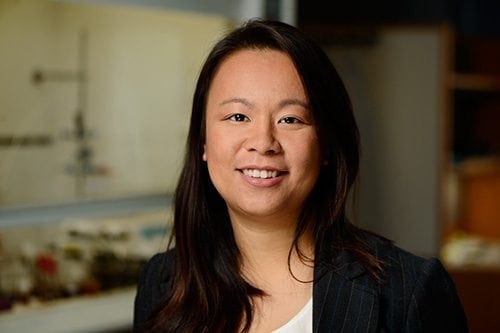 V. Sara Thoi合作论文数Department of Chemistry, Krieger School of Arts & Sciences, Johns Hopkins University2Stieber S Chantal E合作论文数2
 Rony S. Khnayzer合作论文数Department of Liberal Studies, School of Arts and Sciences, Lebanese American University;Department of Natural Sciences, Lebanese American University2
 El Roz Karim A合作论文数2
 Miquel Costas合作论文数IQCC Institut de Química Computacional i Catàlisi, Facultat de Ciències, Universitat de Girona2
 Stosh A. Kozimor合作论文数Office of Science, Los Alamos National Laboratory;Chemistry Department, Colorado School of Mines2
 Jonah W. Jurss合作论文数2
 Mihail Atanasov合作论文数MPI fur Kohlenforschung2Alicia Casitas合作论文数2
 Xavi Ribas合作论文数CSIC, Institut de Ciència de Materials de Barcelona2Ruilian Wu合作论文数Los Alamos National Laboratory2Ty J. Brooks合作论文数1
 Henning Kropp合作论文数1
 Enrique R. Batista合作论文数Center for Nonlinear Studies, Los Alamos National Laboratory1
 Karsten Meyer合作论文数Department of Chemistry and Pharmacy, Friedrich-Alexander-Universität Erlangen-Nürnberg1Ajay Singh合作论文数1
 Sachi Krishnamurthy合作论文数Dept Phys, Univ Texas Dallas1Yonghui Tian (田永辉)合作论文数School of Physical Science and Technology Lanzhou University1Bigi Julian P合作论文数1
 Kyle M. Lancaster合作论文数Department of Chemistry and Chemical Biology, The College of Arts and Sciences, Cornell University1Ryland Bradford L合作论文数Department of Chemistry, University of Wisconsin-Madison1
 Peter Lurz合作论文数1
 Jennifer Hollingsworth合作论文数Los Alamos National Laboratory1
 Serena DeBeer合作论文数Max Planck Institute for Chemical Energy Conversion1
 Luis Santamaría合作论文数Estacion Biologica de Donana, Consejo Superior de Investigaciones Cientificas1
 Fraser Waldie合作论文数1
 Teodor Parella合作论文数Autonomous University of Barcelona1
 Andy J. Green合作论文数Estación Biológica de Doñana1
 Christina J Hanson合作论文数1
 Phil Castellano合作论文数Department of Chemistry, College of Sciences, North Carolina State University1Lauren M. Huffman合作论文数1
 Han Htoon合作论文数Center for Integrated Nanotechnologies, Los Alamos National Laboratory1




