This paper presents a comprehensive human modelling and simulation environment. This environment, called Santos (TM), is a new generation of digital human simulation systems that allows a user to interact with a digital character with full and accurate biomechanics and a complete muscular system, subject to the laws of physics. Major results in the areas of dynamic motion prediction, advanced posture prediction and comfort level assessment, physiology model, modelling of clothing and muscle wrapping and force assessment will be presented. This paper will feature the various modules that comprise the Santos environment.
Large-scale eddies are turbulent features of open channels that advect along the direction of the mean flow in a streamwise rolling motion and comprise the entire flow depth. In order to advance the understanding of large-scale eddies, it is increasingly important to make measurements on a large scale test section or in a river reach. The objective of this research was to measure characteristics of large-scale eddies using large scale particle image velocimetry (LSPIV) for the first time. A gravel-bed flume was chosen in order that the LSPIV technology could be applied for an environment where the eddies were known to exist. LSPIV was used to make free-surface velocity measurements in the flume for quasi-steady, uniform flow. After removing erroneous LSPIV measurements due to light reflections and inadequate seed concentrations, turbulence decomposition via the triple decomposition theorem was used to isolate the large-scale eddies from the small-scale bursting derived eddies. Visual inspection of the decomposed data, coupled with quantitative analyses of the statistical moments of the decomposed velocity and evaluation of the velocity spectrum, were used to objectively choose a decomposition time-step. The decomposed data was visualized and characteristics of the large-scale eddies were measured. LSPIV data showed that the eddy length of the large-scale eddies was approximately 4H, agreeing with past research. The large-scale eddies were not fully organized within the flow. The eddies propagated downstream as long-lived stable structures throughout the test section. Future research of the large-scale eddies is needed under a wide range of conditions, and LSPIV is expected to help serve this need in both large scale laboratory investigations and in the field under a range of bed conditions and flow conditions.
: The objective of this paper is to present our method of predicting and simulating visually realistic and dynamically consistent human stair-climbing motion. The digital human is modeled as a 55-degrees of freedom branched mechanical system with associated human anthropometry-based link lengths, mass moments of inertia, and centers of gravity. The joint angle profiles are determined using a B-spline-based parametric optimization technique subject to different physics-based, task-based, and environment-based constraints. The formulation offers the ability to study effects of the magnitude and location of external forces on the resulting joint angle profiles and joint torque profiles. Several virtual experiments are conducted using this optimization-based approach and results are presented.
motions of Santos(TM) human model. An alternative and efficient formulation of the Zero-Moment Point (ZMP) for dynamic balance and the approximated ground reaction forces/moments are derived from the resultant reaction loads, which includes the gravity, the externally applied loads, and the inertia. The optimization problem is formulated to address the redundancy of the human task, where the general biped and the task-specific constraints are imposed depending on the task requirements. The proposed method is fully predictive and generates physically feasible human-like motions from scratch without any input reference from motion capture or animation. The resulting generated motions demonstrate how a human reacts effectively to different external load conditions in performing a given task by showing realistic features of cause and effect.
This paper presents newly developed capabilities for the virtual human Santos. Santos is an avatar that has extensive modeling and simulation features. It is a digital human with 109 degrees of freedom (DOF), an optimization-based method, predictive dynamics, and realistic human appearance. The new capabilities include (1) significant progress in predictive dynamics (walking and running), (2) advanced clothing modeling and simulation, (3) muscle wrapping and sliding, and (4) hand biomechanics. With these newly developed functionalities, Santos can simulate various dynamic tasks such as walking and running, investigate clothing restrictions to motion such as joint limits and torques, simulate the musculoskeletal system in real time, predict hand injury by monitoring the joint torques, and facilitate vehicle interior design. Finally, additional on-going projects are summarized.
This paper presents work from an ongoing project towards developing a new generation of virtual human models that are highly realistic in appearance, movement, and feedback. Santos™, an anatomically correct human model with more than 100 degrees of freedom, is an avatar that exhibits extensive modelling and simulation capabilities, resides in a virtual environment, and conducts human-factors analysis. The paper presents an optimisation-based approach to posture and motion prediction that allows the avatar to operate with autonomy rather than depending on stored animations and data or being restricted by inverse kinematics. It also presents approaches to determining reach envelopes and workspace zone differentiation, and discusses methods for evaluating the physiological status of the virtual human as it completes tasks. Muscle modelling including muscle wrapping, muscle force and stress determination is also discussed. Finally, the process of building a 25-DOF hand model is described. The result is an exciting step towards a virtual human that is more extensive and complete than any other.
This paper presents new capabilities of the virtual-human Santos introduced last year. Santos is an avatar that has extensive modeling and simulation features. It is a digital human model with over 100 degrees-of-freedom (DOF), where the hand model has 25 DOF, direct optimization-based method, and real-human like appearance. The newly developed analysis includes (1) a 25-DOF hand model that is the first step to study hand grasping; (2) posture prediction advances such as multiple end-effectors (two arms, two arms + head + legs), real-time inverse kinematics for posture prediction for any points, vision functionality; (3) dynamic motion prediction with external loads; and (4) musculosteletal modeling that includes determining muscle forces, and muscle stress. With these newly developed capabilities Santos can be used to test the joystick design, study grasping, facilitate vehicle interior design, test visibility for product design, predict correct dynamic motion or posture subject to external loads, and investigate muscle forces, and muscle stress. Finally, additional ongoing projects are summarized.
This paper presents new capabilities of the virtual-human Santos introduced last year. Santos is an avatar that has extensive modeling and simulation features. It is a digital human model with over 100 degrees-of-freedom (DOF), where the hand model has 25 DOF, direct optimization-based method, and real-human like appearance. The newly developed analysis includes (1) a 25-DOF hand model that is the first step to study hand grasping; (2) posture prediction advances such as multiple end-effectors (two arms, two arms + head + legs), real-time inverse kinematics for posture prediction for any points, vision functionality; (3) dynamic motion prediction with external loads; and (4) musculosteletal modeling that includes determining muscle forces, and muscle stress. With these newly developed capabilities Santos can be used to test the joystick design, study grasping, facilitate vehicle interior design, test visibility for product design, predict correct dynamic motion or posture subject to external loads, and investigate muscle forces, and muscle stress. Finally, additional ongoing projects are summarized.
This paper presents a comprehensive human modeling and simulation environment under development by the University of Iowa Virtual Soldier Research (VSR) program. This environment, called Santos TM , is a new generation of digital human simulation systems that allows for a user to interact with a digital character with full and accurate biomechanics and a complete muscular system, subject to the laws of physics. Highlighting major results in the areas of dynamic motion prediction, modeling of clothing, modeling of muscle activation and loading, and the Santos intuitive interface will be presented. This paper will feature the various modules that comprise the Santos environment.
Design and analysis of a multi-fingered hand prosthesis is presented. The hand has multi-actuated fingers, four with two joints and the thumb with three joints. Each joint is designed using a novel flexible mechanism based on the loading of a compression spring in both transverse and axial directions and using cable-conduit systems. The rotational motion is transformed to tendon-like behavior, which enables the location of the actuators far from the arm (e.g., on a belt around the waist). The forward kinematics of the mechanism is presented. It is shown that the solution of the transverse deflection of each finger segment is obtained in a general form through a Haringx model followed by an element stiffness model. A prototype finger is experimentally tested, results verified, and the hand prosthesis is built. This new design, while presents a low cost alternative, enables the actuation and control of a multi-fingered hand with relatively high degrees of freedom.
 Jasbir S. Arora合作论文数Seamans Center for the Engineering Arts and Sciences, College of Engineering, The University of Iowa9
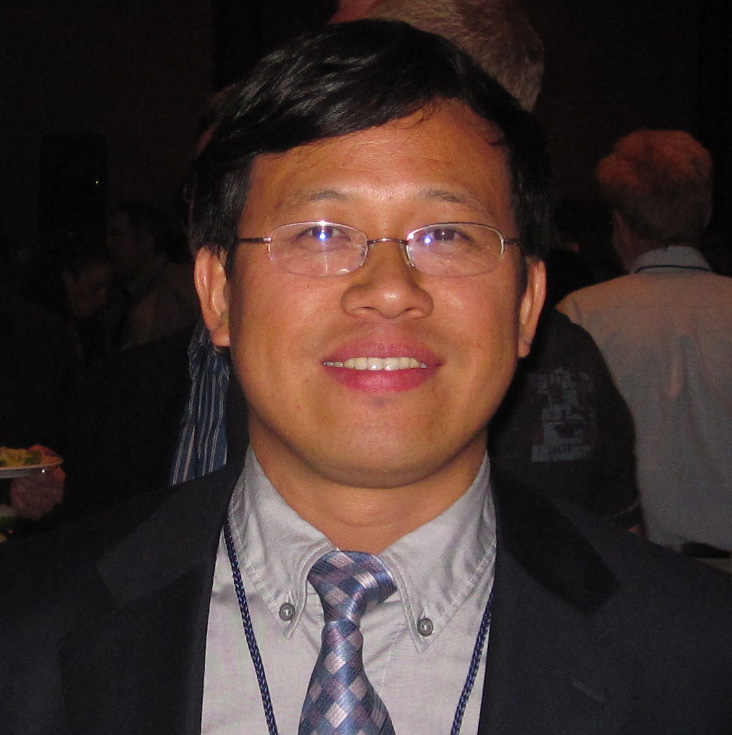 James Yang合作论文数Human-Centric Design Research Laboratory, Department of Mechanical Engineering, Texas Tech University7
 R. Timothy Marler合作论文数7
 K. Abdel-Malek合作论文数the Center for Computer Aided Design
THE UNIVERSITY OF IOWA7Anith Mathai合作论文数5steve beck合作论文数4
K. Abdel-Malek合作论文数the Center for Computer Aided Design
THE UNIVERSITY OF IOWA7Anith Mathai合作论文数5steve beck合作论文数4 Colby Corson Swan合作论文数Department of Civil and Environmental Engineering, College of Engineering, University of Iowa4steven beck合作论文数3
 Joo H. Kim合作论文数Department of Mechanical and Aerospace Engineering, Tandon School of Engineering, New York University3
 Yujiang Xiang合作论文数College of Engineering, The University of Iowa3Salam Rahmatalla合作论文数Center for computer-aided design, the university of iowa3
 Rajan Bhatt合作论文数Center for Computer Aided Design, The University of Iowa3John P. Obusek合作论文数3X. Zhou合作论文数2
 Chris Murphy合作论文数2
 Jie Yang (杨洁)合作论文数Chengdu University of Traditional Chinese Medicine2
 Laura A Frey Law合作论文数The University of Iowa2
 Esteban Pena-Pitarch合作论文数Departament Enginyeria Mecanica, Universitat Politecnica De Catalvnya (UPC),2Hyun-Joon Chung合作论文数Department of Mechanical Engineering, Korea University2Jason Potratz合作论文数2
 Karim Abdel-Malek合作论文数the Center for Computer Aided Design
THE UNIVERSITY OF IOWA2
Karim Abdel-Malek合作论文数the Center for Computer Aided Design
THE UNIVERSITY OF IOWA2 Jhoon Kim合作论文数Atmospheric Radiation Laboratory, Dept.of Atmospheric Sciences, Yonsei University2Xianlian Zhou合作论文数1
 Quan Wang合作论文数Oracle1
 Qian Wang合作论文数Chang'an University, Chang'an University1K. Nebel合作论文数1John F Fox合作论文数1
 Joo Hyun Kim合作论文数Soonchunhyang Institute of Medi-bio Science, Soonchunhyang University;Mechanobiology & Matrix Engineering Laboratory1Rajeev Penmatsa合作论文数University of Iowa1Xiaolin Man合作论文数1
 Lars Lindkvist合作论文数Linköping University1Hyun-Jung Kwon合作论文数1




