Understanding how invasive species populations respond to perturbations can give insight into effective management. However, opportunities to test theoretical population responses are rare, as experimental perturbations often run counter to management goals (e.g., suppression). On the island of Guam, a 5-ha outdoor enclosure (with no immigration or emigration) constructed in 2003 serves as a unique population-scale study area for invasive brown treesnakes (Boiga irregularis). Capture-mark-recapture studies (CMR) and several experiments have taken place since 2004. Here, we analyze a subset of the CMR data collected between 2008 and 2012, a time period encompassing two experimental perturbations: (1) supplemental feeding to determine if the population is food limited and (2) targeted removal of adult and large-subadult cohorts to quantify the timing and magnitude of the population's demographic response to a simulated control effort. We used the CMR data to fit a Pradel model in a Bayesian framework to compare the population growth rate, survival probability, and recruitment rate prior to, during, and post perturbations. We found that increasing food resources increased population growth and recruitment rates, but that survival remained relatively constant. The removal perturbation resulted in a decrease in population growth rate and survival immediately after the removal, but population growth rate and recruitment began increasing 1 year after the removal perturbation. Our results suggest that brown treesnakes in the enclosed population are prey limited, likely constraining population growth, and that the suppression of population growth after removal of adults and large sub-adults is short-lived (i.e., less than a year).
Controlling invasive wildlife species relies on the ability to efficiently remove individuals from the invaded environment. Thus, maximizing capture potential is of high interest, particularly for species that are difficult to capture. For invasive species such as the Argentine black and white tegu lizard (Salvator merianae), increasing attraction to traps could increase the probability of removal. While it has been established that S. merianae can be lured with a single chicken egg, the efficacy of increasing olfactory or visual cues to increase tegu captures has not been rigorously tested. To test this, we leveraged an ongoing National Park Service trapping effort near Everglades National Park. In 2023 and 2024, we randomly assigned traps to a control treatment (single real egg), increased olfactory and visual treatment (three real eggs), an increased visual plus standard olfactory treatment (one real egg and one decoy egg, or one real egg and two decoy eggs), or visual treatment only (three decoy eggs). We fitted Bayesian binomial models for tegu lizards and non-target species to the trapping data to assess how bait treatment, trap style, and trap location affected the daily probability of capture at a trap. Additionally, we fitted Bayesian linear models to test the effect of bait treatment on the size of tegus captured. We found that increasing the olfactory cue to three real eggs increased the probability of tegu capture, but not the probability of non-target species capture. Conversely, traps with one real egg and two decoy eggs increased the probability of non-target captures while reducing the probability of tegu captures. Trap style and trap location also had statistically significant effects. Bait treatment did not significantly influence the size of tegus captured; however, there was a weak effect suggesting juvenile and male tegus captured in traps with three real eggs were larger compared to traps with a single egg and two decoy eggs. Our results highlight potential improvements in tegu control methods that balance effective capture with minimizing non-target bycatch.
Radiotelemetry as a research tool has advanced our understanding of snake behavior and ecology. However, surgical transmitter implantation can lead to health complications for study animals, including expulsion, which may also interfere with research objectives. Two implantation methods include intramuscular and coelomic placements, and we evaluate expulsion rates of transmitters using these methods in Burmese pythons (Python bivittatus) in southern Florida. From 2005 to 2024, we implanted 305 transmitters in 142 adult Burmese pythons, primarily using intramuscular implantation (n = 221), then transitioning to include coelomic placement (n = 84). There were no observations of transmitter-related mortality. Overall, 98.7
South Florida's subtropical climate has facilitated the establishment of numerous invasive species, including the Burmese python (Python bivittatus). Despite decades of efforts to manage the invasive python population across South Florida, we lack a comprehensive understanding of their reproductive physiology, limiting the development of targeted control strategies. Here, we characterized seasonal patterns of testosterone (T) and corticosterone (CORT) in free-ranging adult male pythons and evaluated environmental correlates of hormone variation. Results indicate that T peaks before the onset of the breeding season and declines through the season to baseline levels in the non-breeding season. CORT did not show a clear seasonal trend but showed greater variability during the breeding season. These findings reveal that photoperiod and ambient temperature are key environmental correlates of male hormone cycles, contributing to our understanding of the endocrine phenology of a tropical ectotherm in a novel environment.
Invasive species are a widely recognized threat to ecosystems, where they can negatively affect native species through mechanisms such as predation, competition, and ecosystem modification, including altering seed dispersal. Quantifying these effects is essential to properly assess risk and inform management efforts. In Florida, USA, where introductions are numerous and frequent, one prominent invasive species is the Argentine black and white tegu (Salvator merianae). This large omnivorous lizard likely contributes to ecosystem disruption through all three mechanisms. To better understand the role of invasive tegus in Florida ecosystems, we analyzed the diet of two disjunct tegu populations: Miami-Dade County (established in approximately 2011) and Charlotte County (established in 2018). We identified gastrointestinal contents from 275 tegus caught between 2016 and 2021. Diet items spanned a vast range of vertebrates, invertebrates, and plants, representing 12 classes, 63 orders, and 126 families across a mix of native, invasive, and agricultural species. The most common diet groups were insects (in 97% of diets), mammals (81%), fruit (77%), and snails (60%). Vertebrate consumption was substantially more frequent in the invasive Florida populations relative to tegus in their native range. Tegus also demonstrated a tolerance for “toxic” plant and wildlife species. We used distance-based redundancy analyses to examine the influence of size, sex, capture month, habitat, and spatial autocorrelation on diet composition within each population. In both Florida populations, larger tegus and individuals captured earlier in the year tended to have more diverse diets, including higher frequencies of invasive gastropods and various vertebrates. Smaller tegus and those caught in later months exhibited lower dietary diversity and a greater reliance on fruits and insect groups, such as orthopterans. Our findings corroborate the generalist nature of tegus, whose broad and opportunistic diets likely expose a wide range of native species to predation and may facilitate the dispersal of invasive plants. Tegus’ ability to forage in both natural and degraded habitats likely increases the difficulty of extirpation and therefore supports the need for swift removal efforts in response to new introductions.
Burmese pythons (Python molurus bivittatus) and African rock pythons (Python sebae) have established invasive populations in southern Florida, severely disrupting local ecosystems. We analysed necropsy data from 2,179 pythons captured between 2006 and 2022, revealing nine cases of coelomic foreign bodies, primarily consisting of bird beaks, which presumably entered the coelom following gastrointestinal perforations during prey consumption. Despite the presence of foreign bodies, most examined pythons exhibited no obvious health issues. These findings indicate that the consumption of prey with sharp morphological features, such as wading birds, may not impede the pythons’ survival or health significantly, thereby underscoring their adaptability as apex predators in the Greater Everglades Ecosystem.
Invasive Burmese pythons (Python bivittatus) are extremely cryptic animals. Although their conservation status in their native range is Vulnerable, in the Greater Everglades Ecosystem (Florida, USA) they have become a dominant destructive force and usually are immediately removed whenever found. This poses a paradox where removals are occurring, yet the study and understanding of python ecology is needed to inform removal methods. An important component of life history includes the nesting season, but little is known about python nest site selection, nest brooding, thermogenesis, or hatching success in the wild. Here, we present the first complete and most detailed report of oviposition and brooding for this biologically significant time period of a female Burmese python. We describe anthropogenic nest site selection, document the extent of shivering thermogenesis, describe brooding behaviors, and provide photo-documentation of complete hatching of the largest python clutch on record.
Abstract Increasing the quantity and quality of mark‐reencounter data can be important when individual identification data are needed to address research or management questions. Physical recapture methods tend to be labor‐intensive and therefore expensive, while remote detection methods are not easily applied to all taxa or are proprietary and thus difficult to customize. However, partnerships between wildlife scientists and engineers have the potential to provide innovative solutions that improve data collection while reducing costs. We describe a collaborative effort to improve the collection of mark‐reencounter data on an invasive reptile, the brown treesnake (Boiga irregularis). In laboratory trials conducted on Guåhan (CHamoru; Guam in English) in 2021, we assessed the feasibility of detecting snakes fitted with passive integrated transponder (PIT) tags using customized remote PIT‐tag readers (RePTaR) paired with baited snake traps. We evaluated differences in scanning success as a function of snake traits, location of PIT tags within snakes, and the distance of the PIT tag from the reader. We successfully scanned all individuals, on average 529 times but ranging from 3 to 6,436 times, during 12‐hour trials using a designed customizable RePTaR unit. Snake characteristics and marking location explained little of the variability in scanning success, with distance from the reader as the best‐supported covariate. By building cross‐disciplinary partnerships, we can develop customizable technological solutions and provide additional tools with which to address challenges in wildlife research and management.
ABSTRACT Somatic growth rate is a fundamental trait that influences metabolism, lifespan and reproductive maturity and is critical for understanding population dynamics and informing management actions. Brown Treesnakes (Boiga irregularis) introduced to Guam are highly invasive and can reproduce year‐round without discrete cohorts. We compared snake size trajectories described by the conventionally used von Bertalanffy growth function versus the Gompertz model. Using quantile regression with a regularized effect for individual snakes we modeled growth rates of 270 marked, wild snakes as a function of size. The Gompertz model explained more of the variation in growth and rendered more realistic predictions of asymptotic sizes than did the von Bertalanffy model. With the Gompertz model, growth rates were 1.05–1.16× faster in males than in females. Females reached asymptotic sizes at shorter snout‐vent lengths than males. Growth rate was positively correlated with amount of precipitation, and modeling wet‐dry seasonality on Guam as a sinusoidal function identified a growth peak in September—October. Effects of seasonality and precipitation, however, were minor compared to individual and sex related differences in size‐adjusted growth rates. We estimated that the 50th (and 5th, 95th) growth‐rate percentile males in our study population become sexually mature at an age of 33 (∞, 15) months, while females mature at 41 (∞, 18) months, where ∞ indicates that the slowest growing snakes never reach maturity. However, 50% of the snakes mature at a size below the median, and age at maturity may be as low as 10.4 (males) and 13.7 (females) months for average‐sized hatchlings that grow fast. Our results have implications for the timing of management options for this species and our approach can be broadly applied to animals where repeated growth data are obtained and age is unknown.
Documentation of successful early detection rapid response (EDRR) efforts is lacking from the scientific literature but is needed to inform invasive species response protocols. The Black and White Tegu (Salvator merianae) has become established in several Florida counties and its spread is of significant conservation concern. It is a high priority for State and Federal managers to prevent tegu spread into sensitive ecosystems, including the Greater Everglades. Thus, coordinated EDRR efforts are essential given limited infrastructure and funding for such tasks. While tegus have known populations east and west of Big Cypress National Preserve, there is no evidence to indicate tegus are established within the preserve. On 8 August 2024 a tegu was sighted by a U.S. Geological Survey (USGS) biologist in Big Cypress National Preserve, who alerted National Park Service (NPS) staff and mobilized a response. Within 24 hours, live traps were placed at the location of sighting and a tegu was captured on 13 August 2024. The tegu was determined to be the same individual that was observed five days earlier based on color, pattern, and other physical characteristics. No additional tegus were captured in the 48 hours that traps were left open following capture of the target individual. The rapid, coordinated response of NPS and USGS certainly contributed to this successful EDRR event, and highlights the need for more expansive EDRR frameworks at multiple jurisdictional scales.
The Burmese python (Python bivittatus) is native to Southeast Asia and has an established invasive population throughout South Florida. As part of the effort to understand invasive python biology and potential impacts to the native ecosystem, we have been using radio-telemetry to investigate feeding rates of adult female pythons. The body size and gape of adult Burmese pythons enable them to consume large native prey items including, but not limited to, white-tailed deer (Odocoileus virginianus). As an ectothermic species, Burmese pythons' physiological processes, including digestion, are temperature dependent, which may limit their potential invasive range. The low temperature threshold for python digestion is thought to be 20°C within a laboratory setting. Here, we detail an observation of a radio-telemetered female Burmese python that ingested an adult white-tailed deer, retained the deer within the digestive tract for 10 days, and then vomited the deer coinciding with a drop in air temperature as low as 9.4°C. The python survived the vomiting and was alive at the time of publication. To our knowledge, this is the first observation of a free-ranging Burmese python vomiting a deer within the invasive range without direct disturbance from humans at the time of vomiting. This observation provides additional evidence regarding the limits of thermal tolerance, digestion, and feeding habits of invasive Burmese pythons.
Historically, constrained temperature ranges limited the spread of invasive herpetofauna into temperate climates, but climate change is predicted to facilitate broader distributions. There are three species of tegu lizards native to South America and available in the pet trade that have a high risk of invasion and deleterious impacts to native ecosystems in the United States (US). There are four populations of the black and white tegu (Salvator merianae) in Florida and sightings as far north as North Carolina and west as California. Red tegus (S. rufescens) have been observed in Florida, and there is an established population of gold tegus (Tupinambis teguixin) in Florida. We updated previous distribution models for the contiguous United States (CONUS) that used occurrence points from their native range in South America to evaluate potential changes given current and future climate scenarios (+2 °C and +4 °C warming). Under current climate conditions, one or more tegu species have the potential to occupy most ecoregions in the CONUS. Under a + 4 °C warming scenario, suitable habitat increases by 11 % for S. merianae, 31 % for S. rufescens. The proportion of suitable habitat for T. teguixin was small under all scenarios, but increased from 0.0003 to 0.0017. For S. merianae, parts of Florida become less suitable, while suitability increases in this region for the other two species. Additionally, much of the western US is projected to be suitable for S. rufescens. Our case study underscores the potential for climate change to compound invasion threats that could outpace effective managerial responses.
Predatory Boiga irregularis (brown treesnakes) have decimated Guam's avifauna since their introduction to the island. Aplonis opaca (Sali, Micronesian Starling) is one of two native forest bird species that have survived, though it remains poorly understood how its population has persisted. We compared nest survival and causes of nest failure between snake-resistant nestboxes and natural nesting locations and tested hypotheses to identify drivers of variation in nest survival as well as the efficacy of snake-resistant nestboxes. We monitored 340 nest attempts by 40 A. opaca pairs nesting in nestboxes and 53 attempts by 32 pairs nesting in natural nests (outside of nestboxes). Overall nest survival in nestboxes (62%) was double that in natural nest sites (31%). Nest failure was equally divided between the egg and nestling stage in natural nests, whereas 82% of failures occurred at the egg stage for attempts in nestboxes. Hatch rates per nesting attempt in natural and nestbox nests were similar and generally low (overall mean +/- SE = 71.2 +/- 2.1%), possibly due to inbreeding depression; hatching failure was the leading cause of failure during the egg stage. We found no evidence of nest predation in nestboxes, while several nest failures during the nestling stage in natural nests were consistent with B. irregularis predation. Nest survival was positively correlated with use of nestboxes, clutch size, and distance from forest edge. Our nestbox placement strategy was highly effective at reducing predation of A. opaca nests, demonstrating its importance as a conservation tool for cavity-nesting birds on Guam. Protected nestboxes combined with a yearly mean of 4.3 successful nests per breeding pair produced a high mean annual fecundity (4.01 +/- 0.34 female offspring per female), suggesting nestboxes could help offset low hatch rates and contribute to A. opaca population persistence and expansion on Guam.
Abstract Invasive species are a major cause of biodiversity loss and are notoriously expensive and challenging to manage. We developed a decision‐analytic framework for evaluating invasive species removal strategies, given objectives of maximizing eradication probability and minimizing costs. The framework uses an existing estimation model for spatially referenced removal data—one of the most accessible types of invasive species data—to obtain estimates of population growth rate, movement probability, and detection probability. We use these estimates in simulations to identify Pareto‐efficient strategies—strategies where increases in eradication probability cannot be obtained without increases in cost—from a set of proposed strategies. We applied the framework post hoc to a successful eradication of veiled chameleons (Chamaeleo calyptratus) and identified the potential for substantial improvements in efficiency. Our approach provides managers and policymakers with tools to identify cost‐effective strategies for a range of invasive species using only prior knowledge or data from initial physical removals.
The introduction of nonnative species is a leading cause of biodiversity loss. Many invasive species are cryptic or elusive in nature and therefore often evade detection, complicating their management. Occupancy modeling can reveal the presence and spread of invasive species over time and therefore has important management implications. Camera traps can be used to estimate occupancy, or the proportion of sites that are occupied by a target species. During a 4-year study (2016-2020), we used camera traps both with and without lures to detect the presence of invasive Salvator merianae (Argentine Black and White Tegu) at sites in Miami-Dade County, FL. Our results from a multi-season occupancy model revealed that a quadratic effect of ordinal day was the best predictor of detection, with a peak in June, while occupancy was correlated with distance to landscape features that may facilitate tegu movement. We did not detect any large-scale changes in occupancy over the course of our study. We also discovered that the use of lures with camera traps did not impact detection, indicating fewer resources would be required from invasive species managers for effective monitoring. Understanding the factors that impact occupancy and detection probabilities can inform surveillance and removal efforts, leading to more efficient management strategies.
Burmese pythons ( Python molurus bivittatus ) are native to southeastern Asia, however, there is an established invasive population inhabiting much of southern Florida throughout the Greater Everglades Ecosystem. Pythons have severely impacted native species and ecosystems in Florida and represent one of the most intractable invasive-species management issues across the globe. The difficulty stems from a unique combination of inaccessible habitat and the cryptic and resilient nature of pythons that thrive in the subtropical environment of southern Florida, rendering them extremely challenging to detect. Here we provide a comprehensive review and synthesis of the science relevant to managing invasive Burmese pythons. We describe existing control tools and review challenges to productive research, identifying key knowledge gaps that would improve future research and decision making for python control.
Burmese pythons (Python bivittatus Kuhl, 1820) are one of the world's largest snake species, making them a highly successful and biologically damaging invasive predator in the Greater Everglades Ecosystem, Florida, USA. Though we have knowledge of python diet within this system, we understand very little of other interactions with native species. Effects native species have on invasive pythons, especially in the juvenile size class, are of particular interest as the prevalence of mortalities would inform potential population growth and trophic dynamics with native prey species. Native ophiophagous predators in Florida feed on smaller native snake species and it is unknown if they consistently recognize similarly sized juvenile invasive pythons as prey items. Using radiotelemetry, we found at least four native species within Big Cypress National Preserve that were implicated in juvenile python deaths, including three Florida cottonmouths (Agkistrodon conanti Gloyd, 1969), five American alligators (Alligator mississippiensis Daudin, 1802), one hispid cotton rat (Sigmodon hispidus Say and Ord, 1825), and three mesomammals. One mortality was the result of an attempt to subdue a prey item 106% the size of the python, constituting the largest predator:prey size ratio ever reported in this size class. This finding may indicate that phenotypic variation in individual juvenile pythons includes behavior that could be maladaptive within the novel Florida environment. Here we describe some of the first confirmed cases of non-anthropogenic mortality in juvenile Burmese pythons in Florida and present evidence that invasive pythons in this size class are now being incorporated into the diets of native species in its invasive range.
 Robert N. Reed合作论文数41
 Julie A. Savidge合作论文数22
 Melia Nafus合作论文数Department of Biomedical Sciences, Cornell University20Gordon Rodda合作论文数17Bjorn Lardner合作论文数17
 Andrea Currylow合作论文数Department of Forestry and Natural Resources, Purdue University15Christina M. Romagosa合作论文数Center for Forest Sustainability, School of Forestry and Wildlife Sciences, 602 Duncan Dr. Auburn University, Auburn, AL 36849, United States15Susan K. Skagen合作论文数15Falk Bryan G合作论文数Division of Invertebrate Zoology and Sackler Institute for Comparative Genomics, American Museum of Natural History12
 Page Klug合作论文数Laboratory for Landscape and Conservation Ecology, Kansas State University8
 Sarah J. Converse合作论文数School of Environmental and Forest Sciences, University of Washington8
 Shane R Siers合作论文数USDA, Natl Wildlife Res Ctr7
 Kristen M. Hart合作论文数Davie Field Office, U.S. Geological Survey Florida Integrated Science Center7Adam J. Knox合作论文数6Matthew F Mccollister合作论文数6
 Jillian Josimovich合作论文数6
 gretchen e anderson合作论文数6Frank J. Mazzotti合作论文数Ft. Lauderdale Research and Education Center, University of Florida6Rod D. Adams合作论文数5
 Emma B. Hanslowe合作论文数Colorado Cooperat Fish & Wildlife Res Unit, Colorado State Univ5
 jacquelyn c guzy合作论文数Wetland & Aquat Res Ctr, US Geol Survey5Campbell Earl W合作论文数5Ray W. Snow合作论文数5M. J. Mazurek合作论文数4Michelle A. M. Collier合作论文数4
 S. M. Amburgey合作论文数Washington Cooperat Fish & Wildlife Res Unit, Univ Washington4
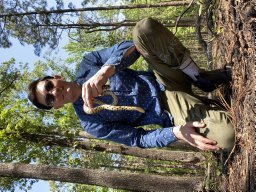 Mark Sandfoss合作论文数Conservation and Research Department, Memphis Zoo4
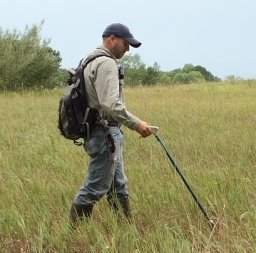 Eric T. Hileman合作论文数Dept Wildlife Fisheries & Aquaculture, Mississippi State Univ4
 Scott Goetz合作论文数Global Earth Observation & Dynamics of Ecosystems Lab, Northern Arizona University;School of Informatics, Computing, and Cyber Systems, Northern Arizona University4Michael S. Cherkiss合作论文数4Michelle T. Christy合作论文数4Melissa A Miller合作论文数3Lea’ R. Bonewell合作论文数3Andrew S Wiewel合作论文数3Austin L Fitzgerald合作论文数3
 Frank Ridgley合作论文数3
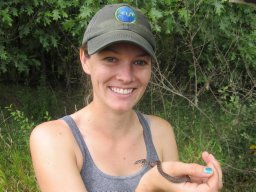 Danielle R. Bradke合作论文数Warnell Sch Forestry & Nat Resources, Univ Georgia3
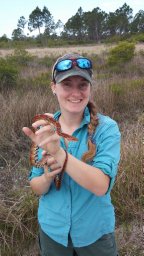 Natalie M Claunch合作论文数Corresponding author.3
 Beth Gardner合作论文数School of Environmental and Forest Sciences, University of Washington3Thomas H. Fritts合作论文数3
 Daniel J. Martin合作论文数Department of Psychiatry, The Ohio State University3Larissa L. Bailey合作论文数Department of Zoology, North Carolina State University3
 Catherine Jarnevich合作论文数United States Geological Survey Fort Collins Science Center3
 Michael R. Rochford合作论文数Ft. Lauderdale Research and Education Center, University of Florida3
 Lee A. Fitzgerald合作论文数Department of Wildlife and Fisheries Sciences, Texas A&M University3
 Scott M Boback合作论文数Department of Biological Sciences, University of Alabama3Michael E. Douglas合作论文数2james w stanford合作论文数2Michelle A. McEachern合作论文数2




