Most purposeful movements require the coordinated control of both hands, yet motor adaptation studies rely on highly constrained tasks that bear little resemblance to everyday bimanual actions. Here, we investigated how task demands shape control strategies during adaptation in a naturalistic bimanual object manipulation task. We tested 73 participants who lifted a virtual plate while we systematically distorted visual feedback of their right hand's movement, creating a sensory conflict between arms. Compared to unimanual, bimanual lifting shifted learning away from feedforward adaptation toward use of feedback control-participants moved more slowly with gradual speed scaling, developed compensatory hand adjustments, and showed smaller aftereffects. Relaxing precision demands improved success and reduced feedback reliance, while minimizing interlimb sensory conflict diminished compensatory adjustments and restored plate aftereffects to unimanual levels. Bimanual contexts create distinct learning environments where precision demands and interlimb sensory conflict independently shape control strategy; this may inform bimanual training protocols.
Movement flexibility and automaticity are necessary to successfully navigate different environments. When encountering difficult terrains such as a muddy trail, we can change how we step almost immediately so that we can continue walking. This flexibility comes at a cost since we initially must pay deliberate attention to how we are moving. Gradually, after a few minutes on the trail, stepping becomes automatic so that we do not need to think about our movements. Canonical theory indicates that different adaptive motor learning mechanisms confer these essential properties to movement: explicit control confers rapid flexibility, while forward model recalibration confers automaticity. Here, we uncover a distinct mechanism of treadmill walking adaptation - an automatic stimulus-response mapping - that confers both properties to movement. The mechanism is flexible as it learns stepping patterns that can be rapidly changed to suit a range of treadmill configurations. It is also automatic as it can operate without deliberate control or explicit awareness by the participants. Our findings reveal a tandem architecture of forward model recalibration and automatic stimulus-response mapping mechanisms for walking, reconciling different findings of motor adaptation and perceptual realignment.
Across development, children must learn motor skills such as drawing with a crayon. Reinforcement learning, driven by success and failure, is fundamental to such sensorimotor learning. It typically requires a child to explore movement options along a continuum (grip location on a crayon) and learn from probabilistic rewards (whether the crayon draws or breaks). We studied the development of reinforcement motor learning using online motor tasks to engage children aged 3–17 years and adults (cross-sectional sample, N=385). Participants moved a cartoon penguin across a scene and were rewarded (animated cartoon clip) based on their final movement position. Learning followed a clear developmental trajectory when participants could choose to move anywhere along a continuum and the reward probability depended on the final movement position. Learning was incomplete or absent in 3–8 year-olds and gradually improved to adult-like levels by adolescence. A reinforcement learning model fit to each participant identified two age-dependent factors underlying improvement across development: an increasing amount of exploration after a failed movement and a decreasing level of motor noise. We predicted, and confirmed, that switching to discrete targets and deterministic reward would improve 3–8 year-olds’ learning to adult-like levels by increasing exploration after failed movements. Overall, we show a robust developmental trajectory of reinforcement motor learning abilities under ecologically relevant conditions, that is, continuous movement options mapped to probabilistic reward. This learning may be limited by immature spatial processing and probabilistic reasoning abilities in young children and can be rescued by reducing task demands.
Virtual reality (VR) is increasingly used to enhance the ecological validity of motor control and learning studies by providing immersive, interactive environments with precise motion tracking. However, designing realistic VR-based motor tasks remains complex, requiring advanced programming skills and limiting accessibility in research and clinical settings. MovementVR is an open-source platform designed to address these challenges by enabling the creation of customizable, naturalistic reaching tasks in VR without coding expertise. It integrates physics-based hand-object interactions, real-time hand tracking, and flexible experimental paradigms, including motor adaptation and reinforcement learning. The intuitive graphical user interface (GUI) allows researchers to customize task parameters and paradigm structure. Unlike existing platforms, MovementVR eliminates the need for scripting while supporting extensive customization and preserving ecological validity and realism. In addition to reducing technical barriers, MovementVR lowers financial constraints by being compatible with consumer-grade VR headsets. It is freely available with comprehensive documentation, facilitating broader adoption in movement research and rehabilitation.
Individuals with cerebellar ataxia face significant challenges in controlling reaching, especially when multi-joint movements are involved. This study investigated the effects of kinematic and dynamic demands on reaching using a home-based virtual reality task. Participants with and without cerebellar ataxia reached to target locations designed to elicit a range of coordination strategies between shoulder and elbow joint movements. Compared with control subjects, cerebellar subjects presented greater initial reaching direction errors, larger hand trajectory curvatures, and more variability. Kinematic simulations indicated that early hand movement errors were sensitive to the required onset times and rates of joint movements and were most impaired when opposite direction joint movements were required (e.g., elbow extension with shoulder flexion). Dynamic analysis revealed that cerebellar participants' movements were more impaired in reaching directions where interaction torques would normally assist the desired elbow and shoulder movements. These reach directions were also those that required joint movements in opposite directions. Overall, our data suggest that reaching deficits in cerebellar ataxia result from 1) the early-phase motion planning deficits that are exacerbated by stringent timing coordination requirements and 2) the inability to compensate for interaction torques, particularly when they assist the intended movement.
Background: In humans, most spontaneous recovery from motor impairment after stroke occurs in the first 3 months. Studies in animal models show higher responsiveness to training over a similar time-period. Both phenomena are often attributed to a milieu of heightened plasticity, which may share some mechanistic overlap with plasticity associated with normal motor learning. Objective: Given that neurorehabilitation approaches are frequently predicated on motor learning principles, here we asked if the sensitivity of trial-to-trial learning for 2 kinds of motor learning processes often involved during rehabilitation is also enhanced early post-stroke. In a cross-sectional design, we compared (1) reinforcement and (2) error-based learning in 2 groups: 1 tested within 3 months after stroke (early group, N = 35) another tested more than 6 months after stroke (late group, N = 30). These 2 forms of motor learning were assessed with variations of the same visuomotor rotation task. Critically, motor execution was matched between the 2 groups. Results: Reinforcement learning was impaired in the early but not the late group, whereas error-based learning was unimpaired in either group. These findings could not be attributed to differences in baseline execution, cognitive impairment, gender, age, or lesion volume and location. Discussion: The presence of a deficit in reinforcement motor learning in the first 3 months after stroke has important implications for rehabilitation. Conclusion: It might be necessary to either increase reinforcement feedback given early after stroke, increase the dose of rehabilitation to compensate, or delay onset of rehabilitation approaches that may rely on reinforcement, for example, constraint-induced movement therapy, and instead emphasize other forms of motor training in the subacute time period.
Damage to the cerebellum can cause ataxia, a condition associated with impaired movement coordination. Typically, coordinated movement relies on a combination of anticipatory mechanisms (specifically, feedforward control) and corrective mechanisms (embodied by feedback control). Here, we show that in 3D reaching in VR, ataxia preserves the visuomotor feedforward and feedback control structure compared to the control group. However, the ataxia group exhibits a small increase in feedback delay (~ 20 ms) and a substantial increase in feedforward delay (~ 70 ms) together with a reduced feedback gain (~ 25% lower). Our results suggest that the feedforward and feedback pathways remain largely intact in ataxia, but that time delay deficits and temoral discoordination amongst these control pathways may contribute to the disorder. We also find that providing a preview-analogous to driving on a clear night and seeing the road ahead vs. driving in the fog-improves tracking performance in the ataxia group, although the control group was significantly better able to exploit this preview information. Overall, our results indicate that the feedforward control and preview utilization are relatively well-preserved in individuals with cerebellar ataxia, and that preview could potentially be leveraged to enhance the feedforward performance of those with ataxia.
The ability to adjust movements in response to perturbations is key for an efficient and mature nervous system, which relies on two complementary mechanisms — feedforward adaptation and feedback control. We examined the developmental trajectory of how children employ these two mechanisms using a previously validated visuomotor rotation task, conducted remotely in a large cross-sectional cohort of children aged 3–17 years and adults (n = 656; 353 males & 303 females). Results revealed a protracted developmental trajectory, with children up to ~13–14 years showing immature adaptation. Younger children relied more on feedback control to succeed. When adaptation was the only option, they struggled to succeed, highlighting a limited ability to adapt. Our results show a gradual shift from feedback control to adaptation learning throughout childhood. We also generated percentile curves for adaptation and overall performance, providing a reference for understanding the development of motor adaptation and its trade-off with feedback control.
Traditional motor adaptation studies often use constrained tasks that limit natural movement strategies. Using virtual reality, we studied people performing a realistic bimanual plate-lifting task while learning to account for a visual gain distortion applied to the right hand. We measured adaptation of early hand speed and the final plate position in three task conditions: bimanual lifting to a narrow target, unimanual lifting to a narrow target, and bimanual lifting to a wide target. As in previous studies, both hands initially adjusted to the distortion in bimanual conditions. But ultimately only the right hand adapted its speed and showed after-effects, contrasting prior reports. Contrary to our expectation, participants did not adapt early speed more when using one versus two hands. When we widened the target zone, participants achieved greater success in final plate position without reducing adaptation of early speed. Finally, both bimanual groups used a strategy of tilting the plate to be successful and showed no after-effects in final plate position when the distortion was removed. In contrast, the unimanual group did not tilt the plate and did show after-effects in final plate position. These findings reveal that in naturalistic tasks, people leverage multiple movement strategies to achieve goals. Overall, our findings support established principles of adaptation but also challenge expectations derived from more constrained motor learning paradigms, highlighting the importance of studying motor learning in more naturalistic contexts. Significance Statement Motor adaptation is a key mechanism through which the nervous system maintains and recalibrates movement in changing environments. While this process has potential applications in rehabilitation, most studies rely on simplified tasks that may not reflect real-world motor control. Here, we investigated adaptation in a naturalistic 3D bimanual task using immersive virtual reality. Our findings demonstrate hallmark features of adaptation in this unconstrained environment but also uncover intelligent strategies that exploit redundancy and feedback to achieve task success. By extending adaptation principles to complex, unconstrained movements, this study provides insight into how the nervous system implements learning in unconstrained situations and contributes to the growing effort to make motor learning research more applicable to real-world rehabilitation settings. ### Competing Interest Statement The authors have declared no competing interest. National Institutes of Health, https://ror.org/01cwqze88, T32 HD007414, R35 NS122266 American Heart Association, https://ror.org/013kjyp64, 20PRE35180131
Goal-directed motor performance relies on the brain's ability to distinguish between actions that lead to successful and unsuccessful outcomes. The basal ganglia (BG) and cerebellum (CBL) are integral for processing performance outcomes, yet their functional interactions remain underexplored. We scanned participants' brains with functional magnetic imaging (fMRI) while they performed a skilled motor task for monetary rewards, where outcomes depended on their motor performance and probabilistic events that were not contingent on their performance. Successful motor outcomes increased activity in the ventral striatum (VS), a functional subregion of the BG, whereas unsuccessful motor outcomes engaged the CBL. In contrast, for probabilistic outcomes unrelated to motor performance, the BG and CBL exhibited no differences in activity between successful and unsuccessful outcomes. Dynamic causal modeling revealed that VS-to-CBL connectivity was inhibitory following successful motor outcomes, suggesting that the VS may suppress CBL error processing for correct actions. Conversely, CBL-to-VS connectivity was inhibitory after unsuccessful motor outcomes, potentially preventing reinforcement of erroneous actions. Additionally, interindividual differences in task preference, assessed by having participants choose between performing the motor task or flipping a coin for monetary rewards, were related to inhibitory VS-CBL connectivity. These findings highlight a performance-mediated functional network between the VS and CBL, modulated by motivation and subjective preferences, that supports goal-directed behavior.
This study asked if combining different motor learning mechanisms—adaptation and reinforcement—could produce immediate improvements in over ground walking after stroke. Fifteen adults with stroke engaged in three conditions: (1) reinforcement following adaptation, (2) reinforcement alone, and (3) adaptation alone. Adaptation involved split-belt treadmill walking to produce after-effects that reduce step asymmetry. Reinforcement involved the use of real-time auditory feedback about step length asymmetry. Auditory feedback was binary, signaling whether steps were asymmetric or equal, but not whether to shorten or lengthen either step. Change in step length asymmetry was the outcome assessed during over ground walking. Reinforcement following adaptation led to reductions in step length asymmetry that persisted into an immediate retention period. Importantly, it led to the desired pattern of lengthening the shorter step in a majority of participants. Reinforcement alone led to no significant change in step length asymmetry, and sometimes produced a non-optimal pattern of shortening the longer step. Our control condition of adaptation alone led to more transient reductions in step length asymmetry. These findings reveal the potential for utilizing serial delivery of adaptation and reinforcement to influence a complex movement in the real-world context of over ground walking, in people with stroke.
Young children with movement impairments from early brain injury often exhibit deficits in balance and postural control. Rehabilitation approaches for this population specifically focus on improving postural control but quantifying dose of intervention beyond time spent on an activity is challenging. Force plates and pressure mats are tools typically used to quantify balance, however they have limited utility for regular clinical use. Wearable inertial sensors offer a more cost effective and practical solution to measuring postural control in pediatric populations, but techniques for utilizing data output are still in development. In this paper, we present an analysis method of inertial sensor data used to measure postural sway and show preliminary results highlighting feasibility of detecting changes in postural sway from baseline during physical therapy activities.
Our nervous system has the remarkable ability to adapt our gait to accommodate changes in our body or surroundings. However, our adapted walking patterns often generalize only partially (or not at all) between different contexts. Here, we sought to understand how the nervous system generalizes adapted gait patterns from one context to another. Through a series of split-belt treadmill walking experiments, we evaluated different mechanistic hypotheses to explain the partial generalization of adapted gait patterns from split-belt treadmill to overground walking. In support of the credit assignment hypothesis, our experiments revealed the central finding that adaptation involves recalibration of two distinct forward models. Recalibration of the first model generalizes to overground walking, suggesting that the model represents the general movement dynamics of our body. On the other hand, recalibration of the second model does not generalize to overground walking, suggesting the model represents dynamics specific to treadmill walking. These findings reveal that there is a predefined portion of forward model recalibration that generalizes across context, leading to overall partial generalization of walking adaptation.
Optimal feedback control provides an abstract framework describing the architecture of the sensorimotor system without prescribing implementation details such as what coordinate system to use, how feedback is incorporated, or how to accommodate changing task complexity. We investigate how such details are determined by computational and physical constraints by creating a model of the upper limb sensorimotor system in which all connection weights between neurons, feedback, and muscles are unknown. By optimizing these parameters with respect to an objective function, we find that the model exhibits a preference for an intrinsic (joint angle) coordinate representation of inputs and feedback and learns to calculate a weighted feedforward and feedback error. We further show that complex reaches around obstacles can be achieved by augmenting our model with a path-planner based on via points. The path-planner revealed “avoidance” neurons that encode directions to reach around obstacles and “placement” neurons that make fine-tuned adjustments to via point placement. Our results demonstrate the surprising capability of computationally constrained systems and highlight interesting characteristics of the sensorimotor system.
Objective Health care has increasingly expanded into a hybrid in-person/telehealth model. Patients with a variety of health conditions, including cerebellar ataxia, have received virtual health evaluations; however, it remains unknown whether some outcome measures that clinicians utilize in the telehealth setting are reliable and valid. The goal of this project is to evaluate the psychometric properties of the Scale for Assessment and Rating of Ataxia (SARA) for patients with cerebellar ataxia in the telehealth setting. Methods Nineteen individuals with cerebellar impairments were recruited on a voluntary basis. Participants completed 2 30-minute testing sessions during which a clinical examination and the SARA were performed. One session was performed in person, and the other session was assessed remotely. Outcome measure performance was video recorded in both environments and independently scored by 4 additional raters with varying levels of clinical experience (ranging from 6 months to 29 years). Concurrent validity was assessed with the Spearman rank order correlation coefficient (α < .05), comparing the virtual SARA scores to their gold standard in-person scores. Interrater reliability was evaluated with the intraclass correlation coefficient (ICC) (2,4) (α < .05). Results Fourteen of the 19 participants completed both in-person and telehealth SARA evaluations. We found that the in-person SARA and the telehealth SARA have large concurrent validity (Spearman rho significant at the 2-tailed α of .01 = 0.90; n = 14). Additionally, raters of varying years of experience had excellent interrater reliability for both the in-person SARA (ICC [2,4] = 0.97; n = 19) and the telehealth SARA (ICC [2,4] = 0.98; n = 14). Conclusion Our results show that the telehealth SARA is comparable to the in-person SARA. Additionally, raters of varying years of clinical experience were found to have excellent interrater reliability scores for both remote and in-person SARA evaluations. Impact Our study shows that the SARA can be used in the telehealth setting for patients with ataxia.
Here we designed a motor adaptation video game that could be played remotely (at home) through a web browser. This required the child to adapt to a visuomotor rotation between their hand movement and a ball displayed in the game. The task had several novel features, specifically designed to allow the study of the developmental trajectory of adaptation across a wide range of ages. We test the concurrent validity by comparing children's performance on our remote task to the same task performed in the laboratory. All participants remained engaged and completed the task. We quantified feedforward and feedback control during this task. Feedforward control, a key measure of adaptation, was similar at home and in the laboratory. All children could successfully use feedback control to guide the ball to a target. Traditionally, motor learning studies are performed in a laboratory to obtain high quality kinematic data. However, here we demonstrate concurrent validity of kinematic behavior when conducted at home. Our online platform provides the flexibility and ease of collecting data that will enable future studies with large sample sizes, longitudinal experiments, and the study of children with rare diseases.
We studied how the nervous system coordinates limb movements during asymmetric gait. Using a split-belt treadmill, we found that most changes in motion occurred when comparing motions between limbs, rather than among joints within a limb. Individual joint patterns resembled speed-matched comparisons, but this meant that joint movements became asymmetric during split-belt walking. These findings demonstrate that the nervous system can use consistent joint motions that are reconfigured in time to achieve new gait patterns.
Purpose Trunk stability, an important prerequisite for many activities of daily living, can be impaired in children with movement disorders. Current treatment options can be costly and fail to fully engage young participants. We developed an affordable, smart screen-based intervention and tested if it engages young children in physical therapy goal driven exercises. Methods Here we describe the ADAPT system, Aiding Distanced and Accessible Physical Therapy, which is a large touch-interactive device with customizable games. One such game, “Bubble Popper,” encourages high repetitions of weight shifts, reaching, and balance training as the participant pops bubbles in sitting, kneeling, or standing positions. Results Sixteen participants aged 2–18 years were tested during physical therapy sessions. The number of screen touches and length of game play indicate high participant engagement. In trials lasting less than 3 min, on average, older participants (12–18 years) made 159 screen touches per trial while the younger participants (2–7 years) made 97. In a 30-min session, on average, older participants actively played the game for 12.49 min while younger participants played for 11.22 min. Conclusion The ADAPT system is a feasible means to engage young participants in reaching and balance training during physical therapy.
Subcortical motor pathways, such as the reticulospinal tract, are critical for producing and modulating voluntary movements and have been implicated in neurological conditions. Previous research has described the presence of ipsilateral motor evoked potentials (iMEPs) in the arm to transcranial magentic stimulation (TMS), and suggested they could be mediated by the uncrossed corticospinal tract or by ipsilateral cortico-reticulospinal connections. Here, we sought to elucidate the role of the reticulospinal tract in mediating iMEPs by assessing their modulation by a startling acoustic stimulus and mapping these responses across multiple upper limb effectors. In a first experiment, we delivered TMS at various intervals (1, 5, 10 and 15 ms) after a startling acoustic stimulus, known to excite the reticular formation, to elicit iMEPs in the arm. We observed robust facilitation of iMEP area when startle conditioning preceded TMS at the 10 ms interval. In a second experiment, we replicated our findings showing that both the area and number of iMEPs in the arm increases with startle conditioning. Using this technique, we observed that iMEPs are more prominent in the arm compared with the hand. In a third experiment, we also observed greater presence of iMEPs in flexor compared with extensor muscles. Together, these findings are consistent with properties of the reticulospinal tract observed in animals, suggesting that iMEPs primarily reflect reticulospinal activity. Our findings imply that we can use this approach to track modulation of cortico-reticulospinal excitability following interventions or neurological conditions where the reticulospinal tract may be involved in motor recovery.
 Pablo Celnik合作论文数Shirley Ryan AbilityLab;National Academy of Medicine20
 Ryan Thomas Roemmich合作论文数Department of Otolaryngology-Head and Neck Surgery, School of Medicine, Johns Hopkins University18
 Susanne M. Morton合作论文数School of Medicine, Johns Hopkins University18
 Allison Okamura合作论文数Department of Mechanical Engineering, School of Engineering, Stanford University15Jennifer Keller合作论文数Kennedy Krieger Inst14Laura A Malone合作论文数14
 Torres-Oviedo Gelsy合作论文数Motion Analysis Laboratory, Kennedy Krieger Institute13W. T. Thach合作论文数13K. Zackowski合作论文数Dept Neurol, Johns Hopkins Univ12
 Jonathan W. Mink合作论文数Department of Neurology, University of Rochester12
 Amanda S. Therrien合作论文数Sensorimotor Neuroscience Laboratory, McMaster University10
 Erin Vasudevan合作论文数10
 Cristina Rossi合作论文数Dept Biomed Engn, Johns Hopkins Univ9
 Darcy Reisman合作论文数Dept Phys Therapy, Univ Delaware9
 James M Finley合作论文数Northwestern Univ.;c;Northwestern Univ.9
 Kristan Anne Leech合作论文数Rehabilitation Institute of Chicago, Northwestern University9Statton Matthew A合作论文数8
 Long Andrew W合作论文数Department of Materials Science and Engineering, University of Illinois at Urbana-Champaign7
 Hannah Block合作论文数Department of Neuroscience, The Johns Hopkins School of Medicine7
 Stewart H. Mostofsky合作论文数Center for Neurodevelopmental and Imaging Research, Kennedy Krieger Institute;School of Medicine, Johns Hopkins University;Laboratory for Neurocognitive and Imaging Research, Johns Hopkins University7
 Bhanpuri Nasir H合作论文数Department of Biomedical Engineering, The Johns Hopkins School of Medicine6
 Tricia L. Gibo合作论文数6
 Reza Shadmehr合作论文数Whiting School of Engineering, Johns Hopkins University;Laboratory for Computational Motor Control, Johns Hopkins University6
 Catherine Eckels Lang合作论文数Department of Neurology, Schoolof Medicine, Washington University in St. Louis6
 Day Kevin A合作论文数6
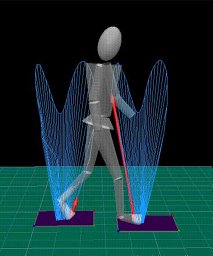 Valerie E. Kelly合作论文数Department of Rehabilitation Medicine, University of Washington6
 Noah Cowan合作论文数Department of Mechanical Engineering, Whiting School of Engineering, Johns Hopkins University6John W. Krakauer合作论文数6Kendra M Cherry-Allen合作论文数5
 Kristin Musselman合作论文数Department of Physical Therapy, Temerty Faculty of Medicine, University of Toronto5Michele F. Rotella合作论文数5
 Fuentes Christina T合作论文数Institute of Cognitive Neuroscience, University College London5
 Peter C.M. Van Zijl合作论文数F.M. Kirby Research Center for Functional Brain Imaging, Kennedy Krieger Institute;Department of Radiology, School of Medicine, Johns Hopkins University;Johns Hopkins Institute for NanoBioTechnology, Johns Hopkins University5GV Raymond合作论文数4
 Stephen A. Smith合作论文数Department of Electrical Engineering and Computer Science, Vanderbilt University4Nayo Hill合作论文数Ctr Movement Sci, Kennedy Krieger Inst4
 Koehler Margaret合作论文数4
 Hadjiosif Alkis M合作论文数Harvard School of Engineering and Applied Sciences, Cambridge, MA, USA. ahadjios@fas.harvard.edu4Choi Julia T合作论文数University of Copenhagen, University of Massachusetts Amherst4
 Daniel Wolpert合作论文数Department of Engineering, University of Cambridge4Jorn Diedrichsen合作论文数4
 Ilana Nisky合作论文数Biomedical Engineering, Ben Gurion University of the Negev4
 Joel Perlmutter合作论文数4Mario Manto合作论文数4
 Joseph Galea合作论文数School of Psychology, College of Life and Environmental Sciences, University of Birmingham4
 Alexander Dromerick合作论文数Georgetown University Medical Center;MedStar National Rehabilitation Hospital4
 Daniel S. Reich合作论文数Translational Neuroradiology Section, Division of Neuroimmunology & Neurovirology, National Institute of Neurological Disorders and Stroke, National Institutes of Health;Division of Intramural Research, National Institute of Neurological Disorders and Stroke, National Institutes of Health;National Multiple Sclerosis Brain Bank3Rachel Reoli合作论文数3




