We analyse the challenges and trade-offs associated with production speed, quality, and lead time constraints in biomanufacturing purification operations. In particular, lead time constraints during purification pose a critical challenge in practice because the safety and quality of intermediate products deteriorate when the production time exceeds a certain predefined value. We analyse purification operations where the biomanufacturer can influence production speed and batch quality by investing in specific purification interventions. We consider two types of interventions: Type 1 interventions, which improve quality without affecting processing time, and Type 2 interventions, which improve quality at the expense of slower processing. Using a stylised model based on queueing networks, we characterise the structure of optimal policies. We show that the optimal policy for both Type 1 and Type 2 interventions is of the threshold type, but the structure of the thresholds depends on the type of interventions and relevant costs. Our analysis provides insights into optimal process intervention policies and when the lead time constraints limit system performance.
Strategic collaborations are critical to the success of efforts aimed at discovering new drugs and therapies in the biopharmaceutical industry. These collaborations aim to leverage domain expertise, asymmetries in production costs and/or capabilities to improve efficiency. Despite increasing collaborations, the biopharmaceutical industry lacks a structured guideline for choosing contracts. We present contract models with effort-based formulations that capture the key characteristics of biopharmaceutical operations and analyse incentive mechanisms such as fixed payment, revenue-sharing, risk-sharing, and cost-sharing in biopharmaceutical collaborations. We show that traditional incentive schemes do not achieve supply chain coordination, although they are commonly used in the industry. We introduce a new contract model called fee-for-effort-and-output contract that encourages the parties to exert higher efforts by offering discounts on their operating costs, and show that this contract achieves coordination with an appropriate selection of contract parameters. We also investigate the efficiency of noncoordinating contracts with traditional incentive schemes and identify the capability and cost structures under which they achieve the highest efficiency possible, to both determine the next-best alternatives and explain their popularity in practice.
The paper analyzes the performance of tandem network of polling queue with setups. For a system with two-products and two-stations, we propose a new approach based on a partially-collapsible state-space characterization to reduce state-space complexity. In this approach, the size of the state-space is varied depending on the information needed to determine buffer levels and waiting times. We evaluate system performance under different system setting and comment on the numerical accuracy of the approach as well as provide managerial insights. Numerical results show that approach yields reliable estimates of the performance measures. We also show how product and station asymmetry significantly affect the systems performance.
We analyze a network of tandem polling queues with two stations operating under synchronized polling (SP) and out-of-sync polling (OP) strategies, and with nonzero setups. We conduct an exact analysis using a decomposition approach to compare the performance in terms of throughput and mean waiting times to investigate when one strategy might be preferred over the other. We also numerically investigate the condition for network stability operating under the two strategies and show that polling network is unstable when there is bottleneck at downstream stations. We find that the SP strategy outperforms the OP strategy in case of product and station symmetric networks while under certain settings of product and station asymmetry, OP strategy outperforms the SP strategy.
One of the key activities during disaster response is distributing relief items to victims. This is a challenging task due to dynamically changing victim needs and disaster aftermath conditions. We model the distribution operations where items like tarpaulins and blankets are distributed by volunteers, to victims at temporary distribution areas called relief centers (RC). We investigate the impact victim movements have on the distribution performance. We model each RC as a queue, and the distribution operation as a generalised queuing network (G-network). We investigate product form solutions for the proposed G-network model, and prove a new product form result for G-networks with signals and batch transfer under certain conditions. We leverage this result to develop product form approximations that apply across a broad range of settings. We apply the G-network model to a case study using the Nepal earthquake relief distribution data, and quantify the impact of victim movement on network performance.
We analyze a tandem network of polling queues with two product types and two stations. We assume that external arrivals to the network follow a Poisson process, and service times at each station are exponentially distributed. For this system, we determine the mean conditional waiting time for an arriving customer using a sample path analysis approach. The approach classifies system state upon arrival into scenarios and exploits an inherent structure in the sequence of events that occur till the customer departs to obtain conditional waiting time estimates. We conduct numerical studies to show both the accuracy of our conditional waiting time estimates and their practical importance.
Immediately after a major disaster large volumes of solicited and unsolicited relief items start to flow into the disaster affected region. This phenomenon is known as material convergence. The sheer volume of incoming materials, coupled with limited resources, make sorting and distribution of relief items a difficult task. The challenge is exacerbated when a large portion of the unsolicited donations are low-priority or inappropriate items, diverting volunteer, space, and transportation capacity from more critical items. This paper investigates volunteer allocation decisions under material convergence and varying levels of high-priority donations. First, we interview disaster response practitioners to understand challenges with resource allocation decisions. Then, we model the donation arrival and sorting process for both solicited and unsolicited donations as transient multi-server queues. Using this model, we quantify the level of material convergence and evaluate the impact of resource allocation decisions on relief item output. We provide insights that can help address the problems of resource allocation under material convergence, that are critical to satisfy needs of disaster victims.
We consider the challenges and trade-offs involved in the manufacturing of engineered proteins. Manufacturing these proteins involves high risk of financial losses due to the purity and yield trade-offs, uncertainty in the process outcomes, and high operating costs. In this setting, the biomanufacturer must determine how much protein to manufacture in the upstream fermentation operations, and then how much of it to waste in each subsequent purification operation because of the purity–yield trade-offs. We develop a Markov decision model to optimize three layers of interdependent decisions in protein manufacturing: the optimal amount of protein to be produced in upstream operations, the optimal choice of chromatography technique to be used in downstream operations, and the optimal choice of pooling windows during chromatography. The proposed stochastic model dynamically optimizes these three layers of interdependent decisions to maximize the expected profit. The structural analysis derives functional relationships between the purity–yield trade-offs and operating costs, and characterizes the optimal operating policies. The optimal policy also suggests when the biomanufacturer is better off failing early and cutting losses. We use a state aggregation scheme to reduce the computational efforts, and quantify the savings obtained from the use of the optimization model in industry practice at Aldevron.
We analyze production and capacity utilization strategies in a supply chain where individual components can be made either at a shared in‐house manufacturing facility or at dedicated facilities of external subcontractors. The manufacturer and the subcontractor differ in terms of costs, production capacities, rates, and service level capabilities. Using Markov decision process models, we determine the optimal policy and characterize its structure. We derive the set of conditions that partitions the state space into regions and characterize optimal policies in each region. We derive optimal policies for manufacturer and subcontractors under different settings and show that the optimal policy has a multi‐index structure in some settings.
We consider the scheduling problem for biomanufacturing projects that involve multiple tasks and “no-wait” constraints between some of these tasks. The aim is to create schedules that ensure timely delivery of products while enabling schedule revisions to accommodate additional constraints realized during the execution of these projects. We formulate the problem as a mixed-integer linear programming model with the objective of minimizing total tardiness, and propose a dynamic scheduling approach that solves a series of modified mixed-integer linear programming models to revise and improve the schedule. We conduct numerical studies to investigate the performance of this approach and compare its performance to a traditional proactive scheduling approach. In collaboration with biomanufacturing companies, we create a scheduling tool and validate the approach with implementation in an industry setting.
Short abstract: To improve biomanufacturing efficiency, a multidisciplinary team of researchers collaborated to develop a portfolio of decision support tools. These tools provide a data-driven, operations research–based approach to reducing biomanufacturing costs and lead times.
We analyze a tandem polling queue with two stations operating under three different polling strategies, namely: (1) Independent polling , (2) Synchronous polling , and (3) Out-of-sync polling . Under Markovian assumptions of arrival and service times, we conduct an exact analysis using Matrix Geometric method to determine system throughput, mean queue lengths, and mean waiting times. Through numerical experiments, we compare the performance of the three polling strategies and the effect of buffer sizes on performance. We observe that the independent polling strategy generally performs better than the other strategies, however, under certain settings of product asymmetry, other strategies yield better performance.
Forks/join stations are commonly used to model synchronization constraints in queuing networks. This paper presents an exact analysis of a fork/join station with inputs from stations composed of multiple exponential servers. The queue length process at the input buffers is analyzed exactly using the underlying Markov process. The semi-Markov kernel characterizing the departure process is analyzed to derive expressions for the marginal and joint distributions of inter-departure times from the fork/join station. These analyses are used to study the effect of inputs from multiple servers on key performance measures at a fork/join station. Comparison studies show that inputs from multiple servers have a significant effect on performance measures such as throughput, synchronization delays and queue lengths at the individual buffers. These insights are important to obtain better representation of synchronization constraints in closed queuing network models of computer networks, fabrication/assembly systems and material control strategies for manufacturing systems.
We analyze resource allocation challenges in protein purification operations where differences in scientist capabilities can lead to significantly different outcomes. We use queuing models to capture the underlying dynamics and quantify the performance of different strategies based on solutions obtained using the matrix-geometric approach. We show that certain partial flexibility structures coupled with appropriate priority rules can yield very efficient system performance. We also define a new server utilization metric that can be very effective in rank ordering strategies. Through numerical studies, we provide useful rules for the biomanufacturers to achieve higher profits and shorter lead times.
Purpose Relief item distribution to victims is a key activity during disaster response. Currently many humanitarian organizations follow simple guidelines based on experience to assess need and distribute relief supplies. However, the interviews with practitioners suggest a problem in efficiency in relief distribution efforts. The purpose of this paper is to develop a model and solution methodology that can estimate relief center (RC) performance, measured by waiting time for victims and throughput, for any RC design and analyze the impact of key design decisions on these performance measures. Design/methodology/approach Interviews with practitioners and current practice guidelines are used to understand relief distribution and a queuing network model is used to represent the relief distribution. Finally, the model is applied to data from the 2015 Nepal earthquake. Findings The findings identify that dissipating congestion created by crowds, varying item assignment decisions to points of distribution, limiting the physical RC capacity to control congestion and using triage queue to balance distribution times, are effective strategies that can improve RC performance. Research limitations/implications This research bases the RC designs on Federal Emergency Management Agency guidelines and assumes a certain area and volunteer availability. Originality/value This paper contributes to humanitarian logistics by discussing useful insights that can impact how relief agencies set up and operate RCs. It also contributes to the queuing literature by deriving analytic solutions for the steady state probabilities of finite capacity, state dependent queues with blocking.
We investigate protein purification operations conducted by biomanufacturers and pharmaceutical companies as part of their research and development efforts. Purification of these proteins involves unique challenges such as balancing the yield and purity trade-offs, dealing with uncertainty in the starting material, and estimating the impact of several interlinked decisions. We develop a Markov decision model and partition the state space into decision zones that provide managerial insights to optimize purification operations. We develop practical guidelines to quantify financial risks, and we characterize the optimal operating decisions based on specific production requirements. The optimization framework has been implemented at Aldevron, a contract biomanufacturer specializing in proteins, and has resulted in 25% reduction in the total lead times and 20% reduction in the costs of protein purification operations on average.
To improve operational flexibility, throughput capacity, and responsiveness in order fulfillment operations, several distribution centers are implementing autonomous vehicle-based storage and retrieval system (AVS(RS) in their high-density storage areas. In such systems, vehicles are self-powered to travel in horizontal directions (x- and y- axes), and use lifts or conveyors for vertical motion (z-axis). In this research, we propose a multi-tier queuing modeling framework for the performance analysis of such vehicle-based warehouse systems. We develop an embedded Markov chain based analysis approach to estimate the first and second moment of inter-departure times from the load-dependent station within a semi-open queuing network. The linking solution approach uses traffic process approximations to analyze the performance of sub-models corresponding to individual tiers (semi-open queues) and the vertical transfer units (open queues). These sub-models are linked to form an integrated queuing network model, which is solved using an iterative algorithm. Performance estimates such as expected transaction cycle times and resource (vehicle and vertical transfer unit) utilization are determined using this algorithm, and can be used to evaluate a variety of design configurations during the conceptualization phase. (C) 2017 Elsevier Ltd. All rights reserved.
Download This Paper Open PDF in Browser Add Paper to My Library Share: Permalink Using these links will ensure access to this page indefinitely Copy URL Copy DOI
The manufacture of biological products from live systems such as bacteria, mammalian, or insect cells is called biomanufacturing. The use of live cells introduces several operational challenges including batch-to-batch variability, parallel growth of both desired antibodies and unwanted toxic byproducts in the same batch, and random shocks leading to multiple competing failure processes. In this article, we develop a stochastic model that integrates the cell-level dynamics of biological processes with operational dynamics to identify optimal harvesting policies that balance the risks of batch failures and yield/quality tradeoffs in fermentation operations. We develop an infinite horizon, discrete-time Markov decision model to derive the structural properties of the optimal harvesting policies. We use IgG(1) antibody production as an example to demonstrate the optimal harvesting policy and compare its performance against harvesting policies used in practice. We leverage insights from the optimal policy to propose smart stationary policies that are easier to implement in practice.
Production and Operations ManagementVolume 25, Issue 12 p. 2003-2005 Original Article Optimal Purification Decisions for Engineer-to-Order Proteins at Aldevron Tugce Martagan, Tugce Martagan t.g.martagan@tue.nl School of Industrial Engineering, Eindhoven University of Technology, De Rondom 70, Pav. E17, Eindhoven, 5612AZ NetherlandsSearch for more papers by this authorAnanth Krishnamurthy, Ananth Krishnamurthy ananth@engr.wisc.edu Department of Industrial and Systems Engineering, University of Wisconsin-Madison, 1513 University Avenue, 3121C Mechanical Engineering Building, Madison, WI, 53706 USASearch for more papers by this authorPeter A. Leland, Peter A. Leland leland@aldevron.com Aldevron, 5602 Research Park Blvd, Madison, WI, 53719 USASearch for more papers by this authorChristos T. Maravelias, Christos T. Maravelias christos.maravelias@wisc.edu Department of Chemical and Biological Engineering, University of Wisconsin-Madison, 1415 Engineering Drive, 2004 Engineering Hall, Madison, WI, 53706 USASearch for more papers by this author Tugce Martagan, Tugce Martagan t.g.martagan@tue.nl School of Industrial Engineering, Eindhoven University of Technology, De Rondom 70, Pav. E17, Eindhoven, 5612AZ NetherlandsSearch for more papers by this authorAnanth Krishnamurthy, Ananth Krishnamurthy ananth@engr.wisc.edu Department of Industrial and Systems Engineering, University of Wisconsin-Madison, 1513 University Avenue, 3121C Mechanical Engineering Building, Madison, WI, 53706 USASearch for more papers by this authorPeter A. Leland, Peter A. Leland leland@aldevron.com Aldevron, 5602 Research Park Blvd, Madison, WI, 53719 USASearch for more papers by this authorChristos T. Maravelias, Christos T. Maravelias christos.maravelias@wisc.edu Department of Chemical and Biological Engineering, University of Wisconsin-Madison, 1415 Engineering Drive, 2004 Engineering Hall, Madison, WI, 53706 USASearch for more papers by this author First published: 20 October 2016 https://doi.org/10.1111/poms.1_12637Citations: 1 [Correction added on 14 November 2016, after first online publication: the authors' affiliations have been corrected accordingly.] Read the full textAboutPDF ToolsRequest permissionExport citationAdd to favoritesTrack citation ShareShare Give accessShare full text accessShare full-text accessPlease review our Terms and Conditions of Use and check box below to share full-text version of article.I have read and accept the Wiley Online Library Terms and Conditions of UseShareable LinkUse the link below to share a full-text version of this article with your friends and colleagues. Learn more.Copy URL Share a linkShare onFacebookTwitterLinkedInRedditWechat Citing Literature Volume25, Issue12December 2016Pages 2003-2005 RelatedInformation
 Charles Malmborg合作论文数Department of Industrial and Systems Engineering, Rensselaer Polytechnic Institute19
 Sunderesh S. Heragu合作论文数School of Industrial Engineering & Management, College of Engineering, Architecture and Technology, Oklahoma State University16
 Debjit Roy合作论文数Department of Management Studies, Indian Institute of Science11
 Rajan Suri合作论文数10
 Tugce G. Martagan合作论文数Mississippi State University7Ashesh Kumar Sinha合作论文数Kansas State University5
 Koushik Kar合作论文数Rensselaer Polytechnic Institute5Merve Ozen合作论文数4
 Sanket Bhat合作论文数Industrial and Systems Engineering, University of Wisconsin-Madison4Yasemin Limon合作论文数4Kumar Satyam合作论文数Dept Decis Sci & Engn Syst, Rensselaer Polytech Inst4
 Ravi Suman合作论文数American Airlines4Xiao Cai合作论文数3
 Stephen M. Robinson合作论文数Department of Industrial and Systems Engineering, College of Engineering, University of Wisconsin-Madison3
 Omar Al-Araidah合作论文数Industrial Engineering Department, Jordan University of Science and Technology3Ram Ramakrishnan合作论文数3Peter A. Leland合作论文数3
 Mary K. Vernon合作论文数Department of Computer Sciences, University of Wisconsin-Madison3Julien Granger合作论文数Department of Industrial and Systems Engineering, University of Wisconsin-Madison3
 Banu Yetkin Ekren合作论文数2
 Christos Maravelias合作论文数Department of Chemical and Biological Engineering, Princeton University2
 David Claudio合作论文数2Kuo Po-Hsun合作论文数2Ali Yasar合作论文数Department of Decision Sciences and Engineering Systems, Rensselaer Polytechnic Institute2
 Neeraj Jaggi合作论文数2Neena Jaggi合作论文数2
 Nico Vandaele合作论文数University of Antwerp Prinsstraat 13 2000 Antwerpen Belgium Prinsstraat 13 2000 Antwerpen Belgium2Nico Goossens合作论文数2Tien, J.M.合作论文数1John E. Mitchell合作论文数1Jing Gong合作论文数1
 Christos T. Maravelias合作论文数Department of Chemical and Biological Engineering, University of Wisconsin-Madison1Deng Ge合作论文数1Charles J Malmborg合作论文数1
 William A. Wallace合作论文数Department of Industrial and Systems Engineering, Rensselaer Polytechnic Institute1Divya Seethapathy合作论文数1Manjunath Kamath合作论文数1
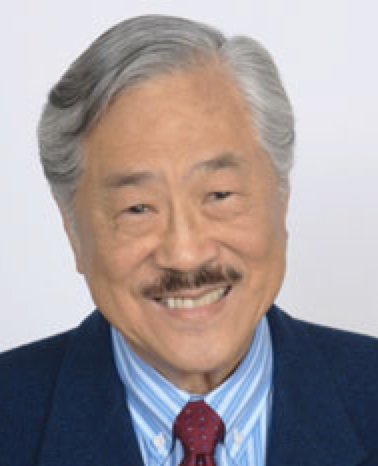 James M. Tien合作论文数Department of Electrical & Computer Engineering, College of Engineering, University of Miami1




