To better understand the dynamics and impacts of major atmospheric modes on regional climates, the temporal variability of the causal strength between the Northern Hemisphere Annular Mode (NAM) and winter Surface Air Temperature (SAT) over Northeast Asia from 1950 to 2024 is explored, with particular emphasis on the modulating effect of Pacific Decadal Oscillation (PDO) phase shifts. Decadal variations in causal strength between SAT and NAM at different pressure levels are clearly observed. The influence of the stratospheric NAM on SAT is more pronounced than that of the tropospheric NAM. At lower levels, the causal strength remained relatively weak and exhibited two notable periods of decline: from the late 1950s to the mid-1970s, and after 2008. In the mid-troposphere, a weakening trend occurred from 1975 to 1995, followed by a substantial recovery that peaked around 2008. In the stratosphere, the causal strength remained consistently strong, with 10 hPa showing a significant upward trend from the early 1970s to the late 1980s. The relationship between NAM and SAT during winter is strongly modulated by PDO phase shifts, which affect the intensity of the Aleutian Low, thereby impacting the Pacific center of NAM and altering its influence on Northeast Asia. Additionally, variations in the strength of the stratospheric polar vortex (SPV) also modulate the phase of NAM, affecting winter SAT by altering the intensity of the westerlies and the East Asian Trough (EAT).
In this opinion/comment we discuss the issues related to proposed geoengineering solutions to climate change. We argue, that while scientifically based, these proposals lack the rigorousness appropriate to the seriousness of the problem.
Environmental determinism is often used to explain past social collapses and to predict the future of modern human societies. We assess the availability of natural resources and the resulting carrying capacity (a basic concept of environmental determinism) through a toy model based on Hurst–Kolmogorov dynamics. We also highlight the role of social cohesion, and we evaluate it from an entropic viewpoint. Furthermore, we make the case that, when it comes to the demise of civilizations, while environmental influences may be in the mix, social dynamics is the main driver behind their decline and eventual collapse. We examine several prehistorical and historical cases of civilization collapse, the most characteristic being that of the Minoan civilization, whose disappearance c. 1100 BC has fostered several causative hypotheses. In general, we note that these hypotheses are based on catastrophic environmental causes, which nevertheless occurred a few hundred years before the collapse of Minoans. Specifically, around 1500 BC, Minoans managed to overpass many environmental adversities. As we have not found justified reasons based on the environmental determinism for when the collapse occurred (around 1100 BC), we hypothesize a possible transformation of the Minoans’ social structure as the cause of the collapse.
Dynamical systems like the one described by the three-variable Lorenz-63 model may serve as metaphors for complex natural systems such as climate systems. When these systems are perturbed by external forcing factors, they tend to relax back to their equilibrium conditions after the forcing has shut off. Here we investigate the behavior of such transients in the Lorenz-63 model by studying its trajectories initialized far away from the asymptotic attractor. Counterintuitively, these transient trajectories exhibit complex routes and, in particular, the sensitivity to initial conditions is akin to that of the asymptotic behavior on the attractor. Thus, similar extreme events may lead to widely different variations before the perturbed system returns back to its statistical equilibrium.
Proxy temperature data records featuring local time series, regional averages from areas all around the globe, as well as global averages, are analyzed using the Slow Feature Analysis (SFA) method. As explained in the paper, SFA is much more effective than the traditional Fourier analysis in identifying slow-varying (low-frequency) signals in data sets of a limited length. We find the existence of a striking gap from ~1000 to about ~20,000 years, which separates intrinsic climatic oscillations with periods ranging from ~60 years to ~1000 years, from the longer time-scale periodicities (20,000 year+) involving external forcing associated with Milankovitch cycles. The absence of natural oscillations with periods within the gap is consistent with cumulative evidence based on past data analyses, as well as with earlier theoretical and modeling studies.
Streamflow is a dynamical process that integrates water movement in space and time within basin boundaries. The authors characterize the dynamics associated with streamflow time series data from about seventy-one U.S. Geological Survey (USGS) stream-gauge stations in the state of Iowa. They employ a novel approach called visibility graph (VG). It uses the concept of mapping time series into complex networks to investigate the time evolutionary behavior of dynamical system. The authors focus on a simple variant of VG algorithm called horizontal visibility graph (HVG). The tracking of dynamics and hence, the predictability of streamflow processes, are carried out by extracting two key pieces of information called characteristic exponent, λ of degree distribution and global clustering coefficient, GC pertaining to HVG derived network. The authors use these two measures to identify whether streamflow process has its origin in random or chaotic processes. They show that the characterization of streamflow dynamics is sensitive to data attributes. Through a systematic and comprehensive analysis, the authors illustrate that streamflow dynamics characterization is sensitive to the normalization, and the time-scale of streamflow time-series. At daily scale, streamflow at all stations used in the analysis, reveals randomness with strong spatial scale (basin size) dependence. This has implications for predictability of streamflow and floods. The authors demonstrate that dynamics transition through potentially chaotic to randomly correlated process as the averaging time-scale increases. Finally, the temporal trends of λ and GC are statistically significant at about 40% of the total number of stations analyzed. Attributing this trend to factors such as changing climate or land use requires further research.
The variations in oceanic and atmospheric modes on various timescales play important roles in generating global and regional climate variability. Many efforts have been devoted to identifying the relationships between the variations in climate modes and regional climate variability, but these have rarely explored the interconnections among these climate modes. Here we use climate indices to represent the variations in major climate modes and examine the harmonic relationship among the driving forces of climate modes using slow feature analysis (SFA) and wavelet analysis. We find that all of the significant peak periods of driving-force signals in the climate indices can be represented as harmonics of four base periods: 2.32, 3.90, 6.55, and 11.02 years. We infer that the period of 2.32 years is associated with the signal of the quasi-biennial oscillation (QBO). The periods of 3.90 and 6.55 years are linked to the intrinsic variability of the El Niño–Southern Oscillation (ENSO), and the period of 11.02 years arises from the sunspot cycle. Results suggest that the base periods and their harmonic oscillations related to QBO, ENSO, and solar activities act as key connections among the climatic modes with synchronous behaviors, highlighting the important roles of these three oscillations in the variability of the Earth's climate. Highlights. i. The harmonic relationship among the driving forces of climate modes was investigated by using slow feature analysis and wavelet analysis.ii. All of the significant peak periods of driving-force signals in climate indices can be represented as the harmonics of four base periods.iii. The four base periods related to QBO, ENSO, and solar activities act as the key linkages among different climatic modes with synchronous behaviors.
Modern data analyses of hourly temperature records reveal the existence, in addition to the daily cycle, of multiple forcings of different frequencies. As a result the routine approach of estimating daily local mean temperature directly from the average of the minimum and maximum is heavily compromised. A simple dynamical model subjected to two periodic forcings of different frequencies, amplitudes and phases is solved analytically and shown to induce substantial deviations from the min–max method that depend crucially on the values of the parameters involved.
The most advanced climate models are actually modified meteorological models attempting to capture climate in meteorological terms. This seems a straightforward matter of raw computing power applied to large enough sources of current data. Some believe that models have succeeded in capturing climate in this manner. But have they? This paper outlines difficulties with this picture that derive from the finite representation of our computers, and the fundamental unavailability of future data instead. It suggests that alternative windows onto the multi-decadal timescales are necessary in order to overcome the issues raised for practical problems of prediction.
Statistical inference of causal interactions and synchronization between dynamical phenomena evolving on different temporal scales is of vital importance for better understanding and prediction of natural complex systems such as the Earth’s climate. This article introduces and applies information theory diagnostics to phase and amplitude time series of different oscillatory components of observed data that characterizes El Niño/Southern Oscillation. A suite of significant interactions between processes operating on different time scales is detected and shown to be important for emergence of extreme events. The mechanisms of these nonlinear interactions are further studied in conceptual low-order and state-of-the-art dynamical, as well as statistical climate models. Observed and simulated interactions exhibit substantial discrepancies, whose understanding may be the key to an improved prediction of ENSO. Moreover, the statistical framework applied here is suitable for inference of cross-scale interactions in human brain dynamics and other complex systems.
Past results [Thompson and Wallace in Geophys Res Lett 25(9):1297–1300, 1998; Science 293(5527):85–89, 2001; Wallace and Thompson in J Clim 15(14):1987–1991, 2002a] indicate that over the Eurasian continent, North America, and East Asia, wintertime surface temperatures tend to be warmer (colder) on high-index (low-index) Northern Hemisphere annular mode (NAM). However, a linear correlation is neither necessary nor sufficient to establish causality between them. Here, we apply a recently developed method, convergent cross mapping (CCM), to examine the causal connections between NAM and wintertime surface air temperature (SAT) over Northeast Asia. Our analysis indicates that both NAM and SAT exhibit nonlinear dynamical structure and that NAM information is encoded in the SAT data but not the other way around. This indicates a causality between them in the direction NAM → SAT. This result opens the possibility to use the NAM index as the external driving factor to forecast winter SAT over Northeast Asia.
 James Brian Elsner合作论文数Geophysical Fluid Dynamics Institute, Florida State University;Department of Geography, Florida State University48
 Kyle Swanson合作论文数Department of Mathematical Sciences, University of Wisconsin-Milwaukee14
 Geli Wang (王革丽)合作论文数13
 Sergey Kravtsov合作论文数Dept . of Mathematical Sciences;Atmospheric Science Group;University of Wisconsin;Atmospheric Science Group, University of Wisconsin13
 Paul Roebber合作论文数Department of Geosciences, University of Wisconsin at Milwaukee8
 Konstantine Georgakakos合作论文数Hydrologic Research Center;Scripps Institution of Oceanography, University of California, San Diego6
 Panagiotis A. Tsonis合作论文数Center for Tissue Regeneration and Engineering;Department of Biology, University of Dayton6
 Thomas H Jagger合作论文数Department of Geography;Florida State University;Department of Geography, Florida State University5
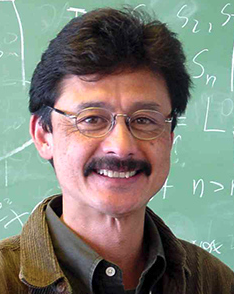 George Sugihara合作论文数Sugihara Lab, University of California San Diego;Scripps Institution of Oceanography, University of California San Diego5G. N. Triantafyllou合作论文数4Nikola Jajcay合作论文数Bernstein Ctr Computat Neurosci Berlin4
 Allen G. Hunt (Allen Hunt)合作论文数Department of Physics, Wright State University4
 Milan Paluš合作论文数Institute of Computer Science, Czech Academy of Sciences4
 Jaroslav Hlinka合作论文数National Institute of Mental Health3
 Ethan R. Deyle合作论文数Department of Biology, Boston University;The Kaufman-Deyle Systems Ecology Lab, Boston University3
 Judith A. Curry合作论文数School of Earth & Atmospheric Sciences, College of Sciences, Georgia Institute of Technology3
 Charles Jones合作论文数Department of Geography, Earth Research Institute, University of California3
 Georgios P. Pavlos合作论文数Department of Electrical and Computer Engineering, Democritus University of Thrace3
 Geoff Austin合作论文数Physics Department;McGill University;Physics Department, McGill University3
 Marcia Glaze Wyatt合作论文数3H. R. Rocha合作论文数2Xinnong Pan合作论文数2Ch Washabaugh合作论文数2P A Tsonis合作论文数2
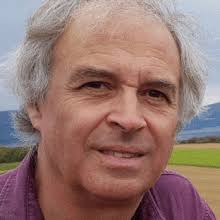 Shaun Lovejoy合作论文数Department of Physics, McGill University;The Climate Variability Across Scales2
 Robert M May合作论文数University of Oxford;University of Sydney;Princeton University;Imperial College London2
 Hideki Takayasu合作论文数Computer Science Laboratories2
 Hao Ye (叶昊)合作论文数Department of Automation, Tsinghua University2A. Rigas合作论文数Department of Electrical and Computer Engineering;Democritus;University of Thrace;Department of Electrical and Computer Engineering, University of Thrace2
 Karsten Steinhaeuser合作论文数AeroVironment;RadiantPoint Technologies2Peicai Yang合作论文数2Joseph Tribbia合作论文数2Christopher Essex合作论文数2
 Paulo S. Polito合作论文数Jet Propulsion Laboratory;California Institute of Technology;Jet Propulsion Laboratory, California Institute of Technology2W. Richard Leaitch合作论文数2
 Leila Carvalho合作论文数Department of Geography, University of California, Santa Barbara2
 Leonidas P. Karakatsanis合作论文数Department of Electrical and Computer Engineering, Democritus University of Thrace2E. G. Pavlos合作论文数1M. D. Couture合作论文数1g a kyriakou合作论文数1D. Tsintikidis合作论文数1g a artan合作论文数1lmv carvalho合作论文数1RA Sommerfeld合作论文数1Wenxu Lu合作论文数1CC Young-Molling合作论文数1
 Nannan Zhang合作论文数1Rc Musselman合作论文数1Ak Guetter合作论文数1




