In health, most large language model (LLM) research has focused on clinical tasks. However, mobile and wearable devices, which are rarely integrated into such tasks, provide rich, longitudinal data for personal health monitoring. Here we present Personal Health Large Language Model (PH-LLM), fine-tuned from Gemini for understanding and reasoning over numerical time-series personal health data. We created and curated three datasets that test 1) production of personalized insights and recommendations from sleep patterns, physical activity, and physiological responses, 2) expert domain knowledge, and 3) prediction of self-reported sleep outcomes. For the first task we designed 857 case studies in collaboration with domain experts to assess real-world scenarios in sleep and fitness. Through comprehensive evaluation of domain-specific rubrics, we observed that Gemini Ultra 1.0 and PH-LLM are not statistically different from expert performance in fitness and, while experts remain superior for sleep, fine-tuning PH-LLM provided significant improvements in using relevant domain knowledge and personalizing information for sleep insights. We evaluated PH-LLM domain knowledge using multiple choice sleep medicine and fitness examinations. PH-LLM achieved 79% on sleep and 88% on fitness, exceeding average scores from a sample of human experts. Finally, we trained PH-LLM to predict self-reported sleep quality outcomes from textual and multimodal encoding representations of wearable data, and demonstrate that multimodal encoding is required to match performance of specialized discriminative models. Although further development and evaluation are necessary in the safety-critical personal health domain, these results demonstrate both the broad knowledge and capabilities of Gemini models and the benefit of contextualizing physiological data for personal health applications as done with PH-LLM.
Foundation large language models (LLMs) have shown an impressive ability to solve tasks across a wide range of fields including health. To effectively solve personalized health tasks, LLMs need the ability to ingest a diversity of data modalities that are relevant to an individual's health status. In this paper, we take a step towards creating multimodal LLMs for health that are grounded in individual-specific data by developing a framework (HeLM: Health Large Language Model for Multimodal Understanding) that enables LLMs to use high-dimensional clinical modalities to estimate underlying disease risk. HeLM encodes complex data modalities by learning an encoder that maps them into the LLM's token embedding space and for simple modalities like tabular data by serializing the data into text. Using data from the UK Biobank, we show that HeLM can effectively use demographic and clinical features in addition to high-dimensional time-series data to estimate disease risk. For example, HeLM achieves an AUROC of 0.75 for asthma prediction when combining tabular and spirogram data modalities compared with 0.49 when only using tabular data. Overall, we find that HeLM outperforms or performs at parity with classical machine learning approaches across a selection of eight binary traits. Furthermore, we investigate the downstream uses of this model such as its generalizability to out-of-distribution traits and its ability to power conversations around individual health and wellness.
Here the Human Pangenome Reference Consortium presents a first draft of the human pangenome reference. The pangenome contains 47 phased, diploid assemblies from a cohort of genetically diverse individuals 1 . These assemblies cover more than 99% of the expected sequence in each genome and are more than 99% accurate at the structural and base pair levels. Based on alignments of the assemblies, we generate a draft pangenome that captures known variants and haplotypes and reveals new alleles at structurally complex loci. We also add 119 million base pairs of euchromatic polymorphic sequences and 1,115 gene duplications relative to the existing reference GRCh38. Roughly 90 million of the additional base pairs are derived from structural variation. Using our draft pangenome to analyse short-read data reduced small variant discovery errors by 34% and increased the number of structural variants detected per haplotype by 104% compared with GRCh38-based workflows, which enabled the typing of the vast majority of structural variant alleles per sample.
Accurate genome sequencing can improve our understanding of biology and the genetic basis of disease. The standard approach for generating DNA sequences from PacBio instruments relies on HMM-based models. Here, we introduce Distilled DeepConsensus - a distilled transformer-encoder model for sequence correction, which improves upon the HMM-based methods with runtime constraints in mind. Distilled DeepConsensus is 1.3x faster and 1.5x smaller than its larger counterpart while improving the yield of high quality reads (Q30) over the HMM-based method by 1.69x (vs. 1.73x for larger model). With improved accuracy of genomic sequences, Distilled DeepConsensus improves downstream applications of genomic sequence analysis such as reducing variant calling errors by 39 3.8 Distilled DeepConsensus are similar between faster and slower models.
The spatial organization of the genome in the cell nucleus plays an important role for gene regulation, replication of the deoxyribonucleic acid (DNA), and genomic integrity. Through the development of chromosome conformation capture experiments (such as 3C, 4C, and Hi-C) it is now possible to obtain the contact frequencies of the DNA at the whole-genome level. In this paper, we study the problem of reconstructing the three-dimensional (3D) organization of the genome from such whole-genome contact frequencies. A standard approach is to transform the contact frequencies into noisy distance measurements and then apply semidefinite programming formulations to obtain the 3D configuration. However, neglected in such reconstructions is the fact that most eukaryotes including humans are diploid and therefore contain two copies of each genomic locus. We prove that the 3D organization of the DNA is not identifiable from the distance measurements derived from contact frequencies in diploid organisms. In fact, there are infinitely many solutions even in the noise-free setting. We then discuss various additional biologically relevant and experimentally measurable constraints (including distances between neighboring genomic loci and higher-order interactions) and prove identifiability under these conditions. Furthermore, we provide semidefinite programming formulations for computing the 3D embedding of the DNA with these additional constraints and show that we can recover the true 3D embedding with high accuracy from both noiseless and noisy measurements. Finally, we apply our algorithm to real pairwise and higher-order contact frequency data and show that we can recover known genome organization patterns.
Summary Platform-dependent sequencing errors must be understood to develop accurate sequencing technologies. We propose a new tool, best (Bam Error Stats Tool), for efficiently quantifying and summarizing error types in sequenced reads. best ingests reads aligned to a high-quality reference assembly and produces per-read metrics, summary statistics, and stratified metrics across genomic intervals. We show that best is 16 times faster than a prior method. In addition to being useful to support development that improves the accuracy of sequencing platforms, best can also be applied to evaluate and improve other experimental factors such as library preparation and error correction methods. Availability and implementation best is an open-source command-line utility available on Github (github.com/google/best) under an MIT license. Contact danielecook@google.com
Circular consensus sequencing with Pacific Biosciences (PacBio) technology generates long (10–25 kilobases), accurate ‘HiFi’ reads by combining serial observations of a DNA molecule into a consensus sequence. The standard approach to consensus generation, pbccs, uses a hidden Markov model. We introduce DeepConsensus, which uses an alignment-based loss to train a gap-aware transformer–encoder for sequence correction. Compared to pbccs, DeepConsensus reduces read errors by 42%. This increases the yield of PacBio HiFi reads at Q20 by 9%, at Q30 by 27% and at Q40 by 90%. With two SMRT Cells of HG003, reads from DeepConsensus improve hifiasm assembly contiguity (NG50 4.9 megabases (Mb) to 17.2 Mb), increase gene completeness (94% to 97%), reduce the false gene duplication rate (1.1% to 0.5%), improve assembly base accuracy (Q43 to Q45) and reduce variant-calling errors by 24%. DeepConsensus models could be trained to the general problem of analyzing the alignment of other types of sequences, such as unique molecular identifiers or genome assemblies.
Thesis: Ph. D., Massachusetts Institute of Technology, Computational and Systems Biology Program, February, 2021
Given the severity of the SARS-CoV-2 pandemic, a major challenge is to rapidly repurpose existing approved drugs for clinical interventions. While a number of data-driven and experimental approaches have been suggested in the context of drug repurposing, a platform that systematically integrates available transcriptomic, proteomic and structural data is missing. More importantly, given that SARS-CoV-2 pathogenicity is highly age-dependent, it is critical to integrate aging signatures into drug discovery platforms. We here take advantage of large-scale transcriptional drug screens combined with RNA-seq data of the lung epithelium with SARS-CoV-2 infection as well as the aging lung. To identify robust druggable protein targets, we propose a principled causal framework that makes use of multiple data modalities. Our analysis highlights the importance of serine/threonine and tyrosine kinases as potential targets that intersect the SARS-CoV-2 and aging pathways. By integrating transcriptomic, proteomic and structural data that is available for many diseases, our drug discovery platform is broadly applicable. Rigorous in vitro experiments as well as clinical trials are needed to validate the identified candidate drugs.
Summary Designing interventions to control gene regulation necessitates modeling a gene regulatory network by a causal graph. Currently, large-scale expression datasets from different conditions, cell types, disease states and developmental time points are being collected. However, application of classical causal inference algorithms to infer gene regulatory networks based on such data is still challenging, requiring high sample sizes and computational resources. Here, we propose an algorithm that efficiently learns the differences in gene regulatory mechanisms between different conditions. Our difference causal inference (DCI) algorithm infers changes (i.e., edges that appeared, disappeared or changed weight) between two causal graphs given gene expression data from the two conditions. This algorithm is efficient in its use of samples and computation since it infers the differences between causal graphs directly without estimating each possibly large causal graph separately. We provide a user-friendly Python implementation of DCI and also enable the user to learn the most robust difference causal graph across different tuning parameters via stability selection. Finally, we show how to apply DCI to bulk and single-cell RNA-seq data from different conditions and cell states, and we also validate our algorithm by predicting the effects of interventions. Availability and implementation All algorithms are freely available as a Python package at http://uhlerlab.github.io/causaldag/dci Contact cuhler@mit.edu
The development of single-cell methods for capturing different data modalities including imaging and sequencing has revolutionized our ability to identify heterogeneous cell states. Different data modalities provide different perspectives on a population of cells, and their integration is critical for studying cellular heterogeneity and its function. While various methods have been proposed to integrate different sequencing data modalities, coupling imaging and sequencing has been an open challenge. We here present an approach for integrating vastly different modalities by learning a probabilistic coupling between the different data modalities using autoencoders to map to a shared latent space. We validate this approach by integrating single-cell RNA-seq and chromatin images to identify distinct subpopulations of human naive CD4+ T-cells that are poised for activation. Collectively, our approach provides a framework to integrate and translate between data modalities that cannot yet be measured within the same cell for diverse applications in biomedical discovery.
We consider the problem of learning a causal graph in the presence of measurement error. This setting is for example common in genomics, where gene expression is corrupted through the measurement process. We develop a provably consistent procedure for estimating the causal structure in a linear Gaussian structural equation model from corrupted observations on its nodes, under a variety of measurement error models. We provide an estimator based on the method-of-moments, which can be used in conjunction with constraint-based causal structure discovery algorithms. We prove asymptotic consistency of the procedure and also discuss finite-sample considerations. We demonstrate our method's performance through simulations and on real data, where we recover the underlying gene regulatory network from zero-inflated single-cell RNA-seq data.
We consider the problem of estimating the differences between two causal directed acyclic graph (DAG) models with a shared topological order given i.i.d. samples from each model. This is of interest for example in genomics, where changes in the structure or edge weights of the underlying causal graphs reflect alterations in the gene regulatory networks. We here provide the first provably consistent method for directly estimating the differences in a pair of causal DAGs without separately learning two possibly large and dense DAG models and computing their difference. Our two-step algorithm first uses invariance tests between regression coefficients of the two data sets to estimate the skeleton of the difference graph and then orients some of the edges using invariance tests between regression residual variances. We demonstrate the properties of our method through a simulation study and apply it to the analysis of gene expression data from ovarian cancer and during T-cell activation.
The 3D structure of the genome plays a key role in regulatory control of the cell. Experimental methods such as high-throughput chromosome conformation capture (Hi-C) have been developed to probe the 3D structure of the genome. However, it remains a challenge to deduce from these data chromosome regions that are colocalized and coregulated. Here, we present an integrative approach that leverages 1D functional genomic features (e.g., epigenetic marks) with 3D interactions from Hi-C data to identify functional interchromosomal interactions. We construct a weighted network with 250-kb genomic regions as nodes and Hi-C interactions as edges, where the edge weights are given by the correlation between 1D genomic features. Individual interacting clusters are determined using weighted correlation clustering on the network. We show that intermingling regions generally fall into either active or inactive clusters based on the enrichment for RNA polymerase II (RNAPII) and H3K9me3, respectively. We show that active clusters are hotspots for transcription factor binding sites. We also validate our predictions experimentally by 3D fluorescence in situ hybridization (FISH) experiments and show that active RNAPII is enriched in predicted active clusters. Our method provides a general quantitative framework that couples 1D genomic features with 3D interactions from Hi-C to probe the guiding principles that link the spatial organization of the genome with regulatory control.
The three-dimensional structure of the genome plays a key role in regulatory control of the cell. Chromosomes are organized nonrandomly inside the nucleus and form a network of interactions. Recent experimental methods such as Hi-C have been used to probe the 3D architecture of the genome, giving average pairwise contact frequencies between chromosomes. However, deducing the spatial organization of chromosomes from this data remains a challenge due to high levels of noise and technical bias. Here, we propose a novel framework that leverages 1D features of the genome (e.g. gene expression) in combination with Hi-C data to identify interacting regions in the genome. First, we find domains of high average interaction in Hi-C maps using a large average submatrix algorithm. Then we construct a weighted network with genomic regions as nodes and interactions as edges, where the edge weights are given by the correlation between genomic features. Individual interacting clusters are determined using weighted correlation clustering on the network. In addition to recapitulating known organizational patterns of chromosome interactions, we validate our predictions using fluorescence in situ hybridization (FISH). We uncover two types of intermingling clusters - active and inactive clusters based on enrichment for RNA polymerase II and H3K9me3, respectively. We show that active clusters are hotspots for transcription factor binding. Our method provides a quantitative framework that allows to couple features of the 1D genome with 3D interactions to uncover the guiding principles of genome spatial organization and regulatory control.
The drug coating process for coated drug-eluting stents (DES) has been identified as a key source of inter- and intra-batch variability in drug elution rates. Quality-by-design (QbD) principles were applied to gain an understanding of the ultrasonic spray coating process of DES. Statistically based design of experiments (DOE) were used to understand the relationship between ultrasonic atomization spray coating parameters and dependent variables such as coating mass ratio, roughness, drug solid state composite microstructure, and elution kinetics. Defect-free DES coatings composed of 70% 85:15 poly(dl-lactide-co-glycolide) and 30% everolimus were fabricated with a constant coating mass. The drug elution profile was characterized by a mathematical model describing biphasic release kinetics. Model coefficients were analyzed as a DOE response. Changes in ultrasonic coating processing conditions resulted in substantial changes in roughness and elution kinetics. Based on the outcome from the DOE study, a design space was defined in terms of the critical coating process parameters resulting in optimum coating roughness and drug elution. This QbD methodology can be useful to enhance the quality of coated DES.
 Caroline Uhler合作论文数Department of Electrical Engineering and Computer Science, Massachusetts Institute of Technology;Institute for Data, Systems, and Society, Massachusetts Institute of Technology8
 Andrew J Carroll Ill合作论文数School of Medicine, University of Alabama at Birmingham5
 Kishwar Shafin合作论文数Google LLC4
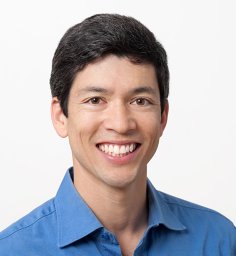 McLean Cory Y合作论文数Dept Comp Sci, Stanford Univ4
 Pi-Chuan Chang合作论文数Google4
 Daniel E Cook合作论文数4
 Alexey Kolesnikov合作论文数3
 Chandler Squires合作论文数Broad Institute, Massachusetts Institute of Technology;Laboratory for Information and Decision Systems, Massachusetts Institute of Technology3
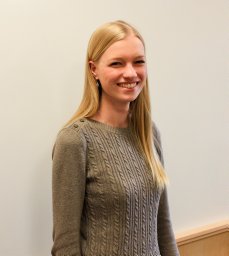 Maria Nattestad合作论文数Cold Spring Harbor Laboratory;3
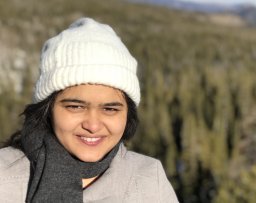 Saradha Venkatachalapathy合作论文数Natl Univ Singapore, Mechanobiol Inst, Singapore 117411, Singapore3
 G. V. Shivashankar合作论文数Department of Health Sciences and Technology, ETH Zurich;Laboratory of Nanoscale Biology, Paul Scherrer Institute3Mallika Nagarajan合作论文数2
 Justin Cosentino合作论文数Google2
 Gunjan Baid合作论文数Inductive Bio2Louis V Cammarata合作论文数2Aaron M Wenger合作论文数Pacific Biosci, Menlo Pk, CA USA2
 Daniel Liu合作论文数Torrey Pines High Sch, San Diego, CA 92130 USA2Adityanarayanan Radhakrishnan合作论文数MIT, Dept Elect Engn & Comp Sci, Lab Informat & Decis Syst, Inst Data Syst & Soc, Cambridge, MA 02139 USA2
 Karren D Yang合作论文数Laboratory for Information & Decision Systems, Massachusetts Institute of Technology;Institute for Data, Massachusetts Institute of Technology2Shravya Shetty合作论文数Google Health;Advanced Clinical;Apollo Radiology International;TB Department, Center of Infectious Disease Research in Zambia;Sibanye Stillwater;and Clickmedix;TB Department, Center of Infectious Disease Research in Zambia2
 Howard Hao Yang (杨浩)合作论文数Zhejiang University-University of Illinois Urbana-Champaign Institute2Furlotte Nicholas A合作论文数Department of Computer Science, Immunology &Molecular Genetic, University of California, Los Angeles2
 Armin Topfer合作论文数Lehrstuhl für Marktorientierte Unternehmensführung Dresden, Technischen Universität2Yuhao Wang (王禹皓)合作论文数2
 Greg Corrado合作论文数Google2
 William J Rowell合作论文数Department of Molecular and Cellular Biology, University of California2Matthew W Mitchell合作论文数1Shyam Tailor合作论文数1Abigail Katcoff合作论文数1Jiening Zhan合作论文数1Dinesh V. Patwardhan合作论文数1Sharmista Chatterjee合作论文数1Baergen Schultz合作论文数1Lawrence J. Sun合作论文数1adam felsenfeld合作论文数1Sarah Cody合作论文数1Robert Cook-Deegan合作论文数1Tsung-Yu Lu合作论文数1Yojan Patel合作论文数1Moses Njagi Mwaniki合作论文数1Christian Fischer合作论文数1Shuangjia Lu合作论文数1
 Mobin Asri合作论文数1Chace Lee合作论文数1Charles Markello合作论文数1Alexandra P Lewis合作论文数1Marina Haukness合作论文数Genom Inst, Univ Calif Santa Cruz1Samuel Sacco合作论文数1
 Krish Eswaran合作论文数Google Health;Advanced Clinical;Apollo Radiology International;TB Department, Center of Infectious Disease Research in Zambia;Sibanye Stillwater;and Clickmedix;TB Department, Center of Infectious Disease Research in Zambia1




