HTN planning is a variation of classical planning where, instead of searching for a linear sequence of actions, an algorithm decomposes higher-level tasks using a method library until only executable actions remain. On one hand, this allows one to introduce domain knowledge that can speed up the search for a solution through the method library. On the other hand, it creates challenges that go beyond those of classical state-space search. While recent research produced a number of heuristics and novel algorithms that speed up HTN planning, these heuristics are not yet as informative as those available in classical planning algorithms. We investigate whether large language models (LLMs) can generate effective search heuristics for HTN planning, extending the methodology of Corrêa, Pereira, and Seipp (2025) from classical to hierarchical planning. Using the Pytrich planner on six standard total-order HTN benchmark domains, we evaluate heuristics generated by nine LLMs under domain-specific prompting and compare them against the TDG and LMCount domain-independent baselines and the PANDA planner. Our results show that LLM-generated heuristics nearly match the coverage of the best available HTN planner, while substantially reducing search effort on 83
Fully-observable non-deterministic (FOND) planning is at the core of artificial intelligence planning with uncertainty. It models uncertainty through actions with non-deterministic effects. In this work, we present a collection of techniques that establish explicit best-first policy-space search as a method competitive with the state of the art for solving FOND planning tasks. We study how to define equivalence relations between policies, allowing part of the search space to be pruned. We show it is possible to use group theory techniques to effectively compute canonical symmetries between states. We also present two contributions that go beyond just policy-space search: we present a procedure that infers in polynomial time a solution policy function given just the specification of its domain set, and an integer-programming formulation procedure that, given a solution policy defined over complete states, yields a set of resource-efficient models that are capable of finding a partial-state policy that represents it unambiguously with the fewest partial states possible.
In Hierarchical Task Network (HTN) planning, landmarks are facts that must hold true, and tasks or methods that must be included in every solution. Existing landmark generation techniques for HTN planning rely on the Delete and Ordering Free (DOF) relaxation and are known to be sound but incomplete, primarily due to the limitations introduced by Task Insertion. This paper presents a new landmark generation method that builds on a previous AND/OR graph-based approach, extending it to capture additional hierarchical dependencies among tasks and methods. We prove that our approach is sound and dominates existing techniques, though it remains incomplete under the DOF relaxation. Experimental results on IPC benchmarks for totally ordered problems show that our method identifies significantly more task and method landmarks across most domains, improving coverage with minimal computational overhead.
In recent years, large language models (LLMs) have shown remarkable capabilities in various artificial intelligence problems. However, they fail to plan reliably, even when prompted with a detailed definition of the planning task. Attempts to improve their planning capabilities, such as chain-of-thought prompting, fine-tuning, and explicit "reasoning" still yield incorrect plans and usually fail to generalize to larger tasks. In this paper, we show how to use LLMs to generate correct plans, even for out-of-distribution tasks of increasing size. For a given planning domain, we ask an LLM to generate several domain-dependent heuristic functions in the form of Python code, evaluate them on a set of training tasks within a greedy best-first search, and choose the strongest one. The resulting LLM-generated heuristics solve many more unseen test tasks than state-of-the-art domain-independent heuristics for classical planning. They are even competitive with the strongest learning algorithm for domain-dependent planning. These findings are especially remarkable given that our proof-of-concept implementation is based on an unoptimized Python planner and the baselines all build upon highly optimized C++ code. In some domains, the LLM-generated heuristics expand fewer states than the baselines, revealing that they are not only efficiently computable, but sometimes even more informative than the state-of-the-art heuristics. Overall, our results show that sampling a set of planning heuristic function programs can significantly improve the planning capabilities of LLMs.
Fully-observable non-deterministic (FOND) planning is at the core of artificial intelligence planning with uncertainty. It models uncertainty through actions with non-deterministic effects. In this work, we present a collection of techniques that establish explicit best-first policy-space search as a method competitive with the state of the art for solving FOND planning tasks. We study how to define equivalence relations between policies, allowing part of the search space to be pruned. We show it is possible to use group theory techniques to effectively compute canonical symmetries between states. We also present two contributions that go beyond just policy-space search: we present a procedure that infers in polynomial time a solution policy function given just the specification of its domain set, and an integer-programming formulation procedure that, given a solution policy defined over complete states, yields a set of resource-efficient models that are capable of finding a partial-state policy that represents it unambiguously with the fewest partial states possible.
Goal Recognition is the task by which an observer aims to discern the goals that correspond to plans that comply with the perceived behavior of subject agents given as a sequence of observations. Research on Goal Recognition as Planning encompasses reasoning about the model of a planning task, the observations, and the goals using planning techniques, resulting in very efficient recognition approaches. In this article, we design novel recognition approaches that rely on the Operator-Counting framework, proposing new constraints, and analyze their constraints' properties both theoretically and empirically. The Operator-Counting framework is a technique that efficiently computes heuristic estimates of cost-to-goal using Integer/Linear Programming (IP/LP). In the realm of theory, we prove that the new constraints provide lower bounds on the cost of plans that comply with observations. We also provide an extensive empirical evaluation to assess how the new constraints improve the quality of the solution, and we found that they are especially informed in deciding which goals are unlikely to be part of the solution. Our novel recognition approaches have two pivotal advantages: first, they employ new IP/LP constraints for efficiently recognizing goals; second, we show how the new IP/LP constraints can improve the recognition of goals under both partial and noisy observability.
We study the problem of learning good heuristic functions for classical planning tasks with neural networks based on samples represented by states with their cost-to-goal estimates. The heuristic function is learned for a state space and goal condition with the number of samples limited to a fraction of the size of the state space, and must generalize well for all states of the state space with the same goal condition. Our main goal is to better understand the influence of sample generation strategies on the performance of a greedy best-first heuristic search (GBFS) guided by a learned heuristic function. In a set of controlled experiments, we find that two main factors determine the quality of the learned heuristic: the algorithm used to generate the sample set and how close the sample estimates to the perfect cost-to-goal are. These two factors are dependent: having perfect cost-to-goal estimates is insufficient if the samples are not well distributed across the state space. We also study other effects, such as adding samples with high-value estimates. Based on our findings, we propose practical strategies to improve the quality of learned heuristics: three strategies that aim to generate more representative states and two strategies that improve the cost-to-goal estimates. Our practical strategies result in a learned heuristic that, when guiding a GBFS algorithm, increases by more than 30% the mean coverage compared to a baseline learned heuristic.
This work is related to the Earth’s ionosphere simulation and prediction system developed in the Brazilian Space Weather program, which process a large number of data to provide total electron content (TEC) maps. We present improvements to the task of finding nearest neighbors for the interpolation method at homogeneous grid locations, which demands an important computational cost. Simulation points generated by 73 parallel executions of a physical-mathematical ionosphere model are used. The proposed approach is based on a custom code optimization and a variable reduction of the search space considering geographic information. We tested a different number of neighbors and geographic longitude ranges, using available libraries for approximate nearest neighbor (ANN), fast library for approximate nearest neighbor (FLANN) and a fast K Nearest Neighbors library for low-dimensional spaces (libnabo) in an ionosphere global simulation. Experiments have shown the proposed approach progressively overcomes the libraries’ best solution as the number of neighbors increases. The speedup was significantly improved for the majority of the scenarios tested. The approach was able to reduce processing time in low and mid-latitudes, while providing close-to-zero errors. On the other hand, errors are noticed at higher latitudes, especially near the poles where geomagnetic field lines converge, or the ionospheric model is unable to provide sufficient estimates.
In this work, we study fully-observable non-deterministic (FOND) planning, which models uncertainty through actions with non-deterministic effects. We present a best-first heuristic search algorithm called AND* that searches the policy-space of the FOND task to find a solution policy. We generalize the concepts of optimality, admissibility , and goal-awareness for FOND. Using these new concepts, we formalize the concept of heuristic functions that can guide a policy-space search. We analyze different aspects of the general structure of FOND solutions to introduce and characterize a set of FOND heuristics that estimate how far a policy is from becoming a solution. One of these heuristics applies a novel insight. Guided by them AND * returns only solutions with the minimal possible number of mapped states. We systematically study these FOND heuristics theoretically and empirically. We observe that our best heuristic makes AND * much more effective than the straightforward heuristics. We believe that our work allows a better understanding of how to design algorithms and heuristics to solve FOND tasks.
The thought-provoking analogy between AI and electricity, made by computer scientist and entrepreneur Andrew Ng, summarizes the deep transformation that recent advances in Artificial Intelligence (AI) have triggered in the world. This chapter presents an overview of the ever-evolving landscape of AI, written in Portuguese. With no intent to exhaust the subject, we explore the AI applications that are redefining sectors of the economy, impacting society and humanity. We analyze the risks that may come along with rapid technological progress and future trends in AI, an area that is on the path to becoming a general-purpose technology, just like electricity, which revolutionized society in the 19th and 20th centuries. A provocativa compara\c{c}\~ao entre IA e eletricidade, feita pelo cientista da computa\c{c}\~ao e empreendedor Andrew Ng, resume a profunda transforma\c{c}\~ao que os recentes avan\c{c}os em Intelig\^encia Artificial (IA) t\^em desencadeado no mundo. Este cap\'itulo apresenta uma vis\~ao geral pela paisagem em constante evolu\c{c}\~ao da IA. Sem pretens\~oes de exaurir o assunto, exploramos as aplica\c{c}\~oes que est\~ao redefinindo setores da economia, impactando a sociedade e a humanidade. Analisamos os riscos que acompanham o r\'apido progresso tecnol\'ogico e as tend\^encias futuras da IA, \'area que trilha o caminho para se tornar uma tecnologia de prop\'osito geral, assim como a eletricidade, que revolucionou a sociedade dos s\'eculos XIX e XX.
Fully Observable Non-Deterministic (FOND) planning models uncertainty through actions with non-deterministic effects. Existing FOND planning algorithms are effective and employ a wide range of techniques. However, most of the existing algorithms are not robust for dealing with both non-determinism and task size. In this paper, we develop a novel iterative depth-first search algorithm that solves FOND planning tasks and produces strong cyclic policies. Our algorithm is explicitly designed for FOND planning, addressing more directly the non-deterministic aspect of FOND planning, and it also exploits the benefits of heuristic functions to make the algorithm more effective during the iterative searching process. We compare our proposed algorithm to well-known FOND planners, and show that it has robust performance over several distinct types of FOND domains considering different metrics.
It is well-known that the search algorithms A* and Iterative Deepening A* (IDA*) can fail to solve state-space tasks optimally due to time and memory limits. The former typically fails in memory-restricted scenarios and the latter in time-restricted scenarios. Therefore, several algorithms were proposed to solve state-space tasks optimally using less memory than A* and less time than IDA*, such as A*+IDA*, a hybrid memory-restricted algorithm that combines A* and IDA*. In this paper, we present a hybrid memory-restricted algorithm that combines Partial Expansion A* (PEA*) and IDA*. This new algorithm has two phases, the same structure as the A*+IDA* algorithm. The first phase of PEA*+IDA* runs PEA* until it reaches a memory limit, and the second phase runs IDA* without duplicate detection on each node of PEA*'s Open. First, we present a model that shows how PEA*+IDA* can perform better than A*+IDA* although pure PEA* usually makes more expansions than pure A*. Later, we perform an experimental evaluation using three memory limits and show that, compared to A*+IDA* on classical planning domains, PEA*+IDA* has higher coverage and expands fewer nodes. Finally, we experimentally analyze both algorithms and show that having higher F-limits and better priority-queue composition given by PEA* have a considerable impact on the performance of the algorithms.
Fully Observable Non-Deterministic (FOND) planning models uncertainty through actions with non-deterministic effects. Existing FOND planning algorithms are effective and employ a wide range of techniques. However, most of the existing algorithms are not robust for dealing with both non-determinism and task size. In this paper, we develop a novel iterative depth-first search algorithm that solves FOND planning tasks and produces strong cyclic policies. Our algorithm is explicitly designed for FOND planning, addressing more directly the non-deterministic aspect of FOND planning, and it also exploits the benefits of heuristic functions to make the algorithm more effective during the iterative searching process. We compare our proposed algorithm to well-known FOND planners, and show that it has robust performance over several distinct types of FOND domains considering different metrics.
Goal recognition aims to recognize the set of candidate goals that are compatible with the observed behavior of an agent. In this paper, we develop a method based on the operator-counting framework that efficiently computes solutions that satisfy the observations and uses the information generated to solve goal recognition tasks. Our method reasons explicitly about both partial and noisy observations: estimating uncertainty for the former, and satisfying observations given the unreliability of the sensor for the latter. We evaluate our approach empirically over a large data set, analyzing its components on how each can impact the quality of the solutions. In general, our approach is superior to previous methods in terms of agreement ratio, accuracy, and spread. Finally, our approach paves the way for new research on combinatorial optimization to solve goal recognition tasks.
A search algorithm with an admissible heuristic function is the most common approach to optimally solve classical planning tasks. Recently Daviesetal.(2015) introduced the solver OpSeq using Logic-Based Benders Decomposition to solve planning tasks optimally. In this approach, the master problem is an integer program derived from the operator-counting framework that generates operator counts, i.e., an assignment of integer counts for each task operator. Then, the operator counts sequencing subproblem verifies if a plan satisfying these operator counts exists, or generates a necessary violated constraint to strengthen the master problem. In OpSeq the subproblem is solved by a SAT solver. In this paper we show that operator counts sequencing can be better solved by state-space search. We introduce OpSearch, an A∗-based algorithm to solve the operator counts sequencing subproblem: it either finds an optimal plan, or uses the frontier of the search to derive a violated constraint. We show that using a standard search framework has two advantages: i) search scales better than a SAT-based approach for solving the operator counts sequencing, ii) explicit information in the search frontier can be used to derive stronger constraints. We present results on the IPC-2011 benchmarks showing that this approach solves more planning tasks, using less memory. On tasks solved by both methods OpSearch usually requires to solve fewer operator counts sequencing problems than OpSeq, evidencing the stronger constraints generated by OpSearch.
Procedural generation of initial states of state-space search problems have applications in human and machine learning as well as in the evaluation of planning systems. In this paper we deal with the task of generating hard and solvable initial states of Sokoban puzzles. We propose hardness metrics based on pattern database heuristics and the use of novelty to improve the exploration of search methods in the task of generating initial states. We then present a system called Beta that uses our hardness metrics and novelty to generate initial states. Experiments show that Beta is able to generate initial states that are harder to solve by a specialized solver than those designed by human experts.
Recent approaches to goal recognition have progressively relaxed the assumptions about the amount and correctness of domain knowledge and available observations, yielding accurate and efficient algorithms. These approaches, however, assume completeness and correctness of the domain theory against which their algorithms match observations: this is too strong for most real-world domains. In this paper, we develop goal recognition techniques that are capable of recognizing goals using incomplete domain theories by considering different notions of planning landmarks in such domains. We evaluate the resulting techniques empirically in a large dataset of incomplete domains, and perform an ablation study to understand their effect on recognition performance.
For a given state space and admissible heuristic function h there is always a tie-breaking strategy for which A* expands the minimum number of states [Dechter and Pearl, 1985]. We say that these strategies have optimal expansion. Although such a strategy always exists it may depend on the instance, and we currently do not know a tie-breaker that always guarantees optimal expansion. In this paper, we study tie-breaking strategies for A*. We analyze common strategies from the literature and prove that they do not have optimal expansion. We propose a novel tie-breaking strategy using cost adaptation that has always optimal expansion. We experimentally analyze the performance of A* using several tie-breaking strategies on domains from the IPC and zero-cost domains. Our best strategy solves significantly more instances than the standard method in the literature and more than the previous state-of-the-art strategy. Our analysis improves the understanding of how to develop effective tie-breaking strategies and our results also improve the state-of-the-art of tie-breaking strategies for A*.
Automated planning is an important general problem solving technique in Artificial Intelligence. Given an initial state, a goal and a set of operators, we want to find a sequence of operators leading us to the goal. What makes planning interesting is that it can model different domains into planning tasks and solve them using a single method. In this work, we approach two different topics in planning. First, we study heuristics for the airport ground traffic problem and propose new heuristics that are better than any other known method. In the second part, we study tie-breakers for the A* search algorithm. We propose a new tie-breaking method that is proved to be the best possible and also show that our methods solve more instances than previous methods in literature
We propose a new algorithm for the problem of approximate nearest neighbors (ANN) search in a regularly spaced low-dimensional grid for interpolation applications. It associates every sampled point to its nearest interpolation location, and then expands its influence to neighborhood locations in the grid, until the desired number of sampled points is achieved on every grid location. Our approach makes use of knowledge on the regular grid spacing to avoid measuring the distance between sampled points and grid locations. We compared our approach with four different state-of-the-art ANN algorithms in a large set of computational experiments. In general, our approach requires low computational effort, especially for cases with high density of sampled points, while the observed error is not significantly different. At the end, a case study is shown, where the ionosphere dynamics is predicted daily using samples from a mathematical model, which runs in parallel at 56 different longitude coordinates, providing sampled points not well distributed that follow Earth’s magnetic field-lines. Our approach overcomes the comparative algorithms when the ratio between the number of sampled points and grid locations is over 2849:1.
 Marcus Ritt合作论文数Instituto de Inform ´|Universidade Federal do Rio|Grande do Sul13Frederico Messa合作论文数6
 Ramon Fraga Pereira合作论文数Department of Computer Science, University of Manchester;Sapienza University of Rome5
 Luciana S. Buriol合作论文数Computer Science department of the Federal University of Rio Grande do Sul5
 Adriano Petry合作论文数Universidade Luterana do Brasil, Universidade Estadual do Rio Grande do Sul5
 Felipe Meneguzzi合作论文数Department of Computing Science, University of Aberdeen;School of Natural and Computing Sciences, University of Aberdeen;School of Technology, Pontifical Catholic University of Rio Grande do Sul5
 Augusto B. Corrêa合作论文数Christ Church College, University of Oxford4
 Jonas R. Souza合作论文数3L. S. Buriol合作论文数Computer Science department of the Federal University of Rio Grande do Sul3Luísa R. A. Santos合作论文数Univ Fed Rio Grande do Sul, Porto Alegre, RS, Brazil2
 Giuseppe De Giacomo合作论文数Department of Computer Science, University of Oxford;Green Templeton College, University of Oxford;Dipartimento Di Ingegneria Informatica, Automatica E Gestionale, Facoltà Di Ingegneria Dell'informazione, Informatica E Statistica, Sapienza Universita' di Roma2Iago da Cunha Corrêa合作论文数1
 Lucas Ferreira da Silva合作论文数1Jacob Scharcanski合作论文数1Gj Bailey合作论文数1
 Haroldo Fraga de Campos Velho合作论文数1Pedro Minini合作论文数1Rafael Vales Bettker合作论文数1
 Rhauani Fazul合作论文数UFSM, Federal University of Santa Maria1
 Wesley L. Kaizer合作论文数Dept Informat, Univ Fed Rio Grande do Sul1
 Telmo dos Santos Klipp合作论文数Southern Reg Space Res Ctr, Natl Inst Space Res1Dâmaris S. Bento合作论文数1
 Anderson Rocha Tavares合作论文数Dept. de Cienc. da Comput., Univ. Fed. de Minas Gerais;c;Dept. de Cienc. da Comput., Univ. Fed. de Minas Gerais1
 Teresa Chambel合作论文数University of Lisbon1
 Joel Luís Carbonera合作论文数Instituto de Informática, Universidade Federal do Rio Grande do Sul1
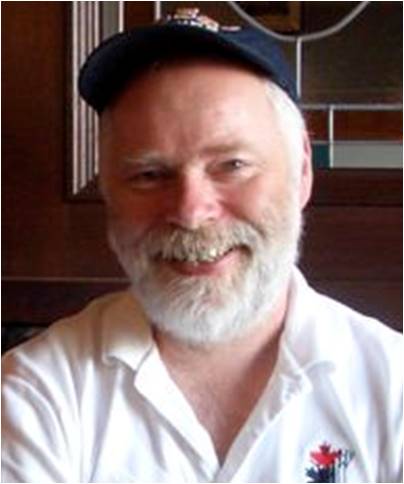 Robert Holte合作论文数Department of Computing Science, Faculty of Science, University of Alberta1
 Jonathan Schaeffer合作论文数Department of Computing Science, Faculty of Science, University of Alberta1
 Viviane Moreira合作论文数Instituto de Informática, Universidade Federal do Rio Grande do Sul1
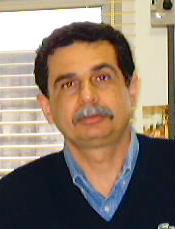 Jose Valdeni De Lima合作论文数Instituto de Informática, Federal University of Rio Grande do Sul1
 Mariana Recamonde-Mendoza合作论文数Universidade Federal do Rio Grande do Sul - UFRGS1
 Eliseo Reategui合作论文数Faculty of Education, Federal University of Rio Grande do Sul1Ana L. C. Bazzan合作论文数Instituto de Informatica UFRGS (Universidade Federal do Rio Grande do Sul)1
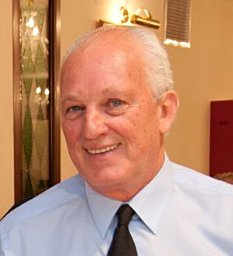 Claudio A.B. Tiellet合作论文数Univ. Fed. de Santa Maria1
 Levi Lelis合作论文数Department of Computing Science, Faculty of Science, University of Alberta1
 Jendrik Seipp合作论文数Department of Computer and Information Science, Linköping University;Machine Reasoning Lab, Linköping University1
 Luís C. Lamb合作论文数Institute of Informatics, Federal University of Rio Grande do Sul1
 Thiago Lopes Trugillo da Silveira合作论文数Department of Applied Computing, Federal University of Santa Maria1Andrea Schwertner Charao合作论文数PPGI, Universidade Federal de Santa Maria1




