MICADO is the Multi-AO Imaging Camera for Deep Observations, a first light instrument for the Extremely Large Telescope (ELT). The instrument will be assisted by a Single-Conjugate Adaptive Optics (SCAO) system and the Multiconjugate adaptive Optics Relay For ELT Observations (MORFEO). MICADO can operate in the so-called stand-alone mode in the absence of MORFEO with the SCAO correction alone. The Relay Optics (RO), is the optical system relaying the ELT focal plane to an appropriate position inside the MICADO cryostat for that SCAO-only stand-alone observing mode. After successfully passing the Final Design Review (FDR), the manufacturing of the RO is in full swing. We present here the current status of the ongoing assembly, integration and verification campaign (AIV), together with its upcoming challenges. The RO consists of an optical bench made of carbon fiber reinforced plastic (CFRP), an optical assembly made of three flat, motorized tip-tilt-piston mirrors (M1, M5 and M6) and three powered mirrors (M2, M3 and M4) of up to similar to 500 mm in diameter, the MICADO calibration assembly (MCA) including its deployable unit with a flat mirror (MDU) and a cover to protect all opto-mechanical components on top of the bench. The fabrication of the mirrors has started, while the machining of the mirror mounts is well ahead. The optical bench, as well as all other CFRP parts have been ordered and the manufacturing is completed. In order to get optimum performance and minimal wavefront error (WFE), the mirrors are tested in their mounts before carrying out the final polishing operations. Therefore, all mirror mounts are scheduled to be delivered to the mirror vendor QED Optics by the end of 2024.
MICADO is the Multi-AO Imaging Camera for Deep Observations, the first light instrument for the Extremely Large Telescope (ELT). The instrument provides imaging, astrometric, spectroscopic and coronographic observing modes. MICADO will be assisted by a Single-Conjugate Adaptive Optics (SCAO) system and the Multiconjugate adaptive Optics Relay For ELT Observations (MORFEO). The instrument will provide a narrow (19") and a wide (51") Field of View. MICADO can operate in the so-called stand-alone mode in the absence of MORFEO with the SCAO correction alone. In this mode, the ELT focal plane is reimaged to the MICADO focal plane via the relay optics (RO). This subsystem consists of an optical bench made of carbon fiber reinforced plastic, the MICADO calibration assembly, a cover to protect all opto-mechanical components on top of the bench, and an optical assembly. The optical assembly of the RO consists of six mirrors, with diameters that go up to around 500 mm. Three of the mirrors are powered, and constitute a Three Mirror Anastigmat (TMA). To be compliant with wavefront error and pupil quality requirements, these mirrors must be aligned to within sub millimeter and sub arcminute tolerances. The remaining mirrors are flat motorized piston, tip-tilt mirrors for interface alignment. In this work, we present the procedure for the alignment of the optical elements of the RO. We present a proof of concept test using dummy mirrors within the already manufactured RO optics mounts, complemented with analyses that extends the results obtained from the test to evaluate the performance of the alignment, finding very promising results within expected tolerances.
The High-contrast End-to-End Performance Simulator (HEEPS) is an open-source python-based software with a modular and extensible architecture, that creates end-to-end simulations of high contrast imaging (HCI) instruments. It uses the wavefront Fresnel propagation package PROPER, the telescope instrument data simulator ScopeSim, and the HCI image processing package VIP. In this paper, we present the design of HEEPS, and motivate its baseline structure with the implementation of the Mid-infrared ELT Imager and Spectrograph (METIS) HCI modes, including coronagraphic components such as vortex phase masks, ring apodizers, and apodizing phase plates. Then, we present the key results of our thorough end-to-end simulations starting from 1-hour AO residual phase screens produced with the end-to-end AO simulator COMPASS. We analyze various undesirable effects such as pupil effects (stability, uniformity, drift) and noncommon path phase and amplitude errors. Finally, the coronagraphic performance including all effects is shown for all the METIS HCI modes as 5-sigma sensitivity contrast curves after ADI post-processing.
MICADO is the Multi-AO Imaging Camera for Deep Observations, a first light instrument for the Extremely Large Telescope (ELT). The instrument provides imaging, astrometric, spectroscopic and coronographic observing modes. MICADO will be assisted by a Single-Conjugate Adaptive Optics (SCAO) system and the Multi-conjugate Adaptive Optics RelaY (MAORY). The instrument will provide a narrow (19′′) and a wide (51′′) Field of View. MICADO can operate in the so-called stand-alone mode in the absence of MAORY with the SCAO correction alone. In this mode, the ELT focal plane is reimaged to the MICADO focal plane via the relay optics (RO). This subsystem consists of an optical bench made of carbon fiber reinforced plastic, the MICADO calibration assembly, a cover to protect all opto-mechanical components on top of the bench, and an optical assembly. The optical assembly consists of six mirrors, with diameters that go up to around 500 mm. Three of the mirrors are powered, and make a TMA. The remaining mirrors are flat motorized piston, tip-tilt mirrors for interface alignment. The nominal design provides a WFE below 25.3 nmRMS for the full FoV, and a high quality exit pupil. In this work, we present the optical design of the RO, and a comprehensive tolerance analysis. This includes alignment and manufacturing tolerances, mount-induced aberrations, warping of the RO bench, and the thermal behaviour of the complete subsystem, and looking at its effects on the WFE, and exit pupil quality. We have a compliant subsystem, which has been approved at FDR level.
Hexapods are very common in astronomy as a mechanism to provide a stiff mount or a precision alignment tool. Here, we present a lumped model for a general symmetric hexapod that allows us to compute the load distribution under external forces, the hexapod’s resolution, and the identification of singularity loci within the workspace. We also developed a script to analyze this parametric model, which is publicly available. We use this model to develop and design a hexapod for mid-infrared ELT imager and spectrograph, one of the extremely large telescope’s first light instruments. The designed hexapod solution can survive strict earthquake conditions that can go up to 5g, and position and align the 11 ton instrument with submillimetric and arcsecond precisions. Although the model presented is not as precise or as realistic as a finite element (FE) analysis, it provides, in a fraction of a second, a very good first approximation. Therefore, unlike FE methods, the model is able to study many geometries in a short time.
Extremely Large Telescopes are considered worldwide as one of the highest priorities in ground-based astronomy, for they have the potential to vastly advance astrophysical knowledge with detailed studies of subjects including the first objects in the Universe, exoplanets, super-massive black holes, and the nature and distribution of the dark matter and dark energy which dominate the Universe. ESO is building its own Extremely Large optical/infrared Telescope, the ELT. This new telescope will have a 39 m main mirror and will be the largest optical/NIR telescope in the world, able to work at the diffraction limit. METIS, one of the first light instruments of the ELT, has powerful imaging and spectrographic capabilities on the thermal wavelengths. It will allow the investigation of key properties of a wide range of objects, from exoplanets to star forming regions, and it is highly complementary to other facilities such as the JWST. METIS is an extremely complex instrument, weighing almost 11 ton, and requiring high positioning and steering precisions. Here we present the ELT's METIS' Warm Support Structure. It consists on a 7 leg elevation platform, a passive hexapod capable of providing METIS with sub-millimetre and arcsecond positioning and steering resolutions, and an access platform where personnel can perform in-situ maintenance activities. The support structure weighs less than 5 ton and is capable of surviving earthquake conditions with accelerations up to 5g. The current design is supported by FEM simulations in ANSYS (R), and was approved for Phase C.
The ELT, Europe’s Extremely Large Telescope, with its 39m main mirror will be the largest optical/infrared telescope in the world, able to work at the diffraction limit. METIS is one of its first light instruments with powerful imaging and spectroscopic capabilities in the thermal wavelengths. It contains several high contrast imaging (HCI) modes, which allow it to detect and characterize exoplanets amongst others. The HCI performance is highly dependent on pupil stabilization mechanisms and a closed loop compensation of non-common path aberrations degrading the wavefront error of the instrument. The Talbot effect is a near-field effect on collimated light, where spatial frequencies of the wavefront are re-imaged periodically along the optical path. The periodicity is known as the Talbot length, which is a function of the wavelength and the wavefront’s spatial frequencies with the latter being a result of the wavefront errors caused by the surface form errors of optical elements. The aberrations oscillate from amplitude to phase, in the spatial scale of one Talbot length, which can have an impact on the performance of the HCI modes. We evaluate the impact of the Talbot effect with respect to the METIS phase aberration budget by assuming representative power spectral density profile for the surface form error of each optical surface. We propagate the errors to the subsequent pupil plane and finally investigate the resulting point spread function profile. Simulations are fed back into the HCI error budget and if necessary, the specifications regarding instrument surface form are adjusted.
We present a solution to the challenges of interfacing the ELT's METIS to the telescope using a steerable hexapod structure. To guide the architectural choices, lumped physical models were derived from inverse kinematics in order to address the load distribution in each arm. Complete FE Analysis is carried on the optimal solutions of these models. The hexapod arms, which are high precision heavy duty linear actuators enduring forces in the excess of 30 tons, are designed using standard components whenever possible. An overall fully functional support structure design, satisfying the ESO/ELT and METIS requirements, is described.
A new all optic non-perturbative diagnostic for measuring densities of long plasma structures is presented. A model based on the refraction of a laser beam crossing a cylindrical column of plasma with a Gaussian density profile is derived and used to measure plasma electronic densities. The model shows good agreement with the performed ray tracing simulations. Experimental measurements of the electronic density of plasma columns ranging from 2 to 8 x 10(18) cm(-3) are presented and show good agreement when compared to interferometry measurements.
 Antonio Amorim合作论文数4
 Friedrich Müller合作论文数3Santiago Barboza合作论文数3Jose Ramos合作论文数3Norbert Muench合作论文数3ralph hofferbert合作论文数3Peter Bizenberger合作论文数3Ralf-Rainer Rohloff合作论文数3
 Jorg-Uwe Pott合作论文数3
 P. J. V. Garcia合作论文数Centro de Astrofí sica, Universidade do Porto3Gabriele Rodeghiero合作论文数2
 Christian Delacroix合作论文数Hololab, Université de Liège2
 Robert J. Harris合作论文数2
 Mercedes E. Filho合作论文数2
 Olivier Absil合作论文数Département d'astrophysique, géophysique et océanographie, Faculté des Sciences, Universite de Liege;Space sciences, Technologies, and Astrophysics Research Institute, University of Liège2Armin Boehm合作论文数1wolfram schlossmacher合作论文数1Dirk Lesman合作论文数1
 David Doelman合作论文数1michael demarco合作论文数1Dennis Dolkens合作论文数1Jeff Lynn合作论文数1
 M. Shinde合作论文数Indian Inst Sci Educ & Res IISER Pune1
 Brunella Carlomagno合作论文数1U. Neumann合作论文数1
 P. Pathak合作论文数European Southern Observ, Garching, Germany1Benjamin R. Setterholm合作论文数1
 Faustine Cantalloube合作论文数Max-Planck-Institut für Astronomie,Heidelberg,Germany1
 Valentin Christiaens合作论文数Space Sci Technol & Astrophys Res STAR Inst, Univ Liege1
 Paulo Gordo合作论文数Fac Ciencias, Univ Lisbon1
 Matthew A. Kenworthy合作论文数Leiden Observatory1Stephen March合作论文数1João Dias合作论文数1Christophe Dupuy合作论文数1
 Nuno Lemos合作论文数1
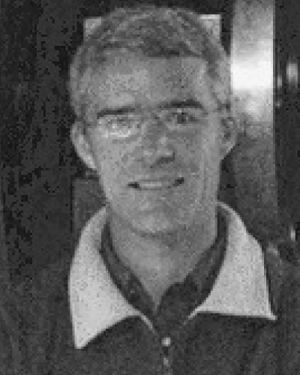 Gert Raskin合作论文数Instituut voor Sterrenkunde;K. U. Leuven;Instituut voor Sterrenkunde|K. U. Leuven1
 Gabby Kroes合作论文数1
 Goncalo Figueira合作论文数GoLP, Portugal1Tibor Agocs合作论文数1
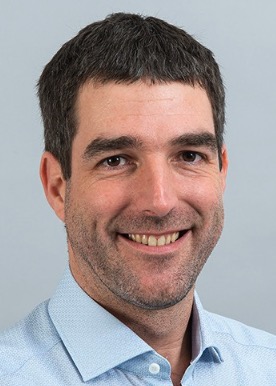 Adrian Michael Glauser合作论文数Institute for Particle Physics and Astrophysics, Eidgenössische Technische Hochschule Zürich;Department of Physics, Eidgenössische Technische Hochschule Zürich1
 Gilles Orban de Xivry合作论文数1Norbert Geis合作论文数1




