An automated water sampling device was developed to collect environmental DNA (eDNA) in aquatic environments with minimal human intervention. Dartmouth Ocean Tech-nologies Inc. (DOT) and NatureMetrics have collaborated to produce an eDNA Sampler equipped with NatureMetrics filters to achieve higher volume filtration. The “DOT-NM eDNA Sampler” demonstrated significantly improved filtering capabilities during benchtop testing when tested in parallel with a standard DOT eDNA Sampler loaded with comparable filter membranes. After benchtop testing, the unit was deployed for a 5-day period in Portchester, UK. A parametric study was performed using different sampling volumes: 1 L, 2 L, and 5 L. Results show that significantly-larger volumes are possible before filter clogging. Metabarcoding analysis of samples revealed a similar number of eukaryotic species detected for each of the three tested volumes. The same analysis, however, revealed a positive correlation between the number of vertebrates detected and the sampled volume. This result highlights the benefit of higher filtration volumes when using environmental DNA sampling to identify vertebrates in an environment.
A continuous flow with reagent injection method on a novel inlaid microfluidic platform for nitrite determination has been successfully developed. The significance of the high-frequency monitoring of nutrient fluctuations in marine environments is crucial for understanding our impacts on the ecosystem. Many in-situ systems face limitations in high-frequency data collection and have restricted deployment times due to high reagent consumption. The proposed microfluidic device employs automatic colorimetric absorbance spectrophotometry, using the Griess assay for nitrite determination, with minimal reagent usage. The sensor incorporates 10 solenoid valves, four syringes, two LEDs, four photodiodes, and an inlaid microfluidic technique to facilitate optical measurements of fluid volumes. In this flow system, Taylor–Aris dispersion was simulated for different injection volumes at a constant flow rate, and the results have been experimentally confirmed using red food dye injection into a carrier stream. A series of tests were conducted to determine a suitable injection frequency for the reagent. Following the initial system characterization, seven different standard concentrations ranging from 0.125 to 10 µM nitrite were run through the microfluidic device to acquire a calibration curve. Three different calibrations were performed to optimize plug length, with reagent injection volumes of 4, 20, and 50 µL. A straightforward signal processing method was implemented to mitigate the Schlieren effect caused by differences in refractive indexes between the reagent and standards. The results demonstrate that a sampling frequency of at least 10 samples per hour is achievable using this system. The obtained attenuation coefficients exhibited good agreement with the literature, while the reagent consumption was significantly reduced. The limit of detection for a 20 µL injection volume was determined to be 94 nM from the sample intake, and the limit of quantification was 312 nM. Going forward, the demonstrated system will be packaged in a submersible enclosure to facilitate in-situ colorimetric measurements in marine environments.
Monitoring biological diversity is essential for monitoring ecosystem health and evaluating conservation efforts. Environmental DNA metabarcoding has emerged as a powerful, scalable, and minimally invasive tool for assessing biodiversity. In this study, we evaluate the performance of an autonomous eDNA sampling platform deployed over a nine-week period and compare it with a traditional filter-at-sample (F AS) sampling protocol. Our results show that the autonomous sampling platform consistently captures and preserves DNA with comparable effectiveness to conventional in-situ filtering and preservation at −80°C. Using two eDNA markers, we found that fish communities (12S marker) identified by both sampling methods largely overlapped, while invertebrate detections (COI marker) differed between methods, likely due to differences in filter specifications. These findings demonstrate that the autonomous samplers worked effectively in comparison to traditional methods, highlighting their potential to expand the temporal and spatial coverage of eDNA-based biodiversity monitoring. The ability of these samplers to facilitate long-term and continuous sampling in challenging environments shows promise for advancing eDNA applications in diverse and remote settings. Further research is needed to assess their performance in deeper waters and over extended periods, particularly to evaluate eDNA preservation at ambient ocean temperatures.
The collection and analysis of environmental DNA is slow, difficult and costly. To facilitate and broaden the use of eDNA technologies, an autonomous eDNA sensor has been designed for in-situ qPCR analysis. The eDNA sensor will provide results in near real-time, reporting the positive or negative detection of a target DNA sequence. The sensor is designed to operate fully autonomously, with on-board reagents, rechargeable batteries, and positive and negative controls. To verify sensor results and to enable a broader swath of lab-based analyses, archival samples are acquired in parallel with analyzed samples. Subsystems of sampling, extraction, and analysis have all been independently tested with promising results. The eDNA sensor presented here will enable same-day decision making regarding commercial activity, conservation efforts, and field research.
We have designed, built, tested, and deployed an autonomous in situ analyzer for seawater total alkalinity. Such analyzers are required to understand the ocean carbon cycle, including anthropogenic carbon dioxide (CO2) uptake and for mitigation efforts via monitoring, reporting, and verification of carbon dioxide removal through ocean alkalinity enhancement. The microfluidic nature of our instrument makes it relatively lightweight, reagent efficient, and amenable for use on platforms that would carry it on long-term deployments. Our analyzer performs a series of onboard closed-cell titrations with three independent stepper-motor driven syringe pumps, providing highly accurate mixing ratios that can be systematically swept through a range of pH values. Temperature effects are characterized over the range 5-25 °C allowing for field use in most ocean environments. Each titration point requires approximately 170 μL of titrant, 830 μL of sample, 460 J of energy, and a total of 105 s for pumping and optical measurement. The analyzer performance is demonstrated through field data acquired at two sites, representing a cumulative 25 days of operation, and is evaluated against laboratory measurements of discrete water samples. Once calibrated against onboard certified reference material, the analyzer showed an accuracy of -0.17 ± 24 μmol kg-1. We further report a precision of 16 μmol kg-1, evaluated on repeated in situ measurements of the aforementioned certified reference material. The total alkalinity analyzer presented here will allow measurements to take place in remote areas over extended periods of time, facilitating affordable observations of a key parameter of the ocean carbon system with high spatial and temporal resolution.
Using environmental DNA (eDNA) to monitor biodiversity in aquatic environments is becoming an efficient and cost-effective alternative to other methods such as visual and acoustic identification. Until recently, eDNA sampling was accomplished primarily through manual sampling methods; however, with technological advances, automated samplers are being developed to make sampling easier and more accessible. This paper describes a new eDNA sampler capable of self-cleaning and multi-sample capture and preservation, all within a single unit capable of being deployed by a single person. The first in-field test of this sampler took place in the Bedford Basin, Nova Scotia, Canada alongside parallel samples taken using the typical Niskin bottle collection and post-collection filtration method. Both methods were able to capture the same aquatic microbial community and counts of representative DNA sequences were well correlated between methods with R ^2 values ranging from 0.71–0.93. The two collection methods returned the same top 10 families in near identical relative abundance, demonstrating that the sampler was able to capture the same community composition of common microbes as the Niskin. The presented eDNA sampler provides a robust alternative to manual sampling methods, is amenable to autonomous vehicle payload constraints, and will facilitate persistent monitoring of remote and inaccessible sites.
Environmental DNA (eDNA) analysis offers a time- and cost-efficient method to perform temporal and spatial observations of aquatic environments, providing a wealth of biodiversity data. Unfortunately, most protocols require manual collection of eDNA samples using highly skilled individuals to capture, filter and store the samples before they can be sent to a lab for analysis. Automated samplers exist to reduce this front-end collection burden, but they tend to be bulky and costly. Here we describe an eDNA sampler designed to be user-friendly and to automate the entire sample collection process. We describe and characterize our eDNA sampler, which offers multi-sample capture, preservation, and self cleaning to reduce cross contamination. DNA sequencing was performed on samples collected using the eDNA sampler as well as a traditional niskin bottle-based protocol at six stations in Bedford Basin, Nova Scotia, Canada. The two approaches showed similar algal and bacterial taxonomic compositions, demonstrating the ability of the eDNA sampler to generate results comparable to those obtained through gold-standard protocols.
Presented here is the fabrication and characterization of a tunable microfluidic check valve for use in marine nutrient sensing. The ball-style valve makes use of a rare-earth permanent magnet, which exerts a pulling force to ensure it remains passively sealed until the prescribed cracking pressure is met. By adjusting the position of the magnet, the cracking pressure is shown to be customizable to meet design requirements. Further applicability is shown by integrating the valve into a poly(methyl methacrylate) (PMMA) lab-on-chip device with an integrated optical absorbance cell for nitrite detection in seawater. Micro-milling is used to manufacture both the valve and the micro-channel structures. The valve is characterized up to a flow rate of 14 mL min−1 and exhibits low leakage rates at high back pressures (<2 µL min−1 at ~350 kPa). It is low cost, requires no power, and is easily implemented on microfluidic platforms.
 Vincent J Sieben合作论文数Dalhousie Univ, Dept Elect & Comp Engn, 1360 Barrington St, Halifax, NS B3H 4R2, Canada8
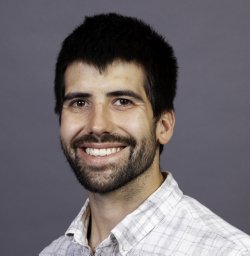 Colin Sonnichsen合作论文数McGill Univ, Dept Chem, Montreal, PQ H3A 0B8, Canada7
 Iain Grundke合作论文数6
 Julie Laroche合作论文数Department of Biology, Dalhousie University5
 Robert G. Beiko合作论文数Faculty of Computer Science, Dalhousie University5Armold Furlong合作论文数4
 Edward Luy合作论文数4James Smith合作论文数3Sean Morgan合作论文数3
 Mahtab Tavasoli合作论文数Faculty of Pharmacy and Pharmaceutical Sciences, University of Alberta3
 Joshua J Creelman合作论文数1Lee Miller合作论文数1Mark Wright合作论文数1Edward P. W. Horne合作论文数1
 Mallory Van Wyngaarden合作论文数1
 Dariia Atamanchuk合作论文数Chemistry and Molecular Biology, University of Gothenburg1
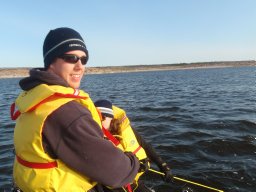 Nicholas W. Jeffery合作论文数1
 Rute B G Clemente-Carvalho合作论文数1
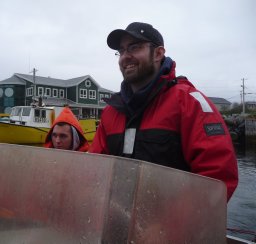 Ryan R.E. Stanley合作论文数Ocean Sciences Centre and Biology Department, Memorial University of Newfoundland1Tolman Jennifer S合作论文数1
 Mae L. Seto合作论文数Def R&D Canada1




