We present the results of a search for gravitational-wave transients associated with core-collapse supernova SN 2023ixf, which was observed in the galaxy Messier 101 via optical emission on 2023 May 19, during the LIGO–Virgo–KAGRA 15th Engineering Run. We define a five-day on-source window during which an accompanying gravitational-wave signal may have occurred. No gravitational waves have been identified in data when at least two gravitational-wave observatories were operating, which covered ∼14% of this five-day window. We report the search detection efficiency for various possible gravitational-wave emission models. Considering the distance to M101 (6.7 Mpc), we derive constraints on the gravitational-wave emission mechanism of core-collapse supernovae across a broad frequency spectrum, ranging from 50 Hz to 2 kHz, where we assume the gravitational-wave emission occurred when coincident data are available in the on-source window. Considering an ellipsoid model for a rotating proto-neutron star, our search is sensitive to gravitational-wave energy 1 × 10 −4 M ⊙ c 2 and luminosity 2.6 × 10 −4 M ⊙ c 2 s −1 for a source emitting at 82 Hz. These constraints are around an order of magnitude more stringent than those obtained so far with gravitational-wave data. The constraint on the ellipticity of the proto-neutron star that is formed is as low as 1.08, at frequencies above 1200 Hz, surpassing past results.
We present results from a search for X-ray/gamma-ray counterparts of gravitational-wave (GW) candidates from the third observing run (O3) of the LIGO-Virgo-KAGRA network using the Swift Burst Alert Telescope (Swift-BAT). The search includes 636 GW candidates received with low latency, 86 of which have been confirmed by the offline analysis and included in the third cumulative Gravitational-Wave Transient Catalogs (GWTC-3). Targeted searches were carried out on the entire GW sample using the maximum-likelihood Non-imaging Transient Reconstruction and Temporal Search pipeline on the BAT data made available via the GUANO infrastructure. We do not detect any significant electromagnetic emission that is temporally and spatially coincident with any of the GW candidates. We report flux upper limits in the 15-350 keV band as a function of sky position for all the catalog candidates. For GW candidates where the Swift-BAT false alarm rate is less than 10(-3) Hz, we compute the GW-BAT joint false alarm rate. Finally, the derived Swift-BAT upper limits are used to infer constraints on the putative electromagnetic emission associated with binary black hole mergers.
We present Fermi Gamma-ray Burst Monitor (Fermi-GBM) and Swift Burst Alert Telescope (Swift-BAT) searches for gamma-ray/X-ray counterparts to gravitational wave (GW) candidate events identified during the third observing run of the Advanced LIGO and Advanced Virgo detectors. Using Fermi-GBM on-board triggers and sub-threshold gamma-ray burst (GRB) candidates found in the Fermi-GBM ground analyses, the Targeted Search and the Untargeted Search, we investigate whether there are any coincident GRBs associated with the GWs. We also search the Swift-BAT rate data around the GW times to determine whether a GRB counterpart is present. No counterparts are found. Using both the Fermi-GBM Targeted Search and the Swift-BAT search, we calculate flux upper limits and present joint upper limits on the gamma-ray luminosity of each GW. Given these limits, we constrain theoretical models for the emission of gamma-rays from binary black hole mergers.
Despite the growing number of confident binary black hole coalescences observed through gravitational waves so far, the astrophysical origin of these binaries remains uncertain. Orbital eccentricity is one of the clearest tracers of binary formation channels. Identifying binary eccentricity, however, remains challenging due to the limited availability of gravitational waveforms that include effects of eccentricity. Here, we present observational results for a waveform-independent search sensitive to eccentric black hole coalescences, covering the third observing run (O3) of the LIGO and Virgo detectors. We identified no new high-significance candidates beyond those that were already identified with searches focusing on quasi-circular binaries. We determine the sensitivity of our search to high-mass (total mass $M>70$ $M_\odot$) binaries covering eccentricities up to 0.3 at 15 Hz orbital frequency, and use this to compare model predictions to search results. Assuming all detections are indeed quasi-circular, for our fiducial population model, we place an upper limit for the merger rate density of high-mass binaries with eccentricities $0 < e \leq 0.3$ at $0.33$ Gpc$^{-3}$ yr$^{-1}$ at 90\% confidence level.
The magnetar SGR 1935+2154 is the only known Galactic source of fast radio bursts (FRBs). FRBs from SGR 1935+2154 were first detected by the Canadian Hydrogen Intensity Mapping Experiment (CHIME)/FRB and the Survey for Transient Astronomical Radio Emission 2 in 2020 April, after the conclusion of the LIGO, Virgo, and KAGRA Collaborations' O3 observing run. Here, we analyze four periods of gravitational wave (GW) data from the GEO600 detector coincident with four periods of FRB activity detected by CHIME/FRB, as well as X-ray glitches and X-ray bursts detected by NICER and NuSTAR close to the time of one of the FRBs. We do not detect any significant GW emission from any of the events. Instead, using a short-duration GW search (for bursts <= 1 s) we derive 50% (90%) upper limits of 10(48) (10(49)) erg for GWs at 300 Hz and 10(49) (10(50)) erg at 2 kHz, and constrain the GW-to-radio energy ratio to <= 10(14)-10(16). We also derive upper limits from a long-duration search for bursts with durations between 1 and 10 s. These represent the strictest upper limits on concurrent GW emission from FRBs.
We report the observation of a coalescing compact binary with component masses 2.5-4.5 M-circle dot and 1.2-2.0 M-circle dot (all measurements quoted at the 90% credible level). The gravitational-wave signal GW230529_181500 was observed during the fourth observing run of the LIGO-Virgo-KAGRA detector network on 2023 May 29 by the LIGO Livingston observatory. The primary component of the source has a mass less than 5 M-circle dot at 99% credibility. We cannot definitively determine from gravitational-wave data alone whether either component of the source is a neutron star or a black hole. However, given existing estimates of the maximum neutron star mass, we find the most probable interpretation of the source to be the coalescence of a neutron star with a black hole that has a mass between the most massive neutron stars and the least massive black holes observed in the Galaxy. We provisionally estimate a merger rate density of 55(-47)(+127) Gpc-3yr(-1) for compact binary coalescences with properties similar to the source of GW230529_181500; assuming that the source is a neutron star-black hole merger, GW230529_181500-like sources may make up the majority of neutron star-black hole coalescences. The discovery of this system implies an increase in the expected rate of neutron star-black hole mergers with electromagnetic counterparts and provides further evidence for compact objects existing within the purported lower mass gap.
Magnetars are neutron stars with exceptionally strong dipole magnetic fields which are observed to display a range of x-ray flaring behavior, but the flaring mechanism is not well understood. The third observing run of Advanced LIGO and Virgo extended from April 1, 2019 to March 27, 2020, and contained x-ray flares from known magnetar SGR 1935+2154, as well as the newly-discovered magnetar, Swift J1818-1607. We search for gravitational waves coincident with these magnetar flares with minimally modeled, coherent searches which specifically target both short-duration gravitational waves produced by excited f-modes in the magnetar's core, as well as long-duration gravitational waves motivated by the Quasi-Periodic Oscillations observed in the tails of giant flares. In this paper, we report on the methods and sensitivity estimates of these searches, and the astrophysical implications.
Among the various candidates for dark matter (DM), ultralight vector DM can be probed by laser interferometric gravitational wave detectors through the measurement of oscillating length changes in the arm cavities. In this context, KAGRA has a unique feature due to differing compositions of its mirrors, enhancing the signal of vector DM in the length change in the auxiliary channels. Here we present the result of a search for $U(1)_{B-L}$ gauge boson DM using the KAGRA data from auxiliary length channels during the first joint observation run together with GEO600. By applying our search pipeline, which takes into account the stochastic nature of ultralight DM, upper bounds on the coupling strength between the $U(1)_{B-L}$ gauge boson and ordinary matter are obtained for a range of DM masses. While our constraints are less stringent than those derived from previous experiments, this study demonstrates the applicability of our method to the lower-mass vector DM search, which is made difficult in this measurement by the short observation time compared to the auto-correlation time scale of DM.
Gravitational lensing by massive objects along the line of sight to the source causes distortions to gravitational wave (GW) signals; such distortions may reveal information about fundamental physics, cosmology, and astrophysics. In this work, we have extended the search for lensing signatures to all binary black hole events from the third observing run of the LIGO-Virgo network. We search for repeated signals from strong lensing by (1) performing targeted searches for subthreshold signals, (2) calculating the degree of overlap among the intrinsic parameters and sky location of pairs of signals, (3) comparing the similarities of the spectrograms among pairs of signals, and (4) performing dual-signal Bayesian analysis that takes into account selection effects and astrophysical knowledge. We also search for distortions to the gravitational waveform caused by (1) frequency-independent phase shifts in strongly lensed images, and (2) frequency-dependent modulation of the amplitude and phase due to point masses. None of these searches yields significant evidence for lensing. Finally, we use the nondetection of GW lensing to constrain the lensing rate based on the latest merger-rate estimates and the fraction of dark matter composed of compact objects.
The second Gravitational-Wave Transient Catalog reported on 39 compact binary coalescences observed by the Advanced LIGO and Advanced Virgo detectors between 1 April 2019 15:00 UTC and 1 October 2019 15:00 UTC. We present GWTC-2.1, which reports on a deeper list of candidate events observed over the same period. We analyze the final version of the strain data over this period with improved calibration and better subtraction of excess noise, which has been publicly released. We employ three matched-filter search pipelines for candidate identification, and estimate the astrophysical probability for each candidate event. While GWTC-2 used a false alarm rate threshold of 2 per year, we include in GWTC-2.1, 1201 candidates that pass a false alarm rate threshold of 2 per day. We calculate the source properties of a subset of 44 high-significance candidates that have an astrophysical probability greater than 0.5. Of these candidates, 36 have been reported in GWTC-2. If the 8 additional high-significance candidates presented here are astrophysical, the mass range of events that are unambiguously identified as binary black holes (both objects $\geq 3M_\odot$) is increased compared to GWTC-2, with total masses from $\sim 14 M_\odot$ for GW190924_021846 to $\sim 182 M_\odot$ for GW190426_190642. The primary components of two new candidate events (GW190403_051519 and GW190426_190642) fall in the mass gap predicted by pair instability supernova theory. We also expand the population of binaries with significantly asymmetric mass ratios reported in GWTC-2 by an additional two events (the mass ratio is less than $0.65$ and $0.44$ at $90\%$ probability for GW190403_051519 and GW190917_114630 respectively), and find that 2 of the 8 new events have effective inspiral spins $\chi_\mathrm{eff} > 0$ (at $90\%$ credibility), while no binary is consistent with $\chi_\mathrm{eff} < 0$ at the same significance.
In this Letter, we present the design and performance of the frequency-dependent squeezed vacuum source that will be used for the broadband quantum noise reduction of the Advanced Virgo Plus gravitational-wave detector in the upcoming observation run. The frequency-dependent squeezed field is generated by a phase rotation of a frequency-independent squeezed state through a 285 m long, high-finesse, near-detuned optical resonator. With about 8.5 dB of generated squeezing, up to 5.6 dB of quantum noise suppression has been measured at high frequency while close to the filter cavity resonance frequency, the intracavity losses limit this value to about 2 dB. Frequency-dependent squeezing is produced with a rotation frequency stability of about 6 Hz rms, which is maintained over the long term. The achieved results fulfill the frequency dependent squeezed vacuum source requirements for Advanced Virgo Plus. With the current squeezing source, considering also the estimated squeezing degradation induced by the interferometer, we expect a reduction of the quantum shot noise and radiation pressure noise of up to 4.5 dB and 2 dB, respectively.
We search for gravitational-wave (GW) transients associated with fast radio bursts (FRBs) detected by the Canadian Hydrogen Intensity Mapping Experiment Fast Radio Burst Project, during the first part of the third observing run of Advanced LIGO and Advanced Virgo (2019 April 1 15:00 UTC–2019 October 1 15:00 UTC). Triggers from 22 FRBs were analyzed with a search that targets both binary neutron star (BNS) and neutron star–black hole (NSBH) mergers. A targeted search for generic GW transients was conducted on 40 FRBs. We find no significant evidence for a GW association in either search. Given the large uncertainties in the distances of our FRB sample, we are unable to exclude the possibility of a GW association. Assessing the volumetric event rates of both FRB and binary mergers, an association is limited to 15% of the FRB population for BNS mergers or 1% for NSBH mergers. We report 90% confidence lower bounds on the distance to each FRB for a range of GW progenitor models and set upper limits on the energy emitted through GWs for a range of emission scenarios. We find values of order 10 51 –10 57 erg for models with central GW frequencies in the range 70–3560 Hz. At the sensitivity of this search, we find these limits to be above the predicted GW emissions for the models considered. We also find no significant coincident detection of GWs with the repeater, FRB 20200120E, which is the closest known extragalactic FRB.
While completing the commissioning phase to prepare the Virgo interferometer for the next joint Observation Run (O4), the Virgo collaboration is also finalizing the design of the next upgrades to the detector to be employed in the following Observation Run (O5). The major upgrade will concern decreasing the thermal noise limit, which will imply using very large test masses and increased laser beam size. But this will not be the only upgrade to be implemented in the break between the O4 and O5 observation runs to increase the Virgo detector strain sensitivity. The paper will cover the challenges linked to this upgrade and implications on the detector’s reach and observational potential, reflecting the talk given at 12th Cosmic Ray International Seminar - CRIS 2022 held in September 2022 in Napoli.
The Virgo detector, based at the EGO (European Gravitational Observatory) and located in Cascina (Pisa), played a significant role in the development of the gravitational-wave astronomy. From its first scientific run in 2007, the Virgo detector has constantly been upgraded over the years; since 2017, with the Advanced Virgo project, the detector reached a high sensitivity that allowed the detection of several classes of sources and to investigate new physics. This work reports the main hardware upgrades of the detector and the main astrophysical results from the latest five years; future prospects for the Virgo detector are also presented.
We present directed searches for continuous gravitational waves from the neutron stars in the Cassiopeia A (Cas A) and Vela Jr. supernova remnants. We carry out the searches in the LIGO data from the first six months of the third Advanced LIGO and Virgo observing run, using the Weave semi-coherent method, which sums matched-filter detection-statistic values over many time segments spanning the observation period. No gravitational wave signal is detected in the search band of 20--976 Hz for assumed source ages greater than 300 years for Cas A and greater than 700 years for Vela Jr. Estimates from simulated continuous wave signals indicate we achieve the most sensitive results to date across the explored parameter space volume, probing to strain magnitudes as low as ~$6.3\times10^{-26}$ for Cas A and ~$5.6\times10^{-26}$ for Vela Jr. at frequencies near 166 Hz at 95% efficiency.
We present a search for dark photon dark matter that could couple to gravitational-wave interferometers using data from Advanced LIGO and Virgo's third observing run. To perform this analysis, we use two methods, one based on cross-correlation of the strain channels in the two nearly aligned LIGO detectors, and one that looks for excess power in the strain channels of the LIGO and Virgo detectors. The excess power method optimizes the Fourier Transform coherence time as a function of frequency, to account for the expected signal width due to Doppler modulations. We do not find any evidence of dark photon dark matter with a mass between $m_{\rm A} \sim 10^{-14}-10^{-11}$ eV/$c^2$, which corresponds to frequencies between 10-2000 Hz, and therefore provide upper limits on the square of the minimum coupling of dark photons to baryons, i.e. $U(1)_{\rm B}$ dark matter. For the cross-correlation method, the best median constraint on the squared coupling is $\sim2.65\times10^{-46}$ at $m_{\rm A}\sim4.31\times10^{-13}$ eV/$c^2$; for the other analysis, the best constraint is $\sim 2.4\times 10^{-47}$ at $m_{\rm A}\sim 5.7\times 10^{-13}$ eV/$c^2$. These limits improve upon those obtained in direct dark matter detection experiments by a factor of $\sim100$ for $m_{\rm A}\sim [2-4]\times 10^{-13}$ eV/$c^2$, and are, in absolute terms, the most stringent constraint so far in a large mass range $m_A\sim$ $2\times 10^{-13}-8\times 10^{-12}$ eV/$c^2$.
We present the first results from an all-sky all-frequency (ASAF) search for an anisotropic stochastic gravitational-wave background using the data from the first three observing runs of the Advanced LIGO and Advanced Virgo detectors. Upper limit maps on broadband anisotropies of a persistent stochastic background were published for all observing runs of the LIGO-Virgo detectors. However, a broadband analysis is likely to miss narrowband signals as the signal-to-noise ratio of a narrowband signal can be significantly reduced when combined with detector output from other frequencies. Data folding and the computationally efficient analysis pipeline, {\tt PyStoch}, enable us to perform the radiometer map-making at every frequency bin. We perform the search at 3072 {\tt{HEALPix}} equal area pixels uniformly tiling the sky and in every frequency bin of width $1/32$~Hz in the range $20-1726$~Hz, except for bins that are likely to contain instrumental artefacts and hence are notched. We do not find any statistically significant evidence for the existence of narrowband gravitational-wave signals in the analyzed frequency bins. Therefore, we place $95\%$ confidence upper limits on the gravitational-wave strain for each pixel-frequency pair, the limits are in the range $(0.030 - 9.6) \times10^{-24}$. In addition, we outline a method to identify candidate pixel-frequency pairs that could be followed up by a more sensitive (and potentially computationally expensive) search, e.g., a matched-filtering-based analysis, to look for fainter nearly monochromatic coherent signals. The ASAF analysis is inherently independent of models describing any spectral or spatial distribution of power. We demonstrate that the ASAF results can be appropriately combined over frequencies and sky directions to successfully recover the broadband directional and isotropic results.
Sources of geophysical noise (such as wind, sea waves and earthquakes) or of anthropogenic noise impact ground-based gravitational-wave interferometric detectors, causing transient sensitivity worsening and gaps in data taking. During the one year-long third Observing Run (O3: from April 01, 2019 to March 27, 2020), the Virgo Collaboration collected a statistically significant dataset, used in this article to study the response of the detector to a variety of environmental conditions. We correlated environmental parameters to global detector performance, such as observation range, duty cycle and control losses. Where possible, we identified weaknesses in the detector that will be used to elaborate strategies in order to improve Virgo robustness against external disturbances for the next data taking period, O4, currently planned to start at the end of 2022. The lessons learned could also provide useful insights for the design of the next generation of ground-based interferometers.
We present results of an all-sky search for continuous gravitational waves which can be produced by spinning neutron stars with an asymmetry around their rotation axis, using data from the third observing run of the Advanced LIGO and Advanced Virgo detectors. Four different analysis methods are used to search in a gravitational-wave frequency band from 10 to 2048 Hz and a first frequency derivative from $-10^{-8}$ to $10^{-9}$ Hz/s. No statistically-significant periodic gravitational-wave signal is observed by any of the four searches. As a result, upper limits on the gravitational-wave strain amplitude $h_0$ are calculated. The best upper limits are obtained in the frequency range of 100 to 200 Hz and they are ${\sim}1.1\times10^{-25}$ at 95\% confidence-level. The minimum upper limit of $1.10\times10^{-25}$ is achieved at a frequency 111.5 Hz. We also place constraints on the rates and abundances of nearby planetary- and asteroid-mass primordial black holes that could give rise to continuous gravitational-wave signals.
We report the results of the first joint observation of the KAGRA detector with GEO600. KAGRA is a cryogenic and underground gravitational-wave detector consisting of a laser interferometer with three-kilometer arms, and located in Kamioka, Gifu, Japan. GEO600 is a British--German laser interferometer with 600 m arms, and located near Hannover, Germany. GEO600 and KAGRA performed a joint observing run from April 7 to 20, 2020. We present the results of the joint analysis of the GEO--KAGRA data for transient gravitational-wave signals, including the coalescence of neutron-star binaries and generic unmodeled transients. We also perform dedicated searches for binary coalescence signals and generic transients associated with gamma-ray burst events observed during the joint run. No gravitational-wave events were identified. We evaluate the minimum detectable amplitude for various types of transient signals and the spacetime volume for which the network is sensitive to binary neutron-star coalescences. We also place lower limits on the distances to the gamma-ray bursts analysed based on the non-detection of an associated gravitational-wave signal for several signal models, including binary coalescences. These analyses demonstrate the feasibility and utility of KAGRA as a member of the global gravitational-wave detector network.
 Rosa Poggiani合作论文数Department of Physics, University of Pisa216
 F. Vetrano合作论文数216
 Giovanni Losurdo合作论文数Scuola Normale Superiore;Istituto Nazionale di Fisica Nucleare211
 Roberto Passaquieti合作论文数Dipartimento di Fisica, Universita’ di Pisa209
 Federico Paoletti合作论文数Istituto Nazionale di Fisica Nucleare;European Gravitational Observatory209
 Alberto Gennai合作论文数Università di Pisa;Istituto Nazionale di Fisica Nucleare206
 Piero Rapagnani合作论文数Dipartimento di Fisica, Sapienza Università di Roma;Istituto Nazionale di Fisica Nucleare203
 G. Cella合作论文数Istituto Nazionale di Fisica Nucleare202A. Pasqualetti合作论文数197
 Ettore Majorana合作论文数Dipartimento di Fisica, Sapienza Università di Roma197Luciano Di Fiore合作论文数Università degli studi di Napoli " Federico II "197
 Jean-Yves Vinet合作论文数Galaxie Université Côte d'Azur;C.N.R.S.192
 Paola Puppo合作论文数Istituto Nazionale di Fisica Nucleare Sezione di Roma;Virgo Experiment190
 Francesco Fidecaro合作论文数Physics Department, Pisa University188
 De Rosa Rosario合作论文数Dipartimento Di Fisica "Ettore Pancini", Università degli Studi di Napoli Federico II188
 Elena Cuoco合作论文数Department of Physics and Astronomy "Augusto Righi", University of Bologna188
 Helios Vocca合作论文数Physics Department, University of Perugia188
 Flavio Travasso合作论文数Dipartimento di Fisica e Geologia, Università degli Studi di Perugia;Università di Camerino186L. Milano合作论文数Istituto Nazionale di Ottica - CNR - 50125 Firenze, Italy185
 Francesco Piergiovanni合作论文数Dipartimento di Scienze Pure e Applicate, Università degli Studi di Urbino Carlo Bo184F. Frasconi合作论文数184Cristiano Palomba合作论文数Sezione di Roma, INFN184
 Michele Punturo合作论文数Istituto Nazionale di Fisica Nucleare183
 Carlo Bradaschia合作论文数Istituto Nazionale di Fisica Nucleare, Sezione di Pisa183P. Hello合作论文数183
 Isidoro Ferrante合作论文数Dipartimento di Fisica, Università Di Pisa183
 Vincent Loriette合作论文数182
 Laurent Pinard合作论文数Laboratoire des Matériaux Avancés179P. Ruggi合作论文数177
 Conor Mow-Lowry合作论文数Faculty of Science, The Australian National University176Henrich Heitmann合作论文数System Engineering Department, European Gravitational Observatory175
 Raffaele Flaminio合作论文数Laboratoire d'Annecy de Physique des Particules, CNRS175Vincenzo Dattilo合作论文数Interferometer Technology Department, European Gravitational Observatory175
 Enrico Calloni合作论文数Diparitmento di Scienze Fisiche, Università di Napoli Federico II175
 Mauro Tonelli合作论文数Dipartimento di Fisica, Università di Pisa171
 Didier Verkindt合作论文数French National Centre for Scientific Research167
 Fabrizio Barone合作论文数Dipartimento di Medicina, Chirurgia e Odontoiatria “Scuola Medica Salernitana”, University of Salerno166f cavalier合作论文数166I. Fiori合作论文数Istituto Nazionale di Fisica Nucleare166
 Fabio Marchesoni合作论文数Physics Division, School of Science and Technology, University of Camerino;Tongji University165
 Fausto Acernese合作论文数Dipartimento di Farmacia, Università degli Studi di Salerno165
 Damir Buskulic合作论文数Laboratoire d'Annecy de Physique des Particules;Université Savoie Mont Blanc163Jean-Pierre Coulon合作论文数Galaxie Université Côte d'Azur163
 Michel Davier合作论文数Université Paris-Saclay162
 Sergio Frasca合作论文数Dipartimento di Fisica Roma, Università di Roma “La Sapienza”162
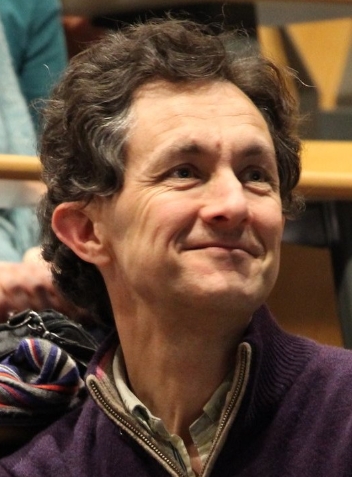 François Bondu合作论文数Institut Foton, Université Rennes162
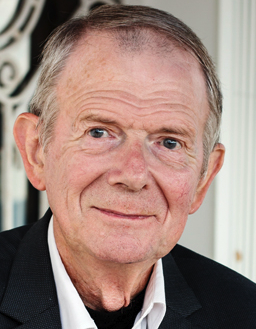 Alain Brillet合作论文数Centre National De La Recherche Scientifique161
 Maddalena Mantovani合作论文数European Gravitational Observatory161
 Adalberto Giazotto合作论文数INFN - Istituto Nazionale di Fisica Nucleare160




