Quantum Machine Learning (QML) offers a promising paradigm that leverages quantum computing principles to develop efficient and expressive models for learning from complex and structured data. Recent advances in natural language processing (NLP) and artificial intelligence (AI) have demonstrated capabilities in understanding, generating, and reasoning over linguistic and multimodal information. In this work, we present the Quantum Graph Transformer (QGT), a hybrid quantum-classical architecture that extends graph transformer capabilities through quantum self-attention. The QGT models variable-length sentences as token graphs, where both the embedding encoding and the self-attention mechanisms are implemented using parameterized quantum circuits (PQCs), enabling efficient contextual learning with significantly fewer trainable parameters. We train QGT using both fully connected and -nearest-neighbor graph structures and evaluate it on five benchmark sentiment-classification datasets. Experimental results show that QGT consistently achieves higher or comparable accuracy to existing quantum NLP models and outperforms a Classical Graph Transformer (CGT) baseline with identical architecture, achieving fewer parameters while requiring 3- fewer samples to reach comparable performance. These findings highlight the potential of graph-based quantum models as scalable and data-efficient architectures for natural language understanding.
Quantum data learning (QDL) provides a framework for extracting physical insights directly from quantum states, bypassing the need for any identification of the classical observable of the theory. A central challenge in many-body physics is that the identity of quantum phases, especially those with topological order, is often inaccessible through local observables or simple symmetry-breaking diagnostics. Here, we apply QDL techniques to the 2 & thorn; 1-dimensional toric-code loop-gas model in a magnetic field. Ground states are generated across multiple lattice sizes using a parametrized loop-gas circuit with a variational quantum-eigensolver approach. We then train a quantum convolutional neural network across the full fieldparameter range to perform phase classification and capture the overall phase structure. We also employ a physics-aware training protocol that excludes the near-critical region (0.2 <= x <= 0.4) around xc approximate to 0.25, the phase-transition point estimated by quantum Monte Carlo simulation, reserving this window for testing to evaluate the ability of the model to learn the phase transition. In parallel, we implement an unsupervised quantum k-means method based on state overlaps, which partitions the dataset into two phases without prior labeling. Our supervised QDL approach recovers the phase structure and accurately locates the phase transition, in close agreement with previously reported values; the unsupervised QDL approach recovers the phase structure and locates the phase transition with a small offset as expected in finite volumes; both QDL methods outperform classical alternatives. These findings establish QDL as an effective framework for characterizing topological quantum matter, studying finite volume effects, and probing phase diagrams of higher-dimensional systems.
Motivated by near term quantum computing hardware limitations, combinatorial optimization problems that can be addressed by current quantum algorithms and noisy hardware with little or no overhead are used to probe capabilities of quantum algorithms such as the Quantum Approximate Optimization Algorithm (QAOA). In this study, a specific class of near term quantum computing hardware defined combinatorial optimization problems, Ising models on heavy-hex graphs both with and without geometrically local cubic terms, are examined for their classical computational hardness via empirical computation time scaling quantification. Specifically the Time-to-Solution metric using the classical heuristic simulated annealing is measured for finding optimal variable assignments (ground states), as well as the time required for the optimization software Gurobi to find an optimal variable assignment. Because of the sparsity of these Ising models, the classical algorithms are able to find optimal solutions efficiently even for large instances (i.e. 100,000 variables). The Ising models both with and without geometrically local cubic terms exhibit average-case linear-time or weakly quadratic scaling when solved exactly using Gurobi, and the Ising models with no cubic terms show evidence of exponential-time Time-to-Solution scaling when sampled using simulated annealing. These findings point to the necessity of developing and testing more complex, namely more densely connected, optimization problems in order for quantum computing to ever have a practical advantage over classical computing. Our results are another illustration that different classical algorithms can indeed have exponentially different running times, thus making the identification of the best practical classical technique important in any quantum computing vs. classical computing comparison.
The emergent practical applicability of the Quantum Approximate Optimization Algorithm (QAOA) for approximate combinatorial optimization is a subject of considerable interest. One of the primary limitations of QAOA is the task of finding a set of good parameters, which is usually done using a variational optimization loop. Parameter transfer, or parameter concentration, is a phenomenon where QAOA angles trained on problem instances that are self-similar tend to perform well for other problem instances from that similar class. This suggests a potentially highly efficient and scalable nonvariational learning method for QAOA angle finding. In this work, we systematically study QAOA parameter transferability from small problem sizes (16 and 27 decision variables) onto large problem instances (up to 156 qubits) for heavy-hex graph Ising models with geometrically local higher-order terms using the Julia based QAOA simulation tool JuliQAOA to perform classical angle finding for up to 49 QAOA layers (p). Parameter transfer of the fixed angles is validated using a combination of full state vector, projected entangled pair states, matrix product state, and LOWESA numerical simulations. We find that the QAOA parameter transfer from single instances applied to other (unseen) problem instances does not in general provide monotonically improving performance as a function of p-there are many cases where the performance temporarily decreases as a function of p-but despite this the transferred angles have a general trend of improved expectation value as the QAOA depth increases, in many cases converging close to the true ground-state energy of the 100+ qubit instances. We also sample the hardware-compatible Ising models using the ensemble of transfer-learned QAOA parameters on several superconducting qubit IBM quantum processors with 127, 133, and 156 qubits. We find continuous solution quality improvement of the hardware-compatible QAOA circuits run on the IBM noisy intermediate-scale quantum processors up to p = 5 on ibm_fez, up to p = 9 on ibm_torino, and up top = 10 on ibm_pittsburgh.
The emergence of quantum computing technology over the last decade indicates the potential for a transformational impact in the study of quantum mechanical systems. It is natural to presume that such computing technologies would be valuable to large scientific institutions, such as United States national laboratories. However, detailed descriptions of what these institutions would like to use these computers for are limited. To help provide some initial insights into this topic, this report develops detailed use cases of how quantum computing technology could be utilized to enhance a variety of quantum physics research activities at Los Alamos National Laboratory, including quantum magnetic materials, high-temperature superconductivity and nuclear astrophysics simulations. The report discusses how current high-performance computers are used for scientific discovery today and develops detailed descriptions of the types of quantum physics simulations that Los Alamos National Laboratory scientists would like to conduct, if a sufficient computing technology became available. While the report strives to highlight the breadth of potential application areas for quantum computation, this investigation has also indicated that many more use cases exist at Los Alamos National Laboratory, which could be documented in similar detail with sufficient time and effort.
The emergent practical applicability of the Quantum Approximate Optimization Algorithm (QAOA) for approximate combinatorial optimization is a subject of considerable interest. One of the primary limitations of QAOA is the task of finding a set of good parameters. Parameter transfer is a phenomenon where QAOA angles trained on problem instances that are self-similar tend to perform well for other problem instances from that similar class. This suggests a potentially highly efficient and scalable non-variational learning method for QAOA angle finding. We systematically study QAOA parameter transferability from small problems (16, 27 qubits) onto large problem instances (up to 156 qubits) for heavy-hex graph Ising models with geometrically local higher order terms using the Julia based QAOA simulation tool JuliQAOA to perform classical angle finding for up to 49 QAOA layers. Parameter transfer of the fixed angles is validated using a combination of full statevector, Projected Entangled Pair States, Matrix Product State, and LOWESA numerical simulations. We find that the QAOA parameter transfer from single instances applied to unseen problem instances does not in general provide monotonically improving performance as a function of p - there are many cases where the performance temporarily decreases as a function of p - but despite this the transferred angles have a general trend of improved expectation value as the QAOA depth increases, in many cases converging close to the true ground-state energy of the 100+ qubit instances. We also sample the hardware-compatible Ising models using the ensemble of fixed QAOA angles on several superconducting qubit IBM Quantum processors with 127, 133, and 156 qubits. We find continuous solution quality improvement of the hardware-compatible QAOA circuits run on the IBM NISQ processors up to p=5 on ibm_fez, p=9 on ibm_torino, and p=10 on ibm_pittsburgh.
Quantum machine learning is a promising direction for building more efficient and expressive models, particularly in domains where understanding complex, structured data is critical. We present the Quantum Graph Transformer (QGT), a hybrid graph-based architecture that integrates a quantum self-attention mechanism into the message-passing framework for structured language modeling. The attention mechanism is implemented using parameterized quantum circuits (PQCs), which enable the model to capture rich contextual relationships while significantly reducing the number of trainable parameters compared to classical attention mechanisms. We evaluate QGT on five sentiment classification benchmarks. Experimental results show that QGT consistently achieves higher or comparable accuracy than existing quantum natural language processing (QNLP) models, including both attention-based and non-attention-based approaches. When compared with an equivalent classical graph transformer, QGT yields an average accuracy improvement of 5.42 datasets. Additionally, QGT demonstrates improved sample efficiency, requiring nearly 50 dataset. These results highlight the potential of graph-based QNLP techniques for advancing efficient and scalable language understanding.
The quantum approximate optimization algorithm, also known in its generalization as the quantum alternating operator ansatz, (QAOA) is a heuristic hybrid quantum-classical algorithm for finding high-quality approximate solutions to combinatorial optimization problems, such as maximum satisfiability. While the QAOA is well studied, theoretical results as to its runtime or approximation ratio guarantees are still relatively sparse. We provide some of the first lower bounds for the number of rounds (the dominant component of QAOA runtimes) required for the QAOA. For our main result, we (i) leverage a connection between quantum annealing times and the angles of the QAOA to derive a lower bound on the number of rounds of the QAOA with respect to the guaranteed approximation ratio. We apply and calculate this bound with Grover-style mixing unitaries and (ii) show that this type of QAOA requires at least a polynomial number of rounds to guarantee any constant approximation ratios for most problems. We also (iii) show that the bound depends only on the statistical values of the objective functions, and when the problem can be modeled as a $k$-local Hamiltonian, can be easily estimated from the coefficients of the Hamiltonians. For the conventional transverse-field mixer, (iv) our framework gives a trivial lower bound to all bounded-occurrence local cost problems and for all strictly $k$-local cost Hamiltonians matching known results that constant approximation ratio is obtainable with a constant-round QAOA for a few optimization problems from these classes. Using our proof framework, (v) we recover the Grover lower bound for unstructured search and, with small modification, show that our bound applies to any QAOA-style search protocol that starts in the ground state of the mixing unitaries.
We present Snapshot-QAOA, a variation of the Quantum Approximate Optimization Algorithm (QAOA) that finds approximate minimum energy eigenstates of a large set of quantum Hamiltonians (i.e. Hamiltonians with non-diagonal terms). Traditionally, QAOA targets the task of approximately solving combinatorial optimization problems; Snapshot-QAOA enables a significant expansion of the use case space for QAOA to more general quantum Hamiltonians, where the goal is to approximate the ground-state. Such ground-state finding is a common challenge in quantum chemistry and material science applications. Snapshot-QAOA retains desirable variational-algorithm qualities of QAOA, in particular small parameter count and relatively shallow circuit depth. Snapshot-QAOA is thus a better trainable alternative to the NISQ-era Variational Quantum Eigensolver (VQE) algorithm, while retaining a significant circuit-depth advantage over the QEC-era Quantum Phase Estimation (QPE) algorithm. Our fundamental approach is inspired by the idea of Trotterization of a continuous-time linear adiabatic anneal schedule, which for sufficiently large QAOA depth gives very good performance. Snapshot-QAOA restricts the QAOA evolution to not phasing out the mixing Hamiltonian completely at the end of the evolution, instead evolving only a partial typical linear QAOA schedule, thus creating a type of snapshot of the typical QAOA evolution. As a test case, we simulate Snapshot-QAOA on a 16 qubit J1-J2 frustrated square transverse field Ising model with periodic boundary conditions.
Quantum computers are an ideal platform to study the ground state properties of strongly correlated systems due to the limitation of classical computing techniques particularly for systems exhibiting quantum phase transitions. While the error rates of Noisy Intermediate-Scale Quantum (NISQ) computers are still high, simulating strongly correlated systems on such devices and extracting information of possible phases may be within reach. The frustrated transverse-field Ising model (TFIM) is such a system with multiple ordered magnetic phases. In this study, we simulate a two-dimensional frustrated TFIM with next-nearest-neighbor spin-exchange interactions at zero temperature. The competition between the nearest-neighbor ferromagnetic and next-nearest-neighbor antiferromagnetic coupling gives rise to frustration in the system. Moreover, the presence of quantum fluctuations makes the ground-state phase profile even richer. We use the Variational Quantum Eigensolver (VQE) to compute the phases on a square lattice with periodic boundary conditions for a system of 16 sites (qubits). The trained VQE circuits are compared to exact diagonalization, allowing us to extract error measures of VQE. We focus on the ground-state phase transitions of this model, where VQE succeeds in finding the dominant magnetic phases. The optimized VQE circuits are then executed on the Quantinuum H1-1 trapped-ion quantum computer without using any error mitigation techniques. Our experiments show near perfect recovery of the magnetic phases of the frustrated model through ground-state energy, the energy derivative, and the spin correlation functions. Thus, we show that the trapped-ion quantum processor is able to achieve reliable simulations of a strongly correlated system within the limitations of the VQE approach.
We show that the quantum approximate optimization algorithm (QAOA) for higher-order, random coefficient, heavy-hex compatible spin glass Ising models has strong parameter concentration across problem sizes from 16 up to 127 qubits for p = 1 up to p = 5, which allows for computationally efficient parameter transfer of QAOA angles. Matrix product state (MPS) simulation is used to compute noise-free QAOA performance. Hardware-compatible short-depth QAOA circuits are executed on ensembles of 100 higher-order Ising models on noisy IBM quantum superconducting processors with 16, 27, and 127 qubits using QAOA angles learned from a single 16-qubit instance using the JuliQAOA tool. We show that the best quantum processors find lower energy solutions up to p = 2 or p = 3, and find mean energies that are about a factor of two off from the noise-free distribution. We show that p = 1 QAOA energy landscapes remain very similar as the problem size increases using NISQ hardware gridsearches with up to a 414 qubit processor.
We present a direct comparison between QAOA (Quantum Alternating Operator Ansatz), and QA (Quantum Annealing) on 127 qubit problem instances. QAOA with p = 1, 2 rounds is executed on the 127 qubit heavy-hex graph gate-model quantum computer ibm_washington, using on-device grid-searches for angle finding, and QA is executed on two Pegasus-chip D-Wave quantum annealers. The problems are random Ising models whose connectivity matches heavy-hex graphs and the Pegasus graph connectivity, and optionally include hardware-compatible cubic terms (ZZZ terms). The QAOA circuits are heavily optimized and of extremely short depth, with a CNOT depth of 6 per round, which allows whole chip usage of the heavy-hex lattice. QAOA and QA are both compared against simulated annealing and the optimal solutions are computed exactly using CPLEX. The noiseless mean QAOA expectation values for p = 1, 2 are computed using classical light-cone based simulations. We find QA outperforms QAOA on the evaluated devices.
Estimating the state preparation fidelity of highly entangled states on noisy intermediate-scale quantum (NISQ) devices is an important task for benchmarking and application considerations. Unfortunately, exact fidelity measurements quickly become prohibitively expensive, as they scale exponentially as O(3(N)) for N-qubit states, using full state tomography with measurements in all Pauli bases combinations. However, Somma et al. [20] established that the complexity could be drastically reduced when looking at fidelity lower bounds for states that exhibit symmetries, such as Dicke States and GHZ States. For larger states, these bounds still need to be tight enough to provide reasonable estimations on NISQ devices. For the first time and more than 15 years after the theoretical introduction, we report meaningful lower bounds for the state preparation fidelity of all Dicke States up to N = 10, and all GHZ states up to N = 20 on Quantinuum H1 ion-trap systems using efficient implementations of recently proposed scalable circuits for these states. Our achieved lower bounds match or exceed previously reported exact fidelities on superconducting systems for much smaller states. This work provides a path forward to benchmarking entanglement as NISQ devices improve in size and quality.
Quantum computing is an emerging field on the multidisciplinary interface between physics, engineering, and computer science with the potential to make a large impact on computational intelligence (CI). The aim of this paper is to introduce quantum approximate optimization methods to the CI community because of direct relevance to solving combinatorial problems. We introduce quantum computing and variational quantum algorithms (VQAs). VQAs are an effective method for the near-term implementation of quantum solutions on noisy intermediate-scale quantum (NISQ) devices with less reliable qubits and early-stage error correction. Then, we explain Farhi et al.'s quantum approximate optimization algorithm (Farhi's QAOA, to prevent confusion). This VQA is generalized by Hadfield et al. to the quantum alternating operator ansatz (QAOA), which is a nature-inspired (particularly, adiabatic) quantum metaheuristic for approximately solving combinatorial optimization problems on gate-based quantum computers. We discuss connections of QAOA to relevant domains, such as computational learning theory and genetic algorithms, discussing current techniques and known results regarding hybrid quantum-classical intelligence systems. We present a schematic of how QAOA is constructed, and also discuss how CI techniques can be used to improve QAOA. We conclude with QAOA implementations for the well-known maximum cut, maximum bisection, and traveling salesperson problems, which can serve as templates for CI practitioners interested in using QAOA.
The Quantum Alternating Operator Ansatz (QAOA) is a prominent variational quantum algorithm for solving combinatorial optimization problems. Its effectiveness depends on identifying input parameters that yield high-quality solutions. However, understanding the complexity of training QAOA remains an under-explored area. Previous results have given analytical performance guarantees for a small, fixed number of parameters. At the opposite end of the spectrum, barren plateaus are likely to emerge at Ω (n) parameters for n qubits. In this work, we study the difficulty of training in the intermediate regime, which is the focus of most current numerical studies and near-term hardware implementations. Through extensive numerical analysis of the quality and quantity of local minima, we argue that QAOA landscapes can exhibit a superpolynomial growth in the number of low-quality local minima even when the number of parameters scales logarithmically with n. This means that the common technique of gradient descent from randomly initialized parameters is doomed to fail beyond small n, and emphasizes the need for good initial guesses of the optimal parameters.
Quantum Volume is a full-stack benchmark for near-term quantum computers. It quantifies the largest size of a square circuit which can be executed on the target device with reasonable fidelity. Error mitigation is a set of techniques intended to remove the effects of noise present in the computation of noisy quantum computers when computing an expectation value of interest. Effective quantum volume is a proposed metric that applies error mitigation to the quantum volume protocol in order to evaluate the effectiveness not only of the target device but also of the error mitigation algorithm. Digital Zero-Noise Extrapolation (ZNE) is an error mitigation technique that estimates the noiseless expectation value using circuit folding to amplify errors by known scale factors and extrapolating to the zero-noise limit. Here we demonstrate that ZNE, with global and local unitary folding with fractional scale factors, in conjunction with dynamical decoupling, can increase the effective quantum volume over the vendor-measured quantum volume. Specifically, we measure the effective quantum volume of four IBM Quantum superconducting processor units, obtaining values that are larger than the vendor-measured quantum volume on each device. This is the first such increase reported.
Quantum information can not be perfectly cloned, but approximate copies of quantum information can be generated. Quantum telecloning combines approximate quantum cloning, more typically referred as quantum cloning, and quantum teleportation. Quantum telecloning allows approximate copies of quantum information to be constructed by separate parties, using the classical results of a Bell measurement made on a prepared quantum telecloning state. Quantum telecloning can be implemented as a circuit on quantum computers using a classical co-processor to compute classical feed forward instructions using if statements based on the results of a mid-circuit Bell measurement in real time. We present universal, symmetric, optimal $1 \rightarrow M$ telecloning circuits, and experimentally demonstrate these quantum telecloning circuits for $M=2$ up to $M=10$, natively executed with real time classical control systems on IBM Quantum superconducting processors, known as dynamic circuits. We perform the cloning procedure on many different message states across the Bloch sphere, on $7$ IBM Quantum processors, optionally using the error suppression technique X-X sequence digital dynamical decoupling. Two circuit optimizations are utilized, one which removes ancilla qubits for $M=2, 3$, and one which reduces the total number of gates in the circuit but still uses ancilla qubits. Parallel single qubit tomography with MLE density matrix reconstruction is used in order to compute the mixed state density matrices of the clone qubits, and clone quality is measured using quantum fidelity. These results present one of the largest and most comprehensive NISQ computer experimental analyses on (single qubit) quantum telecloning to date. The clone fidelity sharply decreases to $0.5$ for $M > 5$, but for $M=2$ we are able to achieve a mean clone fidelity of up to $0.79$ using dynamical decoupling.
Recent advances in quantum computers are demonstrating the ability to solve problems at a scale beyond brute force classical simulation. As such, a widespread interest in quantum algorithms has developed in many areas, with optimization being one of the most pronounced domains. Across computer science and physics, there are a number of different approaches for major classes of optimization problems, such as combinatorial optimization, convex optimization, non-convex optimization, and stochastic extensions. This work draws on multiple approaches to study quantum optimization. Provably exact versus heuristic settings are first explained using computational complexity theory - highlighting where quantum advantage is possible in each context. Then, the core building blocks for quantum optimization algorithms are outlined to subsequently define prominent problem classes and identify key open questions that, if answered, will advance the field. The effects of scaling relevant problems on noisy quantum devices are also outlined in detail, alongside meaningful benchmarking problems. We underscore the importance of benchmarking by proposing clear metrics to conduct appropriate comparisons with classical optimization techniques. Lastly, we highlight two domains - finance and sustainability - as rich sources of optimization problems that could be used to benchmark, and eventually validate, the potential real-world impact of quantum optimization.
Quantum computing is an emerging topic in engineering that promises to enhance supercomputing using fundamental physics. In the near term, the best candidate algorithms for achieving this advantage are variational quantum algorithms (VQAs). We design and numerically evaluate a novel ansatz for VQAs, focusing in particular on the variational quantum eigen-solver (VQE). As our ansatz is inspired by classical multigrid hierarchy methods, we call it “multigrid” ansatz. The multigrid ansatz creates a parameterized quantum circuit for a quantum problem on $n$ qubits by successively building and optimizing circuits for smaller qubit counts $j < n$ , reusing optimized parameter values as initial solutions to next level hierarchy at $j+1$ . We show through numerical simulation that the multigrid ansatz outperforms the standard hardware-efficient ansatz in terms of solution quality for the Laplacian eigensolver as well as for a large class of combinatorial optimization problems with specific examples for MaxCut and Maximum k-Satisfiability. Our studies establish the multi-grid ansatz as a viable method for improving the performance of variational quantum eigensolvers.
 Stephan Eidenbenz合作论文数Los Alamos National Laboratory39
 Elijah Pelofske合作论文数Los Alamos National Laboratory19
 John K. Golden合作论文数12
 O'Malley Daniel合作论文数Computational Earth Science, Los Alamos National Laboratory8
 Abdel-Hameed A. Badawy合作论文数Berkeley Lab;Los Alamos National Laboratory;Performance Evaluation and Architecture Research Laboratory, Klipsch School of Electrical & Computer Engineering, New Mexico State University5Daniel Graf合作论文数4
 Carleton Coffrin合作论文数Los Alamos Natl Lab4
 Matús Mihalák合作论文数Inst Theoret Comp Sci, ETH4
 Shamminuj Aktar合作论文数Klipsch School of ECE, New Mexico State University3Thomas Tschager合作论文数3
 Marc Vuffray合作论文数Theoretical Division, Los Alamos National Laboratory3
 Andrey Y. Lokhov合作论文数Theoretical Division, Los Alamos National Laboratory3
 Lukasz Cincio合作论文数Theoretical Division, Los Alamos National Laboratory3Boris Kiefer合作论文数2Bryan Garcia合作论文数2Zachary Morrell合作论文数2
 Stefan Woerner合作论文数IBM Research Europe – Zurich2Piotr Czarnik合作论文数Theoret Div, Los Alamos Natl Lab2Jérémie Chalopin合作论文数LaBRI Université Bordeaux 12
 Diane Oyen合作论文数Information Sciences Group, Los Alamos National Laboratory2
 Daniel Egger合作论文数Quantum Applications Research & Software Group, IBM Research – Zurich2
 Shantanu Das合作论文数School of Information Technology and Engineering, University of Ottawa2
 Subhash Suri合作论文数Department of Computer Science, Robert Mehrabian College of Engineering, University of California, Santa Barbara2
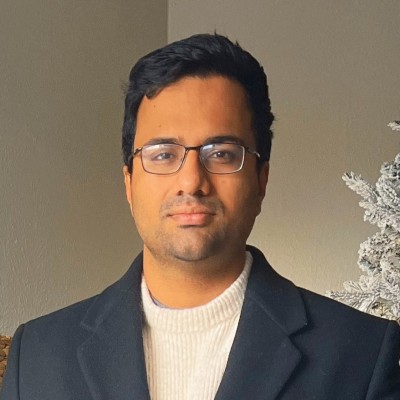 Abhijith Jayakumar合作论文数Theoretical Division, Los Alamos National Laboratory2
 Paolo Penna合作论文数IOHK2Nathan Lemons合作论文数Alfréd rényi institute of mathematics, hungarian academy of sciences2
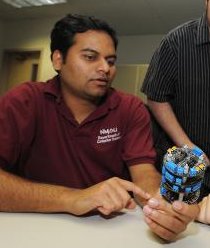 Satyajayant Misra合作论文数New Mexico State University2Barbara Geissmann合作论文数2David Gunter合作论文数1William Casper合作论文数1Sami Boulebnane合作论文数1Manuel Proissl合作论文数1John Ambrosiano合作论文数1Stefano Mensa合作论文数1Balu Nadiga合作论文数1Phillip Romero合作论文数1Naeimeh Mohseni合作论文数1
 Corey O'Meara合作论文数1Dan Strano合作论文数1Bryce Fuller合作论文数1
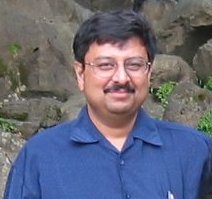 Tanmoy Bhattacharya (坦莫伊·巴塔查里亚)合作论文数Theoretical Division, Los Alamos National Laboratory1Stefanie Zbinden合作论文数1Benjamin C B Symons合作论文数1Jeremy Cook合作论文数1
 Amira Abbas合作论文数Google1reuben tate合作论文数Georgia Institute of Technology1Vanio Markov合作论文数1David Mascarenas合作论文数1
 Emre Sahin合作论文数Hartree Centre, STFC1




