The paper describes the 3 NMT models submitted by the eTranslation team to the WMT 2021 news translation shared task. We developed systems in language pairs that are actively used in the European Commission’s eTranslation service. In the WMT news task, recent years have seen a steady increase in the need for computational resources to train deep and complex architectures to produce competitive systems. We took a different approach and explored alternative strategies focusing on data selection and filtering to improve the performance of baseline systems. In the domain constrained task for the French–German language pair our approach resulted in the best system by a significant margin in BLEU. For the other two systems (English–German and English-Czech) we tried to build competitive models using standard best practices.
The paper describes the submissions of the eTranslation team to the WMT 2020 news translation shared task. Leveraging the experience from the team’s participation last year we developed systems for 5 language pairs with various strategies. Compared to last year, for some language pairs we dedicated a lot more resources to training, and tried to follow standard best practices to build competitive systems which can achieve good results in the rankings. By using deep and complex architectures we sacrificed direct re-usability of our systems in production environments but evaluation showed that this approach could result in better models that significantly outperform baseline architectures. We submitted two systems to the zero shot robustness task. These submissions are described briefly in this paper as well.
This paper describes the submissions of the eTranslation team to the WMT 2019 news translation shared task. The systems have been developed with the aim of identifying and following rather than establishing best practices, under the constraints imposed by a low resource training and decoding environment normally used for our production systems. Thus most of the findings and results are transferable to systems used in the eTranslation service. Evaluations suggest that this approach is able to produce decent models with good performance and speed without the overhead of using prohibitively deep and complex architectures.
The European Commission's (EC) Directorate General for Translation, together with the EC's Joint Research Centre, is making available a large translation memory (TM; i.e. sentences and their professionally produced translations) covering twenty-two official European Union (EU) languages and their 231 language pairs. Such a resource is typically used by translation professionals in combination with TM software to improve speed and consistency of their translations. However, this resource has also many uses for translation studies and for language technology applications, including Statistical Machine Translation (SMT), terminology extraction, Named Entity Recognition (NER), multilingual classification and clustering, and many more. In this reference paper for DGT-TM, we introduce this new resource, provide statistics regarding its size, and explain how it was produced and how to use it.
MultiUN is a multilingual parallel corpus extracted from the official documents of the United Nations. It is available in the six official languages of the UN and a small portion of it is also available in German. This paper presents a major update on the first public version of the corpus released in 2010. This version 2 consists of over 513, 091 documents, including around 9% of new documents retrieved from the United Nations official document system. Compared to the first release, we applied several modifications to the corpus preparation method. In this paper, we describe the methods we used for processing the UN documents and aligning the sentences. The most significant improvement compared to the previous release is the newly added multilingual sentence alignment information. The alignment information is encoded together with the text in XML instead of additional files. Our representation of the sentence alignment allows quick construction of aligned texts parallel in arbitrary number of languages, which is essential for building machine translation systems.
This paper1 describes recent developments and work in progress in the project MT@EC at the Directorate-General for Translation (DGT) of the European Commission, towards providing large-scale machine translation (MT) functionality for institutions of the European Union. We present the overall scope of this project and some of the steps taken so far, including an implementation of prototypes based on statistical MT (SMT), we describe various attempts to assess the quality of these prototypes, as well as a first integration of these prototypes into the translation workflow at our institution. We then sketch ongoing work towards an integration of SMT with translation memory lookup along the lines given in (Koehn and Senellart, 2010) and present first results based on real-life data.
This paper deals with translation of English documents to Oromo using statistical methods. Whereas English is the lingua franca of online information, Oromo, despite its relative wide distribution within Ethiopia and neighbouring countries like Kenya and Somalia, is one of the most resource scarce languages. The paper has two main goals: one is to test how far we can go with the available limited parallel corpus for the English - Oromo language pair and the applicability of existing Statistical Machine Translation (SMT) systems on this language pair. The second goal is to analyze the output of the system with the objective of identifying the challenges that need to be tackled. Since the language is resource scarce as mentioned above, we cannot get as many parallel documents as we want for the experiment. However, using a limited corpus of 20,000 bilingual sentences and 62, 300 monolingual sentences, translation accuracy in terms of BLEU Score of 17.74% was achieved.
We describe our hybrid machine translation system which has been developed for and used in the WMT10 shared task. We compute translations from a rule-based MT system and combine the resulting translation "templates" with partial phrases from a state-of-the-art phrase-based, statistical MT engine. Phrase substitution is guided by several decision factors, a continuation of previous work within our group. For the shared task, we have computed translations for six language pairs including English, German, French and Spanish. Our experiments have shown that our shallow substitution approach can effectively improve the translation result from the RBMT system; however it has also become clear that a deeper integration is needed to further improve translation quality.
We present new results from a hybrid combination of rule-based machine translation (RBMT) with a variant of statistical machine translation (SMT) that supports hierarchical structures and is therefore able to preserve more of the linguistic structures obtained from the RBMT system than versions of SMT that operate on flat phrases alone. Having shown in (Chen and Eisele, 2010) for the first time that a tighter integration of hierachical MT systems from different paradigms leads to consistent improvements for translation from German to English in various experimental settings, the current paper generalizes the approach to translation from English to German, where we observe similar improvements. These findings indicate that hybrid combinations of MT paradigms can benefit from structural similarities in the underlying models, which makes us expect even stronger benefits from a tight integration of different approaches.
The overwhelming majority of the languages in the world are spoken by less than 50 million native speakers, and automatic translation of many of these languages is less investigated due to the lack of linguistic resources such as parallel corpora. In the ACCURAT project we will work on novel methods how comparable corpora can compensate for this shortage and improve machine translation systems of under-resourced languages. Translation systems on eighteen European language pairs will be investigated and methodologies in corpus linguistics will be greatly advanced. We will explore the use of preliminary SMT models to identify the parallel parts within comparable corpora, which will allow us to derive better SMT models via a bootstrapping loop. State-of-the-art machine translation based on the statistical approach is a data-driven process. The quality and quantity of the training data is crucial for the performance of a translation system. However, the increasing amount of training corpora can still not meet the demand of automatic translation on different language pairs and in various domains. Rich data are mostly available for few languages and only certain domains. There are still a great number of underresourced languages. Thousands of languages are spoken by less than 50 million native speakers, with a big group of more than 200 languages that have between 1 and 50 million native speakers. Most of these languages are lacking sufficient linguistic resources. This brings difficulties to improve the translation qualities on these languages. For instance, the majority of the European languages are under-resourced and lack both parallel corpora and language technologies for MT. The project ACCURAT (Analysis and Evaluation of Comparable Corpora for Under-Resourced Areas of Machine Translation) will focus on developing and evaluating language pairs of English-Latvian, English-Lithuanian, English-Estonian, English-Greek, English-Croatian, Croatian-English, English-Romanian, English-Slovenian, Slovenian-English, English-German, German-English, German-Romanian, Romanian-German, Greek-Romanian, LithuanianRomanian, Romanian-Greek, Romanian-English and Latvian-Lithuanian. We also work on the language pair of German and English which is well investigated previously. This can help us find the impact of comparable corpora on translations between language pairs with both rich and poor resources. More details can be found in (Skadina et al., 2010). The participants include organizations of Tilde,
Recent developments on hybrid systems that combine rule-based machine translation (RBMT) systems with statistical machine translation (SMT) generally neglect the fact that RBMT systems tend to produce more syntactically well-formed translations than data-driven systems. This paper proposes a method that alleviates this issue by preserving more useful structures produced by RBMT systems and utilizing them in a SMT system that operates on hierarchical structures instead of flat phrases alone. For our experiments, we use Joshua as the decoder. It is the first attempt towards a tighter integration of MT systems from different paradigms that both support hierarchical analysis. Preliminary results show consistent improvements over the previous approach.
Machine Translation (MT) is the task of automatically translating a text from one language to another. In this work we describe a phrase-based Statistical Machine Translation (SMT) system that translates English sentences to Bangla. A transliteration module is added to handle outof-vocabulary (OOV) words. This is especially useful for low-density languages like Bangla for which only a limited amount of training data is available. Furthermore, a special component for handling preposition is implemented to treat systematic grammatical differences between English and Bangla. We have shown the improvement of our system through effective impacts on the BLEU, NIST and TER scores. The overall BLEU score of our system is 11.7 and for short sentences it is 23.3.
This paper describes the acquisition, preparation and properties of a corpus extracted from the official documents of the United Nations (UN). This corpus is available in all 6 official languages of the UN, consisting of around 300 million words per language. We describe the methods we used for crawling, document formatting, and sentence alignment. This corpus also includes a common test set for machine translation. We present the results of a French-Chinese machine translation experiment performed on this corpus.
Wedescribe the implementation ofMTServer Land, an open-source architecture formachine translation that is developed by the MT group at DFKI. A broker server collects and distributes translation requests to severalworker servers that create the actual translations. Users can access the system via a fast and easy-to-use web interface or use an XML-RPC-based API interface to integrate it into their applications. The source code is published under a BSD-style license and is freely available from GitHub1.
We present a simple method for generating translations with the Moses toolkit (Koehn et al., 2007) from existing hypotheses produced by other translation engines. As the structures underlying these translation engines are not known, an evaluation-based strategy is applied to select systems for combination. The experiments show promising improvements in terms of BLEU.
As advances in the field of machine translation (MT) continue to allow for greater distribution of multi-lingual information, an increasing number of browser-based toolkits are being developed in an attempt to empower translators, and decrease the gap between speed, and quality of output. However, these systems so far have failed to satisfy the translation community due to a fundamental misunderstanding of the way translators work. There has been an essential divergence in the study and implementation of machine translation systems—away from the original goal of providing perfect target-language texts, towards an attempt to provide output that can be largely understood for quick dissemination. The realisation that current methodology in the field does not allow for such high quality to be attained has turned researchers’ attentions to the development of systems that act as supporting processes during several of the traditional stages of translation. Nonetheless, such efforts have continued on the assumption that high quality translation from the getgo is the most important factor, rather than assessing how translators’ workflows react to poor quality target language text generated by such systems. Our aim has been to identify techniques that reduce the time that translators spend on the whole transfer process by realising that a SMT core can provide much more than a raw translation, even at this relatively early stage in its development. Our research evaluates the shortcomings of existing systems, and proposes a new kind of integrated online toolkit that addresses these limitations based on an understanding of the most significant and unnecessary struggles between translators and MT systems. Consequently we believe that with just a handful of changes it is possible to envisage an arrangement that will allow translators to regularly outperform non-MT-based working strategies, both in terms of speed and quality.
In current phrase-based SMT systems, more training data is generally better than less. However, a larger data set eventually introduces a larger model that enlarges the search space for the translation problem, and consequently requires more time and more resources to translate. We argue redundant information in a SMT system may not only delay the computations but also affect the quality of the outputs. This paper proposes an approach to reduce the model size by filtering out the less probable entries based on compatible data in an intermediate language, a novel use of triangulation , without sacrificing the translation quality. Comprehensive experiments were conducted on standard data sets. We achieved significant quality improvements (up to 2.3 Bleu points) while translating with reduced models. In addition, we demonstrate a straightforward combination method for more progressive filtering. The reduction of the model size can be up to 94% with the translation quality being preserved.
 Yu Chen合作论文数16
 Christian Federmann合作论文数Apple11Michael Jellinghaus合作论文数9
 Hans Uszkoreit合作论文数Amber Iris AI Consulting GmbH;UNICEPTA Corporate Intelligence;Deutsches Forschungszentrum für Künstliche Intelligenz;Acrolinx GmbH6
 Sabine Hunsicker合作论文数6
 Martin Kay合作论文数School of Humanities & Sciences, Stanford University5Jochen Dorre合作论文数5Silke Theison合作论文数4Katina Bontcheva合作论文数3Teresa Herrmann合作论文数Universität Karlsruhe (TH),3
 Csaba Oravecz合作论文数Research Institute for Linguistics;Hungarian Academy of Sciences;Hungarian Academy of Sciences, Research Institute for Linguistics3Herve Saint-Amand合作论文数3Rogina, I.合作论文数2Bhavani Bhaskar合作论文数2David Kolovratník合作论文数2Adrien Lardilleux合作论文数2László Tihanyi合作论文数2
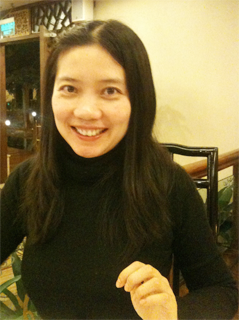 Jia Xu合作论文数Department of Computer Science,Charles V. Schaefer, Jr. School of Engineering and Science, Stevens Institute of Technology2Ulrich Callmeier合作论文数2Noah Coccaro合作论文数University of Colorado at Boulder2
 Eric Gaussier合作论文数Grenoble Interdisciplinary Institute in Artificial Intelligence;University Grenoble Alps2
 Gregory Grefenstette合作论文数Exalead, France2M. Woszczyna合作论文数Language Technologies Institute2
 Inguna Skadina合作论文数2Eva Hasler合作论文数University of Cologne2Arthur E. Mcnair合作论文数2
 Alon Lavie合作论文数Language Technologies Institute, School of Computer Science, Carnegie Mellon University;Phrase2
 Melanie Siegel合作论文数Computational Linguist at Acrolinx2
 Thomas Polzin合作论文数Department of Civil Engineering Solid Mechanics Division, University of Waterloo2Andrejs Vasiljevs合作论文数Tilde2M. Tomita合作论文数1N Aokiwaibel合作论文数1
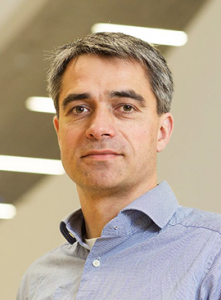 Jörg Tiedemann合作论文数Department of Digital Humanities, University of Helsinki1
 Sisay Adugna Chala合作论文数Data Sci & AI, Fraunhofer FIT1Armin Goelzhaeuser合作论文数1
 Ulrich Schäfer合作论文数OTH AW, Fac Elect Engn Media & Comp Sci, Amberg, Germany1
 Xiaojun Zhang (张晓均)合作论文数School of Computer Science and Sof Tware Engineering, Southwest Petroleum University1
 Emmanuel Morin合作论文数University of Nantes1
 Chris Biemann合作论文数Department of Informatics, University of Hamburg1D. Hull合作论文数1
 Serge Sharoff合作论文数Centre for Translation Studies;University of Leeds;Centre for Translation Studies, University of Leeds1Jo Calder合作论文数1
 Michel Simard合作论文数Laboratoire RALI, Université de Montréal1
 Ralf Steinberger合作论文数European Commission - Joint Research Centre1
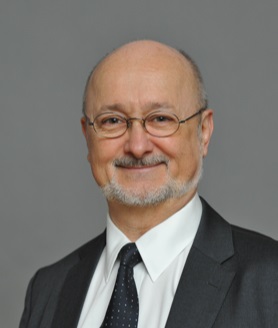 Alex Waibel合作论文数Interactive Systems Labs, Institute for Anthropomatics and Robotics, Karlsruhe Institute for Technology;InterACT;Carnegie Mellon University1
 Yi Zhang合作论文数1
 Tony Mcenery合作论文数Lancaster University1
 Raivis Skadins合作论文数Tilde1Mike Reape合作论文数University of Edinburgh1




