We consider a local planner that utilizes model predictive control to locally deviate from a prescribed global path in response to dynamic environments, taking into account the system dynamics. To ensure the consistency between the local and global paths, we introduce the concept of locally homotopic paths for paths with different origins and destinations. We then formulate a hard constraint to ensure that local paths are locally homotopic to a given global path. Additionally, we propose a cost function to penalize any violation of this requirement, rather than completely prohibiting it. Experimental results show that both variants of our approach are more resilient to localization errors, compared to existing methods that represent the homotopy class constraint as an envelope around the global path.
This paper studies simultaneous search and monitoring (SSM) between multiple unmanned aerial vehicles (UAVs) and multiple moving ground targets. Searching for unknown targets and monitoring known ones are two intrinsically related problems, but they have mostly been addressed in isolation. We combine the two tasks and exploit their interconnection as a synergy rather than a trade-off. We construct the single-robot SSM as a partially observable Markov decision process (POMDP) and the multi-robot SSM as a semi-decentralised POMDP (semi-Dec-POMDP). A novel heuristic reactive policy planning is proposed to solve the POMDP. It is then extended for semi-Dec-POMDP with game-theoretical methods. In simulations and experiments, the searchers will successfully locate unknown targets without losing known ones and cooperate by partitioning their tasks. With theoretical proofs, simulations, and experiments, we demonstrate that our method can perform better than conventional approaches and the state-of-the-art.
Swarm robotics investigates groups of relatively simple robots that use decentralized control to achieve a common goal. While the robots of many swarm systems communicate via optical links, the underlying channels and their impact on swarm performance are poorly understood. This paper models the optical channel of a widely used robotic platform, the e-puck. It proposes SwarmCom, a mobile ad-hoc network for mobile robots. SwarmCom has a detector that, with the help of the channel model, was designed to adapt to the environment and nearby robots. Experiments with groups of up to 30 physical e-pucks show that (i) SwarmCom outperforms the state-of-the-art infra-red communication software—libIrcom—in range (up to 3 times further), bit error rate (between 50 and 63% lower), or throughput (up to 8 times higher) and that (ii) the maximum number of communication channels per robot is relatively low, which limits the load per robot even for high-density swarms. Using channel coding, the bit error rate can be further reduced at the expense of throughput. SwarmCom could have profound implications for swarm robotics, contributing to system understanding and reproducibility, while paving the way for novel applications.
We propose a novel concept for modular robots, termed modular fluidic propulsion (MFP), which promises to combine effective propulsion, a large reconfiguration space, and a scalable design. MFP robots are modular fluid networks. To propel, they route fluid through themselves. In this article, both hydraulic and pneumatic implementations are considered. The robots move towards a goal by way of a decentralized controller that runs independently on each module face, uses two bits of sensory information and requires neither run-time memory, nor communication. We prove that 2-D MFP robots reach the goal when of orthogonally convex shape, or reach a morphology-dependent distance from it when of arbitrary shape. We present a 2-D hydraulic MFP prototype and show, experimentally, that it succeeds in reaching the goal in at least 90% of trials, and that 71% less energy is expended when modules can communicate. Moreover, in simulations with 3-D hydraulic MFP robots, the decentralized controller performs almost as well as a state-of-the-art and centralized controller. Given the simplicity of the hardware requirements, the MFP concept could pave the way for modular robots to be used at sub-centimeter-scale, where effective modular propulsion systems have not been demonstrated.
A robot understands its world through the raw information it senses from its surroundings. This raw information is not suitable as a shared representation between the robot and its user. A semantic map, containing high-level information that both the robot and user understand, is better suited to be a shared representation. We use the semantic map as the user-facing interface on our fleet of floor-cleaning robots. Jitter in the robot's sensed raw map, dynamic objects in the environment, and exploration of new space by the robot are common challenges for robots. Solving these challenges effectively in the context of semantic maps is key to enabling semantic maps for lifelong mapping. First, as a robot senses new changes and alters its raw map in successive runs, the semantics must be updated appropriately. We update the map using a spatial transfer of semantics. Second, it is important to keep semantics and their relative constraints consistent even in the presence of dynamic objects. Inconsistencies are automatically determined and resolved through the introduction of a map layer of meta-semantics. Finally, a discovery phase allows the semantic map to be updated with new semantics whenever the robot uncovers new information. Deployed commercially on thousands of floor-cleaning robots in real homes, our user-facing semantic maps provide a intuitive user experience through a lifelong mapping robot.
Searching for a lost teammate is an important task for multirobot systems. We present a variant of rapidly-expanding random trees (RRT) for generating search paths based on a probabilistic belief of the target teammate's position. The belief is updated using a hidden Markov model built from knowledge of the target's planned or historic behavior. For any candidate search path, this belief is used to compute a discounted reward which is a weighted sum of the connection probability at each time step. The RRT search algorithm uses randomly sampled locations to generate candidate vertices and adds candidate vertices to a planning tree based on bounds on the discounted reward. Candidate vertices are along the shortest path from an existing vertex to the sampled location, biasing the search based on the topology of the environment. This method produces high quality search paths which are not constrained to a grid and can be computed fast enough to be used in real time. Compared with two other strategies, it found the target significantly faster in the most difficult 60% of situations and was similar in the easier 40% of situations.
Multirobot coverage is the problem of planning paths for several identical robots such that the combined regions traced out by the robots completely cover their environment. We consider the problem of multirobot coverage with the objective of minimizing the mission time, which depends on the number of turns taken by the robots. To solve this problem, we first partition the environment into ranks which are long thin rectangles the width of the robot's coverage tool. Our novel partitioning heuristic produces a set of ranks which minimizes the number of turns. Next, we solve a variant of the multiple travelling salesperson problem (m-TSP) on the set of ranks to minimize the robots' mission time. The resulting coverage plan is guaranteed to cover the entire environment. We present coverage plans for a robotic vacuum using real maps of 25 indoor environments and compare the solutions to paths planned without the objective of minimizing turns. Turn minimization reduced the number of turns by 6.7% and coverage time by 3.8% on average for teams of 1-5 robots.
We study the problem of controlling a swarm of anonymous, mobile robots to cooperatively cover an unknown two-dimensional space. The novelty of our proposed solution is that it is applicable to extremely simple robots that lack run-time computation or storage. The solution requires only a single bit of information per robot-whether or not another robot is present in its line of sight. Computer simulations show that our deterministic controller, which was obtained through off-line optimization, achieves around 71-76% coverage in a test scenario with no robot redundancy, which corresponds to a 26-39% reduction of the area that is not covered, when compared to an optimized random walk. A moderately lower level of performance was observed in 20 experimental trials with 25 physical e-puck robots. Moreover, we demonstrate that the same controller can be used in environments of different dimensions and even to navigate a maze. The controller provides a baseline against which one can quantify the performance improvements that more advanced and expensive techniques may offer. Moreover, due to its simplicity, it could potentially be implemented on swarms of sub-millimeter-sized robots. This would pave the way for new applications in micro-medicine.
Task assignment and routing are tightly coupled problems for teams of mobile agents. To fairly balance the workload, each agent should be assigned a set of tasks which take a similar amount of time to complete. The completion time depends on the time needed to travel between tasks which depends on the order of tasks. We formulate the task assignment problem as the minimum Hamiltonian partition problem (MHPP) for m agents, which is equivalent to the minmax multiple traveling salesperson problem (m-TSP). While the MHPP's cost function depends on the order of tasks, its solutions are similar to solutions of the average Hamiltonian partition problem (AHPP) whose cost function is order-invariant. We prove that the AHPP is NP-hard and present an effective heuristic, AHP, for solving it. AHP improves a partitions of a graph using a series of transfer and swap operations which are guaranteed to improve the solution's quality. The solution generated by AHP is used as an initial partition for an algorithm, AHP-mTSP, which solves the combined task assignment and routing problems to near optimality. For n tasks and m agents, each iteration of AHP is O(n^2) and AHP-mTSP has an average run-time that scales with n^2.11 m^0.33. Compared to state-of-the-art approaches, our approach found approximately 10% better solutions for large problems in a similar run-time.
As communication is important for cooperation, teams of mobile robots need a way to re-establish a wireless connection if they get separated. We develop a method for mobile robots to maintain a belief of each other's positions using locally available information. They can use their belief to plan paths with high probabilities of reconnection. This approach also works for subteams cooperatively searching for a robot or group of robots that they would like to reconnect with. The problem is formulated as a constrained optimization problem which is solved using a branch-and-bound approach. We present simulation results showing the effectiveness of this strategy at reconnecting teams of up to five robots and compare the results to two other strategies.
This book presents the state of the art in distributed autonomous systems composed of multiple robots, robotic modules, or robotic agents.
Distributed robotics is an interdisciplinary and rapidly growing area, combining research in computer science, communication and control systems, and electrical and mechanical engineering. Distributed robotic systems can autonomously solve complex problems while operating in highly unstructured real-world environments. They are expected to play a major role in addressing future societal needs, for example, by improving environmental impact assessment, food supply, transportation, manufacturing, security, and emergency and rescue services. The goal of the International Symposium on Distributed Autonomous Robotic Systems (DARS) is to provide a forum for scientific advances in the theory and practice of distributed autonomous robotic systems. This volume of proceedings include 47 original contributions presented at the 13th International Symposium on Distributed Autonomous Robotic Systems (DARS 2016), which was held at the Natural History Museum in London, UK, from November 7th to 9th, 2016. The selected papers in this volume are authored by leading researchers from around the world, thereby providing a broad coverage and perspective of the state-of-the-art technologies, algorithms, system architectures, and applications in distributed robotic systems. The book is organized into seven parts, representative of critical long-term and emerging research thrusts in the multi-robot community: Distributed Coverage and Exploration; Multi-Robot Control; Multi-Robot Estimation; Multi-Robot Planning; Modular Robots and Smart Materials; Swarm Robotics; and Multi-Robot Systems in Applications.
We introduce RoomsSeg, a novel method for segmenting occupancy grid maps into regions that represent rooms and corridors in the real world. The segmentation is utilized for systematic room-by-room cleaning on autonomous vacuum cleaners running in private homes. RoomsSeg is based on automated clutter removal and watershed segmentation on grid maps. Segmented regions are merged into rooms by semantic decision rules. Presented experimental results clearly indicate the efficiency and accuracy of the approach when compared with state of the art methods. When deployed on cleaning robots, a substantial decrease in mission time can be achieved.
We consider a visibility-based pursuit-evasion problem in which a single robot with an omnidirectional but unreliable sensor moving through an environment must systematically search that environment to detect an unpredictably moving target. A common assumption in visibility-based pursuit-evasion is that the sensors used to detect the evader are perfectly reliable. That is, any evader that moves within view of the pursuer for any interval of time will be detected. This assumption is problematic because, when implemented on real sensor systems, such plans cannot account for the possibility of short-term false negative errors in evader detection. This paper addresses this limitation by introducing a model based on the idea of pessimal unoccluded distance to reason about the degree of plausibility that the evader may be concealed within each occluded region. We describe a decomposition of the environment that fully characterizes the opportune moment for an evader to take advantage of sensor error. Furthermore, we present a complete algorithm that solves the active problem of planning a search for a pursuer which maximizes the distance that the evader must travel through the pursuer robot's sensor footprint.
Simultaneous Search and Monitoring (SSM) is studied in this paper for a single Unmanned Aerial Vehicle (UAV) searcher and multiple moving ground targets. Searching for unknown targets and monitoring known targets are two intrinsically related problems, but have mostly been addressed in isolation. We combine the two problems with a joint objective function in a Partially Observable Markov Decision Process (POMDP). An online policy planning approach is proposed to plan a reactive policy to solve the POMDP, using both MonteCarlo sampling and Simulated Annealing. The simulation result shows that the searcher will successfully find unknown targets without losing known ones. We demonstrate, with a theoretical proof and comparative simulations, that the proposed approach can deliver a better performance than conventional foresight optimization methods.
In this paper, we address the problem of detecting intruders in complex bidimensional environments with a team of robots arranged in line formations called sweep lines. Sweep lines are used to coordinate the motion of multiple robots and guarantee the detection of any number of arbitrarily fast intruders, even when each robot has a limited sensor footprint. We present a formalization of the problem, coined Line-Clear, which requires the computation of sweep schedules to coordinate the motion of multiple sweep lines using the fewest robots possible. We provide a proof of NP-hardness of the general Line-Clear problem based on results from graph searching. An algorithm to compute sweep schedules for simply connected environments, which additionally guarantees that the cleared area is connected and not recontaminated, is then presented. We analyze its complexity formally and in simulation experiments and present solutions for a number of subproblems required for an implementation of the algorithm. The analysis provides a formal criterion for when the algorithm runs in polynomial time and the experiments indicate that this criterion may be satisfied for most environments in practice.
This paper presents OpenSwarm, a lightweight easy-to-use open-source operating system. To our knowledge, it is the first operating system designed for and deployed on miniature robots. OpenSwarm operates directly on a robot's microcontroller. It has a memory footprint of 1 kB RAM and 12 kB ROM. OpenSwarm enables a robot to execute multiple processes simultaneously. It provides a hybrid kernel that natively supports preemptive and cooperative scheduling, making it suitable for both computationally intensive and swiftly responsive robotics tasks. OpenSwarm provides hardware abstractions to rapidly develop and test platform-independent code. We show how OpenSwarm can be used to solve a canonical problem in swarm robotics—clustering a collection of dispersed objects. We report experiments, conducted with five e-puck mobile robots, that show that an OpenSwarm implementation performs as good as a hardware-near implementation. The primary goal of OpenSwarm is to make robots with severely constrained hardware more accessible, which may help such systems to be deployed in real-world applications.
Recent advances in technology are delivering robots of reduced size and cost. A natural outgrowth of these advances are systems comprised of large numbers of robots that collaborate autonomously in diverse applications. Research on effective autonomous control of such systems, commonly called swarms, has increased dramatically in recent years and received attention from many domains, such as bioinspired robotics and control theory. These kinds of distributed systems present novel challenges for the effective integration of human supervisors, operators, and teammates that are only beginning to be addressed. This paper is the first survey of human-swarm interaction (HSI) and identifies the core concepts needed to design a human-swarm system. We first present the basics of swarm robotics. Then, we introduce HSI from the perspective of a human operator by discussing the cognitive complexity of solving tasks with swarm systems. Next, we introduce the interface between swarm and operator and identify challenges and solutions relating to human-swarm communication, state estimation and visualization, and human control of swarms. For the latter, we develop a taxonomy of control methods that enable operators to control swarms effectively. Finally, we synthesize the results to highlight remaining challenges, unanswered questions, and open problems for HSI, as well as how to address them in future works.
 Stefano Carpin合作论文数Department of Computer Science and Engineering, School of Engineering, University of California, Merced15
 Katia Sycara合作论文数Advanced Agent-Robotics Technology Lab, Robotics Institute, School of Computer Science, Carnegie Mellon University;Center for Advanced Learning and Discovery, Carnegie Mellon University;Human-Computer Interaction Institute, Carnegie Mellon University15
 Roderich Groß合作论文数Natural Robotics Lab, The University of Sheffield12
 Alexander Kleiner合作论文数iRobot Corporation11
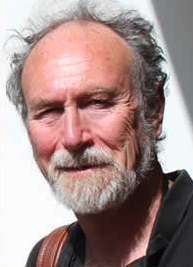 Charles Michael Lewis合作论文数Department of Informatics and Networked Systems, School of Computing and Information, University of Pittsburgh10
 Nilanjan Chakraborty合作论文数Interacting Robotic Systems Laboratory, Department of Mechanical Engineering, Stony Brook University6
 Phillip Walker合作论文数Smart Information Flow Technologies6
 Isaac Vandermeulen合作论文数=University of Sheffield5
 Steven Nunnally合作论文数5
 Sandor Veres合作论文数Department of Automatic Control and Systems Engineering, The University of Sheffield;SysBrain Ltd4
 Melvin Gauci合作论文数The University of Sheffield4
 Huadong Wang合作论文数3
 Christian Dornhege合作论文数Department of Computer Science, University of Freiburg3
 Nathan Brooks合作论文数Law Division3Nunnally, S.合作论文数2Fumitoshi Matsuno合作论文数2Haoyu Zhang合作论文数2
 Stefan M Trenkwalder合作论文数Department of Automatic Control and Systems Engineering, University of Sheffield Sheffield2
 Yuri Kaszubowski Lopes合作论文数2
 Herbert Jaeger合作论文数Zentrum für interdisziplinäre Forschung2
 Emilio Frazzoli合作论文数Laboratory for Information and Decision Systems, Massachusetts Institute of Technology;Operations Research Center, Massachusetts Institute of Technology;Eidgenössische Technische Hochschule Zürich2
 Alcherio Martinoli合作论文数Distributed Intelligent Systems and Algorithms Laboratory, Environmental Engineering Institute, School of Architecture, Civil and Environmental Engineering, Ecole Polytechnique Fédérale de Lausanne2
 Hongyang Qu合作论文数Arm2Mike Lewis合作论文数2
 Andreas Hertle合作论文数2
 Michael Lewis合作论文数University of Pittsburgh2
 Spring M. Berman合作论文数GRASP Laboratory, University of Pennsylvania2
 Paul Scerri合作论文数Carnegie Mellon University;Robotics Institute2
 Nicholas Stiffler合作论文数Department of Computer Science, College of Arts & Sciences, University of Dayton1Dan Popovici合作论文数1Lucio Nardelli合作论文数1
 João V. Amorim Marques合作论文数1
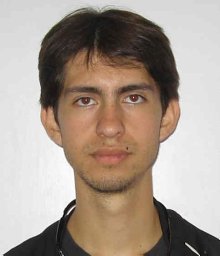 Gabriel Kapellmann-Zafra合作论文数Phys & Astron, Univ Sheffield1
 Matthew J. Doyle合作论文数Univ Sheffield, Sheffield Robot, Sheffield S10 2TN, S Yorkshire, England1Shafiq Abedin合作论文数1
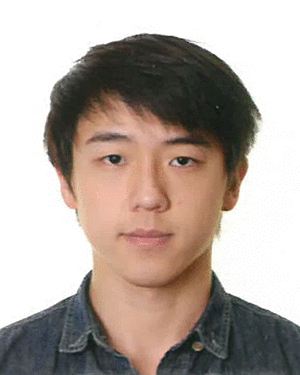 Xinyu Xu合作论文数Univ Sheffield, Sheffield Robot, Sheffield S10 2TN, S Yorkshire, England1
 Rodrigo Baravalle合作论文数national scientific and technical research council1
 Alin Coman合作论文数Department of Psychology, Princeton University1
 Anil Ozdemir合作论文数Dept. of Computer Science, the University of Sheffield1
 Christopher Parrott合作论文数Sheffield Centre for Robot., Univ. of Sheffield;c;Sheffield Centre for Robot., Univ. of Sheffield1
 Nicole Salomons合作论文数Department of Computing, Imperial College London1
 Pablo Pilotti合作论文数1
 Wei Li合作论文数1
 Yue Gu合作论文数1
 Matthew Hall合作论文数Department of Mechanical Engineering, University of Sheffield;Toyota Motor Manufacturing1Jianing Chen合作论文数The University of Manchester1
 Anders Lyhne Christensen合作论文数Instituto de Telecomunicações, Instituto Universitário de Lisboa (ISCTE-IUL)1
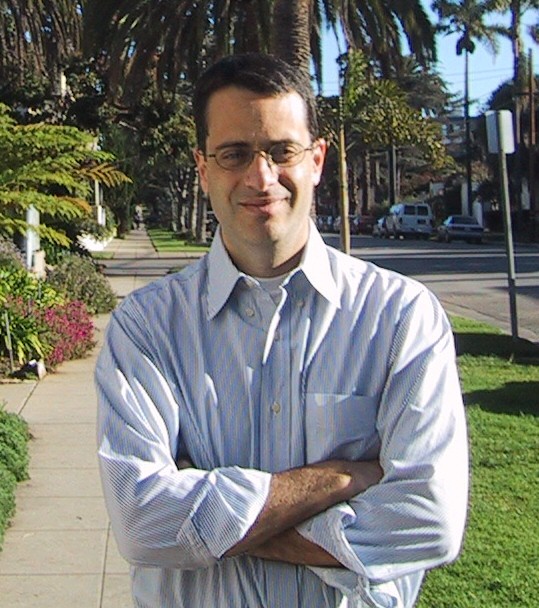 Marcelo Kallmann合作论文数School of Engineering, University of California, Merced1Sean Owens合作论文数School of Computer Science;Carnegie Mellon University1




