The TV-Stokes model is a two-step variational method for image denoising that combines the estimation of a divergence-free tangent field with total variation regularization in the first step and then uses that to reconstruct the image in the second step. Although effective in practice, its mathematical structure and potential for parallelization have remained unexplored. In this work, we establish a rigorous functional-analytic foundation for the TV-Stokes model. We formulate both steps in appropriate infinite-dimensional function spaces, derive their dual formulations, and analyze the compatibility and mathematical consistency of the coupled system. In particular, we identify analytical inconsistencies in the original formulation and demonstrate how an alternative model resolves them. We also examine the orthogonal projection onto the divergence-free subspace, proving its existence in a continuous setting and establishing consistency with its discrete counterpart. Building on this theoretical framework, we develop the first domain decomposition method for TV-Stokes by applying overlapping Schwarz-type iterations to the duals of both steps. Although the divergence-free constraint gives rise to a global projection operator in the continuous model, we show that it becomes locally computable in the discrete setting. This insight enables a fully parallelizable algorithm suitable for large-scale image processing in memory-constrained environments. Numerical experiments demonstrate the correctness of the domain decomposition approach and its usability in parallel image reconstruction.
Recent work has shown that strong-form physics-informed neural networks (PINNs) based on pointwise enforcement of differential operators can be ill-posed due to the combination of sufficiently expressive neural network trial spaces with finitely many measurements. In this work, we develop an abstract analytical framework that isolates this finite-information mechanism and extends its applicability beyond strong-form formulations. We apply the framework to three representative variational neural discretizations: the Deep Ritz method, neural network discretizations of variational regularization functionals, and weak PINNs. Despite their differing formulations, these methods constrain the neural trial function only through finitely many linear measurements, such as quadrature evaluations or finite-dimensional test spaces. We show that this structural feature leads to ill-posed discrete optimization problems, manifested by non-uniqueness or degeneracy of minimizers, independently of the well-posedness of the underlying continuous variational problem.
Physics-informed neural networks based on automatic differentiation (AD-PINNs) and their finite-difference counterparts (FD-PINNs) are widely used for solving partial differential equations (PDEs), yet their analytical properties remain poorly understood. This work provides a unified mathematical foundation for both formulations. Under mild regularity assumptions on the activation function and for sufficiently wide neural networks of depth at least two, we prove that both the AD- and FD-PINN optimization problems are ill-posed: whenever a minimizer exists, there are in fact infinitely many, and uniqueness fails regardless of the choice of collocation points or finite-difference stencil. Nevertheless, we establish two structural properties. First, whenever the underlying PDE or its finite-difference discretization admits a solution, the corresponding AD-PINN or FD-PINN loss also admits a minimizer, realizable by a neural network of finite width. Second, FD-PINNs are tightly coupled to the underlying finite-difference scheme: every FD-PINN minimizer agrees with a finite-difference minimizer on the grid, and in regimes where the discrete PDE solution is unique, all zero-loss FD-PINN minimizers coincide with the discrete PDE solution on the stencil. Numerical experiments illustrate these theoretical insights: FD-PINNs remain stable in representative forward and inverse problems, including settings where AD-PINNs may fail to converge. We also include an inverse problem with noisy data, demonstrating that FD-PINNs retain robustness in this setting as well. Taken together, our results clarify the analytical limitations of AD-PINNs and explain the structural reasons for the more stable behavior observed in FD-PINNs.
In this paper, we propose an adaptive finite difference scheme in order to numerically solve total variation type problems for image processing tasks. The automatic generation of the grid relies on indicators derived from a local estimation of the primal-dual gap error. This process leads in general to a non-uniform grid for which we introduce an adjusted finite difference method. Further we quantify the impact of the grid refinement on the respective discrete total variation. In particular, it turns out that a finer discretization may lead to a higher value of the discrete total variation for a given function. To compute a numerical solution on non-uniform grids we derive a semi-smooth Newton algorithm in 2D for scalar and vector-valued total variation minimization. We present numerical experiments for image denoising and the estimation of motion in image sequences to demonstrate the applicability of our adaptive scheme.
Based on previous work we extend a primal-dual semi-smooth Newton method for minimizing a general L^1-L^2-TV functional over the space of functions of bounded variations by adaptivity in a finite element setting. For automatically generating an adaptive grid we introduce indicators based on a-posteriori error estimates. Further we discuss data interpolation methods on unstructured grids in the context of image processing and present a pixel-based interpolation method. The efficiency of our derived adaptive finite element scheme is demonstrated on image inpainting and the task of computing the optical flow in image sequences. In particular, for optical flow estimation we derive an adaptive finite element coarse-to-fine scheme which allows resolving large displacements and speeds-up the computing time significantly.
Neural network approaches have been demonstrated to work quite well to solve partial differential equations in practice. In this context approaches like physics-informed neural networks and the Deep Ritz method have become popular. In this paper, we propose a similar approach to solve an infinite-dimensional total variation minimization problem using neural networks. We illustrate that the resulting neural network problem does not have a solution in general. To circumvent this theoretic issue, we consider an auxiliary neural network problem, which indeed has a solution, and show that it converges in the sense of Γ-convergence to the original problem. For computing a numerical solution we further propose a discrete version of the auxiliary neural network problem and again show its Γ-convergence to the original infinite-dimensional problem. In particular, the Γ-convergence proof suggests a particular discretization of the total variation. Moreover, we connect the discrete neural network problem to a finite difference discretization of the infinite-dimensional total variation minimization problem. Numerical experiments are presented supporting our theoretical findings.
Based on the Fenchel duality we build a primal-dual framework for minimizing a general functional consisting of a combined L-1 and L-2 data-fidelity term and a scalar or vectorial total variation regularisation term. The minimization is performed over the space of functions of bounded variations and appropriate discrete subspaces. We analyze the existence and uniqueness of solutions of the respective minimization problems. For computing a numerical solution we derive a semi-smooth Newton method on finite element spaces and highlight applications in denoising, inpainting and optical flow estimation.
Domain decomposition is one of the most efficient techniques to derive efficient methods for large-scale problems. In this chapter such decomposition methods for the minimization of the total variation are discussed. We differ between approaches which directly tackle the (primal) total variation minimization and approaches which deal with their predual formulation. Thereby we mainly concentrate on the presentation of domain decomposition methods which guarantee to converge to a solution of the global problem.
We consider sequential and parallel decomposition methods for a dual problem of a general total variation minimization problem with applications in several image processing tasks, like image inpainting, estimation of optical flow and reconstruction of missing wavelet coefficients. The convergence of these methods to a solution of the global problem is analysed in a Hilbert space setting and a convergence rate is provided. Thereby, these convergence result hold not only for exact local minimization but also if the subproblems are just solved approximately. As a concrete example of an approximate local solution process a surrogate technique is presented and analysed. Further, the obtained convergence rate is compared with related results in the literature and shown to be in agreement with or even improve upon them. Numerical experiments are presented to support the theoretical findings and to show the performance of the proposed decomposition algorithms in image inpainting, optical flow estimation and wavelet inpainting tasks.
Alternating and parallel overlapping domain decomposition methods for the minimization of the total variation are presented. Their derivation is based on the predual formulation of the total variation minimization problem. In particular, the predual total variation minimization problem is decomposed into overlapping domains yielding subdomain problems in the respective dual space. Subsequently these subdomain problems are again dualized, forming a splitting algorithm for the original total variation minimization problem. The convergence of the proposed domain decomposition methods to a solution of the global problem is proved. In contrast to other works, the analysis is carried out in an infinite dimensional setting. Numerical experiments are shown to support the theoretical results and to demonstrate the effectiveness of the algorithms.
Choices of regularizationRegularization parameters are central to variational methods Variational method for image restoration Image restoration . In this paper, a spatially adaptive (or distributed) regularization Regularization scheme is developed based on localized residuals, which properly balances the regularization Regularization weight between regions containing image details and homogeneous regions. Surrogate iterative methods Surrogate iterative method are employed to handle given subsampled data in transformed domains, such as Fourier or wavelet data. In this respect, this work extends the spatially variant regularization Regularization technique previously established in Dong et al. (J Math Imaging Vis 40:82–104, 2011), which depends on the fact that the given data are degraded images only. Numerical experiments for the reconstruction from partial Fourier data Partial Fourier data and for wavelet inpainting Wavelet inpainting prove the efficiency of the newly proposed approach.
In this paper, we investigate the usefulness of adding a box-constraint to the minimization of functionals consisting of a data-fidelity term and a total variation regularization term. In particular, we show that in certain applications an additional box-constraint does not effect the solution at all, i.e., the solution is the same whether a box-constraint is used or not. On the contrary, i.e., for applications where a box-constraint may have influence on the solution, we investigate how much it effects the quality of the restoration, especially when the regularization parameter, which weights the importance of the data term and the regularizer, is chosen suitable. In particular, for such applications, we consider the case of a squared L 2 data-fidelity term. For computing a minimizer of the respective box-constrained optimization problems a primal-dual semi-smooth Newton method is presented, which guarantees superlinear convergence.
Based on the weighted total variation model and its analysis pursued in Hintermüller and Rautenberg 2016, in this paper a continuous, i.e., infinite dimensional, projected gradient algorithm and its convergence analysis are presented. The method computes a stationary point of a regularized bilevel optimization problem for simultaneously recovering the image as well as determining a spatially distributed regularization weight. Further, its numerical realization is discussed and results obtained for image denoising and deblurring as well as Fourier and wavelet inpainting are reported on.
In this paper a multimodal optical-resolution photoacoustic and fluorescence microscope in frequency domain is presented. Photoacoustic waves and modulated fluorescence are generated in chromophores by using a modulated diode laser. The photoacoustic waves, recorded with a hydrophone, and the fluorescence signals, acquired with an avalanche photodiode, are simultaneously measured using a lock-in technique. Two possibilities to optimize the signal-to-noise ratio are discussed. The first method is based on the optimization of the excitation waveform and it is argued why square-wave excitation is best. The second way to enhance the SNR is to optimize the modulation frequency. For modulation periods that are much shorter than the relaxation times of the excited chromophores, the photoacoustic signal scales linearly with the modulation frequency. We come to the conclusion that frequency-domain photoacoustic microscopy performed with modulation frequencies in the range of 100 MHz can compete with time-domain photoacoustic microscopy regarding the signal-to-noise ratio. The theoretical predictions are confirmed by experimental results. Additionally, images of stained and unstained biological samples are presented in order to demonstrate the capabilities of the multimodal imaging system.
The minimization of a functional consisting of a combined L-1/L-2-data-fidelity term and a total variation term, named L-1-L-2-TV model, is considered to remove a mixture of Gaussian and impulse noise in images, which are possibly additionally deformed by some convolution operator. We investigate analytically the stability of this model with respect to its parameters and link it to a constrained minimization problem. Based on these investigations and a statistical characterization of the mixed Gaussian-impulse noise a fully automated parameter selection algorithm for the L-1-L-2-TV model is presented. It is shown by numerical experiments that the proposed method finds parameters with which noise is removed considerably while features are preserved in images.
Algorithms for automatically selecting a scalar or locally varying regularization parameter for total variation models with an $L^{\tau}$-data fidelity term, $\tau\in \{1,2\}$, are presented. The automated selection of the regularization parameter is based on the discrepancy principle, whereby in each iteration a total variation model has to be minimized. In the case of a locally varying parameter this amounts to solve a multi-scale total variation minimization problem. For solving the constituted multi-scale total variation model convergent first and second order methods are introduced and analyzed. Numerical experiments for image denoising and image deblurring show the efficiency, the competitiveness, and the performance of the proposed fully automated scalar and locally varying parameter selection algorithms.
In this paper non-overlapping domain decomposition methods for the pre-dual total variation minimization problem are introduced. Both parallel and sequential approaches are proposed for these methods for which convergence to a minimizer of the original problem is established. The associated subproblems are solved by a semi-smooth Newton method. Several numerical experiments are presented, which show the successful application of the sequential and parallel algorithm for image denoising.
In this paper we present subspace correction methods for non-smooth and non-additive energies which are guaranteed to converge. Moreover, we are able to provide an estimate of the distance between the outcome of the subspace correction method and the global minimizer of the non-smooth and non-additive objective. With the help of this estimate we can finally show in our numerical experiments that the proposed method even converges to a true global minimizer.
Computational problems of large-scale data are gaining attention recently due to better hardware and hence, higher dimensionality of images and data sets acquired in applications. In the last couple of years non-smooth minimization problems such as total variation minimization became increasingly important for the solution of these tasks. While being favorable due to the improved enhancement of images compared to smooth imaging approaches, non-smooth minimization problems typically scale badly with the dimension of the data. Hence, for large imaging problems solved by total variation minimization domain decomposition algorithms have been proposed, aiming to split one large problem into N > 1 smaller problems which can be solved on parallel CPUs. The N subproblems constitute constrained minimization problems, where the constraint enforces the support of the minimizer to be the respective subdomain.In this paper we discuss a fast computational algorithm to solve domain decomposition for total variation minimization. In particular, we accelerate the computation of the subproblems by nested Bregman iterations. We propose a Bregmanized Operator Splitting-Split Bregman (BOS-SB) algorithm, which enforces the restriction onto the respective subdomain by a Bregman iteration that is subsequently solved by a Split Bregman strategy. The computational performance of this new approach is discussed for its application to image inpainting and image deblurring. It turns out that the proposed new solution technique is up to three times faster than the iterative algorithm currently used in domain decomposition methods for total variation minimization.
The minimization of a functional composed of a nonsmooth and nonadditive regularization term and a combined L 1 and L 2 data-fidelity term is proposed. It is shown analytically and numerically that the new model has noticeable advantages over popular models in image processing tasks. For the numerical minimization of the new objective, subspace correction methods are introduced which guarantee the convergence and monotone decay of the associated energy along the iterates. Moreover, an estimate of the distance between the outcome of the subspace correction method and the global minimizer of the nonsmooth objective is derived. This estimate and numerical experiments for image denoising, inpainting, and deblurring indicate that in practice the proposed subspace correction methods indeed approach the global solution of the underlying minimization problem.
 Michael Hintermüller合作论文数Institut fur Mathematik, Mathematisch-Naturwissenschaftliche Fakultat, Humboldt-Universitat zu Berlin6
 Stephan Hilb合作论文数3
 Carola Bibiane Schönlieb合作论文数Department of Applied Mathematics and Theoretical Physics, University of Cambridge;Alan Turing Institute3Tao Wu合作论文数2
 Carlos N. Rautenberg合作论文数2Bin Wu合作论文数1Fernando D. Gaspoz合作论文数1Bianca Buchegger合作论文数Institute of Applied Physics, Johannes Kepler University Linz1
 Stanley Osher合作论文数Department of Mathematics, University of California, Los Angeles;Institute for Pure and Applied Mathematics, University of California, Los Angeles1
 Massimo Fornasier合作论文数Department of Mathematics, School of Computation, Information and Technology, Technical University of Munich1
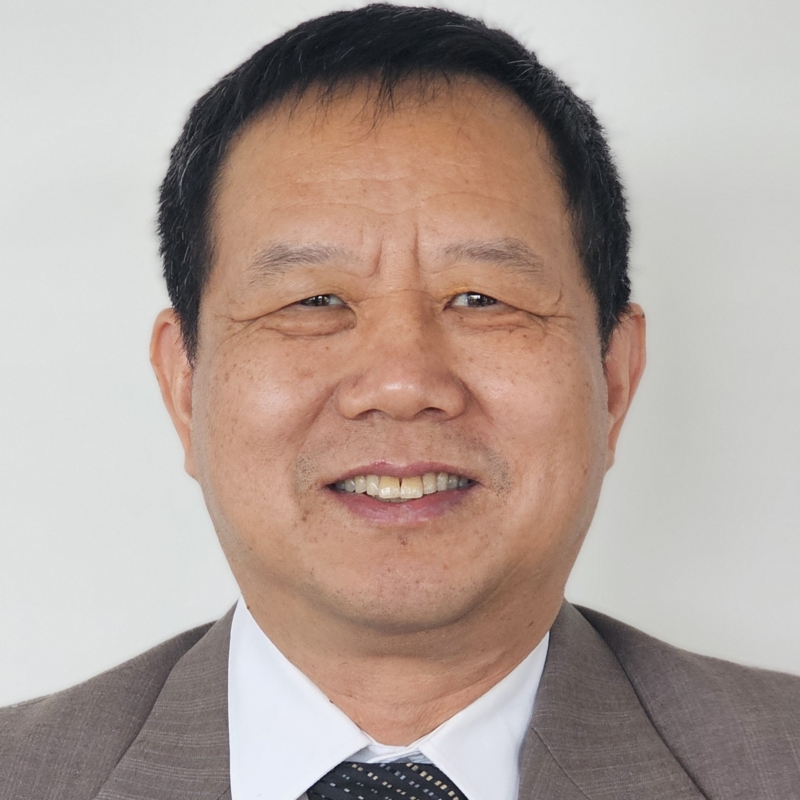 Xue-Cheng Tai (台雪成)合作论文数Norwegian Research Center1Jaroslaw Jacak合作论文数Biophysics Institute;University Linz;Biophysics Institute, University Linz1
 Talal Rahman合作论文数talal.rahman@hib.no1
 Thomas Berer合作论文数Department of Sensors;Upper Austrian Research;Department of Sensors, Upper Austrian Research1
 Thomas A. Klar合作论文数Institute of Applied Physics, Johannes Kepler University Linz1
 Gregor Langer合作论文数1




