Primal logic arose in access control; it has a remarkably efficient (linear time) decision procedure for its entailment problem. But primal logic is a general logic of information. In the realm of arbitrary items of information (infons), conjunction, disjunction, and implication may seem to correspond (set-theoretically) to union, intersection, and relative complementation. But, while infons are closed under union, they are not closed under intersection or relative complementation. It turns out that there is a systematic transformation of propositional intuitionistic calculi to the original (propositional) primal calculi; we call it Flatting. We extend Flatting to quantifier rules, obtaining arguably the right quantified primal logic, QPL. The QPL entailment problem is exponential-time complete, but it is polynomial-time complete in the case, of importance to applications (at least to access control), where the number of quantifiers is bounded.
Recent analysis of classical algorithms resulted in their axiomatization as transition systems satisfying some simple postulates, and in the formulation of the Abstract State Machine Theorem, which assures us that any classical algorithm can be emulated step-by-step by a most general model of computation, called an “abstract state machine”. We refine that analysis to take details of intra-step behavior into account, and show that there is in fact an abstract state machine that not only has the same state transitions as does a given algorithm but also performs the exact same tests on states when determining how to proceed to the next state. This enhancement allows the inclusion—within the abstractstate-machine framework—of algorithms whose states only have partiallydefined equality, or employ other native partial functions, as is the case, for instance, with inversion of a matrix of computable reals.
According to Dirac's bra-ket notation, in an inner-product space, the inner product ⟨ x | y⟩ of vectors x,y can be viewed as an application of the bra ⟨ x| to the ket |y⟩. Here ⟨ x| is the linear functional |y⟩↦⟨ x | y⟩ and |y⟩ is the vector y. But often – though not always – there are advantages in seeing |y⟩ as the function a ↦ a· y where a ranges over the scalars. For example, the outer product |y⟩⟨ x| becomes simply the composition |y⟩∘⟨ x|. It would be most convenient to view kets sometimes as vectors and sometimes as functions, depending on the context. This turns out to be possible. While the bra-ket notation arose in quantum mechanics, this note presupposes no familiarity with quantum mechanics.
A hundred years ago, logic was almost synonymous with foundational studies. The ongoing AI revolution raises many deep foundational problems involving neuroscience, philosophy, computer science, and logic. The goal of the following dialog is to provoke young logicians with a taste for foundations to notice the foundational problems raised by the AI revolution.
We establish the following input independence principle. If a quantum circuit $\mathcal C$ computes a unitary transformation $U_\mu$ along a computation path $\mu$, then the probability that computation of $\mathcal C$ follows path $\mu$ is independent of the input.
We show that, on the abstraction level of quantum circuit diagrams, quantum circuit algorithms belong to the species of interactive sequential algorithms that we studied in earlier work. This observation leads to a natural specification language for quantum circuit algorithms.
In every state of a quantum particle, Wigner's quasidistribution is the unique quasidistribution on the phase space with the correct marginal distributions for position, momentum, and all their linear combinations.
We construct reversible Boolean circuits efficiently simulating reversible Turing machines. Both the circuits and the simulation proof are rather simple. Then we give a fairly straightforward generalization of the circuits and the simulation proof to the quantum case.
We define syntax and semantics of quantum circuits, allowing measurement gates and classical channels. We define circuit-based quantum algorithms and prove that, semantically, any such algorithm is equivalent to a single measurement that depends only on the underlying quantum circuit. Finally, we use our formalization of quantum circuits to state precisely and prove the principle of deferred measurements.
Let $H_1, H_2$ be Hilbert spaces of the same finite dimension $\ge2$, and $C$ an arbitrary quantum circuit with (principal) input state in $H_1$ and (principal) output state in $H_2$. $C$ may use ancillas and produce garbage which is traced out. $C$ may employ classical channels and measurement gates. If $C$ computes, for each computation path $\mu$ through the circuit, a unitary transformation $U_\mu: H_1 \to H_2$ then, for each $\mu$, the probability that a computation takes path $\mu$ is independent of the input.
How many permutations of the natural numbers are needed so that every conditionally convergent series of real numbers can be rearranged to no longer converge to the same sum? We define the rearrangement number, a new cardinal characteristic of the continuum, as the answer to this question. We compare the rearrangement number with several natural variants, for example one obtained by requiring the rearranged series to still converge but to a new, finite limit. We also compare the rearrangement number with several well-studied cardinal characteristics of the continuum. We present some new forcing constructions designed to add permutations that rearrange series from the ground model in particular ways, thereby obtaining consistency results going beyond those that follow from comparisons with familiar cardinal characteristics. Finally, we deal briefly with some variants concerning rearrangements by a special sort of permutation and with rearranging some divergent series to become (conditionally) convergent.
In category-theoretic models for the anyon systems proposed for topological quantum computing, the essential ingredients are two monoidal structures, circle plus and circle times. The former is symmetric but the latter is only braided, and circle times is required to distribute over circle plus. What are the appropriate coherence conditions for the distributivity isomorphisms? We came to this question working on a simplification of the category-theoretical foundation of topological quantum computing, which is the intended application of the research reported here. This question was answered by Laplaza when both monoidal structures are symmetric, but topological quantum computation depends crucially on circle times being only braided, not symmetric. We propose coherence conditions for distributivity in this situation, and we prove that our conditions are (a) strong enough to imply Laplaza's when the latter are suitably formulated, and (b) weak enough to hold when - as in the categories used to model anyons - the additive structure is that of an abelian category and the braided is circle times additive. Working on these results, we found a new redundancy in Laplaza's conditions. (C) 2019 Elsevier B.V. All rights reserved.
Our primary purpose is to isolate the abstract, mathematical properties of circuits -- both classical Boolean circuits and quantum circuits -- that are essential for their computational interpretation. A secondary purpose is to clarify the similarities and differences between the classical and quantum situations. The general philosophy in this note is to include the mathematically essential aspects of circuits but to omit any of the additional structures that are usually included for convenience. We shall, however, retain the assumption that circuits are finite; this assumption does no harm to the applicability of our approach and is necessary for some of our work.
We describe a part of the theory of classifying topoi and its connections with various topics from computer science, logic, and algebra.
Boolean and quantum circuits have commonalities and differences. To formalize the syntactical commonality we introduce syntactic circuits where the gates are black boxes. Syntactic circuits support various semantics. One semantics is provided by Boolean circuits, another by quantum circuits. Quantum semantics is a generalization of Boolean but, because of entanglement, the generalization is not straightforward. We consider only unitary quantum circuits here.
A signed probability distribution may extend a given traditional probability from observable events to all events. We formalize and illustrate this approach. We also illustrate its limitation. We argue that the right question is not what negative probabilities are but what they are for.
When a computer scientist attempts to understand quantum computing, he may stumble over the physics that seems to be a prerequisite. As a result, the attempt may be abandoned. This little pedagogical essay is aimed to help with this problem. We present the specific example of Grover's search algorithm, but we put computation first and postpone physics.
In category-theoretic models for the anyon systems proposed for topological quantum computing, the essential ingredients are two monoidal structures, $\oplus$ and $\otimes$. The former is symmetric but the latter is only braided, and $\otimes$ is required to distribute over $\oplus$. What are the appropriate coherence conditions for the distributivity isomorphisms? We came to this question working on a simplification of the category-theoretical foundation of topological quantum computing, which is the intended application of the research reported here. This question above was answered by Laplaza when both monoidal structures are symmetric, but topological quantum computation depends crucially on $\otimes$ being only braided, not symmetric. We propose coherence conditions for distributivity in this situation, and we prove that our coherence conditions are (a) strong enough to imply Laplaza's when the latter are suitably formulated, and (b) weak enough to hold when --- as in the categories used to model anyons --- the additive structure is that of an abelian category and the braided $\otimes$ is additive. Working on these results, we also found a new redundancy in Laplaza's conditions.
In mathematical applications, category theory remains a contentious issue, with enthusiastic fans and a skepticalmajority. In a muted form this split applies to the authors ofthis note. When we learned that the only mathematically soundfoundation of topological quantum computing in the literature isbased on category theory, the skeptical author suggested to "decategorize" the foundation. But we discovered, to our surprise, thatcategory theory (or something like it) is necessary for the purpose,for computational reasons. The goal of this note is to give a high-level explanation of that necessity, which avoids details and whichsuggests that the case of topological quantum computing is farfrom unique.
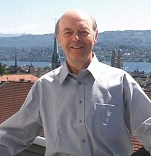 Yuri Gurevich合作论文数Department of Computer Science and Engineering, University of Michigan56
 Saharon Shelah合作论文数Einstein Institute of Mathematics, The Hebrew University of Jerusalem;Rutgers University9
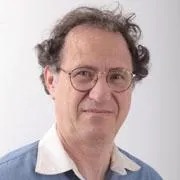 Nachum Dershowitz合作论文数School of Computer Science, Tel Aviv University4
 Andre Scedrov合作论文数Mathematics and Computer and Information Science;University of Pennsylvania4
 Nikolaj S. Bjørner合作论文数Microsoft3
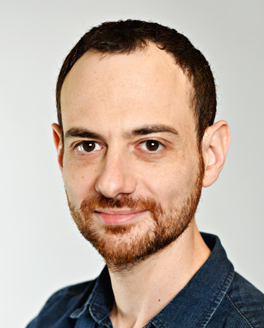 Benjamin Rossman合作论文数Department of Computer Science, Trinity College of Arts & Sciences, Duke University;Department of Mathematics, Trinity College of Arts & Sciences, Duke University3
 John Irwin合作论文数2
 Bruce E. Sagan合作论文数Department of Mathematics, Michigan State University2Yi Zhang (张奕)合作论文数2
 Frank Harary合作论文数Computer Science Department, New Mexico State University2
 Mauro Di Nasso合作论文数University of Pisa2
 Margus Veanes合作论文数Microsoft Research RISE2
 Dean Rosenzweig合作论文数2
 Lev Nachmanson合作论文数Microsoft2
 Victor Pambuccian合作论文数2
 Boris Mitavskiy合作论文数2Michael Hardy合作论文数1frank stephan合作论文数1Will Brian合作论文数Department of Mathematics and Statistics, University of North Carolina1Gábor Braun合作论文数1
 Jonathan L. Verner合作论文数Postal address: Dvouletky 47, Praha 10, 100 00, Czech Republic.1
 Dilip Raghavan合作论文数Department of Mathematics, Faculty of Science, National University of Singapore1
 Su Gao (高速)合作论文数School of Mathematical Sciences, Nankai University1
 Bernd Finkbeiner合作论文数Universität des Saarlandes1
 Taras Banakh合作论文数Department of Mathematics, Lviv University1
 Andrzej Pelc合作论文数Departement d'informatique et d'ingenierie, Universite du Quebec en Outaouais1Rüdiger Göbel合作论文数1David Ilcinkas合作论文数1
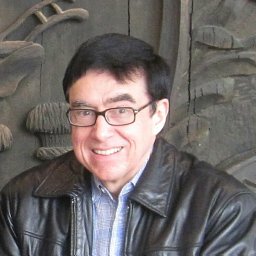 Stephen G. Simpson合作论文数Department of Mathematics;Pennsylvania State University;Department of Mathematics, Pennsylvania State University1
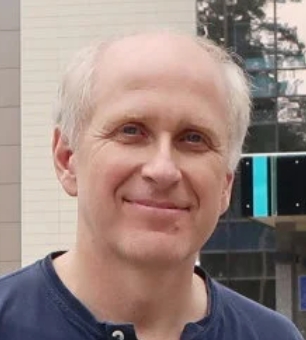 Rolf Niedermeier合作论文数Technische Universitat Berlin1David Feldman合作论文数Department of Mathematics, University of New Hampshire1
 Leslie Ann Goldberg合作论文数Department of Computer Science, University of Oxford;St Edmund Hall, University of Oxford1Vitaly Bergelson合作论文数1
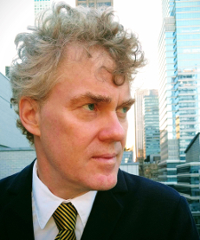 Joel David Hamkins合作论文数Faculty of Philosophy, University of Oxford;Mathematical Institute, University of Oxford1Heike Mildenberger合作论文数1
 Renling Jin合作论文数1
 Wolfram Schulte合作论文数Facebook1
 Benjamin I. P. Rubinstein合作论文数Division of Engineering and IT, University of Melbourne;School of Computing and Information Systems, University of Melbourne1
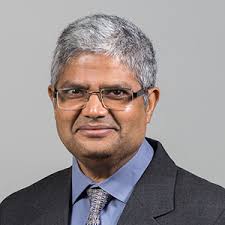 Sanjay Jain合作论文数School of Computing, National University of Singapore1
 Madan Musuvathi合作论文数Microsoft Research1Nicholas Rupprecht合作论文数1
 Peter L. Bartlett合作论文数Department of Statistics, University of California, Berkeley;Department of Electrical Engineering and Computer Sciences, University of California, Berkeley;Google;Google DeepMind1
 Martin Dyer合作论文数School of Computing, University of Leeds1Jörg Brendle合作论文数1
 Michael Hrusak合作论文数Ctr Ciencias Matemat, Univ Nacl Autonoma Mexico1
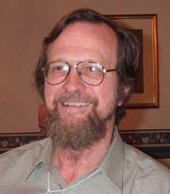 Neil Hindman合作论文数Department of Mathematics, Howard University1Marco Forti合作论文数Universita di Pisa1
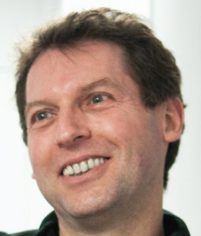 Pierre Fraigniaud合作论文数Institut de Recherche en Informatique Fondamentale, Université Paris Cité;CNRS1
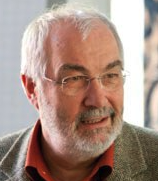 Wolfgang Reisig合作论文数Department of Computer Science, Faculty of Mathematics and Natural Sciences, Humboldt-Universität zu Berlin;Institut für Informatik, Humboldt-Universität zu Berlin1




