One of the sources of infections in hospitals is the presence of potentially harmful bacteria on the skin surface (carriage) of a patient without the development of an infection, but which can spread to other people under certain conditions. Bacteria living on the skin surface can also contribute to worsening of eczema. The current methods of ridding the skin of these microbes (bacteria) involves giving the patient either topical (on the skin) or oral (by mouth) antibiotics, a strategy which, over time, is thought to have caused antibiotic resistance, meaning the antibiotics can no longer kill the bacteria. The study described in this paper was carried out by a group from the University of Regensburg in Germany. They used excised pig and human skin samples to which they had added drug resistant bacteria, such as methicillin resistant staphylococci or MRSA, and then treated the skin with a chemical in solution that acts by increasing sensitivity to light. Skin samples were then exposed to a source of light, a process known as photodynamic activation. They found that this technique led to a large reduction in the numbers of bacteria, without damage to skin cells. The authors suggest that this process should now be investigated as a safer method of reducing surface bacterial carriage without increasing the risk of bacterial resistance and without damaging the skin.
作为医院感染的来源之一, 患者皮肤表面(载体)存在潜在有害细菌, 它们不会产生感染, 但在某些条件下可能传播给其他人。皮肤表面生活的细菌也会导致湿疹恶化。目前去除这些微生物(细菌)皮肤的方法包括给患者使用局部抗生素(皮肤上的)或口服抗生素(口服),但随着时间的推移, 这种策略被认为导致了抗生素耐药性, 这意味着抗生素不再能杀死细菌。本文中描述的是由德国雷根斯堡大学的一个小组进行的研究。他们使用切掉的猪和人体皮肤样本, 在样本中加入耐药细菌,如耐甲氧西林葡萄球菌或 MRSA, 然后用一种化学溶液对皮肤进行处理, 这种化学溶液的作用是增加对光的敏感性。皮肤样本随后暴露在光源下,这一过程被称为光动力激活。他们发现这种技术可以在不损害皮肤细胞的情况下, 大量减少细菌的数量。作者建议,这一过程现在应该作为一种更安全的方法来研究, 以减少表面细菌运输, 而不增加细菌耐药性的风险,也不损害皮肤。
The title compound [Au2{μ-(SC6H4-2-AsPh2)-κS,κAs}2] consists of a dinuclear unit with two AsS– ligands (AsSH = 1-AsPh2-2-SHC6H4) bridging the gold(I) atoms. Each gold(I) atom is coordinated by a sulfur atom from one ligand and one arsenic atom from the other ligand with formation of a ten-membered centrosymmetric Au2As2S2C4 ring. The deviation of the As–Au–S fragment from linear geometry is associated with the presence of a short gold···gold contact.
Melt particles found at various depths in impactites from the Yaxcopoil-1 borehole into the Chicxulub impact structure (Yucatan) have been analyzed for their major and trace element abundances. A total of 176 electron microprobe and 45 LA-ICP-MS analyses from eight different melt particles were investigated. The main purpose of this work was to constrain the compositions of precursor materials and secondary alteration characteristics of these melt particles. Individual melt particles are highly heterogeneous, which makes compositional categorization extremely difficult. Melt particles from the uppermost part of the impactite sequence are Ca- and Na-depleted and show negative Cc anomalies, which is likely a result of seawater interaction. Various compositional groupings of melt particles are determined with ternary and binary element ratio plots involving major and trace elements. This helps distinguish the degree of alteration versus primary heterogeneity of melt phases. Comparison of the trace element ratios Sc/Zr, Y/Zr, Ba/Zr, Ba/Rb, and Sr/Rb with compositions of known target rocks provides some constraints on protolith compositions; however, the melt compositions analyzed exceed the known compositional diversity of possible target rocks. Normalized REE patterns are unique for each melt particle, likely reflecting precursor mineral or rock compositions. The various discrimination techniques indicate that the highly variable compositions are the products of melting of individual minerals or of mixtures of several minerals. Small, angular shards that are particularly abundant in units 2 and 3 represent rapidly quenched melts, whereas larger particles (>0.5 mm) that contain microlites and have fluidal, schlieric textures cooled over a protracted period. Angular, shard-like particles with microlites in unit 5 likely crystallized below the glass transition temperature or underwent fragmentation during or after deposition.
 Wolfgang Baumler合作论文数3
 M. Schreiner合作论文数2
 Daniel B. Eckl合作论文数Institute for Microbiology and Archaea Centre, University of Regensburg2Eichner Anja合作论文数2
 B. König合作论文数Institut für Organische Chemie, Fakultät für Chemie und Pharmazie, Universität Regensburg2Felgenträger Ariane合作论文数1
 Martin G. Tuchscherer合作论文数1W. Uwe Reimold合作论文数1
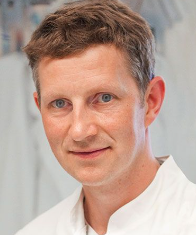 Tim Maisch合作论文数Zentrum für Seltene Erkrankungen, Universitätsklinikum Würzburg1
 Roger Gibson合作论文数School of Geosciences, University of the Witwatersrand1Deon Bruin合作论文数1




