A brief review is presented of ways of stabilizing switched linear systems. Different formulations are considered on the basis of certain assumptions on the modes of the switched system and/or the type of stabilizing controller. Switched systems with uncertainty, delays in control, and modes of different dynamic orders are considered. Approaches to constructing stabilizing controllers are proposed for all formulations of stabilization problems.
For a switched affine system closed by stabilizing static feedback, a method is presented for constructing a parametric family of partitions of the state space, relative to which this closed system remains stable.
An approach is proposed to construct a digital controller stabilizing a continuous-time switched linear interval system with commensurate delays in control under slow switchings. The stabilization approach consistently includes the construction of a switched continuous-time–discrete-time closed-loop system with a digital controller, the transition to its discrete-time model represented as a switched discrete-time linear interval system with modes of various orders, simultaneous stabilization of the subsystems of the resulting discrete-time model, and the calculation of the delay time ensuring the stability of the original switched system closed by the controller found.
An approach is proposed to constructing a digital controller that stabilizes a continuously switched linear system with commensurate delays in control during slow switchings. The approach to stabilization consistently includes the construction of a switchable continuous-discrete closed-loop system with a digital controller, the transition to its discrete model, represented in the form of a switched system with modes of different orders, simultaneous stabilization of the subsystems of the resulting discrete model and calculation of the delay time that ensures the stability of the original switched system , closed by the found regulator.
We consider the problem of stabilization of a switched interval linear system with slow switchings that are inaccessible to observation. It is proposed to look for a solution in the class of variable structure controllers. To ensure the functionality of such a controller, it is necessary to construct an observer of the switching signal. This paper is devoted to some theoretical issues related to the period of quantization of the neural observer’s operating time.
The problem of constructing the graph of states of a switched affine system closed by a static state feedback is considered. To solve this problem, a constructive algorithm based on the study of the consistency of systems of linear algebraic inequalities is proposed.
An approach to the construction of a digital controller that stabilizes a continuous-time switched linear system with commensurate delays in control is proposed. The approach to stabilization sequentially includes the construction of a switched continuous-discrete closed system with a digital controller, the transition to its discrete model represented as a switched system with modes of various orders, and the construction of a discrete dynamic controller based on the quadratic stability condition for a closed switched discrete-time system.
We consider the problem of stabilizing a switched linear system with slow switchings that cannot be observed. The solution is sought in the class of variable structure controllers. To ensure the operability of such a controller, it is necessary to construct a switching signal observer. As an observer, it is proposed to use a neural network. The theoretical aspects of adjusting such an observer are the subject of this paper.
We study the problem of stability of the zero equilibrium of a switched affine systemclosed by a linear static state feedback. The concept of feasible control for a given set of switchingsignals is introduced, and a constructive condition for checking this property for an arbitrarylinear feedback is obtained. A sufficient condition for the stability of the zero equilibrium ofa switched affine system closed by a feasible control is formulated.
This article reports a theoretical and experimental study of a novel thermal energy harvester with heat-induced vibrations in an environment with a nonzero temperature gradient. The energy harvester comprises a shape memory alloy wire from Nitinol and two elastic cantilever beams with deposited lead zirconium titanate piezoelectric layers. The shape memory alloy wire is prestrained by the free ends of the cantilever beams connected in a bow-similar structure. The environment temperature gradient is obtained from the difference in temperatures of a heater and colder air in the room. When the wire approaches the heater, it heats up and shortens, causing it to move away from the hot zone and entering into a colder zone. This causes the wire to cool and to approach the heater again. The cyclic change of the length of the shape memory alloy wire causes vibrations in the cantilever beams due to which electricity is produced by the piezoelectric layers. A dynamical model, based on the theory of Lagrange and Maxwell, combining mechanical, piezoelectric, and thermal domains is derived and used to prove the concept of the developed novel device and for theoretical investigation of the energy harvester performance. The hysteretic behavior of the shape memory alloy is involved in the model. The theoretical results have been proved experimentally.
Sufficient conditions for the existence of stabilizing controllers are established for switched interval linear systems. In particular, the condition for the existence of a static state feedback stabilizer is reduced to the solvability of a system of linear matrix inequalities for a switched interval system with modes of various orders, and the condition for the existence of a digital stabilizing dynamic output feedback controller is stated in terms of the solvability of a system of nonlinear matrix inequalities for a switched interval system with slow switching.
This paper demonstrates a case study of a combined application of smart materials in a thermal energy harvester with vibrating action. The conceptual design of the harvester is based on a Shape Memory Alloy wire attached to the free end of a piezoelectric flexible cantilever beam intended for generation of electrical energy utilizing a constant heat source. A mathematical model containing three differential equations describing the dynamics of the mechanical, electrical and thermal subsystems is developed. The Shape Memory Alloy hysteretic behaviour is considered in the mathematical model. An essential observation is the system oscillates at two frequencies lower one of which depends on the temperature time constant and the higher one is determined by the natural frequency of the mechanical subsystem. The comparison of the numerical solutions and the experimentally obtained graphs of the harvester output characteristics shows a good degree of coincidence.
The paper presents a theoretical and experimental investigation of a thermo-mechanical model of an actuator composed of a shape memory alloy wire arranged in series with a bias spring. The developed mathematical model considers the dynamics of the actuator in the thermal and mechanical domains. The modelling accuracy is increased through the developed algorithm for modelling the minor and sub minor hystereses, thus removing the disadvantages of the classical model. The algorithm improves the accuracy, especially when using pulse-width modulation control, for which minor and sub minor hystereses are likely to occur. Experimental studies show that the system is very sensitive, and there are physical factors whose presence cannot be considered in the mathematical model. The experimental research has shown that setting constant values of the duty cycle is impossible to obtain a stable value of displacement and force. The comparison between the developed mathematical model results and the experimental results shows that the differences are acceptable. The improved modelling serves as a basis for designing such actuators and creating an improved automatic feedback control system to maintain a given displacement (force) or trajectory tracking.
We study the problem of stabilizing multiple-input switched linear systems that may have operation modes of different dynamic orders. To solve this problem, we propose two approaches to constructing a. stabilizing controller based on the dynamic-order extension method and on solving a. system of linear matrix inequalities.
The paper presents a parametric study of an electrothermal oscillator based on Shape Memory Alloy. The operating principle of the oscillator is established on a heated by electric current Shape Memory Alloy wire, mounted with a pre-tension between the free ends of two symmetrically placed cantilever beams. The effect of crystallographic changes in the wire due to heating leads to the generation of mechanical and electrical vibrations. Parametric studies were conducted to investigate the influence of the input parameters on the system output characteristics.
Different forms of control problems for linear systems under essential uncertainty are considered. Specifically, three problems are examined. First, the unknown disturbances are assumed bounded and only their bounds are known. The problem is solved under various assumptions regarding the order of the disturbances and the observed signals, as well as the properties of the system. Second, the estimation of the unknown input (i.e., the inversion problem or the inverse problem) is considered. This problem is solved by the controlled model method with the control designed to stabilize the difference between the observed outputs of the original system and the model. Robust stabilization algorithms produce estimates of the unknown signals with a desired accuracy. The third problem focuses on stabilization of switched systems. The dynamics of the chosen system is described at each instant by one of the systems from a given finite set. Switching between regimes may depend both on time and on the system phase vector. Two problems are solved successively: finding stabilizers (a unique stabilizer if possible) for each plant from the family, and then investigating the conditions when switching between stable regimes does not disrupt the stability of the switched system. Various stabilization methods are obtained for switched systems covering different switching schemes.
We solve the problem of constructing a digital controller that stabilizes a continuous-time switched system whose operating modes are interval linear systems. The proposed stabilization approach includes constructing a continuous-time/discrete-time closed-loop system with a digital controller, passing to its discrete-time model, constructing, for a finite family of interval discrete-time systems (discrete-time model modes), a controller that stabilizes each of the systems, and subsequent estimation of the delay time that ensures stabilization of the original switched interval system by this controller.
We develop the internal approximation method for constructing algorithms that allow one to seek stability sets for finite families of homogeneous affine polynomials. Under certain assumptions, the complex problem of synthesis of a simultaneously stabilizing controller for a given finite family of linear stationary dynamic plants can be reduced to such a problem.
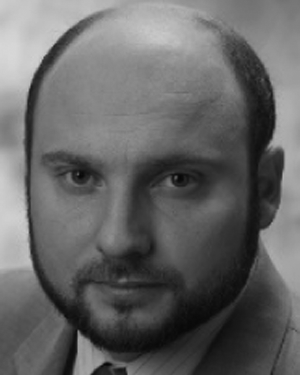 V. V. Fomichev合作论文数22
 S. K. Korovin合作论文数10
 V. A. Il’In合作论文数7A. V. Kudritskii合作论文数6
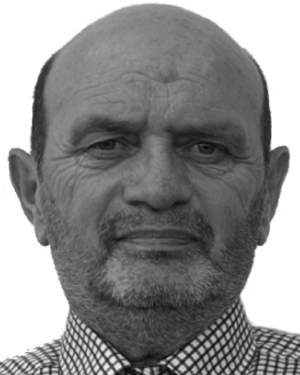 Todor Stoilov Todorov合作论文数6Sv Emel'Yanov合作论文数6
 Rosen Mitrev合作论文数Dept. of Eng. Logistics, Tech. Univ. of Sofia;c;Dept. of Eng. Logistics, Tech. Univ. of Sofia6с в емельянов合作论文数5P. A. Krylov合作论文数5A. P. Nosov合作论文数4Yu. M. Mosolova合作论文数4S. I. Minyaev合作论文数4а в ильин合作论文数3Э. Ф. Хусаинов合作论文数3I. V. Kapalin合作论文数3E. S. Sagadinova合作论文数2Nicolai A Izobov合作论文数2
 I. G. Mamedov合作论文数Baku State University2
 A. V. Kraev合作论文数2А. В. Ильин合作论文数1Ev Voskresenskii合作论文数1Fz Sadyrbaev合作论文数1An Vetokhin合作论文数1In Sergeev合作论文数1Na Izobov合作论文数1Va Kondratev合作论文数1Alexander V. Il'in合作论文数1
 Alexey Ilin合作论文数1
 Borislav Todorov Ganev合作论文数Faculty of Electronic Engineering and Technologies, Technical University of Sofia1A. V. Maltseva合作论文数1Stanislav Emelyanov合作论文数1
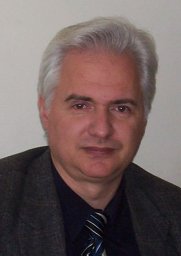 Ivan Yatchev合作论文数Technical University of Sofia;Faculty of Electrical Engineering;Faculty of Electrical Engineering, Technical University of Sofia1V. M. Millionshchikov合作论文数1M. V. Filinov合作论文数1
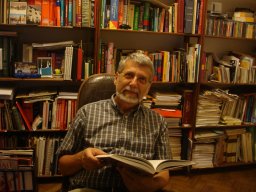 Stanimir Valtchev合作论文数1V. N. Filinov合作论文数1
 E. K. Makarov合作论文数Institute of Mathematics, National Academy of Sciences1Andrew V Ilin合作论文数1




