We have developed a multicomponent synthesis of a new family of stable selones, 3-acylarylethenyl-1-alkylimidazole-2-selones, in 28-86% yields by intercepting (MeCN, 70 °C) N-alkyl-N-alkenylimidazolium carbenes, generated in situ from substituted imidazoles and acylarylacetylenes, with elemental selenium. The basic reactivity (E/Z-photoisomerization, reduction, hydrolysis/oxidation, and oximation) of the synthesized imidazole-2-selones has been evaluated.
The energies of O-H···O- and N+-H···O charge-assisted hydrogen bonds quantified via the method based on molecular tailoring approach for a series of anionic and cationic compounds. The energies of O-H···O- and N+-H···O charge-assisted hydrogen bonds vary from 15 to 43 and from 5 to 29 kcal/mol, being five and seven times stronger, on average, respectively, than conventional intramolecular hydrogen bonds in neutral prototypes. The strengthening of (-) and (+) charge-assisted hydrogen bonds in anions and cations relative to conventional hydrogen bonds in neutral compounds is accompanied by significant changes in the structural, spectral and theoretical hydrogen bond descriptors. The hydrogen bond geometry changes, the spectral manifestations of (-) and (+) charge-assisted hydrogen bonds and process of electron transfer through hydrogen bond become more pronounced compared to conventional hydrogen bonds. The energies of (-) and (+) charge-assisted hydrogen bonds and conventional hydrogen bonds are functionally related to the values of hydrogen bond descriptors, allowing the former to be evaluated using the latter. It has been shown that the energies of (-) and (+) charge-assisted hydrogen bonds are the strongest of the known types of hydrogen bonds and belong in most cases to the category of strong hydrogen bonds.
All electron shells of 118 elements of the periodic table are visualized using the parameters of the (3,-3) critical points in the topology of the localized orbital locator function, and a consistent compression of shells with increasing atomic number (Z) is demonstrated. A relationship is established between the properties of atoms (atomic size, ionization energy, electronegativity) and the parameters of the (3,-3) critical points of the outer shell. This interconnection allows scanning of activity centers, analysis of reactivity, and local properties of atoms in molecules via parameters of the (3,-3) critical points. Based on the parameters of the (3,-3) critical points as electronegativity descriptors, a ranking of 24 known electronegativity scales is performed for the sp-, d-, and f-blocks of the periodic table elements. Using these descriptors, a correction of the Pauling electronegativity scale is carried out to obtain new electronegativity values. The parameters of the (3,-3) critical points provide a digital visualization of phenomena such as the relativistic contraction of electron shells, as well as the lanthanide and actinide contraction, at the level of all electron shells.
The relative reactivity of deprotonated CH3 group and nitrogen atom of 1-methylisoquinoline towards electrophilic triple bond crucially depends on the acetylene structure and the reaction conditions. 1-Acyl-2-arylacetylenes react with 1-methylisoquinoline in a 2 : 1 molar ratio (34 mol% KOH 0.5H2O, H2O/MeCN, 55-60 degrees C, 24-48 h) to give 1-[5'-(het)aryl-m-terphenyl-4'-yl]isoquinolines in 28-51% yields and 1-[6'-acyl-5'-(het)aryl-m-terphenyl-4'-yl]iso-quinolines in trace to 11% yields. The minor product (proved by X-ray) results from 1,3-shift of the acyl group in the carbanionic intermediate. Me N O Ar R KOH/H2O Ar = Ph, 4-MeC6H4 R = Ph, 3-MeOC6H4, 2-fury!, 2-thieny! MeCN 55-60 degrees C 24-48 h N Ar R + Ar Ar Ar N R O R 28-51% traces-11%
The OH···OC RAHB energies were quantified via a molecular tailoring approach for a series of tropolones with the fused aromatic and antiaromatic cycles. At 3,4 and 5,6 fusions of the tropone ring with aromatic cycles, the RAHB enhancement is observed while the RAHB weakening takes place at 4,5 and 6,7 fusions. An opposite trend appears at the fusion of the tropone ring with the antiaromatic cycle. A linear ratio was found between the HOMA structure-based aromaticity indices as well as NICS magnetic ones for the tropone ring and the RAHB energy. The total RAHB energy is divided into σ- and π-components. The σ- and π-components were established to change in the same directions, appearing the synergism. This synergism causes extremely high RAHB energies above 30 kcal/mol in some tropolones. It was shown that RAHB acquires the features of CAHB in these cases due to the excess charge on the oxygen of the CO group. The influence of the RAHB strength on the frontier molecular orbitals patterns, energy, the size of the gap between them, and the λmax absorption wavelength in the UV/vis range was studied. It was revealed that the HOMO energy elevates, the LUMO energy lowers, the HOMO-LUMO gap narrows, and the λmax wavelength undergoes a bathochromic shift with RAHB strengthening in the studied tropolones.
A new type of S N H Ar reaction in the quinoline core under the action of available acylethynylpyrroles proceeds without halogenated reagents and any catalysts to stereoselectively afford 2-( E -2-acylethenylpyrrolyl)quinolines with a yield up to 78%.
1-Methylisoquinoline undergoes stereoselective annulation with pyrrolylacetylenic ketones (MeCN, 80-82 degrees C) to provide (E)-acylethenylpyrrolo[1',2':3,4]imidazo[2,1-a]isoquinolines in up to 92% yield. In the case of 5-arylpyrrolylacetylenic ketones, instead of the above cyclization, the dimerization of the starting ketones to give dipyrrolopyrazines in 38 and 39% yields occurs.
For a series of tropolones, the nature of the intramolecular O-H⋅⋅⋅O=C hydrogen bond closing the five-membered quasi-cycle was studied. Enhancement of conjugation in the hydrogen-bonded rotamer was revealed. Quantification of hydrogen bond energy in tropolones via the molecular tailoring approach yields values in the range from 15 to 20 kcal/mol suggesting that the intramolecular interaction in tropolones has nature of the resonance-assisted hydrogen bond. The total resonance-assisted hydrogen bond energy in the tropolones was divided into σ- and π-components. The magnitudes of total energy of resonance-assisted hydrogen bond in the substituted tropolones can be controlled by the electronic properties of the substituents at the tropone ring. In 3-, 4-, and 5-substituted tropolones, the resonance-assisted hydrogen bond energy is raised due to electron-donating substituents and lowered due to electron-withdrawing ones. The opposite trend is observed in 7-substituted tropolones. The size of the π-shares plays a crucial role in establishing the total energy of resonance-assisted hydrogen bond. The reason for the occurrence of a resonance-assisted hydrogen bond in the tropolones is the molecular backbone aromaticity, since, in accordance with the Hückel rule, 10 π-electrons are delocalized.
Context Hydrogen bonds critically influence the structure and properties of both organic molecules and biomolecules, as well as supramolecular assemblies. For this reason, the development and elaboration of methods for quantitative assessment of hydrogen bond energy is an urgent challenge. In this study, using a large series of hydroxycarbonyl aliphatic compounds with the O‒H···O = C intramolecular hydrogen bond, a bank of hydrogen bond descriptors was created, including spectroscopic, structural, QTAIM-based, and NBO-based parameters. It was shown that the O‒H vibration frequency, OH chemical shift as the spectroscopic descriptors, the O···H hydrogen bond length, O···O distance, and O‒H covalent bond length as the structural descriptors, the electron density and its Laplacian, electron potential energy density in the hydrogen bond critical point, the electron density at the ring critical point as the QTAIM-based descriptors change in a correlated manner. The same correlation is found in change of the charge transfer energy through a hydrogen bond, the occupancy of the O‒H bond antibonding orbital, the Wiberg indices of the O···H hydrogen bond, and the O‒H covalent bond, as well as the polarization of the O‒H bond, which are the NBO-based descriptors. It was also recognized that the specified descriptors from the spectroscopic, structural, QTAIM-based, and NBO-based categories are functionally related to the values of intramolecular hydrogen bond energy, quantified via the molecular tailoring approach. This allowed one to obtain a system of equations for quantitative estimation of intramolecular hydrogen bond energy based on the spectroscopic, structural, QTAIM, and NBO descriptors, which makes such quantification more dependable and reliable. Methods To obtain the spectroscopic descriptors, the vibrational spectra and shielding constants were calculated using the GIAO method. Structural descriptors were obtained for the equilibrium geometry of molecules, calculated at the MP2(FC)/6–311 + + (2d,2p) level using the Gaussian 09 program. The QTAIM-based descriptors were calculated using the AIMAll program within the framework of the quantum theory “Atoms in Molecules.” The NBO-based descriptors were calculated using the NBO 3.1 program implemented into Gaussian 09. To quantify the energy of intramolecular hydrogen bonds, molecular fragmentation was used within the molecular tailoring approach.
The energies of the O−H∙∙∙O=C intramolecular hydrogen bonds were compared quantitatively for the series of ortho-disubstituted benzenes and Z-isomers of olefins via a molecular tailoring approach. It was established that the hydrogen bond energy in the former series is significantly less than that in the latter one. The reason for lowering the hydrogen bond energy in the ortho-disubstituted benzenes compared to the Z-isomers of olefins is the decrease in the π-contribution to the total energy of the complex interaction, in which the hydrogen bond per se is enhanced by the resonance effect. By the example of the para- and meta-disubstituted benzenes, as well as E-isomers of olefins, it was explicitly shown that the aromatic ring is a much poorer conductor of the resonance effect compared to the double bond. The hydrogen bond in the ortho-disubstituted benzenes has a lower energy than a typical resonance-assisted hydrogen bond because the aromatic moiety cannot properly assist the hydrogen bond with a resonance effect. Thus, a hydrogen bond on an aromatic platform should fall into a special category, namely an aromaticity-assisted hydrogen bond, which is closer by nature to a simple hydrogen bond rather than to a resonance-assisted one.
Using the molecular tailoring approach, a total energy scale for the push‐pull effect in the range from −40 to 100 kcal/mol is created for the wide series of neutral, charged and doubly charged compounds on the chalcone platform. Taking into account similar energy scale for hydrogen bonds, the strength of the push‐pull effect is ranked in the seven categories, ranging from negative (anti‐push‐pull) to very weak and very strong push‐pull effect. It is demonstrated that the molecular properties of chalcone can be tuned prior synthesis due to the created energy scale for the push‐pull effect. The single bonds of the π‐spacer in the chalcones are shortened, the double ones are lengthened, and the C=O bond vibrations are red shifted when the push‐pull effect is enhanced along the energy scale. The HOMO and LUMO energies change systematically while the HOMO–LUMO energy gap narrows as the strength of the push–pull effect increases.
AbstractOxalylacetylenes act as dielectrophiles in the annulation of quinolines to give highly functionalized 1,3-oxazine cycles decorated with ethynyl, oxalyl, ester and aryl substituents. The annulation proceeds under mild conditions (room temperature, without catalyst) in 2:1 mode with respect to acetylene and quinoline to deliver 1,3-oxazinoquinolines in 45–88% yields. A beneficial feature of the reaction is that, in contrast to results on the reaction of quinolines with trifluoroacetylacetylenes in the presence of water, where H2O acted as a third electrophile, leading to the 1,3-oxazinoquinolines containing a hydroxyl group, this reaction well tolerates the aqueous medium. This reaction also tolerates isoquinoline and phenanthridine.
Phenanthridine is readily annulated at room temperature with dihydro-1,3-oxazine ring under the action of oxalylacetylene ethyl ester to diastereoselectively deliver (R*,R*)-2-hydroxy-4-aryl-2H,13bH-[1,3]oxazino[3,2-f]- phenanthridines in up to 58% yield. According to quantum chemical calculations, among the possible transformations of the 1,3(4)-dipole phenanthridine/oxalylacetylene inter- mediate, protonated with water, the preferred route leading to the target product is attack of the hydroxyl anion at the carbonyl moiety, followed by closing of the oxazine ring. The calculated stability of oxazinophenanthridine with respect to the oxazinoquinoline derivative in terms of ΔG, and the higher C6–O bond order in the former are confirmed by experimental results of differences between the reactions of phenanthridine and quinoline with aryloxalylacetylenes in water.
Acylethynylpyrroles, now readily available by the cross-coupling of pyrroles with acylbromoacetylenes in solid Al2O3 media, in the presence of 1-methylimidazole underwent unprecedentedly easy (40–45 °C) cyclodimerization into bis(acylmethylidene)dipyrrolo[1,2-a:1′,2′-d]pyrazines in up to 51% yield. Some other organic and inorganic basic catalysts can also trigger this cyclodimerization, but less efficiently.
The parameters of the (3, -3) critical point in the topology of the localized orbital locator inside the electron shell reveal patterns that make it possible to recognize trends in the size, electronegativity, and ionization energy of atoms in the first four periods of the periodic table.
Both the experimental and calculated data reveal that a strong NH⋯OС intramolecular hydrogen bond closing the seven-membered quasi-cycle is formed in the Z-isomers of pyrrolylenones. Comparison of the NH⋯OС intramolecular hydrogen bonds energies in the pyrrolylenones, estimated via the molecular tailoring approach, with the similar data for reference malonaldehydes shows that the resonance-assisted hydrogen bonding occurs in both cases, the hydrogen bond energy being varied mainly within 10-20 kcal/mol. The combined application of function-based and molecular tailoring approaches makes it possible to decompose the NH⋯OС total hydrogen bond energy in the pyrrolylenones into the π- and σ-components. It is established that the contribution of the π-component to the total N(O)H⋯OС hydrogen bond energy in the pyrrolylenones and malonaldehydes is almost the same (6-7 kcal/mol). Comparison of the π-contribution to the total energy of the resonance-assisted hydrogen bonding in the Z-isomer of pyrrolylenones with the energy of the push-pull effect in the E-isomer of pyrrolylenones reveals that the resonance contribution to the total energy of the resonance-assisted hydrogen bond in the former significantly enhances with reference to the net resonance energy in the latter. The appearance of the resonance-assisted hydrogen bond in the pyrrolylenones is possible due to the participation in the interaction of 10 or 14 π-electrons satisfying the Hückel aromaticity rule.
The title compound, 5-(1H-indol-3-yl)-1-methyl-3-phenyl-1,6-benzodiazocin-2(1H)-one, was synthesized for the first time by a one-step, two-component reaction between 1-methylbenzimidazole and benzoylindolyl-3-acetylene. The product was characterized by 1H-NMR, 13C-NMR, IR spectroscopy and HRMS.
Early unknown pharmaceutically oriented heterocyclic systems of benzo[1,4]diazocinone/pyrrole ensembles have been synthesized in up to 93 % yields by the catalyst-free mild insertion of pyrrolylacetylenic ketones into benzimidazoles. The reaction represents an extraordinary easy expansion of the aromatic five-membered heterocyclic ring up to pyrrole-ringed, highly unsaturated eight-membered heterocyclic system. The proposed mechanism of the reaction proceeding through dipole and ylide intermediates is confirmed by quantum chemical calculations (DFT).
The parameters of the (3,-3) critical point in the localized orbital locator topology near a heteroatom have been found to reflect the changes in the size, density and electron energy of the lone pair and correlate with the donor ability of the lone pair carrying heteroatom.
Pyrido[2,1-b][1,3]oxazines decorated with acetylenic, ester, aldehyde, ethyloxalyl functions, alkyl, aryl and heteroaryl substituents are readily assembled in up to 83% yield, mainly (-90%) as 2S*,9aS*-diastere-omers, by a mild (room temperature, no catalyst and solvent) one-pot procedure from pyridine and oxalylacetylenes (1:2 M ratio). The quantum chemical calculations (B3LYP/6-311G(d,p)) show that 2S*,9aS*-diastereomers of the pyrido[2,1-b][1,3]oxazines are more energetically preferred over 2S*,9aR*-diastereomers (by 2.9 kcal/mol for a modal example). (c) 2021 Elsevier Ltd. All rights reserved.
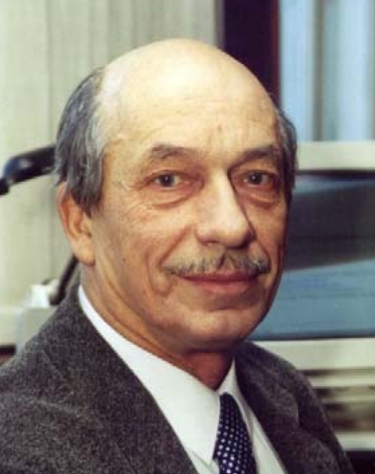 Boris A. Trofimov合作论文数A.E. Favorsky Institute of Chemistry, Siberian Branch of the Russian Academy of Sciences61
 Igor A. Ushakov合作论文数45Kseniya V. Belyaeva合作论文数43Lina P. Nikitina合作论文数41Anastasiya G. Mal'kina合作论文数33Alexander V. Vashchenko合作论文数28Ludmila V. Andriyankova合作论文数25Dmitry V. Pavlov合作论文数13Alexander I. Albanov合作论文数12
 Svetlana V Amosova合作论文数10V. I. Gostevskaya合作论文数10Galina M. Gavrilova合作论文数10Albina I. Mikhaleva合作论文数9Danuta Rusinska-Roszak合作论文数Inst Chem Technol & Engn, Poznan Univ Tech8
 Andrey Viktorovich Ivanov合作论文数6Vladimir Voronov合作论文数6Elena Yu. Schmidt合作论文数6Veronika S. Gen'合作论文数5Irina Yu. Bagryanskaya合作论文数5Oleg A. Dyachenko合作论文数5Valentina V. Nosyreva合作论文数5Vladimir A Potapov合作论文数5Olga N. Kazheva合作论文数5Ls Romanenko合作论文数4Vk Voronov合作论文数4
 Valentine G. Nenajdenko合作论文数Department of Chemistry, Lomonosov Moscow State University4Vasiliy M. Muzalevskiy合作论文数4Nina K. Gusarova合作论文数4B. V. Trzhtsinskaya合作论文数4Es Domnina合作论文数3Kseniya O. Khrapova合作论文数3Lv Baikalova合作论文数3
 Anton Kuzmin合作论文数3
 Valentin Semenov合作论文数3O. A. Tarasova合作论文数3Ludmila V. Baikalova合作论文数3Nina I. Ivanova合作论文数3
 Vladimir Kobychev合作论文数Irkutsk State University3Grigorii G. Alexandrov合作论文数3
 Denis Tomilin合作论文数3Ol'Ga A. Tarasova合作论文数3Ludmila A. Oparina合作论文数3Lyubov N. Sobenina合作论文数3Lyudmila V. Andriyankova合作论文数3Pavel A. Volkov合作论文数3Anatolii N. Chekhlov合作论文数2Ba Trofimov合作论文数2AK BOGENS合作论文数2Gennadii Shilov合作论文数2




