The VocalNotes project investigated how expert traditional music listeners conceive of notes in vocal performances by studying similarities and differences in their transcriptions. Teams of experts from five musical traditions (Japanese folk song, Chinese bangzi opera, Russian traditional village singing, Alpine yodelling, and Romaniote Jewish chanting) each transcribed ~10 minutes of vocal recordings from their culture, where manual transcription consisted of segmentation and note pitch correction, starting from an automatically extracted pitch curve. The experts then compared their independent transcriptions and looked for factors which could have led to disagreements. Western staff notation is not suitable for investigating such variances, because it does not represent sufficiently fine gradations of pitch and timing. We therefore used tools that allowed more precise annotations, namely Tony for segmentation, and Sonic Visualiser for note pitch correction and transcription comparison. We found that overall agreement was prevalent and the concept of note was generally applicable for analysis of vocal performances. Yet in some contexts disagreements were abundant, with the note concept reaching its limits. We identified four primary contexts which led to disagreements across several musical cultures: 1) differences in cultural knowledge between the transcribers, 2) differences in interpreting syllabic boundaries, 3) intra-syllabic pitch changes, and 4) “voice splash” - abrupt pitch changes caused by vocal techniques or used as an expressive device. The VocalNotes dataset, containing the audio of the musical fragments, annotations, and song documentation, has been published for replicability and further research.
Music transcription is a process of creating a notation of musical sounds. It has been used as a basis for the analysis of music from a wide variety of cultures. Recent decades have seen an increasing amount of engineering research within the field of Music Information Retrieval that aims at automatically obtaining music transcriptions in Western staff notation. However, such approaches are not widely applied in research in ethnomusicology. This article aims to bridge interdisciplinary gaps by identifying aspects of proximity and divergence between the two fields. As part of our study, we collected manual transcriptions of traditional dance tune recordings by eighteen transcribers. Our method employs a combination of expert and computational evaluation of these transcriptions. This enables us to investigate the limitations of automatic music transcription (AMT) methods and computational transcription metrics that have been proposed for their evaluation. Based on these findings, we discuss promising avenues to make AMT more useful for studies in the Humanities. These are, first, assessing the quality of a transcription based on an analytic purpose; secondly, developing AMT approaches that are able to learn conventions concerning the transcription of a specific style; thirdly, a focus on novice transcribers as users of AMT systems; and, finally, considering target notation systems different from Western staff notation.
Even before K-pop topped the Billboard charts, the Korean Peninsula, like Bali or coastal Ghana, was one of those areas whose music attracted a level of international attention out of proportion to geographical size or population. As of December 2020, searching the Society for Ethnomusicology’s online directory for members interested in Korea yields more hits than for either Japan or China. Yet the music feeding this voracious international appetite for knowledge has necessarily come from the southern half of the Korean peninsula. Since the partition into North and South Korea in 1948, the musical life of the northern half has been largely inaccessible to outside observation. Specialists in Korean music have been keen to know more about music in the North. For one thing, many leading musicians and other artists chose to move from the South to the North at the outbreak of the Korean War in 1950, and one...
As long ago as 1971 Mantle Hood wrote, in The Ethnomusicologist, of “the chronic problem, transcription of non-Western music, and the chronic solution, ‘doctored’ Western notation.” With the recent resurgence of interest in cross-cultural and comparative music analysis, the “chronic problem” has not gone away, yet efforts to find new and better solutions seem to have dwindled. While dance studies, linguistics, and organology have long benefited from purpose-made written-descriptive systems (Labanotation, the International Phonetic Alphabet, and the Sachs-Hornbostel instrument classification system respectively), world music analysis continues to adopt and adapt the prescriptive notation of one tradition as a descriptive notation for all the others, resulting in distortions and limitations that are generally acknowledged but regarded as inevitable. This paper proposes an alternative to the “chronic solution” of a kind that was envisaged by Hood as a remote future possibility, and that I argue has now become feasible: a “Laban Solution,” meaning a newly devised notation system designed from the outset to represent any kind of musical sound organization as efficiently as Labanotation can represent bodily movement. I describe a system called “global notation,” under development since 2016 with the aim of providing a consistent and easily learned set of conventions whereby users can specify any information about sound that may be wanted for the purposes of the notation and only that information. I illustrate how, by making all information optional, global notation offers advantages not only as a descriptive notation but also as an “aesthesic” one—one that can represent what is perceived by listeners as well as what is intended by composers and performers. To demonstrate that global notation should be particularly useful for studies that compare music from more than one tradition, I focus on one such study—Michael Tenzer’s 2011 article “Temporal Transformations in Cross-Cultural Perspective: Augmentation in Baroque, Carnatic and Balinese Music”—and re-notate its examples in global notation, which I suggest might help make insights such as Tenzer’s accessible to a wider readership. I then present some ways in which the Laban Solution of global notation can combine with what Hood called the Seeger and Hipkins Solutions—respectively, mechanical/computerized transcription and knowledge of indigenous notation systems—in working toward the ultimate “Composite Solution” that Hood dreamed of. I conclude by inviting input from interested readers to help develop global notation into a form that will achieve its full potential benefits of accuracy, efficiency, and accessibility.
In most of the world, through most of history, music has been conceived as a set of practices and techniques, expressive or religious behaviours, and adaptable repertoire resources, or as an integral part of some larger phenomenon such as theatre or healing. Over the last two hundred years, however, music has increasingly been reconceived as consisting of autonomous musical works. This has surely been one of the most important developments in musical history worldwide; yet it has been relatively little studied.
Taking Part in Music: Case Studies in Ethnomusicology Ian Russell and Catherine Ingram, eds. Aberdeen: Aberdeen University Press, 2013. 351 pp. Bibliog. Index. 20.00 [pounds sterling]. [ILLUSTRATION OMITTED] 'Taking Part' was the theme of the twenty-seventh conference of the European Seminar in Ethnomusicology, held at the University of Aberdeen's Elphinstone Institute in September 2011, and this book presents revised and expanded versions of twenty papers from that conference. The theme of a learned society conference like this is generally chosen to suggest a broad area of interest on which almost anyone working in the relevant discipline will feel that they have something to say. 'Taking Part' seems no exception, since ethnomusicologists habitually deal with musical participation both as a research subject and as a research method. More concerned with music-making as an activity than with criticism of musical 'works' or explication of historical and biographical contexts, they focus explicitly or implicitly on the many ways in which people take part in musical behaviour, and whenever possible they join in themselves for purposes of 'participant observation'. It would hardly be more than a rephrasing of Jeff Todd Titon's influential definition, 'the study of people making music', to suggest that ethnomusicology could be defined as the study of musical participation. (1) As an ethnomusicologist, therefore, my first reaction on hearing about this book was to wonder whether it would be, at one extreme, a tightly focused contribution to the theorization of musical participation, or at the other, a random collection of ethnomusicology articles that deal with participation neither more nor less than other publications in the field. As it turns out, perhaps not surprisingly, it is something in between. It would not be in the nature of a conference-derived, multi-authored publication like this for the whole book to adhere to a single, precise definition of its subject, and in fact there is hardly any attempt in the book to define the terms 'taking part' or 'participation'. The two expressions are used synonymously, which is reasonable enough since 'participation' is simply Latin for 'taking part', and in their actual application they seem to cover virtually the whole range of behaviours in which people engage with music. The commonplace understanding that musical participation means producing musical sound in a group is explicitly challenged by several of the authors, who argue, for instance, that silent listeners may be equally important participants in some kinds of musical event (Catherine Ingram) and that talking about music may be the main form of participation in others (Ingrid Akesson). Other authors extend the meaning of participation without making an explicit argument, as when Anthony Seeger speaks of 'participatory listening' to records (p. 29) but does not explain what this means or how it is different from other kinds of listening. Indeed, we are hardly given any examples of musical phenomena that are not participatory, except when Alf Arvidsson and his co-authors set 'taking part' in opposition to 'late modern society's view of music [...] as a work/product performed by the few (artists/experts) for consumption by the many (the audience)' (p. …
Readers unfamiliar with the subject of this book may be surprised to find that the ‘musical drama’ in the title turns out to be performed by a single singer to the accompaniment of a single drum. By most definitions, the Korean traditional performing art p’ansori is more a form of storytelling than of drama. It does incorporate dramatic elements, for instance in the singer’s use of acting and of different ‘voices’ when delivering the words of different charactersçbut then, so do most forms of storytelling worldwide. It does not incorporate the dialogue between multiple actors that is generally associated with ‘drama’, let alone the stage scenery and ‘props’of the theatre. Yet Western visitors to Korea from the late nineteenth century onwards recognized p’ansori as Korea’s nearest equivalent to the theatrical art forms that had developed in other East Asian countries, and that seemed conspicuously absent from Korea. By then, p’ansori had risen from its humble origins among the peasantry of the southern provinces to become one of Korea’s pre-eminent art forms, enjoyed by audiences throughout the peninsula and at every level of society right up to the royal family. As a result of elite patronage, its words and music had been elaborated by the layering of erudite expressions from Chinese poetry over the original rural Korean dialect, of melodic modes from various regional and court styles over the basic south-western folk idiom, and of ethical themes from the Confucian ideology of the ruling class over a romantic and often tricksterish repertory of folk tales and legends. Thus, as Um succinctly puts it, while p’ansori is ‘simple and minimalistic in form . . . it is also complex in its literary and musical content and expression’ (p. 211). This book goes further than any previous publication in elucidating the literary and musical complexity of p’ansori for the Englishspeaking reader. Two earlier books in EnglishçMarshall R. Pihl’s The Korean Singer of Tales (Cambridge, Mass., 1994) and Chan E. Park’s Voices from the Straw Mat: Toward an Ethnography of Korean Story Singing (Honolulu, 2003)çgo into more depth on certain aspects of the p’ansori texts as literature, but neither one attempts any close musical analysis. Um, in contrast, gives about equal weight to words and music, examining how they work together to produce a flexible expressive code that can accommodate a wide range of narrative and affective situations as well as stylistic variation between ‘schools’ and between individual singers. In addition to considering these ‘intrinsic’ properties of p’ansori, Um gives attention to what might be called the ‘extrinsic’ aspects such as performance contexts, transmission, and institutionalization, and surveys the social history of the genre from its earliest documentation in the mid-eighteenth century to its recent manifestations in Korean diasporic communities and in newly composed topical p’ansori stories. This makes Korean Musical Drama the most comprehensive Englishlanguage study of p’ansori to date, and Um can justly state that ‘all the major musical, social and cultural aspects of p’ansori are brought together in this book’ (p. 7). The book originates in Um’s 1992 doctoral thesis at Queen’s University, Belfast, and the thesis forms the basis of the first six of the book’s eight chapters. After a new Introduction that focuses on the second part of the book’s titleçhow the fashioning of p’ansori as an iconic ‘traditional’ art form has been shaped by various aspects of ‘modernity’ in Koreaç chapter 1 describes what happens in a typical p’ansori performance, and introduces the related genres tanga (introductory song), kayagufl m pyofl ngch’ang (self-accompanied singing) and ch’anggufl k (opera with multiple actors singing in p’ansori style). It also outlines the main social institutions and contexts that maintain the p’ansori tradition in modern South Korea, including p’ansori clubs, mass media, educational institutions, and state sponsorship. Chapter 2 then reviews theories and evidence on the history of p’ansori and ch’anggufl k from their origins to the time of Um’s doctoral research, emphasizing that ‘p’ansori as we know [it] is very much of the twentieth century construction’ (p. 56). There follow three chapters that look closely at how p’ansori works as a textual and musical system. Using Kim Sejong’s version of the famous Song of Ch’unhyang as an example, chapter 3 examines textual aspects such as narrative structure and themes, rhetorical devices and the ‘speech styles’ that express social relationships in the Korean language, as well as musical aspects such as vocal technique, melodic modes, and rhythmic cycles. It shows how words and music work together, for instance in the varying distribution of poetic lines across units of musical time, and in the use of different melodic modes and rhythmic
July 24, 1896: Korean First Recording: (Minyo) Korean Traditional Songs. 2009. C. K. Jung's Traditional Music Recording Series CKJCD–010–A. Re-recorded by Pak Kiman. Annotated by C. K. Jung, Lee Bo-hyung, and Yi Chinwőn. 28-page booklet with notes in Korean and English. Colour and b/w photographs. CD, 45 tracks (55:21). - Volume 46
The teaching of “world music” in Western academic institutions has historically focused on traditional musics studied in relation to the cultures that produced them, but often in isolation from other musical cultures and from global processes of cultural exchange and power relations. Since the 1980s, however, the term “world music” has been adopted by the music industry as a marketing category that includes “hybrid” and popular musics which obviously result from such processes. This paper surveys the responses of “world music” educators, as reflected in published teaching materials, to the question of how to handle the industry’s kind of “world music”. It argues for a “transcultural” approach in which “world music” courses would embrace literally any kind of music on an equal footing and situate all music within a single shared history. Finally, it describes an example from my own teaching practice of how such an approach might be realized.
intellectual elite that finds contemporary Bulgarian life ‘degraded’ and ‘vulgar’, she professes no affection for this new type of popular music. Caught in this quandary, she decides to study chalga as an anthropologist might, not swayed by her and others’ emotional response to it as a reflection of their disgust with life in the postcommunist era (17), but rather to theorise that disgust and to treat it in a way that is ‘analytical and diagnostic rather than moralizing and pathetic’ (19). To accomplish this goal, the book has two parts: Three chapters deal with the intellectual elite’s response to the genre, which for many years has dominated the commercial music market in Bulgaria, and two chapters contain profiles of three Roma musicians. For intellectuals, she discusses chalga’s seven sins against their sensibilities: its provision of a distorted image of modern Bulgaria; its seeming valorisation of 500 years of Ottoman domination; its oriental character; its regionalism rather than nationalism; its lack of ‘purity’ as a mixture of styles; its eroticism to the point of vulgarity; and its victory over the ‘folk’, which during the communist period was a stand-in for the ‘high’, the ‘national’ and the ‘pure’. In the second part, she provides detailed transcripts of interviews with three Roma musicians*one a musical eccentric, one a famous composer and performer of ‘wedding music’, and one a journeyman player. They provide Roma perspectives on Bulgarian musical life, a narrative tactic that reminds one of Peycheva’s and Dimov’s approach to their subjects and serves as a counterpoint to the point of view of the intellectuals. This is a heart-felt book, which puts the author squarely in her narrative, trapped between her sympathy for all musicians and for popular (or as she calls them, ‘low’) forms of music and her aversion to a musical style that seems to reflect only too accurately the degraded, anti-intellectual, economically stressful, criminalised nature of contemporary life in Bulgaria.
This is the first book on Korean opera in a language other than Korean. Its subject is ch'angguk, a form of musical theater that has developed over the last hundred years from the older narrative singing tradition of p'ansori. Andrew Killick examines the history and current practice of ch'angguk as an ongoing attempt to invent a traditional Korean opera form to compare with those of neighboring China and Japan. In this, the work addresses a growing interest within the fields of ethnomusicology and Asian studies in the adaptation of traditional arts to conditions in the modern world. For the benefit of readers who have not seen ch'angguk performed, the author begins with a detailed description of a typical performance, illustrated with photographs and musical examples, followed by a history of the genre - from its still disputed origins in the early twentieth century through a major revival under Japanese colonial rule and the flourishing of an all-female version (yosong kukkur) after Liberation to the efforts of the National Changgeuk Company and others to establish ch'angguk as Korean traditional opera. Killick concludes with analyses of the stories and music of ch'angguk and a personal view on developing a Korean national theater form for international audiences.
In the Korean context, it is debated whether the cluster of ritual practices and beliefs designated as ‘shamanism’ (musok in Korean) really constitutes a single tradition, and whether Korean ‘shamanism’ (or some part of it) is the same kind of phenomenon as that designated by the same word in its original context, Siberia (Howard, 1998). Rather than enter into such debates, Mills indicates in his title that he is not dealing with Korean shamanism in general but rather with a tradition specific to the east coast of South Korea, where shamans and their accompanying musicians have most often entered the profession by being born into it rather than undergoing a traumatic ‘spirit sickness’ like that of the ‘charismatic’ shamans whose ritual and artistic practices have so far been studied more extensively. Hereditary shamans, he explains, rarely possess the ‘spirit power’ that enables charismatic shamans to become possessed by spirits and act as vehicles for their self-expression; instead, they ‘perform a more priestly role’, using ritual skills and knowledge acquired from their parents and other human sources rather than the supernatural. In doing so, they ‘place much heavier emphasis on the subtle use of music and the arts as a means of providing their clients with the healing emotional fulfilment that they desire’ (p. 4). This book is about the use of music in that context, and despite its title, it does not focus on the shamans themselves but on their accompanying musicians. The main source for the book is a series of interviews conducted by Mills with two such musicians who visited London in January–February 2005, and he quotes from these interviews extensively throughout the book. He also refers to his own 18 months of fieldwork in South Korea in 1999–2000, but this experience remains very much in the background, perhaps surprisingly since Mills himself performed a musical role in rituals (p. 83) and must have become quite deeply involved in the tradition. He positions the book as following the example of a Korean publication, the 20-volume Deep-rooted Tree Oral-histories Series, and defines its purpose as documenting and encouraging an appreciation for a tradition whose future is far from certain in Korea’s rapidly changing society. Thus, this is a monograph in the strict sense: devoted to a single subject, it does not engage with any general ideas or literature about (for instance) music and healing (Gouk, 2000), or endangered traditions and cultural policy (Baumann, 1991). Accordingly, the place of an Introduction is taken by a single page of ‘editorial notes’, and the similarly brief Conclusion is content to summarize the main points of the book and update them with a mention of some recent Psychology of Music
Music in America: Experiencing Music, Expressing Culture by Adelaida Reyes. New York and Oxford: Oxford University Press, 2005. xviii + 123 pp. ISBN 0195146662 (£23.99, hardback), 0195146670 (£10.99, paperback) - Volume 23 Issue 1
Solitary music-making for personal satisfaction is a widespread form of musical behaviour that has hitherto been neglected by ethnomusicologists and other students of music. By analogy with “participation” (taking part), this activity might be termed “holicipation” (taking the whole), in that, as the only performer and listener involved, the solitary music-maker personally experiences the whole of the musical event. This paper assesses the treatment (or neglect) of musical holicipation in a wide range of literary and audiovisual sources, and argues that a number of recent developments in the study of music call for a more serious study of holicipation, especially by ethnomusicologists.
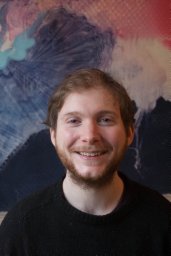 John McBride合作论文数Institute for Basic Science1
 Gakuto Chiba合作论文数1
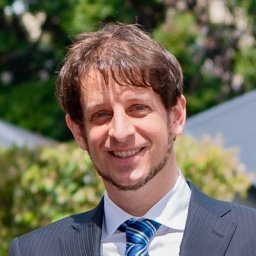 Patrick Savage合作论文数Dept Musicol, Tokyo Univ Arts1
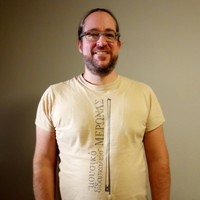 André Holzapfel合作论文数School of Electrical Engineering and Computer Science, KTH Royal Institute of Technology1
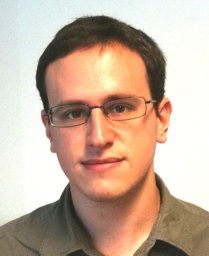 Emmanouil Benetos合作论文数Centre for Digital Music, Queen Mary Univ of London1
 Richard Widdess合作论文数1
 Polina Proutskova合作论文数1Yuto Ozaki合作论文数1




