This paper describes an implementation of the Infrastructure-as-a-Service (IaaS) concept for scientific computing and seven service pilot implementations with requirements from biomedical use cases at the CSC - IT Center for Science. The key service design requirements were enabling the use of any scientific software environment the use cases needed to succeed, and delivering the distributed infrastructure ICT resources seamlessly with the local ICT resources for the scientist users. The service concept targets the IT administrators at research organisations and delivers virtualised compute cluster and storage capacity via private network solutions. The virtualised resources can become part of the local cluster as virtual nodes and they can share the same file system as the physical nodes assuming the network performance is sufficient. Extension of the local resources can then be made transparent to enable an easy infrastructure uptake to the scientist end-users. Based on 20 months of service piloting most of the biomedical organisations express a sustained and growing need for the distributed compute and storage resources delivered with the IaaS. We conclude that a successful implementation of the IaaS can improve access and reduce the effort to run expensive ICT infrastructure needed for biomedical research.
A report by the International Society for Stem Cell Research (ISSCR)'s Task Force on Unproven Stem Cell Treatments outlines development of resources for patients, their families, and physicians seeking information on stem cell treatments.
AbstractAlbert Hermann Post (1839–95) is an almost forgotten figure in the history of legal anthropology, yet he was the first anthropologist to propose the study of the legal relations of indigenous peoples. His questionnaire is presented here in English for the first time. It was distributed in the 1890s and the answers, from Cameroon, Mali, Western Sudan, Uganda, German East Africa, German South West Africa, Madagascar, and the Solomon and Marshall Islands, were published by Steinmetz in 1903, after Post's death. The questionnaire gives an insight into the state of German anthropology at the time and, however naïve the method, the answers provide in many cases the only written evidence for the period on the societies studied. This article also considers Hildebrandt's reassessment of Post and gives an account of the circumstances leading up to the distribution of Josef Kohler's later questionnaire.
The newly available techniques for sensitive proteome analysis and the resulting amount of data require a new bioinformatics focus on automatic methods for spectrum reprocessing and peptide/protein validation. Manual validation of results in such studies is not feasible and objective enough for quality relevant interpretation. The necessity for tools enabling an automatic quality control is, therefore, important to produce reliable and comparable data in such big consortia as the Human Proteome Organization Brain Proteome Project. Standards and well-defined processing pipelines are important for these consortia. We show a way for choosing the right database model, through collecting data, processing these with a decoy database and end up with a quality controlled protein list merged from several search engines, including a known false-positive rate.
service Email alerting click here top right corner of the article or Receive free email alerts when new articles cite this article-sign up in the box at the
UNLABELLEDThe paper reports on programs, organization and Hypertext Mark-up Language (HTML) presentation provided by the Hierarchical Automated Gene Identification System (HAGIS) designed for managing sequencing projects.AVAILABILITYOn request from the authors.CONTACTst23646@ggr.co.uk
A method of estimating distances between pairs of genetic markers is described that directly uses their observed joint frequency distribution in a panel of radiation hybrids (RHs). The distance measure is based on the strength of association between marker pairs, which is high for close markers and decays with distance. These distances are then submitted to a previous method that generates linear coordinates for the markers directly from the intermarker distance matrix. This method of map building from RH data is simpler than others, because it uses only the observed joint frequency distributions of markers in the panel, and does not attempt to model unobserved quantities such as the retention of different sized fragments that contain the markers. It also incorporates directly the observed variation in retention of different markers, without needing a model for differential fragment retention dependent on chromosomal location, which is generally not known. Only small, precise distances are used in map construction, thereby reducing any effects of different fragment retention frequencies and local variations in X-ray sensitivity. The method is tested by simulation, and known marker distances and locations are successfully recovered from RH raw data. The method is also applied to publicly available data sets related to the recent transcript map of the human genome.
SUMMARY:A Java interface to radiation hybrid (RH) mapping software is described which enables users to build and interactively refine RH maps over the web.AVAILABILITY:The Java applets described here are available on the internet at http://www.oxmol.com/biolib/webmap/.
The great advances in human healthcare that are presaged by the Human Genome Project can be realized by the pharmaceutical industry. A prerequisite for this will be the successful integration of bioinformatics into most aspects of drug discovery. Although, from a scientific viewpoint, this is not a difficult problem, there are formidable technological obstacles. Once these are overcome, rapid progress can be expected.
Many sequence analysis problems involve consideration of a multiple sequence alignment where the 3-dimensional structure of one (or more) of the aligned sequences is known. In such cases, it is useful to map the sequence variability onto the atomic co-ordinates of known structure. If the structure also includes a bound ligand (or the location of the active site is known), each column position in the multiple sequence alignment may be annotated with its 'distance' from the binding site. These annotations, together with a measure of sequence variability, provide additional insights into drug specificity, for example among viral mutants. This paper describes several useful programs that automate this analysis.
The case of Gwao bin Kilimo v. Kisunda bin Ifuti decided by the colonial courts of the then Tanganyika has always held a certain fascination for those interested in the process of law under colonial rule. This is for a variety of reasons. The case seems to put into sharp focus the conflict between the imposed common law system and the indigenous customary law. This in turn stimulates questions as to the social values that lay, and probably still lie, behind the two systems and the extent to which those values reflect actual differences between the societies in which they developed. Since the conflict arose in a colonial context, the case also raises the question of the rôle of law in such a society and therefore, to some extent, the rôle of law in relation to ideology and political economy in this and in other contexts also. What is less well known is that the case was the subject of comment by colonial administrative officers at the time, comments which point up many of the issues involved and provide some insight into the different perceptions of African society on the part of administrative officers on the one hand and the judiciary on the other.
Sequence analysis of protein and nucleic acid databases by exhaustive string-matching algorithms is effectively implemented on large processor-array machines, such as the I.C.L. DAP. An improved method of assessing the significance of the best alignments for proteins is described. Examples involving the cystic fibrosis antigen and Drosophila vitellogenins illustrate the usefulness of this approach.
The rational design of enzyme catalysts for chiral chemistry and of drugs which bind to proteins would be facilitated if rules for the recognition of one partner by the other could be formulated. This communication suggests and tests one generalization: arginine forms a tighter ion pair with a carboxylate group than does lysine and is always used for ion-pairs which are not broken during turnover in naturally-occurring enzymes.
The material which forms the subject matter of this article constituted a chapter of a PhD thesis presented to London University in 1980. The thesis was based largely on the answers to Kohler's questionnaire which was distributed by the German colonial authorities throughout what was then German East Africa in 1909. A recent article in the Journal of African Law describes these questionnaires in detail. Bibliographical references in the following text to the answers to the questionnaires follow the numbers assigned to them by Ankermann (1929) and used in the list in Redmayne and Rogers' article. Some answers were published at the time and these are referred to in the same way as normal bibliographical entries Some use has also been made of Post's earlier questionnaire which, together with the answers, was published under the editorship of Steinmetz (1903). Post's questionnaire was written in 1895 and distributed throughout the German colonies. The thesis dealt with land tenure and contract and so covered the field of the answers in the questionnaires dealing with those topics. It also set out a typology of African societies at the time the questionnaires were distributed, based on what could be discovered of their economic and social relations. As it turned out this typology proved rather more useful in establishing connections between economic relations and forms of land tenure than it was in establishing connections with such relations and contractual liability.
BIOLOG contains facilities for the analysis of nucleic acid sequences. These facilities are available through queries and commands of the underlying implementation language PROLOG. Familiarity with PROLOG is gained by using the built-in BIOLOG functions. This experience should enable the user to extend the current system and define new facilities.
 Newell W合作论文数2Sayle Roger A合作论文数2
 Stephan Beck合作论文数Research Department of Cancer Bio, University College London;Cancer Institute, University College London2Pekka T Lehtovuori合作论文数1Teemu Perheentupa合作论文数1G. Koerting合作论文数1A. Van Hall合作论文数1
 Joshuah Holbrook合作论文数1Marcus D. Oxer合作论文数1H. Thiele合作论文数1M. Hamacher合作论文数1
 Philip Jones合作论文数1
 Alan Colman合作论文数1
 Alok Srivastava合作论文数Department of Haematology, Christian Medical College;Centre for Stem Cell Research, Christian Medical College;Tamil Nadu Dr. MGR Medical University1
 Miettinen Timo合作论文数1
 Roger A. Barker合作论文数Cambridge Centre for Parkinson-Plus, University of Cambridge;Department of Clinical Neurosciences, University of Cambridge;MRC Cambridge Stem Cell Institute, University of Cambridge1Blueggel Martin合作论文数1
 Elena Cattaneo合作论文数Laboratory of Stem Cell Biology and Pharmacology of Neurodegenerative Diseases, Department of Biosciences, University of Milan;UniStem-Centre for Stem Cell Research, University of Milan1
 Lawrence Goldstein合作论文数Department of Cellular and Molecular Medicine, University of California, San Diego1
 Pierre-Alain Binz合作论文数Swiss Inst Bioinformat1
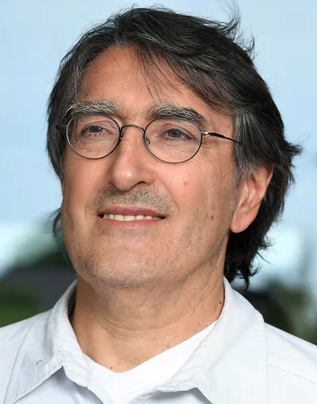 Hans Lehrach合作论文数Max Planck Institute for Molecular Genetics1
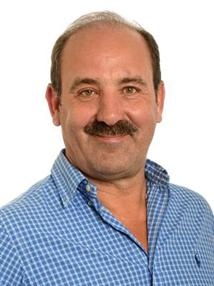 Dale Wigley合作论文数Department of Infectious Disease, Faculty of Medicine, Imperial College London1
 Christian Stephan合作论文数1Karl G. Blume合作论文数1
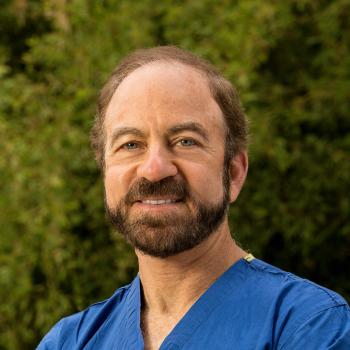 Gary K. Steinberg合作论文数Stanford Stroke Center, Department of Neurology and Neurological Sciences, School of Medicine, Stanford University;Moyamoya Center, School of Medicine, Stanford University1
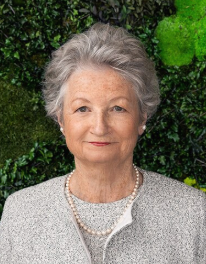 Katherine A. High合作论文数Department of Pediatrics, Perelman School of Medicine, University of Pennsylvania;Center for Cellular and Molecular Therapeutics, The Children's Hospital of Philadelphia;RhyGaze1
 Helmut E. Meyer合作论文数Medizinisches Proteom-Center, Ruhr-Universität Bochum, D-44780 Bochum, Germany1David Parkinson合作论文数1
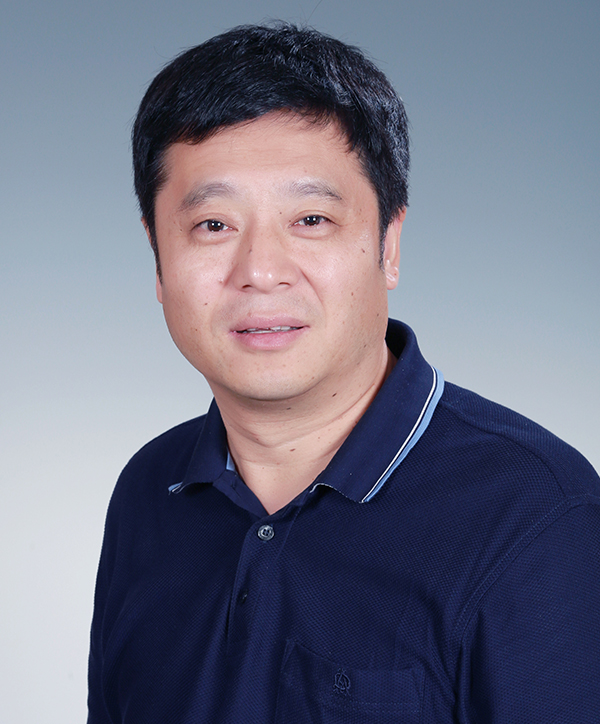 Hongkui Deng (邓宏魁)合作论文数School of Life Sciences, Peking University1
 Janet Thornton合作论文数European Bioinformatics Institute, European Molecular Biology Laboratory1
 Douglas Sipp合作论文数Riken Center for Developmental Biology, Science Policy and Ethics Studies Unit, 2-2-3 Minatojima-minamimachi, Chuo-ku, Kobe 650-0047, Japan1Robert W. Gill合作论文数1
 Rolf Apweiler合作论文数European Bioinformatics Institute1Jarno Laitinen合作论文数1Risto Laurikainen合作论文数1
 Robertson Parkman合作论文数Pediatrics Department, Stanford University1
 Fernando Pitossi合作论文数1Harold Edgar合作论文数1
 Amy Wagers合作论文数Department of Stem Cell and Regenerative Biology, Faculty of Arts and Sciences, Harvard University1Keith W. Hart合作论文数1
 Peter Hammond合作论文数Department of Entomology;Natural History Museum;Department of Entomology, Natural History Museum1Susan Stayn合作论文数1John F. Collins合作论文数1Imre Vastrik合作论文数1Ernest D. Prentice合作论文数1A. F. W. Coulson合作论文数1
 Charlie Hodgman合作论文数School of Biosciences, University of Nottingham;Centre for Plant Integrative Biology, University of Nottingham1
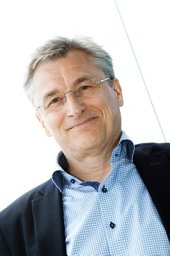 Per Öster合作论文数CSC - IT Center for Science Ltd1




