This paper explores using SIRENs, neural networks with periodic activation functions, as a means for synthesising abstract three-dimensional dynamic forms.A SIREN is used to generate a field function for an implicit surface, with inputs for 3D position and time.A wide range of complex quasiperiodic forms can be created, with synthesis and rendering being achievable at interactive rates using modern graphics hardware.Synthesis of 3D structures.
In this paper we examine the concept of complexity as it applies to generative art and design. Complexity has many different, discipline specific definitions, such as complexity in physical systems (entropy), algorithmic measures of information complexity and the field of "complex systems". We apply a series of different complexity measures to three different generative art datasets and look at the correlations between complexity and individual aesthetic judgement by the artist (in the case of two datasets) or the physically measured complexity of 3D forms. Our results show that the degree of correlation is different for each set and measure, indicating that there is no overall "better" measure. However, specific measures do perform well on individual datasets, indicating that careful choice can increase the value of using such measures. We conclude by discussing the value of direct measures in generative and evolutionary art, reinforcing recent findings from neuroimaging and psychology which suggest human aesthetic judgement is informed by many extrinsic factors beyond the measurable properties of the object being judged.
This paper looks at experiments into using real-time ray tracing to significantly enhance shape perception of complex three-dimensional digitally created structures. The author is a computational artist whose artistic practice explores the creation of intricate organic three-dimensional forms using simulation of morphogenesis. The generated forms are often extremely detailed, comprising tens of millions of cellular primitives. This often makes depth perception of the resulting structures difficult. His practice has explored various techniques to create presentable artefacts from the data, including high resolution prints, animated videos, stereoscopic installations, 3D printing and virtual reality. The author uses ray tracing techniques to turn the 3D data created from his morphogenetic simulations into visible artefacts. This is typically a time-consuming process, taking from seconds to minutes to create a single frame. The latest generation of graphics processing units offer dedicated hardware to accelerate ray tracing calculations. This potentially allows the generation of ray traced images, including self-shadowed complex structures and multiple levels of transparency, from new viewpoints at frame rates capable of real-time interaction. The author presents the results of his experiments using this technology with the aim of providing significantly enhanced perception of his generated three-dimensional structures by allowing user-initiated interaction to generate novel views, and utilising depth cues such as stereopsis, depth from motion and defocus blurring. The intention is for these techniques to be usable to present new exhibitable works in a gallery context.
A bottleneck in any evolutionary art system is aesthetic evaluation. Many different methods have been proposed to automate the evaluation of aesthetics, including measures of symmetry, coherence, complexity, contrast and grouping. The interactive genetic algorithm (IGA) relies on human-in-the-loop, subjective evaluation of aesthetics, but limits possibilities for large search due to user fatigue and small population sizes. In this paper we look at how recent advances in deep learning can assist in automating personal aesthetic judgement. Using a leading artist’s computer art dataset, we use dimensionality reduction methods to visualise both genotype and phenotype space in order to support the exploration of new territory in any generative system. Convolutional Neural Networks trained on the user’s prior aesthetic evaluations are used to suggest new possibilities similar or between known high quality genotype-phenotype mappings.
In 2016, the Victoria and Albert Museum (V&A) acquired a number of Andy Lomas' works from an exhibition held at the Watermans ArtCentre (Watermans in Morphogenetic creations-Andy Lomas. New Media Arts Archive, 2016a) to add to its Computer Art Collection (V&A in The V&A's computer art collections, 2016). The exhibition, titled 'Morphogenetic Creations', explored how intricate complex structures, such as those found in nature, can be created emergently through computational simulation of growth processes. Following in a long-established tradition of art inspired by biology the work is at the intersection of art, science and computing. The artefacts collected by the V&A included prints, multi-screen video and stereoscopic works. This article looks at the works involved, as well as two works from the original exhibition that were not included in the acquisition, as a case study of providing digital works in a form suitable for preservation, and for display in the future when technology for playback of media is likely to have significantly changed.
This half-day Symposium explores themes of digital art, culture, and heritage, bringing together speakers from a range of disciplines to consider technology with respect to artistic and academic practice. As we increasingly see ourselves and life through a digital lens and the world communicated on digital screens, we experience altered states of being and consciousness in ways that blur the lines between digital and physical reality, while our ways of thinking and seeing become a digital stream of consciousness that flows between place and cyberspace. We have entered the postdigital world and are living, working, and thinking with machines as our computational culture driven by artificial intelligence and machine learning embeds itself in everyday life and threads across art, culture, and heritage, juxtaposing them in the digital profusion of human creativity on the Internet.
This paper describes Vase Forms: a series of art works created using morphogenetic processes. A key motivation for these works was exploration of ways of working creatively with complex generative processes, such as morphogenetic systems, where the desire is to be able to influence the process in creative directions whilst achieving desired properties, such as fabricability using 3D printing, in a manner that retains rich emergence. The paper describes methods used in the creation of these works, including directly affecting morphogenetic processes using constraints and differential growth rates, combined with evolutionary search and machine learning algorithms to explore the space of possibilities afforded by the system. As well as describing the creation of Vase Forms, which have been successfully used to create sculptures, the paper looks at the closely related Mutant Vase Forms: an additional series of artworks created by accident when the system exploited bugs in the rules for the growth system resulting in unexpected but aesthetically interesting structures. These Mutant Vase Forms are not fabricable as physical sculptures with the originally intended methods, but now exist as virtual sculptures in stereoscopic installations.
This article reviews the development of the author's computational art practice, where the computer is used both as a device that provides the medium for generation of art ('computer as art') as well as acting actively as an assistant in the process of creating art ('computer as artist's assistant'), helping explore the space of possibilities afforded by generative systems. Drawing analogies with Kasparov's Advanced Chess and the deliberate development of unstable aircraft using fly-by-wire technology, the article argues for a collaborative relationship with the computer that can free the artist to more fearlessly engage with the challenges of working with emergent systems that exhibit complex unpredictable behavior. The article also describes 'Species Explorer', the system the author has created in response to these challenges to assist exploration of the possibilities afforded by parametrically driven generative systems. This system provides a framework to allow the user to use a number of different techniques to explore new parameter combinations, including genetic algorithms, and machine learning methods. As the system learns the artist's preferences the relationship with the computer can be considered to change from one of assistance to collaboration.
Alan Turing (1912--1954) is widely acknowledged as a genius. As well as codebreaking during World War II and taking a pioneering role in computer hardware design and software after the War, he also wrote three important foundational papers in the fields of theoretical computer science, artificial intelligence, and mathematical biology. He has been called the father of computer science, but he also admired by mathematicians, philosophers, and perhaps more surprisingly biologists, for his wide-ranging ideas. His influence stretches from scientific to cultural and even political impact. For all these reasons, he was a true polymath. This paper considers the genius of Turing from various angles, both scientific and artistic. The four authors provide position statements on how Turing has influenced and inspired their work, together with short biographies, as a starting point for a panel session and visual music performance.
As part of EVA London 2017, Lumen Prize for Digital Art and V&A Digital Futures are coming together with a special event presenting a series of installations, networking and the announcement of the 2017 Lumen Prize Longlist.
This talk describes work that I have been doing using generative systems and the problems this raises with how to deal with multi-dimensional parameter spaces. In particular I am interested in dealing with problems where there are too many parameters to do a simple exhaustive search, only a small number of parameter combinations are likely to achieve interesting results, but the user still wants to retain creative influence. For a number of years I have been exploring how intricate complex structures may be created by simulating growth processes. In early work, such the Aggregation (Lomas 2005) and Flow series, a small number of parameters controlled various effects that could bias the growth. These could be explored by simply varying all the parameters independently and running simulations to test the results. Simple methods such as these work well when there are up to 3 parameters. However, as the number of parameters increase, the task rapidly becomes increasingly complex, and methods that exhaustively sample all the parameters independently are no longer viable. In this talk I will discuss how I have approached this problem for my recent Cellular Forms (Lomas 2014) and Hybrid Forms (Lomas 2015) works which can have more than 30 parameters, any of which could affect the simulation process in complex and unexpected ways. In particular, systems that have the potential for interesting emergent results often exhibit difficult behavior, where most sets of parameter values create uninteresting regularity or chaos. Only at the transition areas between these states are the most interesting complex results found. To help solve these problems I have been developing a tool called 'Species Explorer'. This uses a hybrid approach that combines both evolutionary and lazy machine learning techniques to assist the user find combinations of parameters that may be worth sampling, helping them to explore for novelty as well as to refine particularly promising results.
This paper describes Species Explorer, an interface to allow creative exploration of generative systems with multi-dimensional parameter spaces. The system combines both evolutionary and machine learning approaches. It was originally designed to assist creating work for the author's 'Cellular Forms' and 'Hybrid Forms' series, where a large number of parameters are used to yield emergent results, but is a general framework that could be applied to many other systems.
Each form starts with a small initial ball of cells which is incrementally developed over time, adding iterative layers of complexity to the structure. The aim is to create forms emergently from the interactions between individual cells, exploring generic similarities between many different shapes in nature rather than emulating any particular organism. The process reveals universal archetypal forms that can come from growth-like processes rather than top-down externally engineered design.
Cellular Forms: a series of computationally created artworks that uses digital simulation of morphogenetic processes. The aim is to create structures emergently: exploring generic similarities between many different forms in nature rather than recreating any particular organism, revealing universal archetypal forms that can come from growth-like processes rather than top-down externally engineered design.
These images are composed of layered trajectories followed by millions of particles as they flow in fields of forces. Each individual trajectory is essentially an independent, random process, with the trail terminating when it reaches a deposition. Collectively, however, the paths combine to form delicate complex shapes of filigree and shadow in the areas of negative space that the paths don’t reach.
The 'Aggregated Teapot' was originally created for a sketch session presented at SIGGRAPH 2005. It is part of the Aggregation series: a set of digitally generated sculptural forms that study the incredible intricacy of organic natural forms and their relationship to simple mathematical rules. The 'Aggregated Teapot' demonstrates how the rules used to generate an aggregated structure can be directed towards a targeted goal. Influenced by the work of D'Arcy Thompson, Alan Turing and Ernst Haeckel, the images in the series examine how the forms of plant and coral like structures can be created by digital simulation of flow and deposition. Sculptural shapes are created by a process of accretion over time, gradually grown by simulating the paths of millions of particles randomly flowing in a fluid field. Over time they build on top of an initial simple seed surface to produce structures of immense complexity.
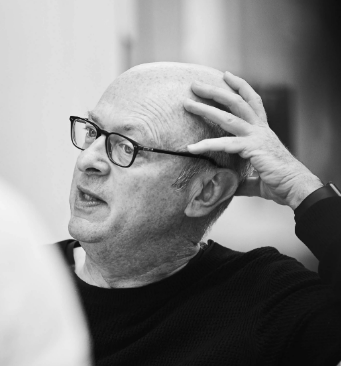 Jon McCormack合作论文数Department of Human-Centred Computing, Faculty of Information Technology, Monash University2
 Jonathan Bowen合作论文数Faculty of Business, London South Bank University2
 Laura Dekker合作论文数1Terry Trickett合作论文数1
 Rachel Ara合作论文数1
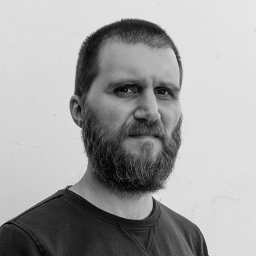 Camilo Cruz Gambardella合作论文数SensiLab, Monash University1
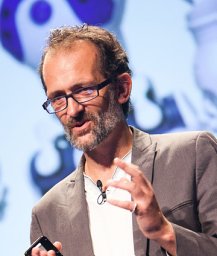 Patrick Tresset合作论文数Department of Computing, Goldsmiths College1
 Tula Giannini合作论文数1
 Jeremy B A Green合作论文数Centre for Craniofacial & Regenerative Biology, Dental Clinical Academic Group1




