Humans can infer the three-dimensional structure of objects from two-dimensional visual inputs. Modeling this ability has been a longstanding goal for the science and engineering of visual intelligence, yet decades of computational methods have fallen short of human performance. Here we develop a modeling framework that predicts human 3D shape inferences for arbitrary objects, directly from experimental stimuli. We achieve this with a novel class of neural networks trained using a visual-spatial objective over naturalistic sensory data; given a set of images taken from different locations within a natural scene, these models learn to predict spatial information related to these images, such as camera location and visual depth, without relying on any object-related inductive biases. Notably, these visual-spatial signals are analogous to sensory cues readily available to humans. We design a zero-shot evaluation approach to determine the performance of these `multi-view' models on a well established 3D perception task, then compare model and human behavior. Our modeling framework is the first to match human accuracy on 3D shape inferences, even without task-specific training or fine-tuning. Remarkably, independent readouts of model responses predict fine-grained measures of human behavior, including error patterns and reaction times, revealing a natural correspondence between model dynamics and human perception. Taken together, our findings indicate that human-level 3D perception can emerge from a simple, scalable learning objective over naturalistic visual-spatial data. All code, human behavioral data, and experimental stimuli needed to reproduce our findings can be found on our project page.
Perception-based humanoid loco-manipulation requires connecting egocentric observations and task instructions to whole-body motion. Learning this mapping requires synchronized egocentric images, language commands, and robot-compatible kinematic trajectories, yet no existing data source provides this complete tuple at scale. We address this bottleneck by generating vision-language-kinematics (VLK) supervision synthetically in reconstructed scenes. Our pipeline leverages 3D Gaussian Splatting to reconstruct metric-scale indoor environments, synthesizes navigation and object-interaction trajectories using privileged scene information, and renders paired egocentric observations after the fact. We produce 48,000 paired trajectories with no human intervention and train a VLK policy that predicts short-horizon whole-body kinematic trajectories. A whole-body tracker converts these predictions into actions on the physical humanoid. We evaluate on the physical Unitree G1 performing navigation and single-object transport, demonstrating that synthesized interactions in reconstructed scenes provide effective supervision for sim-to-real perception-based humanoid loco-manipulation. Project Website: https://vision-language-kinematics.github.io/
A dominant paradigm for teaching humanoid robots complex skills is to retarget human motions as kinematic references to train reinforcement learning (RL) policies. However, existing retargeting pipelines often struggle with the significant embodiment gap between humans and robots, producing physically implausible artifacts like foot-skating and penetration. More importantly, common retargeting methods neglect the rich human-object and human-environment interactions essential for expressive locomotion and loco-manipulation. To address this, we introduce OmniRetarget, an interaction-preserving data generation engine based on an interaction mesh that explicitly models and preserves the crucial spatial and contact relationships between an agent, the terrain, and manipulated objects. By minimizing the Laplacian deformation between the human and robot meshes while enforcing kinematic constraints, OmniRetarget generates kinematically feasible trajectories. Moreover, preserving task-relevant interactions enables efficient data augmentation, from a single demonstration to different robot embodiments, terrains, and object configurations. We comprehensively evaluate OmniRetarget by retargeting motions from OMOMO, LAFAN1, and our in-house MoCap datasets, generating over 8-hour trajectories that achieve better kinematic constraint satisfaction and contact preservation than widely used baselines. Such high-quality data enables proprioceptive RL policies to successfully execute long-horizon (up to 30 seconds) parkour and loco-manipulation skills on a Unitree G1 humanoid, trained with only 5 reward terms and simple domain randomization shared by all tasks, without any learning curriculum. All code, retargeted datasets, and result videos can be found at https://omniretarget.github.io.
We present Fillerbuster, a unified model that completes unknown regions of a 3D scene with a multi-view latent diffusion transformer. Casual captures are often sparse and miss surrounding content behind objects or above the scene. Existing methods are not suitable for this challenge as they focus on making known pixels look good with sparse-view priors, or on creating missing sides of objects from just one or two photos. In reality, we often have hundreds of input frames and want to complete areas that are missing and unobserved from the input frames. Our solution is to train a generative model that can consume a large context of input frames while generating unknown target views and recovering image poses when camera parameters are unknown. We show results where we complete partial captures on two existing datasets. We also present an uncalibrated scene completion task where our unified model predicts both poses and creates new content. We open-source our framework for integration into popular reconstruction platforms like Nerfstudio or Gsplat. We present a flexible, unified inpainting framework to predict many images and poses together, where all inputs are jointly inpainted, and it could be extended to predict more modalities such as depth.
RL post-training has become increasingly pivotal for improving diffusion policies, but existing diffusion policy-gradient methods are often unstable and cannot achieve reliable policy improvement. We identify the cause as the double-drift phenomenon: optimizing a variational surrogate can let the ELBO separate from the true log-likelihood, which then makes the resulting proxy policy gradient misaligned with the true policy gradient of expected return. We propose DiPOD, a diffusion policy optimization framework that maintains tight-bound behavior throughout training by interleaving self-distillation with policy-improving gradient updates. This leads to a simple and practical algorithm: augmenting each diffusion policy-gradient update with an on-policy ELBO regularizer. Across diffusion language model post-training and continuous-control diffusion policies, DiPOD substantially stabilizes training and reaches higher rewards than previous methods.
Large-scale data has driven breakthroughs in robotics, from language models to vision-language-action models in bimanual manipulation. However, humanoid robotics lacks equally effective data collection frameworks. Existing humanoid teleoperation systems either use decoupled control or depend on expensive motion capture setups. We introduce TWIST2, a portable, mocap-free humanoid teleoperation and data collection system that preserves full whole-body control while advancing scalability. Our system leverages PICO4U VR for obtaining real-time whole-body human motions, with a custom 2-DoF robot neck (cost around $250) for egocentric vision, enabling holistic human-to-humanoid control. We demonstrate long-horizon dexterous and mobile humanoid skills and we can collect 100 demonstrations in 15 minutes with an almost 100% success rate. Building on this pipeline, we propose a hierarchical visuomotor policy framework that autonomously controls the full humanoid body based on egocentric vision. Our visuomotor policy successfully demonstrates whole-body dexterous manipulation and dynamic kicking tasks. The entire system is fully reproducible and open-sourced at https://yanjieze.com/TWIST2 . Our collected dataset is also open-sourced at https://twist-data.github.io .
Flow-based generative models, including diffusion models, excel at modeling continuous distributions in high-dimensional spaces. In this work, we introduce Flow Policy Optimization (FPO), a simple on-policy reinforcement learning algorithm that brings flow matching into the policy gradient framework. FPO casts policy optimization as maximizing an advantage-weighted ratio computed from the conditional flow matching loss, in a manner compatible with the popular PPO-clip framework. It sidesteps the need for exact likelihood computation while preserving the generative capabilities of flow-based models. Unlike prior approaches for diffusion-based reinforcement learning that bind training to a specific sampling method, FPO is agnostic to the choice of diffusion or flow integration at both training and inference time. We show that FPO can train diffusion-style policies from scratch in a variety of continuous control tasks. We find that flow-based models can capture multimodal action distributions and achieve higher performance than Gaussian policies, particularly in under-conditioned settings.
Exploration is a prerequisite for learning useful behaviors in sparse-reward, long-horizon tasks, particularly within 3D environments. Curiosity-driven reinforcement learning addresses this via intrinsic rewards derived from the mismatch between the agent's predictive model of the world and reality. However, translating this intrinsic motivation to complex, photorealistic environments remains difficult, as agents can become trapped in local loops and receive fresh rewards for revisiting forgotten states. In this work, we demonstrate that this failure stems from a lack of spatial persistence and episodic context. We show that effective curiosity requires a model of the world that is persistent and continuously updated, paired with an agent that maintains an episodic trajectory history to navigate toward novel regions. We achieve this using an online 3D reconstruction as a persistent model of the world, while the agent policy is parameterized as a sequence model over RGB observations to maintain episodic context. This design enables effective exploration during training while allowing the agent to navigate using solely RGB frames at deployment. Trained purely via curiosity on HM3D, our agent outperforms RL-based active mapping baselines and generalizes zero-shot to Gibson and AI-generated worlds. Our end-to-end policy enables efficient adaptation to downstream tasks, such as apple picking and image-goal navigation, outperforming from-scratch baselines. Please see video results at https://recuriosity.github.io/.
Likelihood-based policy gradient methods are the dominant approach for training robot control policies from rewards. These methods rely on differentiable action likelihoods, which constrain policy outputs to simple distributions like Gaussians. In this work, we show how flow matching policy gradients – a recent framework that bypasses likelihood computation – can be made effective for training and fine-tuning more expressive policies in challenging robot control settings. We introduce an improved objective that enables success in legged locomotion, humanoid motion tracking, and manipulation tasks, as well as robust sim-to-real transfer on two humanoid robots. We then present ablations and analysis on training dynamics. Results show how policies can exploit the flow representation for exploration when training from scratch, as well as improved fine-tuning robustness over baselines.
Large-scale multi-view reconstruction models have made remarkable progress, but most existing approaches still rely on fully supervised training with ground-truth 3D/4D annotations. Such annotations are expensive and particularly scarce for dynamic scenes, limiting scalability. We propose SelfEvo, a self-improving framework that continually improves pretrained multi-view reconstruction models using unlabeled videos. SelfEvo introduces a self-distillation scheme using spatiotemporal context asymmetry, enabling self-improvement for learning-based 4D perception without external annotations. We systematically study design choices that make self-improvement effective, including loss signals, forms of asymmetry, and other training strategies. Across eight benchmarks spanning diverse datasets and domains, SelfEvo consistently improves pretrained baselines and generalizes across base models (e.g. VGGT and π^3), with significant gains on dynamic scenes. Overall, SelfEvo achieves up to 36.5
We introduce ABC, a fully open-source stack for manipulation with behavior cloning. At its core is ABC-130K: the largest open-source teleoperation dataset to date, featuring 3,500 hours of data spanning over 130K episodes across 195 diverse tasks. Furthermore, we open-source our accessible hardware setup, training infrastructure, and simulation pipeline. We also release 400 hours of sim-teleop data and provide a co-training recipe that produces correlated simulation and real-world evaluation, offering a reliable proxy for ablating model-design and training decisions before costly real-world evaluation. We explore various training recipes and compare common architectural choices for Diffusion Transformers (DiT) and Vision-Language-Action (VLA) models, grounding our findings in real-world evaluations. The resulting policies successfully execute dexterous tasks such as box folding and extracting credit cards from wallets. By providing a reproducible toolkit, we aim to place researchers on an equal footing, establishing the necessary foundation to learn the ABCs of Behavior Cloning together as a community.
While recent advances in humanoid locomotion have achieved stable walking on varied terrains, capturing the agility and adaptivity of highly dynamic human motions remains an open challenge. In particular, agile parkour in complex environments demands not only low-level robustness, but also human-like motion expressiveness, long-horizon skill composition, and perception-driven decision-making. In this paper, we present Perceptive Humanoid Parkour (PHP), a modular framework that enables humanoid robots to autonomously perform long-horizon, vision-based parkour across challenging obstacle courses. Our approach first leverages motion matching, formulated as nearest-neighbor search in a feature space, to compose retargeted atomic human skills into long-horizon kinematic trajectories. This framework enables the flexible composition and smooth transition of complex skill chains while preserving the elegance and fluidity of dynamic human motions. Next, we train motion-tracking reinforcement learning (RL) expert policies for these composed motions, and distill them into a single depth-based, multi-skill student policy, using a combination of DAgger and RL. Crucially, the combination of perception and skill composition enables autonomous, context-aware decision-making: using only onboard depth sensing and a discrete 2D velocity command, the robot selects and executes whether to step over, climb onto, vault or roll off obstacles of varying geometries and heights. We validate our framework with extensive real-world experiments on a Unitree G1 humanoid robot, demonstrating highly dynamic parkour skills such as climbing tall obstacles up to 1.25m (96
Reinforcement learning (RL) has become a standard technique for post-training diffusion-based image synthesis models, as it enables learning from reward signals to explicitly improve desirable aspects such as image quality and prompt alignment. In this paper, we propose an online RL variant that reduces the variance in the model updates by sampling paired trajectories and pulling the flow velocity in the direction of the more favorable image. Unlike existing methods that treat each sampling step as a separate policy action, we consider the entire sampling process as a single action. We experiment with both high-quality vision language models and off-the-shelf quality metrics for rewards, and evaluate the outputs using a broad set of metrics. Our method converges faster and yields higher output quality and prompt alignment than previous approaches.
We recover the underlying 3D structure from images of cartoons and anime depicting the same scene. This is an interesting problem domain because images in creative media are often depicted without explicit geometric consistency for storytelling and creative expression-they are only 3D in a qualitative sense. While humans can easily perceive the underlying 3D scene from these images, existing Structure-from-Motion (SfM) methods that assume 3D consistency fail catastrophically. We present Toon3D for reconstructing geometrically inconsistent images. Our key insight is to deform the input images while recovering camera poses and scene geometry, effectively explaining away geometrical inconsistencies to achieve consistency. This process is guided by the structure inferred from monocular depth predictions. We curate a dataset with multi-view imagery from cartoons and anime that we annotate with reliable sparse correspondences using our user-friendly annotation tool. Our recovered point clouds can be plugged into novel-view synthesis methods to experience cartoons from viewpoints never drawn before. We evaluate against classical and recent learning-based SfM methods, where Toon3D is able to obtain more reliable camera poses and scene geometry.
Current agentic robot systems can write executable Code-as-Policy programs, observe feedback, and revise behavior across multiple attempts, but they remain largely task-driven: reusable skills are acquired only after explicit instructions. We study Playful Agentic Robot Learning, where an embodied coding agent uses self-directed play as a continual skill-learning stage before downstream tasks arrive. We introduce RATs, Robotics Agent Teams designed for play-time skill acquisition. During play, RATs proposes novel yet learnable exploratory tasks, plans and executes robot-code policies, verifies intermediate progress, diagnoses failures, retries with dense, step-level feedback, and distills successful executions into a persistent code skill library. At test time, the agent reuses relevant skills from this frozen library to help solve new tasks. Experiments in LIBERO-PRO and MolmoSpaces show that play-learned skills improve held-out downstream tasks over no-play and random-play baselines, with 20.6 and 17.0 percentage-point gains over CaP-Agent0 on LIBERO-PRO and MolmoSpaces, respectively. Moreover, the learned skills can be plugged into other inference-time Code-as-Policy agents by simply retrieving them into the context, improving RoboSuite and real-world transfer by 8.9 and 8.8 points, respectively, without finetuning the underlying model.
Vision-as-inverse-graphics, the concept of reconstructing images into editable programs, remains challenging for Vision-Language Models (VLMs), which inherently lack fine-grained spatial grounding in one-shot settings. To address this, we introduce VIGA (Vision-as-Inverse-Graphics Agent), an interleaved multimodal reasoning framework where symbolic logic and visual perception actively cross-verify each other. VIGA operates through a tightly coupled code-render-inspect loop: synthesizing symbolic programs, projecting them into visual states, and inspecting discrepancies to guide iterative edits. Equipped with high-level semantic skills and an evolving multimodal memory, VIGA sustains evidence-based modifications over long horizons. This training-free, task-agnostic framework seamlessly supports 2D document generation, 3D reconstruction, multi-step 3D editing, and 4D physical interaction. Finally, we introduce BlenderBench, a challenging visual-to-code benchmark. Empirically, VIGA substantially improves accuracy compared with one-shot baselines in BlenderGym (35.32
We present Agent-to-Sim (ATS), a framework for learning interactive behavior models of 3D agents from casual longitudinal video collections. Different from prior works that rely on marker-based tracking and multiview cameras, ATS learns natural behaviors of animal and human agents non-invasively through video observations recorded over a long time-span (e.g., a month) in a single environment. Modeling 3D behavior of an agent requires persistent 3D tracking (e.g., knowing which point corresponds to which) over a long time period. To obtain such data, we develop a coarse-to-fine registration method that tracks the agent and the camera over time through a canonical 3D space, resulting in a complete and persistent spacetime 4D representation. We then train a generative model of agent behaviors using paired data of perception and motion of an agent queried from the 4D reconstruction. ATS enables real-to-sim transfer from video recordings of an agent to an interactive behavior simulator. We demonstrate results on pets (e.g., cat, dog, bunny) and human given monocular RGBD videos captured by a smartphone.
We present Viser, a 3D visualization library for computer vision and robotics. Viser aims to bring easy and extensible 3D visualization to Python: we provide a comprehensive set of 3D scene and 2D GUI primitives, which can be used independently with minimal setup or composed to build specialized interfaces. This technical report describes Viser's features, interface, and implementation. Key design choices include an imperative-style API and a web-based viewer, which improve compatibility with modern programming patterns and workflows.
Robot motion can have many goals. Depending on the task, we might optimize for pose error, speed, collision, or similarity to a human demonstration. Motivated by this, we present PyRoki: a modular, extensible, and device-agnostic toolkit for solving kinematic optimization problems. PyRoki couples an interface for specifying kinematic variables and costs with an efficient nonlinear least squares optimizer. Unlike existing tools, it is also device-agnostic: optimization runs natively on CPU, GPU, and TPU. In this paper, we present (i) the design and implementation of PyRoki, (ii) motion retargeting and planning case studies that highlight the advantages of PyRoki's modularity, and (iii) optimization benchmarking, where PyRoki can be 1.4-1.7x faster and converges to lower errors than cuRobo, an existing GPU-accelerated inverse kinematics library. The code is open-sourced at https://pyroki-toolkit.github.io.
We present Fillerbuster, a unified model that completes unknown regions of a 3D scene with a multi-view latent diffusion transformer. Casual captures are often sparse and miss surrounding content behind objects or above the scene. Existing methods are not suitable for this challenge as they focus on making known pixels look good with sparse-view priors, or on creating missing sides of objects from just one or two photos. In reality, we often have hundreds of input frames and want to complete areas that are missing and unobserved from the input frames. Our solution is to train a generative model that can consume a large context of input frames while generating unknown target views and recovering image poses when camera parameters are unknown. We show results where we complete partial captures on two existing datasets. We also present an uncalibrated scene completion task where our unified model predicts both poses and creates new content. We open-source our framework for integration into popular reconstruction platforms like Nerfstudio or Gsplat. We present a flexible, unified inpainting framework to predict many images and poses together, where all inputs are jointly inpainted, and it could be extended to predict more modalities such as depth.
 Jitendra Malik合作论文数Department of Electrical Engineering and Computer Sciences, University of California, Berkeley23
 Matt Tancik合作论文数Luma AI15
 Brent Yi合作论文数University of California, Berkeley12
 Justin Kerr合作论文数AI Research Lab, University of California, Berkeley;Lawrence Livermore National Laboratory12
 Ruilong Li (李瑞龙)合作论文数11
 Pieter Abbeel合作论文数Department of Electrical Engineering and Computer Sciences, University of California, Berkeley;Amazon11
 Vickie Ye合作论文数Anthropic11
 Georgios Pavlakos合作论文数Department of Computer Science, University of Texas at Austin11
 Chung Min Kim合作论文数University of California, Berkeley10
 Ethan Weber合作论文数Massachusetts Institute of Technology10
 Trevor Darrell合作论文数Department of Electrical Engineering and Computer Science, University of California, Berkeley10
 Michael Black合作论文数Perceiving Systems Department, Max Planck Institute for Intelligent Systems;Department of Computer Science, Faculty of Science, Eberhard Karls Universität Tübingen10
 David W. Jacobs合作论文数Department of Computer Science, University of Maryland;Brendan Iribe Center for Computer Science and Engineering, University of Maryland;University of Maryland Institute for Advanced Computer Studies10
 Noah Snavely合作论文数Department of Computer Science, Cornell University;Google Research9
 Qianqian Wang合作论文数University of California, Berkeley;Google DeepMind8
 Ken Goldberg合作论文数Industrial Engineering and Operations Research Department, College of Engineering, University of California, Berkeley;University of California, San Francisco8
 Haven (Haiwen) Feng合作论文数Max Planck Institute for Intelligent Systems;Berkeley Artificial Intelligence Research7
 Aleksander Holynski合作论文数Google DeepMind;University of California, Berkeley7
 Alexei (Alyosha) Efros合作论文数Department of Electrical Engineering and Computer Sciences, University of California, Berkeley;Berkeley Artificial Intelligence Research Lab, University of California, Berkeley7
 David Mcallister合作论文数University of California, Berkeley;Berkeley Artificial Intelligence Research7
 Jathushan Rajasegaran合作论文数xAI6
 Guanya Shi (石冠亚)合作论文数6
 Richard Tucker合作论文数Google Research6
 Hang Gao合作论文数University of California, Berkeley5
 Yi Ma (马毅)合作论文数School of Computing and Data Science, The University of Hong Kong;Department of Electrical Engineering and Computer Sciences, University of California, Berkeley5
 Ameesh Makadia合作论文数Google Research5Rocky Duan合作论文数4
 Lea Müller合作论文数University of California, Berkeley4
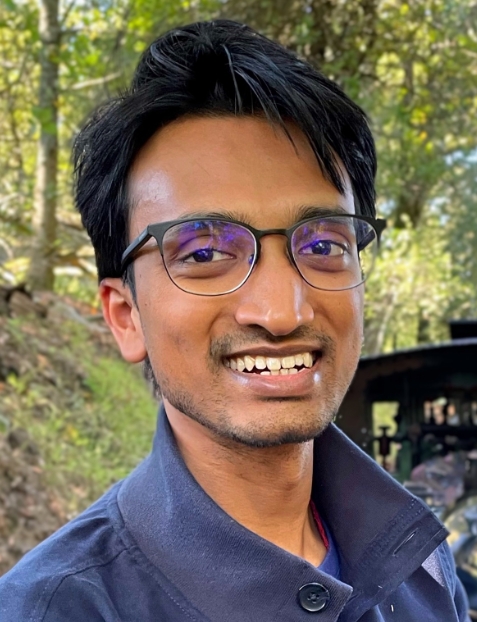 Shubham Goel合作论文数Avataar4
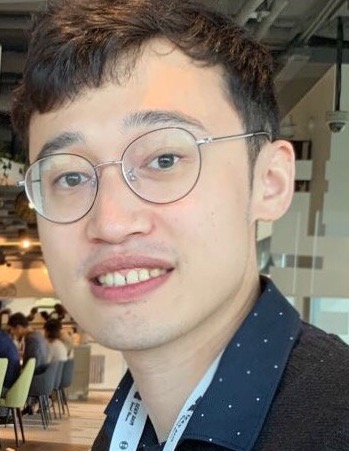 Zhengqi Li合作论文数Google DeepMind4
 Carmelo Sferrazza合作论文数Institute for Dynamic Systems and Control, ETH Zürich4
 Jiajun Wu (吴佳俊)合作论文数Computer Science Department, Stanford University4
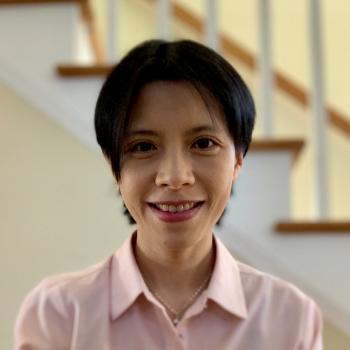 C. Karen Liu合作论文数Computer Science Department, Stanford University;GVU Center, Georgia Institute of Technology4
 Evonne Ng合作论文数UC Berkeley4
 Silvia Zuffi合作论文数CNR Institute for Applied Mathematics and Information Technologies4
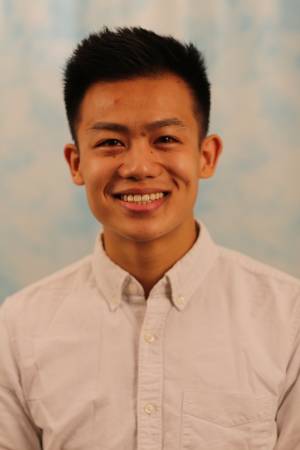 Jason Y. Zhang合作论文数Center for Autonomous Vehicle Research, Robotics Institute, School of Computer Science, Carnegie Mellon University4
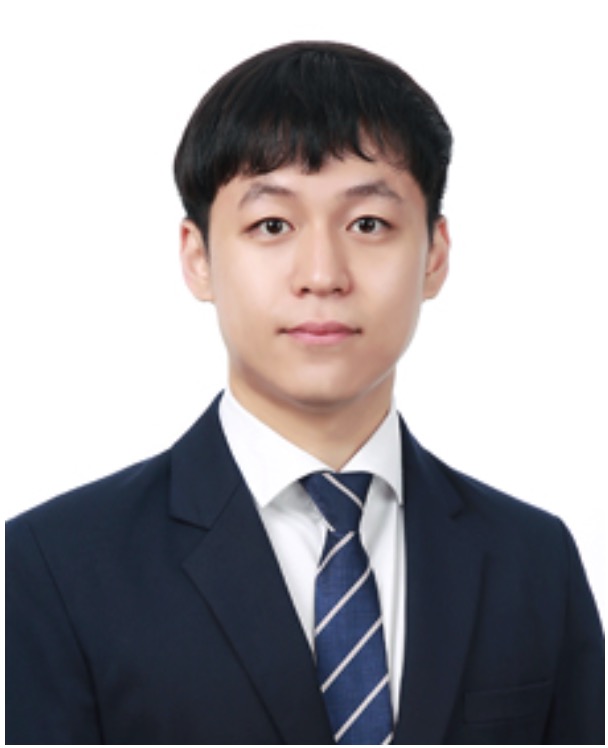 Hongsuk Benjamin Choi合作论文数Samsung AI center3Jake Austin合作论文数3
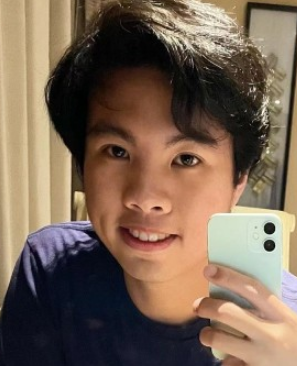 Xiaoyu Huang合作论文数Georgia Institute of Technology;GT Design Build Fly3
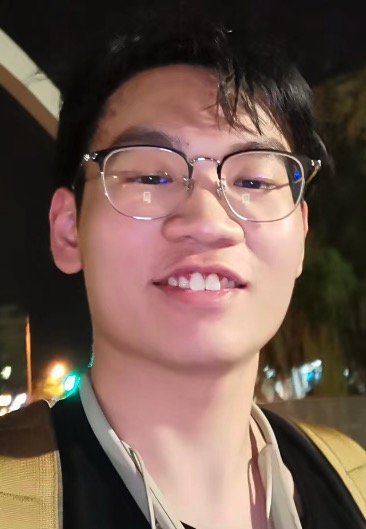 Junyi Zhang (章俊一)合作论文数University of California, Berkeley3
 Sergey Levine合作论文数Department of Electrical Engineering and Computer Sciences, University of California, Berkeley3
 Christoph Lassner合作论文数World Labs3
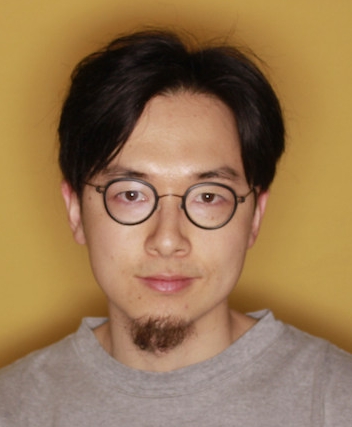 Shunsuke Saito (齋藤隼介)合作论文数Meta;Facebook Reality Labs3
 Panna Felsen合作论文数HelloCreator3
 Shiry Ginosar合作论文数Toyota Technological Institute at Chicago3
 Xue Bin (Jason) Peng合作论文数School of Computing Science, Faculty of Applied Sciences, Simon Fraser University3
 Javier Romero合作论文数Meta3
 Alex Yu (余思贤)合作论文数Luma AI3
 Hao Li (黎颢)合作论文数Undergraduate Division, Mohamed bin Zayed University of Artificial Intelligence;Metaverse Center, Mohamed bin Zayed University of Artificial Intelligence;Pinscreen3