Primary sclerosing cholangitis (PSC) is an inflammatory disease of the biliary tract eventually leading to bile duct destruction, liver failure, cholangiocellular adenocarcinoma and/or death. No disease modifying treatments are available. Especially cytotoxicity of bile acids, are discussed as potential driver of disease progression. Cholangiocytes are protected by a bicarbonate umbrella formed by the glycocalyx, a dense layer of membrane bound polyglycans extending into the extracellular space. Bile of PSC patients harbors a unique microbiome. Here we identified a new factor in the pathogenesis of PSC. The bacterial degradation of sialic acid and galactose are associated with a poor event free survival of PSC patients and could identify bacterial liberation of sialic acid as crucial element in cholangiocyte damage using cell culture experiments, individualized organoid models and liver biopsies. With this study the view on bacteria-host interactions in bile duct associated diseases is widened. Functional patterns of the bacterial community are crucial for bile duct destruction in PSC patients. This opens a new field of diagnostic tools, disease modifying treatment options and identification of patients at risk. ### Competing Interest Statement The authors have declared no competing interest. ### Funding Statement The study was funded by the Deutsche Forschungsgemeinschaft (DFG German Research Foundation) under Germany Excellence Strategy EXC 2155 RESIST Project ID 390874280 and by the German Centre for Infection Research (DZIF e.V.). This work was supported by a grant from the German Federal Ministry of Education and Research (reference number: 01EO1302) and by the Helmholtz Association Initiative on Aging and Metabolic Programming. ### Author Declarations I confirm all relevant ethical guidelines have been followed, and any necessary IRB and/or ethics committee approvals have been obtained. Yes The details of the IRB/oversight body that provided approval or exemption for the research described are given below: The study had been approved by the ethics committee of the Hannover Medical School (approval no. 220- 2007, approval no. 3241- 2016, approval no. 9660\_BO\_K\_2021 and approval no. 10183\_BO\_K\_2022). I confirm that all necessary patient/participant consent has been obtained and the appropriate institutional forms have been archived, and that any patient/participant/sample identifiers included were not known to anyone (e.g., hospital staff, patients or participants themselves) outside the research group so cannot be used to identify individuals. Yes I understand that all clinical trials and any other prospective interventional studies must be registered with an ICMJE-approved registry, such as ClinicalTrials.gov. I confirm that any such study reported in the manuscript has been registered and the trial registration ID is provided (note: if posting a prospective study registered retrospectively, please provide a statement in the trial ID field explaining why the study was not registered in advance). Yes I have followed all appropriate research reporting guidelines, such as any relevant EQUATOR Network research reporting checklist(s) and other pertinent material, if applicable. Yes Raw data from 16S amplicon sequencing, metagenomic sequence data, bacterial genome data and data from mass spectrometry will be available upon publication after peer-review. All additional data in the present study are available upon reasonable request to the authors.
Kaposi sarcoma-associated herpesvirus (KSHV), or human herpesvirus-8, is an oncogenic herpesvirus. Its latency-associated nuclear antigen (LANA) is essential for the persistence of KSHV in latently infected cells. LANA mediates replication of the latent viral genome during the S phase of a dividing cell and partitions episomes to daughter cells by attaching them to mitotic chromosomes. It also mediates the establishment of latency in newly infected cells through epigenetic mechanisms and suppresses the activation of the productive replication cycle. Furthermore, LANA promotes the proliferation of infected cell by acting as a transcriptional regulator and by modulating the cellular proteome through the recruitment of several cellular ubiquitin ligases. Finally, LANA interferes with the innate and adaptive immune system to facilitate the immune escape of infected cells.
Kaposi's sarcoma-associated herpesvirus (KSHV; human herpesvirus 8) belongs to the subfamily of Gammaherpesvirinae and is the etiological agent of Kaposi's sarcoma as well as of two lymphoproliferative diseases: primary effusion lymphoma and multicentric Castleman disease. The KSHV life cycle is divided into a latent and a lytic phase and is highly regulated by viral immunomodulatory proteins which control the host antiviral immune response. Among them is a group of proteins with homology to cellular interferon regulatory factors, the viral interferon regulatory factors 1-4. The KSHV vIRFs are known as inhibitors of cellular interferon signaling and are involved in different oncogenic pathways. Here we characterized the role of the second vIRF protein, vIRF2, during the KSHV life cycle. We found the vIRF2 protein to be expressed in different KSHV positive cells with early lytic kinetics. Importantly, we observed that vIRF2 suppresses the expression of viral early lytic genes in both newly infected and reactivated persistently infected endothelial cells. This vIRF2-dependent regulation of the KSHV life cycle might involve the increased expression of cellular interferon-induced genes such as the IFIT proteins 1, 2 and 3, which antagonize the expression of early KSHV lytic proteins. Our findings suggest a model in which the viral protein vIRF2 allows KSHV to harness an IFN-dependent pathway to regulate KSHV early gene expression.
 Thomas F Schulz合作论文数2Werner Tegge合作论文数1Freya Wellhoener合作论文数1Friederike Klein合作论文数1
 Akshay Dhingra合作论文数1Iris Albers合作论文数1Torsten Voigtlaender合作论文数1Kristina M Niculovic合作论文数1
 Martijn Zoodsma合作论文数1
 Sandra C. Koch合作论文数1
 Leonard Knegendorf合作论文数1Plumeier Iris合作论文数1Bräsen Jan Hinrich合作论文数1
 Gisa Gerold合作论文数1Solbach Philipp合作论文数1Rückert Jessica合作论文数1
 Marius Vital合作论文数1Lenzen Henrike合作论文数Department of Gastroenterology, Hepatology and Endocrinology, Hannover Medical School1
 Hage Elias合作论文数Institute of Virology, Hannover Medical School1Schmitz Jessica合作论文数1Gallo Antonio合作论文数1Saborowski Anna合作论文数Cancer Biology and Genetics Program, Memorial Sloan-Kettering Cancer Center1
 Modester Damas合作论文数1Stein Saskia C合作论文数Weill Medical College, Cornell University1Kahl Silke合作论文数1
 Heiner Wedemeyer合作论文数Department of Gastroenterology, Hepatology, Infectious Diseases and Endocrinology, Hannover Medical School1
 Elisabeth Kremmer合作论文数Faculty of Biology, Ludwig-Maximilians-Universität München1
 Benjamin Heidrich合作论文数1
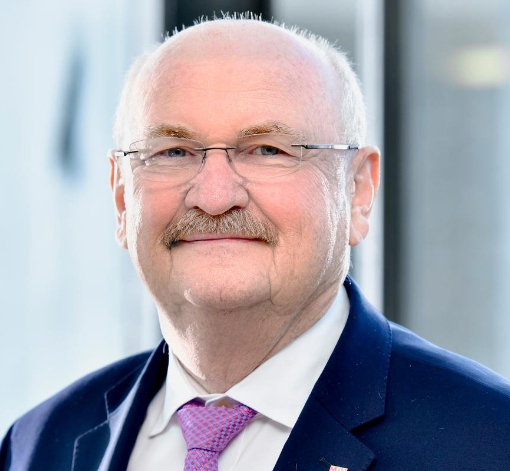 Michael Manns合作论文数Medizinischen Hochschule Hannover1
 Wolfram Brune合作论文数1
 Dietmar Pieper合作论文数Helmholtz-Zentrum für Infektionsforschung GmbH1
 Mark Bronstrup合作论文数Chemistry, Aventis Pharma1
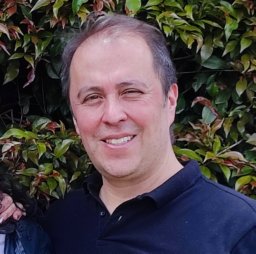 Howard Junca合作论文数Biodegradation Group, German Research Centre for Biotechnology (GBF), 38124 Braunschweig, Germany1
 Cheng-Jian Xu合作论文数1




