Autonomous drones are increasingly used across various domains, yet critical situations can arise, and little research exists on how users prefer to be alerted during these events. In multi-drone control scenarios, where human-machine interfaces are used to monitor multiple drones simultaneously, alerting preferences are critical for ensuring situational awareness and timely decision-making. This paper explores multimodal alert design preferences in a user-centered approach. In an online survey, drone pilots identified critical scenarios, with collision risks, signal loss, and hardware problems being the most prevalent challenges. The subsequent study examined notification preferences for multi-drone control interfaces. Participants designed alerts for critical scenarios that were created based on the findings from the first survey. Using a printed control room interface with drone feeds and a map view, participants created multimodal alerts combining visual cues (e.g., frames, text), auditory signals (e.g., beeps), and, less frequently, tactile notifications (vibrations). This work bridges real-world drone operation challenges with user-centered multimodal interface design for autonomous systems.
One of the advantages of formalizing domain knowledge in OWL ontologies is that one can use reasoning systems to infer implicit information automatically. However, it is not always straightforward to understand why certain entailments are inferred, and others are not. The popular ontology editor Protégé offers two explanation services to deal with this issue: justifications for OWL 2 DL ontologies, and proofs generated by the reasoner ELK for lightweight OWL 2 EL ontologies. Since justifications are often insufficient for explaining inferences, there is thus only little tool support for more comprehensive explanations in expressive ontology languages, and there is no tool support at all to explain why something was not derived. In this paper, we present Evee, a Java library and a collection of plug-ins for Protégé that offers advanced explanation services for both inferred and missing entailments. Evee explains inferred entailments using proofs in description logics up to ALCH. Missing entailments can be explained using counterexamples and abduction. We evaluated the effectiveness and the interface design of our plug-ins with description logic experts, ontology engineers, and students in two user studies. In these experiments, we were able to not only validate the tool but also gather feedback and insights to improve the existing designs.
Ontologies provide the logical underpinning for the Semantic Web, but their consequences can sometimes be surprising and must be explained to users. A promising kind of explanations are proofs generated via automated reasoning. We report about a series of studies with the purpose of exploring how to explain such formal logical proofs to humans. We compare different representations, such as tree- vs. text-based visualizations, but also vary other parameters such as length, interactivity, and the shape of formulas. We did not find evidence to support our main hypothesis that different user groups can understand different proof representations better. Nevertheless, when participants directly compared proof representations, their subjective rankings showed some tendencies such as that most people prefer short tree-shaped proofs. However, this did not impact the user’s understanding of the proofs as measured by an objective performance measure.
Agility is the ability to change your body’s position in a fast and efficient way while maintaining control of speed and direction. To develop this skill, the use of agility ladders is a widespread and well-known training method. While drills vary, having a human expert explaining and monitoring the exercises is usually advantageous. So far, only a few approaches to interactive systems for agility ladder training have been presented. In this work, we propose an interactive projection system to support an athlete in performing those drills. To investigate the effects of the location of those projections, we conducted an initial study with twelve participants using qualitative and quantitative methods. We found that while projecting instructions and feedback on the floor was favored, participants who were presented the same information in front of them on a projected screen partially performed better in a subsequent agility assessment.
In highly automated driving (HAD), it is still an open question how machines can safely hand over control to humans, and if an advance notice with additional explanations can be beneficial in critical situations. Conceptually, use of formal methods from AI – description logic (DL) and automated planning – in order to more reliably predict when a handover is necessary, and to increase the advance notice for handovers by planning ahead at runtime, can provide a technological support for explanations using natural language generation. However, in this work we address only the user’s perspective with two contributions: First, we evaluate our concept in a driving simulator study (N=23) and find that an advance notice and spoken explanations were preferred over classical handover methods. Second, we propose a framework and an example test scenario specific to handovers that is based on the results of our study.
Although logical entailments are often considered “explainable”, experience with justifications in DLs has shown that explaining why a logical consequence holds still requires some effort. However, a full formal proof of a DL entailment may be considered too long-winded, and a textual representation of a proof may be preferred. It may also depend on the user’s experience and individual preferences which representation of a proof constitutes a good explanation for them. Building on previous work on explaining DL consequences to users, we ran an experiment to compare 4 different forms of proofs: formal proofs and textual proofs, which are either very detailed or condensed. A multiple linear regression with contrast coding revealed that the participants rated short proofs as being easier than long proofs, independent of their representation. On the other hand, we could not verify any influence of prior experience with logic on how easy or difficult the different kinds of proofs were considered.
For mixed-initiative control between cyber-physical systems (CPS) and its users, it is still an open question how machines can safely hand over control to humans. In this work, we propose a concept to provide technological support that uses formal methods from AI -- description logic (DL) and automated planning -- to predict more reliably when a hand-over is necessary, and to increase the advance notice for handovers by planning ahead of runtime. We combine this with methods from human-computer interaction (HCI) and natural language generation (NLG) to develop solutions for safe and smooth handovers and provide an example autonomous driving scenario. A study design is proposed with the assessment of qualitative feedback, cognitive load and trust in automation.
Virtual agents usually come in a virtual environment that can be designed in various ways which might affect users. This paper presents a study that examines whether the design of the virtual environment has an impact on the assessment of the virtual agent and the interaction. In a virtual job interview training, participants interacted with a virtual interviewer that behaved exactly the same, but the background and lighting conditions were manipulated. Our results indicate that the environmental design affects the assessment of the interviewer as well as the interview process.
 Frederik Wiehr合作论文数5
 Alisa Kovtunova合作论文数Free University of Bozen5
 Antonio Krüger合作论文数Department of Computer Science, Saarland University;Cognitive Assistants Department, German Research Center for Artificial Intelligence GmbH4
 Stefan Borgwardt合作论文数Department of Psychiatry and Psychotherapy, University of Lübeck4Nina Knieriemen合作论文数3
 Florian Daiber合作论文数German Research Center for Artificial Intelligence (DFKI), Saarbrücken, Germany3
 Ernie Chang合作论文数Meta AI2
 Christian Alrabbaa合作论文数Tech Univ Dresden, Theoret Comp Sci, Dresden, Germany2Marcel Steinmetz合作论文数Foundations of Artificial Intelligence Group, Saarland University2
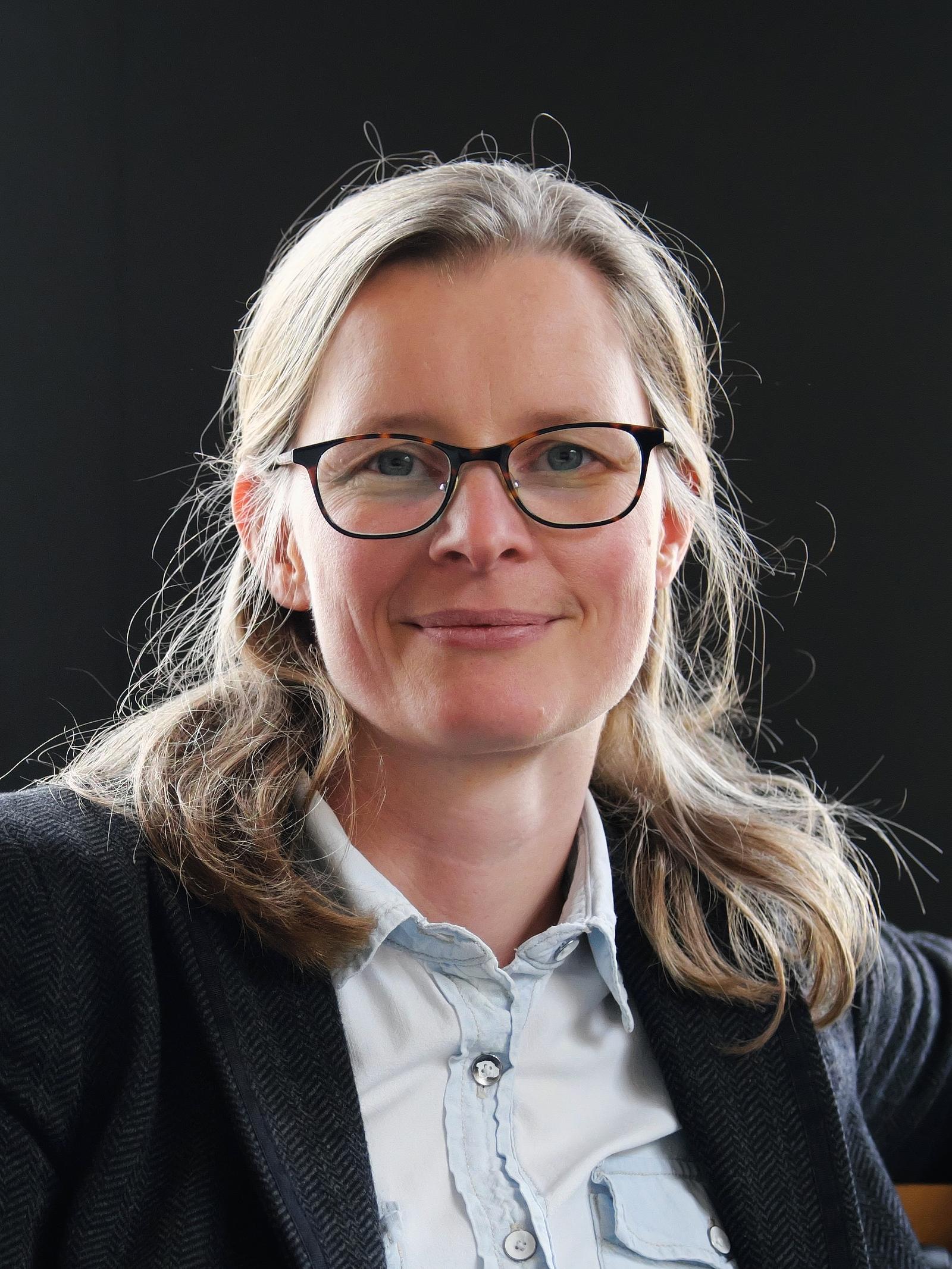 Vera Demberg合作论文数Department of Informatics, Saarland University;Department of Language Science and Technology, Saarland University;Department of Computer Science, Saarland University2
 Jörg Hoffmann合作论文数Department of Computer Science, Saarland University;Foundations of Artificial Intelligence Group, Saarland University2Ida S. R. Siahaan合作论文数1
 Tanja Schneeberger合作论文数1Alexej Popovič合作论文数1Anna Milena Rothermel合作论文数1Tom Friese合作论文数1Fabian Hupperich合作论文数Saarland Informatics Campus, Germany1
 Patrick Gebhard合作论文数DFKI1
 Patrick Koopmann合作论文数Faculty of Science, Vrije Universiteit Amsterdam;Network Institute, Vrije Universiteit Amsterdam;Knowledge in AI Group, Vrije Universiteit Amsterdam;Department of Computer Science, Vrije Universiteit Amsterdam1
 Cornelius J. Konig合作论文数Fachrichtung Psychol, Univ Saarland1
 Felix Kosmalla合作论文数Saarland University1




