This paper presents a three-phase onboard charger based on reconfigured motor windings. In the proposed scheme, the motor windings, together with the traction converter switches, are utilized to form a three-phase interleaved buck converter (IBC). The IBC is interfaced with a three-phase AC-DC converter operating as a boost power factor correction (PFC) rectifier. The interleaved structure significantly reduces the battery-side current ripple, thereby enhancing battery cycle life. In addition, the battery current is effectively shared among three inductors, resulting in reduced on-state losses in the switches and lower copper losses in the inductors. Furthermore, a simplified control strategy is developed that minimizes current sensor requirements and eliminates the need for a proportional-integral (PI) controller, offering a clear advantage over conventional IBC control approaches. The proposed converter also achieves zero current switching (ZCS) for the IBC switches, thereby improving overall efficiency. The effectiveness and practicality of the proposed system are validated through real-time implementation on an OPAL-RT 4512 platform.
This article proposes the architecture of a solar-powered grid integrated on-board charger for electric vehicles (EVs) utilizing the unique combination of an interleaved Cuk converter and a modified flyback converter. On one side, the interleaved Cuk converter ( IL-Cuk ) power factor corrected (PFC) converter outstandingly satisfies the grid side necessities; whereas, the flyback converter on the other side confirms ripple (twice the line frequency ripples) free charging of the EVs under different charging modes. The discontinuous conduction mode (DCM), which is intended for use by the IL-Cuk converter, has inherent benefits like zero current switching and the elimination of losses because of reverse recovery in diodes. Due to its DCM features, this operating mode also leads to smaller PFC inductors and fewer sensors. The developed charger’s dependability is enhanced by using both the grid and the solar PV (SPV) array for charging. The execution of the developed charger is assessed across a gamut of operating situations in order to determine its compatibility with renewable energy sources such as solar photovoltaic (SPV) array. In modern transportation, battery electric cars (EVs) using solar power are becoming more and more popular. The developed topology has been experimentally verified through real-time hardware implementation using an OPAL-RT platform, demonstrating that the obtained real-time results closely correspond to practical experimental performance under both grid-supplied and solar-powered operating conditions. The proposed 2.4 kW charger maintains a regulated DC-link voltage of 300 V and charges the battery at a constant current of 10 A during both grid-only and grid-assisted solar charging modes. The proposed charger achieves a peak efficiency of 92.75%, operates at nearly unity power factor, and restricts the grid current THD to 0.3% under rated conditions and below 2% during dynamic grid voltage variations, thereby complying with the IEC 61000-3-2 power quality requirements.
A new integrated converter (IC) for an N-phase switching reluctance motor (SRM) drive that combines battery charging and propulsion is presented in this article. To effectively drive the SRM for propulsion, the IC reconfigures into an asymmetric half-bridge (AHB) converter. The integrated AHB converter switching pulses are regulated via a closed-loop constant current control technique. The proposed IC integrates a slow and semi-fast single-phase AC charger (level-1 and level-2), a fast three-phase AC charger (level-3), and a fast DC charger for battery charging via standard charging modes. The existing ICs developed for SRM drive do not achieve integration of all the charging modes without additional non-integrated power electronics and passive components. Thus, the significant contribution of the proposed IC is in integrating all the standard charging modes without requiring additional component/s. To achieve this, the proposed IC, depending upon the operating mode, foresees the reconfiguration of SRM winding/s and DC link capacitor as passive element/s, wherever required. Thus, the overall volume and cost associated with realizing different on-board charger modules in an electric vehicle are heavily reduced. Additionally, a maximum power point tracking (MPPT) technique based on a single current sensor is employed in the battery charging mode through solar power, results in cost reduction and tracking time. Through simulation and real time responses investigations on a 4-phase SRM, or N = 4, the suggested IC claims are verified.
The creation of hydrogen using electrolysis is a very promising approach to producing modern and sustainable energy. This study presents a mathematical model of the PEM electrolyser as an equivalent electrical circuit. In practice, this model has been used to examine a variety of electrolyser features. Solar PV module power this mathematical model of PEM electrolyser. Relations have been used to model the electrolyser so that its rating can be adjusted by varying the number of cells. Appropriate power conditioning systems are required to connect the modelled electrolyser and solar PV and guarantee the stability of the entire system. To confirm that an interleaved boost converter has been developed. It has been discovered that this inter-leaved boost converter model is efficient and clamps the voltage stress across the switch. Consequently, improving both its own and the system’s overall efficiency. In steady state conditions, the input current-voltage (I-V) could be recovered. The rate of hydrogen production has been observed to increase linearly with input current. There is non-linear relationship between input power and the rate of hydrogen production. The behaviour of electrical energy systems that use stored electrolytic hydrogen as energy has been found to be better understood using this model.
This work is focused on a solar PV-based onboard charger using reconfigured motor windings. In the proposed scheme, the motor windings along with traction converter switches form a three-phase interleaved buck converter (IBC). The IBC is interfaced with the solar PV and the IBC acts as the maximum power point tracking (MPPT) converter. The IBC reduces the current ripple at the battery side and improves the battery cycle life. Through IBC, a large amount of current at the battery side is paralleled in three inductors of the IBC, which reduces the on-state losses in the switches and copper loss in the inductors. Therefore, it is possible to increase the power level of the onboard charging system as high as that of the propulsion system with enhanced compactness of the system while reducing the cost.
This research paper introduces an innovative bidirectional direct current–direct current (DC–DC) converter topology for electric vehicle (EV) applications, addressing critical limitations in existing power conversion systems. The proposed design demonstrates key advancements like a unique inductor-capacitor network configuration enabling continuous current flow on both input and output ports, overcoming the prevalent discontinuity issue in conventional converters, an integrated inrush current suppression mechanism through optimized switching sequences, and a significant reduction in passive component requirements while maintaining high power density. Simulation validation confirms a voltage gain enhancement of 2× compared to standard topologies, with measured peak efficiency reaching 96.2
This article presents a versatile power converter and a hybrid energy source propulsion system for reliable, lightweight, and extended flight endurance autonomous aerial vehicles. The proposed converter is designed to operate in various configurations to meet different flight mission requirements. It efficiently harvests power from solar panels, fuel cells, and a battery without requiring an additional converter in multiple working conditions. Furthermore, when the aircraft is in rest mode, the converter can act in power factor correction converter mode. The proposed converter can minimize the number of components by integrating step-up and step-down operation capabilities as required for the objective. A brushless dc motor is used as the propulsion motor in the system because of its distinct benefits and unique features. Moreover, this work also discusses a unique technique to emulate the avionic load subsystem. The system is initially simulated using MATLAB/Simulink, and then it is verified on a real-time test bench.
This work is focused on a solar photovoltaics (PV)-based onboard charger using reconfigured motor windings. In the proposed scheme, the motor windings and traction converter switches form a three-phase interleaved buck converter (IBC). The IBC is interfaced with the solar PV and acts as the maximum power point tracking converter. The IBC reduces the current ripple at the battery side and improves the battery cycle life. Through IBC, a large amount of current at the battery side is paralleled in three inductors of the IBC, which reduces the on-state losses in the switches and copper loss in the inductors. Therefore, it is possible to increase the power level of the onboard charging system as high as that of the propulsion system with enhanced compactness of the system while reducing the cost. Moreover, the applied control strategy reduces the current sensor requirements in IBC and eliminates the proportional-integral controller, which is another major advantage of the proposed system compared to conventional control of the IBC. Furthermore, the switches are subjected to zero current switching. Finally, the real-time experiment of the proposed system was accomplished using the OPAL-RT platform for 6 kW of charging power.
This paper deals with the design and development of a novel Boost-SEPIC based three-port converter (TPC). The developed converter is used as a DC microgrid in electric boat consisting of roof-top solar PV (SPV) panels. This proposed converter is capable of managing the energy supplied by solar PV and battery, and delivering a continuous power to the load. The proposed TPC comprises of two parts, first part is capable of detecting the MPP(maximum power point), while the second part is the integration of SPV and battery with load using the Boost-SEPIC converter. It eliminates the need of three different DCDC converters for charging, discharging, and continuous power supply to the load. It has many advantages such as compact design, whole control over load voltage and low ripple currents during the transient time.Boost-SEPIC TPC can swiftly change between different modes of operation by detecting the load variations, Battery SOC, and PV availability, thereby ensuring continuous power flow towards the load. The system topology is designed and analyzed using the simulated results in the Matlab-SIMULINK environment. And the results depicting the continuous power flow to the load in different modes of operation have been presented. Thus proving the viability of the proposed converter.
In this work an interleaved Landsman converter (ILC) integrated with flyback converter and boost converter based EV battery charging scheme has been proposed. It utilises both grid and solar PV as power sources. At the front end two Landsman converter cells are interleaved to make up this PFC converter. The input and output inductors of both the cells operated in DCM and CCM respectively. It results in decreased current ripple in both input and output current and also less peak current stress across the switches. This enhances the harmonic character of the input current even further. ILC uses a phase shift PWM system (PSPWM), and switches with duty cycles below 50% are chosen. This enables line and load side ripple cancellation. In comparison to the traditional Landsman converter based chargers, the interleaving at the PFC stage and the DCM based design guarantee a low cost charging solution. Also the flyback converter regulates the current while the battery is being charged in constant current or constant voltage mode. Through the boost converter SPV has been integrated as one of the primary power sources. It enhances its reliability in the market and compatibility with renewables.
In this article, a hybrid energy sources based system is presented for powertrain of electric vehicles. The proposed system have continuous input and output currents at all the ports, which improves the cycle life of hybrid energy storages [supercapacitor (SC) and battery] and the dc-link capacitor. The SC supplies or absorbs a large amount of power during acceleration or regenerative braking operation. Moreover, the battery is avoided for frequent charging by regenerative energy, which further improves the battery's cycle life. Most of the time, the battery is used to supply energy under cruising mode. An effective and simpler control strategy have been developed for energy management among the energy sources, which provides smooth transition among the modes. A frequency domain (Bode plot) based method is used for controller design of the proposed system. Further, a detailed loss analysis of the converter presented in propulsion and regenerative braking modes. Finally, the proposed system is verified by extensive hardware results.
Download This Paper Open PDF in Browser Add Paper to My Library Share: Permalink Using these links will ensure access to this page indefinitely Copy URL Copy DOI
This work deals with the design and development of a dual source based propulsion architecture for electric vehicles. The converter utilized for the propulsion system is derived from a conventional CuK converter, which operates in a bidirectional power flow mode. The proposed propulsion system has two energy sources: a battery and a supercapacitor (SC). The proposed system has continuous input and output currents at low and high voltage sides, which improves the cycle life of hybrid energy storage (SC and battery) and the DC-link capacitor. Further, the proposed converter has magnetic reduction compared to a conventional two-input bidirectional CuK converter. Moreover, an effective and simpler control strategy (only one switch is pulse width modulated (PWM) operated at a time) has been developed for energy management between sources during charging (regenerative braking) and discharging (propulsion), which is effectively verified by simulation and experimental results. Further, a frequency domain (bode plot)-based technique is used for controller design and stability analysis of the proposed system. This work deals with the design and development of a dual source-based propulsion architecture for electric vehicles. The converter utilized for the propulsion system is derived from a conventional CuK converter, which operates in a bidirectional power flow mode. The proposed propulsion system has two energy sources: a battery and a supercapacitor (SC). The proposed system has continuous input and output currents at low and high voltage sides, which improves the cycle life of hybrid energy storage (SC and battery) and the DC-link capacitor. Further, the proposed converter has magnetic reduction compared to a conventional two-input bidirectional CuK converter. Moreover, an effective and simpler control strategy (only one switch is pulse width modulated (PWM) operated at a time) has been developed for energy management between sources during charging (regenerative braking) and discharging (propulsion), which is effectively verified by simulation and experimental results. Further, a frequency domain (bode plot)-based technique is used for controller design and stability analysis of the proposed system. image
Renewable energy sources are now being focused on for usage in electric vehicles. Although majority of electric vehicles run solely on batteries, they have eliminated local emissions but not pollution. To tackle this issue, this research looks into the performance and power management aspects of an electric vehicle's hybrid power system, with a particular emphasis on the interactions between fuel cells, batteries, and photovoltaic (PV) cells. Stable operation is ensured via a bi-directional buck-boost converter, which maintains the voltage from all sources around reference 430 V. Initially, the fuel cell supplies electricity under low light conditions. The PV system and battery take over when the irradiance surpasses 100 W/m2, 2 , with the battery first draining and then charging in tandem with the increase in irradiance. 1750 RPM is the constant motor speed that is reached after making the required torque adjustments. A model full electric vehicle with multiple sources has been proposed with an efficient power management algorithm. When the battery is in stationary mode and the state of charge (SOC) is less than 100%, extra solar power is used to charge the battery. The model also takes into consideration using the car for entertainment or gadget charging when the ignition is off. The biogas output can be regulated using an inferential control technique using artificial neural network (ANN) based on the fuel demand or consumption. The system also includes anaerobic digestion of organic waste to provide hydrogen for the fuel cell sustainably from biogas. Power, current, SOC profiles, motor performance graphs, and other validations show that the extensive simulations exhibit efficient power management and a strong model for hybrid electric car power systems. The model has been simulated in the MATLAB Simulink environment and has been tested under realistic conditions.
In this paper, a high-gain bidirectional DC-DC converter is presented for electric vehicles where low terminal voltage source like a supercapacitor is used along with the battery. The supercapacitor provides or absorbs large amount power during acceleration and deacceleration and extends the life of main energy source, that is, battery. The supercapacitor terminal voltage varies considerably during charging and discharging activities; hence, a bidirectional DC-DC converter with a high-voltage conversion ratio must be used to connect the lower supercapacitor voltage to the higher DC-link voltage. Such application requires steep voltage conversion ratio along with continuous gain-based bidirectional DC-DC converters. In this study, a typical CuK converter is employed to produce a voltage gain of 3X and X/3 with the ability to transmit power in both directions. The suggested bidirectional converter has a continuous current on both the low- and high-voltage sides, which reduces the requirement for filter capacitance and increases the lifespan of the supercapacitor and DC-link capacitor. Further, inherent inrush current safety is provided by the proposed converter as the inclusion of an inductor in the path of capacitor charging or discharging. Both in the charging and discharging phases, a detailed steady-state analysis of the proposed circuit was performed. Moreover, a deep discharge analysis of the supercapacitor and its implication on the performance of the converter is also investigated. The proposed work is focused on a high-gain bidirectional DC-DC converter for electric vehicles where a low terminal voltage source like a supercapacitor is used along with battery. The supercapacitor provides or absorbs large amount of power during acceleration and deacceleration and hence extends the life of the main energy source, i.e., the battery. The supercapacitor operates in acceleration or regenerative braking mode. However, the battery can operate in any mode whether it is acceleration, regenerative braking, or constant power mode. image
The life cycle of the battery is improved in electric vehicles (EVs) by integrating a supercapacitor alongside the battery. Additionally, a supercapacitor enhances the dynamics of the internal power system by supplying or absorbing a significant quantity of instantaneous power during abrupt demands like acceleration or regenerative braking. Supercapacitors face significant difficulties due to their low terminal voltage, which vary greatly while charging and discharging activities are being performed. Therefore, a bidirectional DC-DC converter with a high voltage conversion ratio is required to connect the lower supercapacitor voltage to the higher dc-link voltage. Such applications heavily rely on the steep voltage conversion ratio offered by bidirectional DC-DC converters that use continuous gain. In this research, a typical CuK converter is used to generate a high gain bidirectional converter. The suggested converter lowers the need for filter capacitance and lengthens the lifespan of the supercapacitor and dc-link capacitor by having a constant current on both the low and high voltage sides. Additionally, the presence of an inductor in the route of capacitor charging or discharge in the proposed converter results in intrinsic inrush current protection. The suggested circuit has undergone a thorough steady-state analysis in both charging and discharging modes.
This work proposed a simple, compact, and efficient scheme for an onboard charging configuration for light plug-in electric vehicles (LPEVs) with a dual charging arrangement, i.e., utility grid and solar panel. The system is targeted to develop an LPEV with a low dc bus voltage (< 100 V) and onboard solar support using a brushless dc motor (BLDCM) drive due to its economic controller, compact drive arrangement, and high efficiency. The designed integrated converter works well under all operating modes such as charging, propulsion (PP), and regenerative braking (RB) operations. The developed converter works as a power factor correction (PFC) converter during grid charging as well as performs a maximum power point tracking (MPPT) converter when charging through solar power. A new approach of the controller in regenerative mode exploiting both the drive and proposed integrated control is unique for this system. As a result, the designed system becomes compact and efficient, making it a competitive solution for an onboard charging scheme for LEVs.
This paper proposes, a single phase fast battery charger pertaining high input power factor and low output current ripple at the battery terminal for electric vehicle battery charging application. The proposed charger consists of a bridgeless SEPIC converter cascaded with an interleaved buck converter. That does not require current shaping loop for power factor correction. Moreover, bridgeless nature and zero current switching (ZCS) turn-on of $S_{1},\ S_{2}$ and ZC turnoff of diode $D_{3}$ results in lower conduction losses. Interleaved buck converter mitigates the ripples in output voltage and current in the battery terminals and increases the current handling capability at lower output voltage. Small-signal modeling in DCM operation has been used for designing DC link voltage controllers. The complete design procedure is also presented.
Selenium (Se) is an essential element for living systems, however, toxic at higher levels. In the present study, Dunaliella salina cells were exposed to different Se concentrations for their growth (EC50 195 mg L-1) as well as Se accumulation. The cells exposed to 50 mg L-1 Se showed photoautotrophic growth parallel to control and accumulated 65 mu g Se g-1 DW. A decrease in photosynthetic quantum yield, chlorophyll content, and the in-crease in intracellular reactive oxygen species, proline content, and lipid peroxidation accompanied by higher neutral lipid accumulation, were recorded at higher Se level. The enzymes superoxide dismutase and catalase played a pivotal role in antioxidative defense. Heterogeneity in accumulated carotenoids at varying concen-trations of selenium was prevalent. The cells exposed to 200 mg L-1 Se resulted in the disorganization of or-ganelles. Thus, the Se enriched biomass obtained at 50 mg L-1 may be explored for bio-fortification of food and feed.
This chapter is intended to provide insight into the design and development of single-stage battery charging systems for on-board applications of plug-in electric vehicles (PEVs), their classification and issues related to them, different configurations, size, and compactness improvement, and possibility and technique to incorporate solar energy into charging system.
 Mishra, Anjanee Kumar合作论文数14
 Mukesh Kumar Pathak合作论文数10
 Asthana Ravi Kumar合作论文数Centre of Advanced Study in Botany, Banaras Hindu University6
 Prabhakar Singh合作论文数5
 Taehyung Kim合作论文数Department of Electrical and Computer Engineering, College of Engineering and Computer Science, University of Michigan-Dearborn5
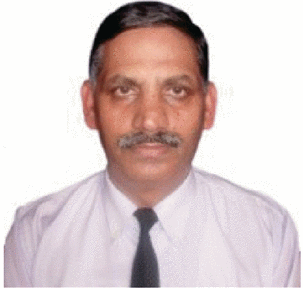 Alok Prakash Mittal合作论文数5
 Urmilesh Singh合作论文数4
 Sk Riyazat Khadim合作论文数4
 Krishna Kumar Gupta合作论文数4
 Manoj Badoni合作论文数3Y. Srinivasa Rao合作论文数2
 Abhishek Mohanta合作论文数2Priyanka Maurya合作论文数2Anupam Tiwari合作论文数2
 Pallavee Bhatnagar合作论文数Dept. of Electr. Eng., MANIT;c;Dept. of Electr. Eng., MANIT2
 Yogesh N. Tatte合作论文数Dept. of Electr. Eng., Visvesvaraya Nat. Inst. of Technol.;c;Dept. of Electr. Eng., Visvesvaraya Nat. Inst. of Technol.2
 Chinmaya K.A合作论文数2
 Yam Siwakoti合作论文数School of Electrical and Data Engineering, Faculty of Engineering and Information Technology, University of Technology Sydney2
 Amit Keshav合作论文数Department of Chemical Engineering, Indian Institute of Technology (IIT) Roorkee2Adarsh K Pandey合作论文数1Deepak Kumar合作论文数1
 Priyanka Singh合作论文数1
 Rajeev Kumar合作论文数1Laxmi合作论文数1
 Kundan Anand合作论文数1Sakshi Singh合作论文数1
 Vikash Singh合作论文数Department of Chemical Engineering, Indian Institute of Technology RoorkeeRoorkee1
 Hemant Saxena合作论文数Delhi-NCR Campus, SRM Institute of Science and Technology1
 Arvind Kumar Singh合作论文数Centre for Community Medicine, All India Institute of Medical Sciences1
 Ram Krishan合作论文数Centre for Energy Studies, Indian Institute of Technology Delhi;c;Centre for Energy Studies, Indian Institute of Technology Delhi1
 M. Veerachary合作论文数Department of Electrical Engineering, Indian Institute of Technology Delhi1
 Rajmohan Thiagarajan合作论文数1
 Bhavnesh Kumar合作论文数Div. of ICE, Netaji Subhas Inst. of Technol.;c;Div. of ICE, Netaji Subhas Inst. of Technol.1
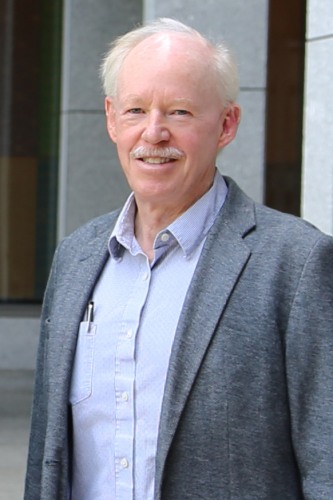 Angus I. Kingon合作论文数School of Engineering, Brown University1Prashant G. Mehta合作论文数1
 Sushant K. Shrivastava合作论文数Institute of Technology, Banaras Hindu University1
 Mohan V. Aware合作论文数Visvesvaraya National Institute of Technology1
 Rekha Sharma合作论文数Department of Dietetics, All India Institute of Medical Sciences1
 Alka Singh合作论文数Indian Institute of Remote Sensing1Vinay Kumar Singh合作论文数1
 Ragini Tilak合作论文数Institute of Medical Sciences, Banaras Hindu University (BHU),1
 Rahul Rai合作论文数Sustainable Design Lab;Engineering Management Department;University of Missouri-Rolla;Sustainable Design Lab, University of Missouri-Rolla1




