Images of Black Americans are becoming remarkably diverse, enabling Barack Obama to defy simple-minded stereotypes and succeed. Understood through the Stereotype Content Model's demonstrably fundamental trait dimensions of perceived warmth and competence, images of Black Americans show three relevant patterns. Stereotyping by omission allows non-Blacks to accentuate the positive, excluding any lingering negativity but implying it by its absence; specifically, describing Black Americans as gregarious and passionate suggests warmth but ignores competence and implies its lack. Obama's credentials prevented him from being cast as incompetent, though the experience debate continued. His legendary calm and passionate charisma saved him on the warmth dimension. Social class subtypes for Black Americans differentiate dramatically between low-income Blacks and Black professionals, among both non-Black and Black samples. Obama clearly fit the moderately warm, highly competent Black-professional subtype. Finally, the campaign's events (and nonevents) allowed voter habituation to overcome non-Blacks' automatic emotional vigilance to Black Americans.
AbstractImages of Black Americans are becoming remarkably diverse, enabling Barack Obama to defy simple-minded stereotypes and succeed. Understood through the Stereotype Content Model's demonstrably fundamental trait dimensions of perceived warmth and competence, images of Black Americans show three relevant patterns. Stereotyping by omission allows non-Blacks to accentuate the positive, excluding any lingering negativity but implying it by its absence; specifically, describing Black Americans as gregarious and passionate suggests warmth but ignores competence and implies its lack. Obama's credentials prevented him from being cast as incompetent, though the experience debate continued. His legendary calm and passionate charisma saved him on the warmth dimension. Social class subtypes for Black Americans differentiate dramatically between low-income Blacks and Black professionals, among both non-Black and Black samples. Obama clearly fit the moderately warm, highly competent Black-professional subtype. Finally, the campaign's events (and nonevents) allowed voter habituation to overcome non-Blacks' automatic emotional vigilance to Black Americans.
Structural features of interpersonal relationships, particularly competition and status, can cause people, respectively, to (dis)like and (dis)respect each other, although them think they are reacting to the target's personality. Two studies manipulate structural relationships between students in a 2 x 2 between-participants design. Competition and status, respectively, differentiate perceptions of the target's warmth and competence. In Study 1's pre-post design, the pre- and post-interaction warmth, but status affected only pre-interaction competence. Study 2 post-interaction-only design did replicate both of Study, 1's pre-interaction results. Competing targets were judged less warm than cooperating targets; high-status targets were judged more competent than low-status targets. These experiments demonstrate the structural predictors of the intergroup stereotype content model at the interpersonal level. Copyright (C) 2008 John Wiley & Sons, Lid.
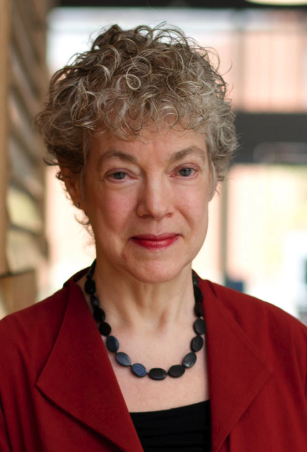 Susan Fiske合作论文数Department of Psychology, Princeton University;School of Public and International Affairs, Princeton University7
 Lasana Harris合作论文数Division of Psychology and Language Sciences, Faculty of Brain Sciences, University College London2
 Tiane L. Lee合作论文数2
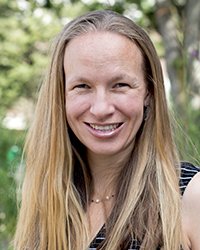 Hilary Bergsieker合作论文数2Lyle Williams合作论文数2
 Miguel Moya合作论文数Universidad de Granada1




