Engaging men and boys in sexual and reproductive health and rights (SRHR) and doing so in a way that challenges harmful masculinities, is both neglected and vital for improving the SRHR of both women and men. To address this gap, WHO commissioned a global research priority setting exercise on masculinities and SRHR. The exercise adapted the quantitative child health and nutrition research initiative priority setting method by combining it with qualitative methods. Influenced by feminist and decolonial perspectives, over 200 diverse stakeholders from 60 countries across all WHO regions participated. The exercise forges a collaborative research agenda emphasising four key areas: gender-transformative approaches to men's and boys’ engagement in SRHR, applied research to deliver services addressing diversity in SRHR among men and women and to generate gender-equality, research designs to support participation of target audiences and reach to policy makers, and research addressing the priorities of those in low-income and middle-income countries.
A growing awareness of sex and gender bias in evidence has spurred the development of numerous tools to address this concern. The Sex and Gender Equity in Research (SAGER) guidelines 1 Heidari S Babor TF De Castro P Tort S Curno M Sex and Gender Equity in Research: rationale for the SAGER guidelines and recommended use. Res Integr Peer Rev. 2016; 1: 2 Crossref PubMed Google Scholar and the Guidelines for Accurate and Transparent Health Estimates Reporting (GATHER) 2 Stevens GA Alkema L Black RE et al. Guidelines for Accurate and Transparent Health Estimates Reporting: the GATHER statement. Lancet. 2016; 388: e19-e23 Summary Full Text Full Text PDF PubMed Scopus (563) Google Scholar , 3 WHOGuidelines for Accurate and Transparent Health Estimates Reporting (GATHER). https://data.who.int/about/data/gatherDate accessed: December 14, 2023 Google Scholar stand out as noteworthy initiatives, designed to foster more transparent research and reporting practices that bridge the gender evidence gap. These tools enable researchers to unravel the complexities that underlie health risks and outcomes and generate more accurate and relevant findings that can inform effective and equitable policies and interventions for better health outcomes.
Objetivos. Analizar el progreso en las estructuras, mecanismos y estrategias organizativas, así como los factores y las barreras, que favorecen la incorporación de la perspectiva de género en la salud en Guatemala, Guyana y Perú, dado el papel que ello desempeña en el abordaje de las desigualdades de género en la salud como un motor estructural clave de la equidad en salud. Métodos. Se obtuvieron datos a partir de la literatura gris de leyes, políticas o documentos de programas y entrevistas cualitativas semiestructuradas con 37 informantes. El análisis se basó en un marco teórico que incluía siete categorías consideradas esenciales para avanzar la incorporación de la perspectiva de género en el sector de la salud. Resultados. A pesar de los importantes esfuerzos y las experiencias acumuladas respecto de la incorporación de la perspectiva de género en el sector de la salud persisten obstáculos estructurales, como desafíos sociales más amplios para transformar las relaciones de poder desiguales entre los géneros; la complejidad del sistema de salud combinada con una baja capacidad técnica, política y financiera de las estructuras institucionales encargadas de abordar el tema; y la limitada coordinación con las instituciones nacionales dedicadas a la promoción de la mujer (a menudo, débiles). En algunos contextos, los obstáculos se ven agravados por la limitada comprensión de los conceptos básicos subyacentes a la perspectiva de género (a veces exacerbada por una comprensión limitada de la interseccionalidad o el compromiso con los hombres) y la ausencia de indicadores para medir los resultados y el impacto concreto de la incorporación de la perspectiva de género. Conclusiones. Para que la incorporación de la perspectiva de género en la salud sea satisfactoria, se requiere una agenda más estratégica y transformadora, elaborada e implementada en coordinación con las instituciones nacionales de promoción de la mujer y la sociedad civil y vinculada a instancias externas (p. ej., el Comité para la Eliminación de la Discriminación contra la Mujer). Es necesario, asimismo, una distinción más clara entre los enfoques sensibles al género y aquellos transformativos de las relaciones desiguales de género, y una definición de los resultados previstos y los indicadores para medir los avances. Estos podrían entonces documentarse y sistematizarse mejor, lo que permitiría que la perspectiva de género se comprendiera más ampliamente y se pusiera en práctica como instrumento concreto para lograr la equidad en salud.
The COVID-19 pandemic has exacerbated social, economic, and health-related disparities, which disproportionately affect persons living in conditions of vulnerability. Such populations include ethnic groups who face discrimination and experience barriers to accessing comprehensive health care. The COVID-19 pandemic has exposed these health disparities, and disruptions of essential health services have further widened the gaps in access to health care. Noncommunicable diseases are more prevalent among groups most impacted by poor social determinants of health and have been associated with an increased likelihood of severe COVID-19 disease and higher mortality. Disruptions in the provision of essential health services for noncommunicable diseases, mental health, communicable diseases such as HIV, tuberculosis, and malaria, and maternal and child health services (including sexual and reproductive health), are projected to also increase poor health outcomes. Other challenges have been an increased frequency of interpersonal violence and food insecurity. Countries in the Americas have responded to the disruptions caused by the pandemic by means of health service delivery through telemedicine and other digital solutions and stepping up social service support interventions. As vaccinations for COVID-19 create the opportunity to overcome the pandemic, countries must strengthen primary health care and essential health services with a view to ensuring equity, if the region is to achieve universal health coverage in fulfillment of the Sustainable Development Goals.
Los importantes desafíos a la equidad en la salud en la Región de las Américas, como se detalla en el informe de la Comisión Independiente de la Organización Panamericana de la Salud sobre Equidad y Desigualdades en Salud en las Américas (1), fueron el impulso inicial para este número especial de la Revista Panamericana de Salud Pública sobre la equidad en la salud. En el informe Sociedades justas: equidad en la salud y vida digna se analizaba un amplio cúmulo de evidencia que indicaba las abrumadoras desigualdades existentes en la Región en relación con tres factores: los factores estructurales, las condiciones de vida y la gobernanza para lograr la equidad en materia de salud (pasar a la acción).
OBJECTIVES:To analyze progress in organizational structures, mechanisms, strategies, and enabling factors and barriers towards gender mainstreaming (GM) in health in Guatemala, Guyana, and Peru, given GM's role in addressing gender inequalities in health as a key structural driver of health equity.METHODS:Data was obtained through a grey literature review of laws, policies, and/or program documents and semi-structured qualitative interviews with 37 informants. Analysis was based on a theoretical framework including 7 categories considered essential to advance GM in the health sector.RESULTS:Despite significant efforts and accumulated experiences of GM in health, structural barriers include: wider societal challenges of transforming gender unequal power relations; health system complexity combined with the low technical, political, and financial capacity of institutional structures tasked with GM; and limited coordination with (often weak) National Women's Machineries (NWMs). In some contexts, barriers are compounded by limited understanding of basic concepts underlying GM (at times exacerbated by misunderstandings related to intersectionality and/or engagement with men) and the absence of indicators to measure GM's concrete results and impact.CONCLUSIONS:Successful GM requires a more strategic and transformational agenda, developed and implemented in coordination with NWMs and civil society and with reference to external bodies (e.g. Committee on the Elimination of Discrimination against Women) to go beyond process, with clearer distinction between gender sensitivity and gender transformation, and definition of expected results and indicators to measure advances. These then could be better documented and systematized, enabling GM to be more broadly understood and operationalized as a concrete instrument towards health equity.
Addressing gender inequalities through an equity and human rights lens is central to the leave no one behind pledge of the Sustainable Development Goals and is at the heart of WHO's normative responsibility. 1 Thomas R Magar V Mainstreaming human rights across WHO. in: Meier BM Gostin LO Human rights in global health: rights-based governance for a globalizing world. Oxford University Press, Oxford2018: 133-155 Google Scholar , 2 WHOThirteenth general programme of work, 2019–2023 report by the Director-General. World Health Organization, Geneva2018 Google Scholar
Better data on health disparities and commitment to interventions focused on the determinants of inequality are essential, argue Eric Friedman and colleagues
RESUMEN Fundamentos: La evidencia pone de manifiesto la importancia de abordar la etnicidad en relacion a los determinantes sociales de la salud para el logro progresivo del acceso universal a la salud y la cobertura universal en salud. Esto implica que todas las personas y las comunidades tengan acceso, sin discriminacion alguna, a servicios integrales de salud adecuados, oportunos, de calidad, a la vez que se asegura que el uso de esos servicios no expone a los usuarios a dificultades financieras. La Organizacion Panamericana de la Salud (OPS/OMS) reconocio la necesidad de un compromiso politico y marco estrategico consensuado para avanzar hacia la equidad en salud, elaborando la primera politica sobre etnicidad y salud para las Americas aprobada por los ministerios de salud en septiembre de 2017 durante la 29a Conferencia Sanitaria Panamericana. Esta politica, impulsada por la OPS/OMS, que incluye la etnicidad como uno de sus cuatro ejes transversales de trabajo, esta alineada con importantes compromisos globales, incluida la Agenda 2030 para el Desarrollo Sostenible. El presente articulo presenta la forma como se elaboro esta politica, y los desafios para su implementacion. Dicha politica tiene en cuenta la necesidad de trabajar en conjunto y reorientar los servicios de salud con un enfoque intercultural para mejorar las condiciones de salud de los pueblos indigenas, los afrodescendientes, los romanies y otros grupos etnicos que coexisten en la region de las Americas y que, en muchas ocasiones, presentan resultados de salud mas desfavorables que el resto de la poblacion. Conclusiones: Con la aprobacion de esta politica, la region de las Americas se convierte en la primera region de la OMS en dar respuesta a la necesidad de adoptar un abordaje intercultural, en el contexto de los determinantes sociales de la salud, considerando las desigualdades de genero que interaccionan con las de etnicidad, las diferencias en acceso a la salud a traves del curso de vida, la promocion y el respeto de los derechos individuales y, para los pueblos indigenas, de los derechos colectivos.
This chapter outlines the obstacles faced, and potential offered, by the post-2015 development framework for advancing the normative framework and commitments for indigenous women's health in Latin America. An overview of the status of indigenous women's health in the region is presented, as well as a brief analysis of current normative frameworks at global and regional levels that make reference to indigenous women´s health and the challenges of operationalising these frameworks in national legal frameworks. The chapter discusses how health goals for indigenous women may articulate with more generalized goals related to health, gender equality and women's empowerment within the proposed new development framework to confront these challenges. It grapples with some of the complexities of including indigenous women's health issues in the new framework in a meaningful way, as well as the particular potential offered by attention to the intersections between the goals, the related intersectoral action this implies, and the particular importance of the goals related to means of implementation, and particularly disaggregated data, for ensuring accountability.
Improving the health status of indigenous children is a long-standing challenge. Several United Nations committees have identified the health of indigenous peoples as a human rights concern. Addressing the health of indigenous children cannot be separated from their social, cultural, and historic contexts, and any related health program must offer culturally appropriate services and a community perspective broad enough to address the needs of children and the local worlds in which they live. Evaluations of programs must, therefore, address process as well as impacts. This paper assesses interventions addressing indigenous children's health in Brazil, ranging from those explicitly targeting indigenous children's health, such as the targeted immunization program for indigenous peoples, as well as more generalized programs, including a focus upon indigenous children, such as the Integrated Management of Childhood Illness. The paper discusses the tensions and complexities of ethnically targeted health interventions as well as the conceptual and methodological challenge of measuring the processes employed and their impact. The lessons learned, especially the need for countries to more systematically collect data and evaluate impacts using ethnicity as an analytical category, are drawn out with respect to ensuring human rights for all within health sector responses.
INTRODUCTION: In the absence of unifying conceptual frameworks, there have been calls to identify and share practical experiences of community participation in health (CPH) to document the contexts and dynamics of participatory practice. OBJECTIVES: This article describes the process of a community-based review of care in obstetric emergencies from rural Indonesia. METHODS: Four village-based groups were convened to review a series of cases of maternal death and disability and to develop recommendations for health planning. Narrative analysis of the reviewers’ discussions was employed to describe and explain whether and how participation occurred. RESULTS: Participation was complex, dynamic and evolved over the course of the study. Although blame and defensiveness characterised the early discussions, over time the reviewers became less condemning of individuals and more so of systems and services, situating individual behaviours within wider health and social systems. Participants also increasingly shared personal experiences, generating rich and explicit reviews of care. Eliciting this information was contingent on skilful facilitation, assuring anonymity and instilling a ‘permission to criticise’ among participants. Sufficient time was also required to convey the necessary principles and reassurances. Despite evidence of learning outcomes, implementation and evaluation of the recommendations were not possible so sustainability and empowerment were likely to be limited. CONCLUSIONS: Despite its potential and relevance, the adoption of meaningful CPH activities may be threatened by wider socio-economic and political conditions, as well as by prevailing evidence hierarchies. We recommend policy and research to establish a firmer foundation for this progressive, yet obscured, public health concept.
INTRODUCTION: Based on the premises that maternal health in developing countries is socially constructed and that valid insights into this phenomenon can be gained from local knowledge, we developed a participatory, community-based review of maternal mortality and severe morbidity in rural Indonesia. OBJECTIVES: The study aimed to demonstrate the utility of the ‘community-perspective’ as a valid source of information for health planning. The objectives were to engage with community groups to conduct critical assessments of quality of, and access to, care in obstetric emergencies, and to develop recommendations for local health planning. METHODS: Four independent village-based groups conducted a series of structured assessments of cases of maternal death and disability. Key care processes were identified through qualitative analysis of the discussion narratives. RESULTS: In the cases reviewed, the health insurance scheme, designed to protect poor families from the catastrophic costs of care, was widely used but often negatively affected access to good quality care. The schemes were seen to be inadequately socialised, inequitably distributed, complex, bureaucratic and led to multiple delays and discriminatory care in time-limited emergencies. The schemes were also reportedly used by families not officially classified as poor, but likely to find care unaffordable. Other problems included poor birth preparedness, the lack of midwives in villages, and shortages in emergency transport. A series of recommendations were generated for health insurance reform, more complete resourcing of village health workers, and continued investments in community health infrastructure. CONCLUSIONS: The reviewers conferred rich and vivid data that allowed for a detailed analysis of the complex relationships between individual providers and women as they interacted in the health system. The reviews suggested that the social and structural determination of maternal health a may be a useful point of departure for health planning and reform. Community-based participatory research can provide useful information for the social organisation of care.
 Evi Martha合作论文数University of Indonesia4
 Lucia D'Ambruoso合作论文数Immpact, University of Aberdeen4
 Alice Kiger合作论文数4Yulia Izati合作论文数4
 Sandra del Pino合作论文数3Oscar J. Mujica合作论文数3
 Michael G. Marmot合作论文数Department of Epidemiology, University College of London 3Arachu Castro合作论文数2Ana Cristina González Vélez合作论文数2Gerry Eijkemans合作论文数2Denisse Wolfenzon合作论文数2Victoria Diaz Garcia合作论文数2
 Cesar Victora合作论文数International Center for Equity in Health, Universidade Federal de Pelotas;Department of Psychiatry, Medical Sciences Division, Universities of Oxford2Shirin Heidari合作论文数International AIDS Society2Renato Oliveira E Souza合作论文数1Princess Nothemba Simelela合作论文数1Jose Milton Guzman合作论文数1Bernardino Vitoy合作论文数1Edwin Bolastig合作论文数1Aoibheann Brennan-Wilson合作论文数1
 Veronica Magar合作论文数Gender, Equity and Human Rights, World Health Organization (WHO),1
 Valdilea Veloso合作论文数1
 Tracy Robinson合作论文数Univ West Indies1
 Chenguang Wang合作论文数School of Public Health, Johns Hopkins University;Regeneron1
 A. Mushtaque Chowdhury合作论文数Department of Population and Family Health, Columbia University Mailman School of Public Health1
 Hosseinpoor Ahmad Reza合作论文数Dept Hlth Stat & Informat Syst, WHO1
 Agnes Binagwaho合作论文数University of Global Health Equity1Ghidinelli Massimo合作论文数1Friedman Eric A合作论文数1
 Anam Nyembezi合作论文数Medical Research Council1
 Anselm J M Hennis合作论文数1
 Matthew M Kavanagh合作论文数Leonard Davis Institute of Health Economics, University of Pennsylvania;Health Global Access Project, New York, NY, USA.;Leonard Davis Institute of Health Economics, University of Pennsylvania1Amin Avni合作论文数1
 Jeremy J. Farrar合作论文数World Health Organization1Zamora Gerardo合作论文数Universidad Pública de Navarra1
 Mark Tomlinson合作论文数Department of Sociological Studies, Faculty of Social Sciences, The University of Sheffield1
 Rodolfo Gomez Ponce de leon合作论文数1Joia S Mukherjee合作论文数1
 Mirta N. Roses Periago合作论文数1
 Carlos Ruiz-Frutos合作论文数Laboratorio Andaluz de Enfermedades Profesionales1
 Lawrence O. Gostin合作论文数O’Neill Institute for National & Global Health Law;Georgetown University1John Garry合作论文数School of Politics, International Studies and Philosophy, Queen’s University Belfast1Silvana Luciani合作论文数1Miriam K. Were合作论文数1
 Juan Gomez Salgado合作论文数Mental health nursing dpt., Huelva University1
 Asha George合作论文数School of Public Health, University of the Western Cape1
 Maria Lohan合作论文数School of Earth, Ocean and Environmental Sciences, University of Plymouth1
 Samira Asma合作论文数1
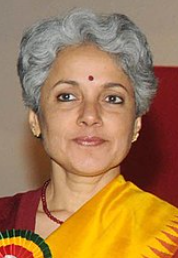 Soumya Swaminathan合作论文数M S Swaminathan Research Foundation1




