Abstract The collective behavior of complex systems emerges from the actions and interactions of their individual components. But what if these individuals make mistakes, or deviate from behavior tuned to lead to collective success? Here, we explore the effects of individual errors on collective outcomes. We investigate in particular whether information flow among individuals exacerbates or mitigates such individual failures. We use an agent-based, spatially explicit model inspired by collective foraging in social insects. Social insect colonies forage for food with autonomous workers who search for and exploit resources around the central nest, as well as share information about discovered resources. We find that the errors that have the most chances of occurring had the strongest impacts: for example, false positive detections can occur at any time during search, and each such error derailed exploration activity. Similarly, forgetting errors are potentially frequent and detrimental to resource exploitation. Despite the fact that communication inherently may narrow the breadth of information used by a colony, we found, in contrast, that it enhanced spatial exploration in our model. Communication in our model also reduced the effects of individual errors, instead of permitting erroneous information to spread. Our model thus illustrates that communication plays a central role in error management in complex systems, and that the evolution of communication systems in social insects may be shaped by selection on exploration and error mitigation as well as on efficient food retrieval.
The ability of animals to innovate - solve novel problems - can shape their ecology and evolution. Here we investigate how individual traits and environmental complexity relate to successful solving of a novel problem. We presented foraging bumble bees (Bombus impatiens) with artificial flowers of not-previously-encountered shapes and recorded the bees' latency to access nectar. We measured individual foraging traits across multiple trips with simple flowers that did not require innovation, and bees were foraging either in a simple or complex environment (cluttered flight arena). Bees in complex environments took longer to find and were less likely to land on novel flowers, indicating that environmental complexity may take up cognitive resources and make search more difficult. However, we did not find an effect of environmental treatment on the ability or time to access reward in novel flowers once bees had landed on them. In contrast, behavioral traits significantly predicted how quickly bees 'solved' novel flowers. In particular, overall foraging tempo as well as routine formation, i.e. how much bees followed a fixed route on known flowers, predicted innovation - faster bees innovated faster, and bees with more repetitive foraging sequences were slower to solve the novel tasks. Overall, while the degree of evolutionary 'novelty' in tasks or solutions is always hard to evaluate, our findings demonstrate that environment and individual traits may affect innovation in different ways. Individuals in simple environments may be more likely to detect, and individuals that are generally faster and have a lower tendency to develop fixed routines may be more likely to solve, novel tasks.
How likely is it that we will find aliens like the ones in so many science fiction stories–people who possess self-awareness and cognitive ability comparable to ours, but who arose from an independent evolutionary origin? Here I make the argument that if life has evolved on other planets, it may well eventually acquire complexity equivalent to that found on Earth. The resulting lifeforms may be good problem-solvers, including predicting their environment and the behavior of social partners, using tools, learning, and otherwise flexibly and adaptively responding to information: these are all traits common among organisms on Earth. However, on Earth, humanlike intelligence is unique. No other animal appears to have the same level of cognitive complexity, ability to use abstract and endlessly flexible communication, and ability to capitalize on social division of labor as humans do. Surprisingly, we do not know why this is the case: why are we the only ones with this level of intelligence on our own planet? This is not an unsolvable question in principle: we know the answer to many evolutionary “why” questions when it comes to animal intelligence. In the case of humans, however, natural selection to increase individual reproduction seems insufficient as explanation. Perhaps it is: sexual selection, the evolution of an exaggerated trait unnecessary for survival but impressive to potential mates, much like a peacock’s tail or a nightingale’s song, may be the most plausible explanation for the evolution of the human brain. If this is true, then we should expect cognitive ability, i.e. learning, memory, abstraction, and many other elements of intelligence to be commonplace in the galaxy as they are among organisms on Earth; but exaggerated intelligence as in humans may be a rare accident of chance, as rare as a peacock’s tail.
Finding resources for the colony is one of the most difficult and risky tasks for a social insect worker. A worker on a foraging trip can face a number of challenges, including interference from other individuals, her own errors, and environmental disturbances. Collectively, colonies may use a variety of strategies to minimize the impact of such perturbations on the foraging process. Here, we investigated how individual Solenopsis xyloni ant workers react to perturbation of an established pheromone trail. We trained foragers from colonies in the field to either a low or high concentration sucrose solution in a feeder on a T-maze setup, then replaced a section of floor covering, removing a section of the pheromone trail previously laid. We found that while ants made correct choices on the T-maze when the trail was intact, their choices did not differ from chance when the trail was absent, indicating strong reliance on a pheromone trail (and not, for example, memory) to return to the resource. Moreover, when the trail was absent, we found that a majority of ants abandoned the resource, and that even the ants that were able to reach the resource did not repair the perturbed trail. However, with a high-quality resource, more ants persisted in attempting to reach it (instead of abandoning). We interpret these responses in the framework of robustness mechanisms discussed in systems biology. Our study thus links individual and collective responses to perturbations, and provides an empirical example of how information use interacts with system robustness.
Theory and empirical science should be in constant dialogue, but often find it hard to understand one another. Here we describe a graduate-level university course we developed to improve matters. The course was designed to help empirically-focused biology graduate students read and understand theory papers, despite little prior mathematical training. It uses several evidence-based principles of modern teaching: backwards design, active learning, and just-in-time teaching. We believe that this or similar curricular content, emphasizing the nature of evidence and the role of theory in science, will improve critical thinking and scientific progress.
When two species use the same resource, this typically leads to competition, such as when different plants aim to attract the same mutualist pollinators. However, more flowers may also attract more pollinators to an area, such that one or both 'competitors' actually benefit from the other's presence. For example, it has been argued that strips of wildflowers planted next to crops may attract pollinators who 'spill over' into the crop. Here, we mathematically examine facilitation and competition in consumer attraction. Contrary to previous claims, no accelerating benefits of density on attraction per se are necessary for facilitation. Instead, under very general assumptions, facilitation can be generated by an imbalance between local competition and joint long-distance attraction of consumers; for example, a low presence of highly attractive 'wildflowers' should lead to benefits to a crop. In this mechanism, how pollinator attraction to a patch increases with density of plants is a key factor. Our results generalize to many contexts where local competition may trade off with joint long-distance attraction of consumers, and we show that the exact relationship between competitor density and attraction of consumers can qualitatively shape outcomes, including facilitation or competition.
High-frequency animal tracks must often be subsampled to allow a simple analysis of the movement on the most meaningful scale for the respective study. One way of achieving this is to identify ‘biologically significant turns’, compared to heading changings caused by ‘noise’. Many ‘turn identification’ methods have been developed, but the accuracy and consistency of such methods have rarely been validated against ground truth trajectories with known ’true’ turns and noise. We analyze simulated tracks with known parameters as well as two empirical tracks and identify turns with 10 different frequently used resampling methods. We assess the specificity and sensitivity of identifying the location of turns and compare the known mean step length and turn angle of the paths with the resampled trajectories. We found great accuracy differences between, and sometimes within, methods, even on simulated tracks of the same characteristics. Results of some methods were also highly sensitive to the user-set threshold the method requires (e.g. max angle). Overall, the best-performing methods in this study were DP and MRPA, methods used in human mobility research, and TPA, which is mostly used in primate research. We thus advise caution when comparing results of studies using different resampling methods and recommend justifying the use of the resampling method in addition to quantifying the sensitivity of results to the threshold value. This study is also an appeal to authors of novel turn identification methods to consider thorough comparisons in different scenarios with a wide range of previous methods, including those developed outside the movement ecology discipline. ### Competing Interest Statement The authors have declared no competing interest. * List of Abbreviations : AUROC : Area under the Receiver Operating Curve DP : Douglas-Peucker CPT : Change Point Test 1D : 1-dimensional projection method TPA : Turning Points Algorithm VW : Visvalingam-Whyatt MRPA : Multi-Resolution Polygonal Approximation
Division of labor, a key feature of many complex systems, requires a mechanism that allows individuals to choose tasks. The popular ‘response threshold hypothesis’ posits that some workers start engaging in particular tasks at a lower level of need than others. However, individuals may only have access to information about need after they actually engage in a task. We therefore introduce two novel interpretations of this task-allocation mechanism. While the ‘response threshold mechanism’ determines when individuals start working, the ‘satisfaction threshold mechanism’ drives when individuals stop working. We also model a ‘composite threshold mechanism’ where workers consider task need both to start and end working. Second, we model the possibility that the stimulus perceived by workers is a ‘completion’ cue instead of a ‘demand’ cue. While these may seem like subtle variations, we show here that they can yield dramatically different collective dynamics. In simulations with biologically relevant parameter ranges, response thresholds produced the quickest reaction to increases in task demand, satisfaction thresholds yielded the lowest task-switching rate, and composite thresholds most closely matched the number of workers allocated to the number needed. Different threshold types thus differentially trade off speed, cost, and accuracy. We did not model benefits of specialization; purely in terms of allocating workers to tasks, we also found that response thresholds usually perform worse than a null random choice model in terms of cost and efficiency, and variation among workers does not improve task allocation. Colonies utilizing task demand cues also tend to perform better than those using task completion cues. Our results ultimately suggest that different threshold mechanisms may be suited for different situations or types of tasks.Author Summary Division of labor is a phenomenon where workers in a community consistently differ in the tasks they work on. Many scientists believe division of labor arises in social insects (i.e. ants and bees) as a result of difference in workers’ responsiveness to cues that correspond to the demand for work in a task. For example, some ants in a colony start feeding brood much sooner than others, possibly because of a higher sensitivity, or lower ‘response threshold’, to brood pheromone. We show that instead of using such a cue to decide when to start on a task, theoretically workers may instead use it only to decide when to stop working; similarly, workers may use a cue that tells them how much work is needed in a task, or they may use one that corresponds to how much work has already been done. These seemingly subtle differences affect how much a colony invests in work and how quickly stability is reached when the balance of work needed in different tasks changes. Therefore, these different mechanisms may evolve to solve different problems.### Competing Interest StatementThe authors have declared no competing interest.
Social parasitism, where one social species parasitically depends on the other for survival and reproduction, is a highly successful life history strategy, especially in the eusocial Hymenoptera. In ants alone, more than 400 species of socially parasitic species exist and multiple forms of social parasitism evolved independently and convergently. Yet disentangling the evolutionary history of obligate social parasitism is challenging. Identifying species that inform the transition from cooperative, eusocial toward socially parasitic behavior is crucial for understanding the underlying co-evolutionary processes. Here, we report the first case of mixed colonies involving four predominantly free-living Temnothorax ant species from the western United States. Three Temnothorax species supplement their worker force with brood from the nests of their four congeners. We suggest, based on these observations and other published evidence, that this facultative dulotic behavior may have resulted from territorial contests due to limited nest sites. Socially parasitic behavior is not present in all populations across the species distribution ranges, however in populations where this behavior was observed, it is also associated with significant increases in interspecific aggression. These four species of Western US Temnothorax ants represent a particularly interesting case of social parasitism, because the presence of between-population behavioral variation provides a powerful system to test hypotheses about the ecological and behavioral conditions contributing to an evolutionary transition from cooperative to socially parasitic behavior.
Collectively searching animals might be expected to coordinate with their groupmates to cover ground more evenly or efficiently than uncoordinated groups. Communication can lead to coordination in many ways. Previous work in ants suggests that chemical ‘footprints’, left behind by individuals as they walk, might serve this function by modulating the movement patterns of following ants. Here, we test this hypothesis by considering the two predictions that, first, ants may turn away from sites with higher footprint concentrations (klinotaxis), or, second, that they may change their turning patterns depending on the presence of footprints (klinokinesis). We tracked 5 whole colonies of Temnothorax rugatulus ants in a large arena over 5h. We approximated the footprint concentration by summing ant visitations for each point in the arena and calculated the speed and local path straightness for each point of the ant trajectories. We counterintuitively find that ants walk slightly faster and straighter in areas with fewer footprints. This is partially explained by the effect that ants who start out from the nest walking straighter move on average further away from the nest, where there are naturally fewer footprints, leading to an apparent relationship between footprint density and straightness However, ants walk slightly faster and straighter off footprints even when controlling for this effect. We tested for klinotaxis by calculating the footprint concentrations perceived by the left and right antennae of ants and found no evidence for a turning-away (nor turning-towards) behavior. Instead, we found noticeable effects of environmental idiosyncrasies on the behavior of ants which are likely to overpower any reactions to pheromones. Our results indicate that search density around an ant colony is affected by several independent processes, including individual differences in movement pattern, local spatial heterogeneities, and ants’ reactions to chemical footprints. The multitude of effects illustrates that non-communicative coordination, individual biases and interactions with the environment might have a greater impact on group search efficiency and exploratory movements than pheromone communication.
The mutualism between bees and flowers creates strong selection on both the structure of the flower and behavior of the bee to maximize pollination and foraging success, respectively. Previous research has primarily assessed the costs of foraging by quantifying the time and accuracy of search, and handling time of the flower. However, there is little attention given to the actual success of landing, and it is often not explicitly stated whether failed landing attempts are taken into consideration. We show here that landing attempts often are unsuccessful, especially in inexperienced bees. Orientation of artificial flowers in our experiment neither influenced the preference nor landing success of a naive bumble bee forager. The presence of a labellum, often considered to serve as a landing platform, also did not influence landing success, indicating that it may mostly play a role in flower recognition or act as a nectar guide. Failed landing attempts may thus play an under-recognized role in the foraging efficiency and behavior of bees, and learning may be key in individual bee landing efficiency, not just flower recognition. Further research should aim to quantify the costs of landing failures and consider the role of experience in individual bee landing success. ### Competing Interest Statement The authors have declared no competing interest.
Many animals inhabit nests that protect them from adverse environments. However, the effects of living in a built or found structure are not limited to protection: the physical space can shape and organize behaviour, particularly in self-organized collective systems. In addition, the geometry of nest space may not be under the animal's control, raising the question whether animals can compensate for the effects that unexpected or suboptimal geometries may have. Here we examine how the shape of a nest cavity affects spatial organization of colonies in the ant Temnothorax rugatulus, a species that adapted to nest cavities of unmodifiable internal dimensions, since they inhabit rock crevices with rigid walls. We show that the emerging spatial relationships of workers, brood, queens and young alates, as well as their relationships and distances to significant points in the nest, are all significantly influenced by nest shape, with the brood distributions most affected. However, we also found that the size of worker spatial fidelity zones, i.e. the areas in the nest that individual workers occupy and that may be key regulators of division of labour, are overall not affected by nest shape. These findings indicate that ants may actively regulate which areas of a nest they occupy and that they may compensate for effects of nest architecture constraints. Physical properties of nests can thus influence the organization of ant colonies, highlighting the need to explore spatial constraints as a direct influence on the organization, movement and communication of evolved or engineered self-organized systems. (c) 2024 The Association for the Study of Animal Behaviour. Published by Elsevier Ltd. All rights are reserved, including those for text and data mining, AI training, and similar technologies.
Central-place foragers must learn the resource and visual landscapes around them when they are in a new environment, to facilitate efficient foraging and navigation. We investigated how the colony-level exploration strategy of Temnothorax rugatulus ants changes over time. For this study, we introduced ants to a novel environment by placing them in a foraging arena and tracking their movements over 3 days for 5 h per day, prohibiting access to the arena at other times. To test whether any changes in movement behavior are due to chemical markings, we replaced the paper floor on the third day. We found that colony-level exploration activity decreased with time, but only within a roughly 1 m radius around the nest, possibly reflecting a shift from familiarization or marking walks to searching. Individuals’ movements overall also became slightly straighter and faster across and within days. However, unlike learning walks of other ant species, T. rugatulus ants did not pause more often when facing toward the nest. Reactions to chemical markings seem to play a minor role in our observed effects, as the exploratory behavior did not reset after the floor cover had been replaced. Thus, ant colony exploration and search behaviors adapt to the familiarity of their environment by becoming more dispersive, possibly aiding in search efficiency. This must be considered in lab studies on the foraging activity and behavior of ants.
A fundamental goal of animal behavior research is to discover the proximate mechanisms driving individual behavioral differences. Biogenic amines are known to mediate various aspects of behavior across many species, including aggression, one of the most commonly measured behavioral traits in animals. Arthropods provide an excellent system to manipulate biogenic amines and quantify subsequent behavioral changes. Here, we inves-tigated the role of dopamine (DA) and serotonin (5-HT) on foraging aggression in western black widow spiders (Latrodectus hesperus), as measured by the number of attacks on a simulated prey animal in the web. We injected spiders with DA or 5-HT and then quantified subsequent changes in behavior over 48 h. Based on previous work on insects and spiders, we hypothesized that increasing DA levels would increase aggression, while increasing 5 -HT would decrease aggression. We found that injection of 5-HT did decrease black widow foraging aggression, but DA had no effect. This could indicate that the relationship between DA and aggression is complex, or that DA may not play as important a role in driving aggressive behavior as previously thought, at least in black widow spiders. Aggressive behavior is likely also influenced by other factors, such as inter-individual differences in genetics, metabolic rates, environment, and other neurohormonal controls.
 Nigel R. Franks合作论文数School of Biological Sciences, University of Bristol29
 Daniel Charbonneau合作论文数14
 Pacifica Sommers合作论文数13Rebecca S. Lipson合作论文数13Joshua S. Hoskinson合作论文数13R. Keating Godfrey合作论文数13Austin Cruz合作论文数12Christy Coverdale Stewart合作论文数12J. A. Banks合作论文数11Jennifer M. Jandt合作论文数11
 Bengston Sarah Elizabeth合作论文数11
 Lars Chittka合作论文数Centre for Brain and Behaviour, School of Biological and Behavioural Sciences, Faculty of Science and Engineering, Queen Mary University of London11
 Min C. Shin合作论文数Video and Image Analysis Lab, Department of Computer Science, College of Computing & Informatics, UNC Charlotte10Dan Papaj合作论文数9
 James Marshall合作论文数Department of Computer Science, Faculty of Engineering, The University of Sheffield9
 Tim Kovacs合作论文数University of Bristol8
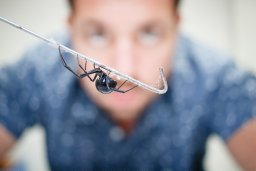 Dirienzo Nicholas合作论文数7
 Matina C. Donaldson-Matasci合作论文数7
 Leonard Anne S合作论文数Center for Insect Science, University of Arizona6
 Nancy A. Lynch合作论文数Computer Science and Artificial Intelligence Laboratory, Massachusetts Institute of Technology;Department of Electrical Engineering and Computer Science, Massachusetts Institute of Technology6
 Thomas Fasciano合作论文数University of North Carolina6
 Margaret J. Couvillon合作论文数Department of Ecology and Evolutionary Biology, University of Arizona6
 Robert Planque合作论文数Department of Computer Science, Bristol University6
 Evan Kelemen合作论文数Department of Biology, York University5
 Scott Powell合作论文数School of Biological Sciences, University of Bristol5
 Rafal Bogacz合作论文数Nuffield Department of Clinical Neurosciences, University of Oxford5
 Stefan Popp合作论文数Department of Ecology and Evolutionary Biology, University of Arizona4
 Greg Chism合作论文数Graduate Interdisciplinary Program in Entomology and Insect Science, University of Arizona4
 Nicole Leitner合作论文数4Tuan Cao合作论文数4
 Franziska Klügl合作论文数Department for Artificial Intelligence and Applied Computer Science,University of Wurzburg4
 David W. Kikuchi合作论文数4
 James A. R. Marshall合作论文数Complex Systems Modelling Group, Department of Computer Science, Faculty of Engineering, The University of Sheffield;Opteran Technologies4
 michael rivera合作论文数Program Ecol Evolut & Conservat Biol, Univ Illinois3
 Benjamin Blonder合作论文数Department of Environmental Science, Policy and Management, College of Natural Resources, University of California, Berkeley3Jo-Anne Holley合作论文数Department of Ecology and Evolutionary Biology, University of Arizona3
 Frank Puppe合作论文数Universitat Wurzburg, Fakultat fur Mathematik und Informatik Lehrstuhl fur Kunstliche Intelligenz und Angewandte Informatik (Informatik VI)3Tsvetomira Radeva合作论文数Computer Science and Artificial Intelligence Laboratory, Massachusetts Institute of Technology3
 Judith Bronstein合作论文数Department of Entomology, College of Agriculture and Life Sciences, University of Arizona;Department of Ecology and Evolutionary Biology, College of Science, University of Arizona3
 Goggy Davidowitz合作论文数Department of Entomology, College of Agriculture, Life & Environmental Sciences, The University of Arizona;Department of Ecology and Evolutionary Biology, The University of Arizona;HexaFeast LLC3Wulfila Gronenberg合作论文数3
 Hsin-Hao Su合作论文数3
 Aimee S. Dunlap合作论文数Department of Biological Sciences;Northern Arizona Uniersity;Department of Biological Sciences, Northern Arizona Uniersity3Hoan Nguyen合作论文数Iowa State University3Corinna Thom合作论文数2Kenneth James Chapin合作论文数2karen kierstead合作论文数2Catherine Webb合作论文数2




