e24102 Background: Over the past decade, there has been an increase in the use of direct oral anticoagulants (DOACs) in the cancer population despite limited data comparing its use against low molecular weight heparin (LMWH), the standard of care in cancer patients. Increasing data supporting DOACs in cancer-associated thrombosis has emerged over the past few years. Nonetheless, this study will evaluate the relative safety and efficacy of DOACs versus LMWH in cancer-associated thrombosis within an urban setting associated with low socioeconomic status. Methods: This is a retrospective chart review of medical records from patients treated at an urban academic medical center from October 2010 through October 2018. Patients met study inclusion if they had a diagnosis of venous thromboembolism occurring after the date of diagnosis of active cancer and were prescribed a direct oral anticoagulant (rivaroxaban, apixaban, dabigatran, edoxaban) or a low molecular weight heparin (dalteparin, enoxaparin, or fondaparinux) as monotherapy for the treatment of venous thromboembolic disease. Patients were excluded if they had less than 6 months of follow up data for reasons other than death. The primary outcomes were recurrent venous thromboembolism, major bleeding and death. Results: Of the 914 patients who met inclusion criteria, 286 were excluded due to lack of follow up data. The remaining patients included 472 in the LMWH arm and 156 in the DOAC arm. At 6 months, recurrent thromboembolism occurred in 5 of the 472 patients (1.1%) in the LMWH group as compared with 4 of the 156 patients (2.6%) in the DOAC group (p = 0.170). Major bleeding occurred in 36 patients (7.6%) in the LMWH group and 11 patients (7.0%) in the DOAC group (p = 0.813). Death within 6 months of starting anticoagulation occurred in 76 patients (16.1%) in the LMWH group and 16 patients (9.6%) in the DOAC group (p = 0.046). Discontinuation before 6 months of treatment occurred in 241 patients (51.2%) in the LMWH group and 46 patients (29.5%) in the DOAC group. Conclusions: The LMWH and DOAC groups had similar rates of recurrent thromboembolism and major bleeding. The mortality rate within 6 months of starting anticoagulation was significantly higher in the LMWH group and this difference requires further evaluation. These results help support the continued use of DOACs for the treatment of cancer-associated thrombosis and demonstrate that DOACs are as safe and effective as LMWH in this patient population.
Oxaliplatin is a standard component of fluorouracil-based therapy for gastrointestinal cancers, prolonging progression-free survival in metastatic colorectal cancer (CRC) and overall survival when used as adjuvant therapy in stage III colon cancer.1,2 Although toxicities include bone marrow suppression and gastrointestinal effects, the dose-limiting toxicity is neurotoxicity, manifesting acutely as cold-induced perioral or distal extremity paresthesias, or chronically as a distal sensory neuropathy.
BACKGROUND:Infection with the novel severe acute respiratory syndrome coronavirus 2 has been associated with a hypercoagulable state. Emerging data from China and Europe have consistently shown an increased incidence of venous thromboembolism (VTE). We aimed to identify the VTE incidence and early predictors of VTE at our high-volume tertiary care center. METHODS:We performed a retrospective cohort study of 147 patients who had been admitted to Temple University Hospital with coronavirus disease 2019 (COVID-19) from April 1, 2020 to April 27, 2020. We first identified the VTE (pulmonary embolism [PE] and deep vein thrombosis [DVT]) incidence in our cohort. The VTE and no-VTE groups were compared by univariable analysis for demographics, comorbidities, laboratory data, and treatment outcomes. Subsequently, multivariable logistic regression analysis was performed to identify the early predictors of VTE. RESULTS:The 147 patients (20.9% of all admissions) admitted to a designated COVID-19 unit at Temple University Hospital with a high clinical suspicion of acute VTE had undergone testing for VTE using computed tomography pulmonary angiography and/or extremity venous duplex ultrasonography. The overall incidence of VTE was 17% (25 of 147). Of the 25 patients, 16 had had acute PE, 14 had had acute DVT, and 5 had had both PE and DVT. The need for invasive mechanical ventilation (adjusted odds ratio, 3.19; 95% confidence interval, 1.07-9.55) and the admission D-dimer level ≥1500 ng/mL (adjusted odds ratio, 3.55; 95% confidence interval, 1.29-9.78) were independent markers associated with VTE. The all-cause mortality in the VTE group was greater than that in the non-VTE group (48% vs 22%; P = .007). CONCLUSIONS:Our study represents one of the earliest reported from the United States on the incidence rate of VTE in patients with COVID-19. Patients with a high clinical suspicion and the identified risk factors (invasive mechanical ventilation, admission D-dimer level ≥1500 ng/mL) should be considered for early VTE testing. We did not screen all patients admitted for VTE; therefore, the true incidence of VTE could have been underestimated. Our findings require confirmation in future prospective studies.
Breast implant-associated anaplastic large cell lymphoma is a recently recognized complication of textured breast implants. It typically presents as unilateral peri-implant swelling approximately 7-10 years after implantation. While the course is usually indolent, breast implant-associated anaplastic large cell lymphoma may form a locally invasive mass and metastasize to regional lymph nodes or beyond to distant sites. Surgical excision has been well established as the standard of care for localized disease; however, guidelines directing management of advanced, recurrent or unresectable disease are based on limited and extrapolated evidence. The CD30-targeting immunoconjugate, brentuximab vedotin, has been utilized in this setting, typically in combination with chemotherapy. We recently reported a patient with unresectable breast implant-associated anaplastic large cell lymphoma who was treated with brentuximab vedotin monotherapy and has now sustained complete remission for 2.6 years. Herein, we provide an up-to-date review of the epidemiology, pathogenesis, clinical features, diagnosis and management of breast implant associated anaplastic large cell lymphoma with emphasis on the role of brentuximab vedotin.
BI-ALCL is a rare CD30+ T-cell malignancy, which is known to complicate textured breast implants. The CD30-targeting immunoconjugate, brentuximab vedotin, has been suggested for invasive BI-ALCL; however, its efficacy for unresectable BI-ALCL has not been demonstrated. We present a case of unresectable BI-ALCL, which was successfully treated with brentuximab vedotin.
 Rashmi Khanal合作论文数2Huaqing Zhao合作论文数2Nadia Ali合作论文数2Nadia D. Ali合作论文数1Matthew Hamby合作论文数1Asya Varshavsky Yanovsky合作论文数1Melissa McShane合作论文数1Peter Abdelmessieh合作论文数1Andrea L. Lubitz合作论文数1Joseph Panaro合作论文数1Omar Sheriff合作论文数1Jordan Senchak合作论文数1
 Chandra Dass合作论文数1Lawrence Oresanya合作论文数1Parth Rali合作论文数1Van Hellerslia合作论文数1Yuliya Shestovska合作论文数1
 Rohit Gupta合作论文数1Catherine N Myers合作论文数1Robert Weiss合作论文数1Gary Cohen合作论文数1Vladimir Lakhter合作论文数Department of Cardiology, Temple University Hospital1Xiaoning Lu合作论文数1
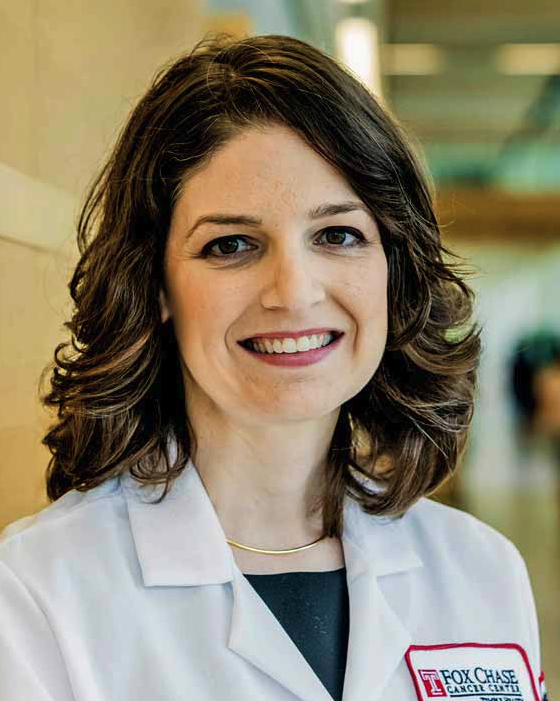 Crystal S. Denlinger合作论文数Department of Hematology/Oncology, Fox Chase Cancer Center;National Comprehensive Cancer Network1Bromberg Michael合作论文数1O'Corragain Oisin A合作论文数1
 Choi Eric T合作论文数1Kumaran Maruti合作论文数Queen's Medical Centre, Nottingham University Hospitals NHS Trust1Desai Parag合作论文数1Yu Daohai合作论文数1
 Riyaz Bashir合作论文数Division of Cardiovascular Medicine, Temple University Hospital1
 A. Koneti Rao合作论文数Lewis Katz School of Medicine, Temple University1Michael Styler合作论文数MCP-Hahnemann University1
 Henry Chi Hang Fung合作论文数Department of Bone Marrow Transplant and Cellular Therapies, Fox Chase Cancer Center1
 Gerard J. Criner合作论文数Department of Thoracic Medicine and Surgery, Lewis Katz School of Medicine, Temple University;Temple Lung Center1
 Nadia Khan合作论文数Division of General Internal Medicine, Department of Medicine, Faculty of Medicine, The University of British Columbia;Centre for Health Evaluation and Outcome Sciences, Department of Medicine, Faculty of Medicine, The University of British Columbia1
 Roberto Caricchio合作论文数University of Pennsylvania1




