An entry from the Cambridge Structural Database, the world’s repository for small molecule crystal structures. The entry contains experimental data from a crystal diffraction study. The deposited dataset for this entry is freely available from the CCDC and typically includes 3D coordinates, cell parameters, space group, experimental conditions and quality measures.
ChemInform is a weekly Abstracting Service, delivering concise information at a glance that was extracted from about 100 leading journals. To access a ChemInform Abstract of an article which was published elsewhere, please select a “Full Text” option. The original article is trackable via the “References” option.
The reaction of the oxyl (CF3)2NO· (7) with α-pinene (1) (2:1 molar ratio) on warming from −196 °C to room temperature gives the hydroxylamine (CF3)2NOH (9) (37% based on oxyl), 3-[N,N-bis(trifluoromethyl)amino-oxy]pin-2(10)-ene (10) (66.5% based on α-pinene) as a mixture of the exo and endo isomers (ratio 50:50) and 2,3-bis[N,N-bis(trifluoromethyl)amino-oxy]pinane (11) (20.5% based on α-pinene) as a mixture of several diastereomers. A corresponding reaction with β-pinene (2) on warming from −196 °C to room temperature affords hydroxylamine 9 (21% based on oxyl), 10-[N,N-bis(trifluoromethyl)amino-oxy]pin-2-ene (12) (48% based on β-pinene), {1-[N, N-bis(trifluoromethyl)amino-oxy]methyl}-4-{2-[N N-bis(trifluoromethyl)amino-oxy]isopropyl}cyclo-hex-1-ene (13) (10% based on β-pinene) and 2,10-bis[N,N-bis(trifluoromethyl)amino-oxy]pinane (14) (40.5% based on β-pinene) as a mixture of two diastereomers (ratio 59:41). A second reaction involving slow passage of the oxyl 7 in nitrogen through a solution of pinene 2 in CF2ClCFCl2 as a solvent gave compounds 12 (64%), 13 (7%) and 14 (29%). The room temperature reactions of the oxadiazapentane (CF3)2NON(CF3)2 (8) with pinenes 1 and 2 (1:1 molar ratio) afforded complex product mixtures. The reaction with pinene 1 yields hydroxylamine 9 (22% based on compound 8), the amine (CF3)2NH (15) (23% based on compound 8) and an inseparable higher-boiling mixture containing c. 14 components, while the reaction of pinene 2 gives compounds 9 and 15 and a higher-boiling mixture (c. 11 components) from which compound 12 (7% based on β-pinene), 10-[N,N- bis(trifluoromethyl)amino]pin-2-ene (16) (15% based on β-pinene) and the rearrangement products 1-{[N,N- bis(trifluoromethyl)amino]methyl}-4-{2-[N,N-bis(trifluoromethyl)amino-oxy]isopropyl}cyclohex-1-ene (17) (10% based on β-pinene) and 1-{[N,N-bis(trifluoromethyl)amino]methyl}-4-isopropylcyclohex-1-ene (18) (20% based on β-pinene) could be separated and identified.
ChemInform is a weekly Abstracting Service, delivering concise information at a glance that was extracted from about 100 leading journals. To access a ChemInform Abstract of an article which was published elsewhere, please select a “Full Text” option. The original article is trackable via the “References” option.
Reaction of the oxadiazapentane (CF3)2NON(CF3)2 (1) with an excess of the propenes CH2=CXR (X=H or Cl, R=Me or CH2Cl) at room temperature gives high yields (92%–97%) of mixtures of the 1:1 adducts (CF3)2NCH2CXRON(CF3)2 (3) and (CF3)2NCXRCH2ON(CF3)2 (4) in the ratio 87:13 to 90:10 via initial (CF3)2N-radical attack. In contrast, the corresponding reactions of the alkenes CH2=CClR (R=Me, CH2Cl) with the N-bromoamine (CF3)2NBr (2) under free-radical conditions results in monodirectional (CF3)2N- radical attack to give the 1:1 adducts (CF3)2NCH2CBrCIR (14) (95%–98%). With the alkenes CH2=CHCF3 and CCl2=CHMe, reaction with 1 affords the adducts (CF3)2NCH2CH(CF3)ON(CF3)2 (3e) (96%) and (CF3)2NCHMeCCl2ON(CF3)2 (10) (86%), respectively, but 3-bromopropene gives a complex mixture of products including the alkene (CF3)2NCH2CH=CH2 (7) (4%), the compound [(CF3)2NCH2]2CHON(CF3)2 (8) (24%) and the dibromide (BrCH2)2CHON(CF3)2 (9) (48%). Treatment of (E)- or (Z)-but-2-ene with 1 gives in each case a mixture (c. 80%) of the erythro and threo 1:1 adducts (CF3)2NCHMeCHMeON(CF3)2 (11) in the ratio 75:25, while from (E)-1-chlorobut-2-ene the adducts (CF3)2NCH(CH2Cl)CHMeON(CF3)2 (12) (54%) and (CF3)2NCHMeCH(CH2Cl)- ON(CF3)2 (13) (42%) are formed each as a mixture of the erythro and threo isomers.
ChemInform is a weekly Abstracting Service, delivering concise information at a glance that was extracted from about 100 leading journals. To access a ChemInform Abstract of an article which was published elsewhere, please select a “Full Text” option. The original article is trackable via the “References” option.
The reaction of cyclohexa-1,3-diene with the dialkynyl ester (CF3CC)2CMeO2CMe (1a) at 70 °C gives a mixture of two diastereomers (ratio 9:2) of the Diels-Alder adduct [2-(2-acetoxy-5,5,5-trifluoropent-3-yn-2-yl)-3-trifluoromethyl]bicyclo[2.2.2]octa-2,5-diene (3), which on thermolysis at 100 °C affords mainly 2-(2-acetoxy-5,5,5-trifluoropent-3-yn-2-yl)benzotrifluoride (4) together with a small amount of its hydration product 2-(2-acetoxy-5,5,5-trifluoropent-3-one-2-yl)benzotrifluoride (5). Attempted cycloaddition between norbornadiene and the corresponding benzoate ester (CF3CC)2CPhO2CPh (1b) at 150 °C gave a complex mixture of unidentified products; reaction did not occur at 100 °C. Facile reaction occurred between diazomethane and the ester 1b at 0 °C to give [α,α-bis(4-trifluoromethylpyrazol-3-yl)]benzyl benzoate (16) and [α-(1-methyl-4-trifluoromethylpyrazol-5-yl)-α-(4-trifluoromethylpyrazol-3-yl)]benzyl benzoate (15) and hence [α,α-bis(1-methyl-4-trifluoromethyl pyrazol-3-yl)benzyl benzoate (17), [α-(1-methyl-4-trifluoropyrazol-3-yl)-α-(1-methyl-4-trifluoromethylpyrazol-5-yl)]benzyl benzoate (14) (major product) and [α,α-bis(1-methyl-4-trifluoromethylpyrazol-5-yl)]benzyl benzoate (13).
The liquid-phase reaction at room temperature of the title dioxyl (1) with an excess of the alkenes CH2CHR (RH, F, COCl), CF2CHF, CHClCCl2 and cis-CHClCHCl gives 1:1 copolymers 3 in high yield, although with the alkenes CH2CH2, CH2CHF and CF2CHF cyclic 1:1 adducts 2 are also formed in low yield. The reactions with the alkenes CH2CMe2, CH2CHEt, CH2CHCO2H and cis-HO2CCHCHCO2H produce copolymers which are not 1:1 copolymers. The 1:1 copolymer 3f from acryloyl chloride is hydrolysed readily by water to the acrylic acid/dioxyl 1 1:1 copolymer 3j. Gas-phase reaction at room temperature of 1 with an excess of the alkenes CH2CHR (RCl, Br, COCl, COF), CH2CXCH3 (XCl, Br), CHClCCl2, cis- and trans- CHClCHCl, CH2CCl2, CF2CCl2, CF2CFCl and CF2CFBr affords cyclic 1:1 adducts 2 (11.5–78%) and copolymers 3 (18.5–76.5%): hydrolysis of the acryloyl fluoride 1:1 adduct 2j gives the acrylic acid 1:1 adduct 2s in high yield.
AbstractChemInform is a weekly Abstracting Service, delivering concise information at a glance that was extracted from about 100 leading journals. To access a ChemInform Abstract of an article which was published elsewhere, please select a “Full Text” option. The original article is trackable via the “References” option.
Thermal reaction of hexafluoropropene with n-butane at ca. 300 °C gives 1 : 1 and 2 : 1 adducts [major products CF3CHFCF2R; R = Bun(11), Bus(12), and CHMeCH2CH2CF2CHFCF3(14)], together with lower alkane adducts H [C3F6] R (R = Me, Et, Prn, and Pri) and 1,1,1,2,3,3-hexafluoropropane (4). The 1 : 1 adducts are precursors of the 2 : 1 adducts and the lower alkane adducts, and the structures of the isolated 2 : 1 adducts indicate that C–H bonds α- and β- to the fluoroalkyl group in the 1 : 1 adducts are deactivated towards hydrogen abstraction. It is proposed that the 1 : 1 and 2 : 1 adducts arise by a radical-chain mechanism initiated by hydrogen abstraction from n-butane and the 1 : 1 adducts, respectively, and that the lower alkane adducts are formed via interaction between the 1 : 1 adducts and excited hexafluoro-propene resulting in C–C bond fission. The photochemical and peroxide-initiated reactions give much higher yields of 1 : 1 and 2 : 1 adducts at the expense of the lower alkane adducts. Analogous products are formed in the thermal reaction with n-pentane [major 1 : 1 and 2 : 1 adducts CF3CHFCF2R; R = CHMePrn(16), CHEt2(17), CHMeCH2CHMeCF2CHFCF3(18), and CHMe(CH2)3CF2CHFCF3(19)], but, surprisingly, 2 : 1 adducts formed via hydrogen abstraction from the γ-C–H bonds (CH3) of the 1 : 1 adduct (17) are absent.
The reactions of hydrogen bromide, N-bromobistrifluoromethylamine, methanethiol, and trimethylsilane with perfluoro-3-methylbut-1-ene under free-radical conditions proceed by attack by Br·, (CF3)2N·, MeS·, and Me3Si· exclusively at the terminal CF2 group. Fluoride ion rearranges the olefin to perfluoro-2-methylbut-2-ene, and methoxide ion affords a complex mixture of products derived from both the reactant and rearranged olefins. Dimethylamine gives the unexpected 1 : 1 adduct, (CF3)2CH·CF2·CF2·NMe2 and the corresponding amide (CF3)2CH·CF2·CO·NMe2. Catalytic hydrogenation of the olefin proceeds normally to give 1H,2H-3-trifluoromethylheptafluorobutane.
Die photochemische Reaktion des Tetrafluorpropens (I) mit Trichlorsilan produziert die Silane (II) und (III) neben telomerem Material.
Photochemical reaction of trifluoroiodomethane with the title olefin gives the 1:1 adduct (CF3)2CF·CFI·CF2·CF3 in low yield (22%), the perfluoroalkane (CF3)2CF·CF(CF3)·C2F5, the iodo-compounds (CF3)2C:CF·CF2I (VII), (CF3)2CF·Cl:CF2(VIII), and (CF3)2CF·CFI·CF3(IX), formed via the iodine adduct (CF3)2CF·CFI·CF2I, and the unsaturated compounds (CF3)2C:CF·CF2·CF2·CF:C(CF3)2(IV), (CF3)2C:CF·CF2·CF(CF3)·CF(CF3)2(V), and (CF3)2C:CF·CF2·CF(C2F5)·CF(CF3)2(VI), which are considered to arise by combination reactions involving the allyl radical (CF3)2C:CF·CF2. Under comparable conditions the reaction of iodine with the olefin yields the iodo-compounds (VII), (VIII), and (IX), the alkene (V), and the diene (IV). Irradiation of the olefin alone affords mainly the dimers (V) and (CF3)2CF·CF(CF3)·C[CF(CF3)2]:CF2, together with small amounts of the dimer (CF3)2CF·CF2·CF2·C[CF(CF3)2]:CF2 and the diene (IV); dimer formation probably involves rearrangement of intermediate dimer diradicals.
1,2,2-Trifluoroethylidene, generated by pyrolysis of trifluoro-(1,1,2,2-tetrafluoroethyl)silane, inserts exclusively into the tertiary C–H bond of the alkane Me2CH·CMe3, into both the primary and secondary C–H bonds (ratio 1 : 2) of the ethyl group in the alkane EtCMe3, and into both the tertiary and secondary C–H bonds (ratio ca. 8 : 1) of the isobutyl group in the alkane Me2CH·CH2·CMe3. (2-Chloro-1,1,2,2-tetrafluoroethyl)trifluorosilane is best prepared by fluorination of trichloro-(1,1,2,2-tetrafluoroethyl)silane followed by vapour-phase photochemical chlorination. On pyrolysis the silane affords 2-chloro-1,2,2-trifluoroethylidene, which inserts into the Si–H bond of trimethylsilane and reacts with allene to afford 1-chlorodifluoromethyl-1-fluoro-2-methylenecyclopropane. Stereospecific addition of the carbene to the double bond of trans-but-2-ene takes place to give r-1-chlorodifluoromethyl-1-fluoro-c-2,t-3-dimethylcyclopropane, but reaction with cis-but-2-ene is not stereospecific and affords a mixture of the c-2,c-3- and t-2,t-3-dimethylcyclopropanes and the c-2, t-3-dimethylcyclopropane in the ratio 63 : 18.
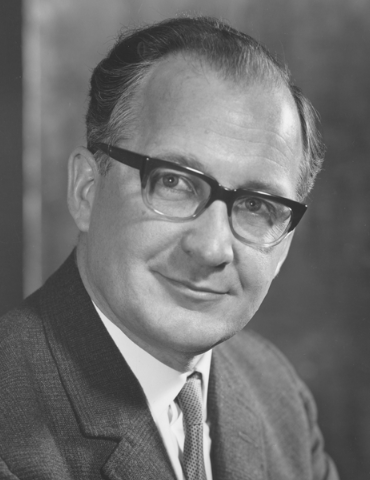 Robert Haszeldine合作论文数Institute of Science and Technology, University of Manchester90
 Michael J. Newlands合作论文数16Barry Hewitson合作论文数11Anthony M. Devine合作论文数11Richard O'b. Watts合作论文数10
 John Middleton合作论文数School of Cultures, Languages and Linguistics, Faculty of Arts, The University of Auckland10William I. Bevan合作论文数10David H. Coy合作论文数9Colin R. Pool合作论文数9James R. Mcallister合作论文数7Ilyas-Ud-D. Mir合作论文数7Michael G. Barlow合作论文数6Ronald Rowland合作论文数6Peter A. Griffin合作论文数5George L. Fleming合作论文数4Barry Haley合作论文数4D. Cooper合作论文数3Victor J. Davis合作论文数3Nadia N.E. Suliman合作论文数3Graham W. Cross合作论文数3John Freear合作论文数3Allan J. Mitchinson合作论文数3C. James Attridge合作论文数3Sabiha Tajammal合作论文数2ANTHONY G. WILSON合作论文数2Terry F. Davies合作论文数Mount Sinai School of Medicine2Rhymer B. Rigby合作论文数2M. G. Barlow合作论文数2
 Lakhdar Sibous合作论文数Chemistry Department, University of Manchester Institute of Science and Technology2David J. Rogers合作论文数1
 Michael J. Green合作论文数Celera Genomics, 180 Kimball Way, South San Francisco, CA 94080, USA1
 Robin Gavin Pritchard合作论文数1Gregory D. Connelly合作论文数1
 David L Scott合作论文数King’s College London;King’s College Hospital1Gordon Newsholme合作论文数1




