Declining scholarly interest in intentional discrimination may be due to rapid growth of interest in systemic biases and implicit biases. Systemic biases are produced by organizational personnel doing their assigned jobs, but nevertheless causing adverse impacts to members of protected classes as identified in civil rights laws. Implicit biases are culturally formed stereotypes and attitudes that cause selective harms to protected classes while operating mostly outside of conscious awareness. Both are far more pervasive and responsible for much greater adversity than caused by overt, explicit bias, such as hate speech. Scientific developments may eventually influence jurisprudence to reduce effects of systemic and implicit biases, but likely not rapidly. We conclude by describing possibilities for executive leadership in both public and private sectors to ameliorate discrimination faster and more effectively than is presently likely via courts and legislation.
The processing mechanisms employed in a task can sometimes be inferred by determining which sequential relationships between trials increase or decrease reaction time. In three selective attention reaction time (SART) experiments, we have examined sequential effects involving events that occurred simultaneously in both a focal channel of stimulation (to which the subject had to respond) and a distractor channel (which had to be rejected by attentional mechanisms). Our findings for 2-trial sequences demonstrated that, on the trial just after one on which the distractor and focal channels had conflicting content, subjects exhibited two levels of rejection of the distractor channel, both (a) being less affected generally by information in the distractor channel, and (b) inhibiting the response associated with the last distractor stimulus. Analysis of 3-trial sequences showed effects on reaction times due to the distractor event from the second preceding trial. This unanticipated finding indicated the existence of previously unsuspected residual (i.e., memorial) effects of unattended information. In discussing these results, we offer a taxonomy of 2-trial sequential SART effects and note gaps in the currently available data.
Accumulated findings from studies in which implicit-bias measures correlate with discriminatory judgment and behavior have led many social scientists to conclude that implicit biases play a causal role in racial and other discrimination. In turn, that belief has promoted and sustained two lines of work to develop remedies: (a) individual treatment interventions expected to weaken or eradicate implicit biases and (b) group-administered training programs to overcome biases generally, including implicit biases. Our review of research on these two types of sought remedies finds that they lack established methods that durably diminish implicit biases and have not reproducibly reduced discriminatory consequences of implicit (or other) biases. That disappointing conclusion prompted our turn to strategies based on methods that have been successful in the domain of public health. Preventive measures are designed to disable the path from implicit biases to discriminatory outcomes. Disparity-finding methods aim to discover disparities that sometimes have obvious fixes, or that at least suggest where responsibility should reside for developing a fix. Disparity-finding methods have the advantage of being useful in remediation not only for implicit biases but also systemic biases. For both of these categories of bias, causes of discriminatory outcomes are understood as residing in large part outside the conscious awareness of individual actors. We conclude with recommendations to guide organizations that wish to deal with biases for which they have not yet found solutions.
Interest in unintended discrimination that can result from implicit attitudes and stereotypes (implicit biases) has stimulated many research investigations. Much of this research has used the Implicit Association Test (IAT) to measure association strengths that are presumed to underlie implicit biases. It had been more than a decade since the last published treatment of recommended best practices for research using IAT measures. After an initial draft by the first author, and continuing through three subsequent drafts, the 22 authors and 14 commenters contributed extensively to refining the selection and description of recommendation-worthy research practices. Individual judgments of agreement or disagreement were provided by 29 of the 36 authors and commenters. Of the 21 recommended practices for conducting research with IAT measures presented in this article, all but two were endorsed by 90% or more of those who felt knowledgeable enough to express agreement or disagreement; only 4% of the totality of judgments expressed disagreement. For two practices that were retained despite more than two judgments of disagreement (four for one, five for the other), the bases for those disagreements are described in presenting the recommendations. The article additionally provides recommendations for how to report procedures of IAT measures in empirical articles.
This meta-analysis evaluated theoretical predictions from balanced identity theory (BIT) and evaluated the validity of zero points of Implicit Association Test (IAT) and self-report measures used to test these predictions. Twenty-one researchers contributed individual subject data from 36 experiments (total N = 12,773) that used both explicit and implicit measures of the social-cognitive constructs. The meta-analysis confirmed predictions of BIT's balance-congruity principle and simultaneously validated interpretation of the IAT's zero point as indicating absence of preference between two attitude objects. Statistical power afforded by the sample size enabled the first confirmations of balance-congruity predictions with self-report measures. Beyond these empirical results, the meta-analysis introduced a within-study statistical test of the balance-congruity principle, finding that it had greater efficiency than the previous best method. The meta-analysis's full data set has been publicly archived to enable further studies of interrelations among attitudes, stereotypes, and identities.
In the last 20 years, research on implicit social cognition has established that social judgments and behavior are guided by attitudes and stereotypes of which the actor may lack awareness. Research using the methods of implicit social cognition has produced the concept of implicit bias, which has generated wide attention not only in social, clinical, and developmental psychology, but also in disciplines outside of psychology, including business, law, criminal justice, medicine, education, and political science. Although this rapidly growing body of research offers prospects of useful societal applications, the theory needed to confidently guide those applications remains insufficiently developed. This article describes the methods that have been developed, the findings that have been obtained, and the theoretical questions that remain to be answered.
Self-esteem remains one of social psychology's central constructs, despite disagreements about its theoretical interpretation and methods of measurement. This entry provides an overview of alternative views of structure and empirical controversies about the function of self-esteem in personality. Special emphasis is placed on recent advancement in implicit measurement of self-esteem, with a brief discussion of implications for developmental research.
[Version 3 (uploaded 21 April 2020) provides corrected list of co-authors and commenters; the ms. is otherwise unchanged from Versions 1 and 2.] Scientific interest in unintended discrimination that can result from implicit attitudes and stereotypes (implicit biases) has produced a large corpus of empirical findings. In addition to much evidence for validity and usefulness of Implicit Association Test (IAT) measures, there have been psychological critiques of empirical findings and theoretical disagreements about interpretation of IAT findings. Because of public attention drawn by the concept of implicit bias, commercial and other applications based on the concept of implicit bias have been developed by non-psychologists—some of these applications are not appropriately guided by the existing body of research findings. This article is in 5 parts: (1) review of best practices for research use of IAT measures, (2) summary of what has been confidently learned from empirical research using IAT measures, (3) accepted and controversial theoretical interpretations of IAT findings, (4) significant questions about the IAT and implicit bias that still await answer, and (5) questions arising in attempts to apply research findings to remedy unintended discrimination due to implicit biases.
This longitudinal study examined early social-cognitive markers that might be associated with the emergence of childhood depression and anxiety. At 5 years of age, 137 children completed an implicit self-esteem measure. At 9 years of age, the same children completed measures of implicit self-esteem, explicit self-esteem, depression, and anxiety. Two novel findings emerged. First, higher implicit self-esteem at age 5 than explicit self-esteem at age 9 (implicit > explicit discrepancy) was associated with depressive symptoms at age 9, but not with symptoms of anxiety. Second, this cross-age implicit > explicit discrepancy was associated with depressive symptoms more strongly than was the same implicit > explicit discrepancy measured concurrently at age 9. The overall pattern suggests that the appearance of depressive symptoms in children is associated with discrepancies between implicit and explicit self-esteem and not just lower levels of implicit self-esteem or lower levels of explicit self-esteem taken alone. It is the direction and discrepancy across time that is particularly informative, such that discrepancies between early implicit representations and later explicit reports of self-worth reflect a developmental pathway associated with elevated risk for depressive symptoms. Taken altogether, this study illustrates the benefits of combining work in developmental, child-clinical, and social psychology to provide a more complete view of the developing child. We believe that combining implicit and explicit measures of self-esteem across developmental time points can be used to examine early markers of depression in children at younger ages than typically possible with explicit measures alone. (C) 2020 Elsevier Inc. All rights reserved.
Language is a popular resource to mine speakers' attitude bias, supposing that speakers' statements represent their bias on concepts. However, psychology studies show that people's explicit bias in statements can be different from their implicit bias in mind. Although both explicit and implicit bias are useful for different applications, current automatic techniques do not distinguish them. Inspired by psychological measurements of explicit and implicit bias, we develop an automatic language-based technique to reproduce psychological measurements on large population. By connecting each psychological measurement with the statements containing the certain combination of special words, we derive explicit and implicit bias by understanding the sentiment of corresponding category of statements. Extensive experiments on English and Chinese serious media (Wikipedia) and non-serious media (social media) show that our method successfully reproduce the small-scale psychological observations on large population and achieve new findings.
Using data from 217 research reports (N = 36,071, compared to 3,471 and 5,433 in previous meta-analyses), this meta-analysis investigated the conceptual and methodological conditions under which Implicit Association Tests (IATs) measuring attitudes, stereotypes, and identity correlate with criterion measures of intergroup behavior. We found significant implicit-criterion correlations (ICCs) and explicit-criterion correlations (ECCs), with unique contributions of implicit (β = .14) and explicit measures (β = .11) revealed by structural equation modeling. ICCs were found to be highly heterogeneous, making moderator analyses necessary. Basic study features or conceptual variables did not account for any heterogeneity: Unlike explicit measures, implicit measures predicted for all target groups and types of behavior, and implicit, but not explicit, measures were equally associated with behaviors varying in controllability and conscious awareness. However, ICCs differed greatly by methodological features: Studies with a declared focus on ICCs, standard IATs rather than variants, high-polarity attributes, behaviors measured in a relative (two categories present) rather than absolute manner (single category present), and high implicit-criterion correspondence (k = 13) produced a mean ICC of r = .37. Studies scoring low on these variables (k = 6) produced an ICC of r = .02. Examination of methodological properties-a novelty of this meta-analysis-revealed that most studies were vastly underpowered and analytic strategies regularly ignored measurement error. Recommendations, along with online applications for calculating statistical power and internal consistency are provided to improve future studies on the implicit-criterion relationship. (PsycINFO Database Record (c) 2019 APA, all rights reserved).
Unpronounceable strings of 4 consonants (conditioned stimuli: CSs) were consistently followed by familiar words belonging to 1 of 2 opposed semantic categories (unconditioned stimuli: USs). Conditioning, in the form of greater accuracy in rapidly classifying USs into their categories, was found when visually imperceptible (to most subjects) CSs occupied ≥58 ms of a 75-ms CS-US interval. When clearly visible CSs were presented in a 375 ms CS-US interval, conditioning was strongly correlated with measures of contingency awareness, and did not occur in the absence of that awareness. These experiments delineated 2 forms of conditioning: Unconscious conditioning occurred with a brief CS-US interval, with an effectively masked conditioned stimulus (CS), and with no reportable knowledge of the contingent CS-US relation. Conscious conditioning occurred with a substantially longer CS-US interval, a perceptible CS, and with subjects' reportable knowledge of the contingent CS-US relation. (PsycINFO Database Record
The APA Awards for Distinguished Scientific Contributions are presented to persons who, in the opinion of the Committee on Scientific Awards, have made distinguished theoretical or empirical contributions to basic research in psychology. Anthony G. Greenwald is a recipient of the 2017 award for his work in collaboration with Mahzarin R. Banaji. Greenwald "identified prejudice against the null hypothesis among researchers and unintended prejudices toward social groups among everyone." Greenwald's award citation, biography, and a selected bibliography are presented here.
Presents an obituary for Earl Busby Hunt-known to family, friends, and colleagues as Buz-who died at home in Bellevue, Washington, on April 12, 2016. Buz specialized in artificial intelligence (AI) and had a main focus in cognitive psychology. In fact he was editor of Cognitive Psychology from 1974-1987. Buz's honors include the Lifetime Achievement Award from the International Society for Intelligence Research (2009) and the Cattell Award from the Association for Psychological Science (2011) for lifetime contributions. (PsycINFO Database Record
Mentally rehearsing unfamiliar first names for the purpose of categorizing them into a group produces both preference for and, more surprisingly, identification with the group of names (i.e., association of the names with self; Greenwald, Pickrell, & Farnham, 2002). The present research started as an effort to determine how these 'implicit partisanship' effects of stimulus exposures differed from the well-known mere exposure effect and whether mental rehearsal might play a role in both phenomena. Four experiments found that parallel effects on liking and association with self-occurred (a) more strongly for stimuli that were mentally rehearsed than for ones that were passively exposed, (b) equally for stimuli rehearsed individually versus categorized in groups, (c) consistently for both self-report and implicit measures, and (d) across substantial variations of stimulus types and of mental rehearsal procedures. The findings are interpreted as identifying a shared theoretical ingredient of implicit partisanship and mere exposure effects, linking these two effects more generally to phenomena of implicit self-esteem, including minimal group and mere ownership effects.
In the 1970s, memory researchers converged on interesting phenomena observed in Korsakoff-syndrome amnesic patients. These patients' performances on difficult tasks were reliably improved by practice sessions from which they could recall nothing. Related findings of indirect memory effects in college students triggered wide attention to phenomena that, in 1985, were first identified as implicit memory. Within a decade, the indirect measurement methods of implicit memory research had spread to social psychologists' studies of attitudes and stereotypes. After another two decades, the methods and findings of this developing revolution have revised understanding of how past learning, operating in ways that bypass conscious awareness, nevertheless shapes conscious judgment and perception. This revolution in psychological thinking is on the cusp of reconceiving the relation between unconscious and conscious mental process. Further, it demands researchers' careful attention to justification for many self-report measures that are now routinely treated as face-valid. (PsycINFO Database Record
 Mahzarin R. Banaji合作论文数Department of Psychology, Harvard University45
 Brian Nosek合作论文数Department of Psychology, University of Virginia;Center for Open Science39
 Dario Cvencek合作论文数18
 Andrew Meltzoff合作论文数Department of Psychology, University of Washington11
 Mark R. Klinger合作论文数9N Sriram合作论文数9
 Laurie A. Rudman合作论文数Department of Psychology, School of Arts and Sciences, The State University of New Jersey9
 Nilanjana Dasgupta合作论文数Department of Psychological and Brain Sciences, College of Natural Sciences, University of Massachusetts Amherst9
 Steven Breckler合作论文数National Science Foundation9
 Sean Draine合作论文数University of Washington9Anthony R. Pratkanis合作论文数9
 Janice A. Sabin合作论文数Department of Biomedical Informatics and Medical Education, University of Washington8Ar Pratkanis合作论文数7MH BAUMGARDNER合作论文数7MR LEIPPE合作论文数7
 Richard A. Abrams合作论文数Attention and Performance Lab, Washington University St. Louis;Department of Psychology and Brain Sciences, Washington Arts and Science, Washington University In St. Louis7deborah s mellott合作论文数6
 Nicole Lofaro合作论文数Department of Psychology, University of Florida6Debbie E. Mcghee合作论文数6
 Eric R. Spangenberg合作论文数College of Business and Economics, Washington State University6Brad Pinter合作论文数6Dominika Maison合作论文数University of Warsaw5
 Huajian Cai (蔡华俭)合作论文数Institute of Psychology, CAS5
 Axt Jordan R合作论文数Department of Psychology, University of Virginia5
 R.W.H.J. (Reinout) Wiers合作论文数Department of Psychology, Faculty of Social and Behavioural Sciences, University of Amsterdam;Centre for Urban Mental Health, University of Amsterdam5
 Shelly Farnham合作论文数Microsoft Research;Social Computing Group5
 Mark R. Forehand合作论文数Foster School of Business, University of Washington5
 Andrew W. Perkins合作论文数Psychology Department-MS 25, Rice University5Konrad Schnabel合作论文数Humboldt-Universitat zu Berlin5
 Thierry Devos合作论文数Department of Psychology, College of Sciences, San Diego State University5Rocha Anita合作论文数4
 John Dovidio合作论文数Department of Psychology, Yale University4
 Jennifer P. Stuber合作论文数School of Social Work, University of Washington4
 Karl Christoph Klauer合作论文数Institut fur Psychologie, Albert-Ludwigs-Universitat Freiburg;Department of Social Psychology and Methodology, Faculty of Economics and Behavioral Science, University of Freiburg4
 Brian Ostafin合作论文数Department of Psychology;North Dakota State University;Department of Psychology, North Dakota State University4David L Ronis合作论文数3
 james r rae合作论文数Zillow Research3
 Ratliff Kate A合作论文数Department of Social Psychology, Tilburg University3
 Lai Calvin K合作论文数University of Virginia3
 Jens B. Asendorpf合作论文数Department of Psychology, Faculty of Life Sciences, Humboldt University of Berlin3Carl Obermiller合作论文数3
 Kristin A. Lane合作论文数Bard College3
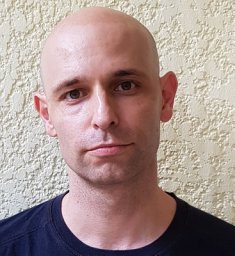 Yoav Bar-Anan合作论文数Department of Psychology, Tel Aviv University3
 David E. Sprott合作论文数New York University;University of Pennsylvania;New York University, University of Pennsylvania3
 Kristen P. Lindgren合作论文数University of Washington3
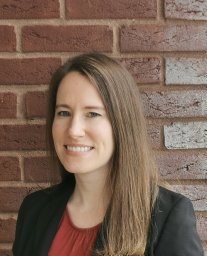 Teri A. Kirby合作论文数Department of Psychology, University of Washington3
 Kimihiro Shiomura合作论文数3




