Provenance, which records the history of an in-silico experiment, has been identified as an important requirement for scientific workflows to support scientific discovery reproducibility, result interpretation, and problem diagnosis. Large provenance datasets are composed of many smaller provenance graphs, each of which corresponds to a single workflow execution. In this work, we explore and address the challenge of efficient and scalable storage and querying of large collections of provenance graphs serialized as RDF graphs in an Apache HBase database. Specifically, we propose: (i) novel storage and indexing techniques for RDF data in HBase that are better suited for provenance datasets rather than generic RDF graphs and (ii) novel SPARQL query evaluation algorithms that solely rely on indices to compute expensive join operations, make use of numeric values that represent triple positions rather than actual triples, and eliminate the need for intermediate data transfers over a network. The empirical evaluation of our algorithms using provenance datasets and queries of the University of Texas Provenance Benchmark confirms that our approach is efficient and scalable.
Geosciences Web portals are becoming increasingly important for supporting geoscientists in their research. The GEO-SEED portal is a repository of geosciences web services metadata, represented in Resource Description Framework (RDF), which supports management and discovery by machines and automated agents. This project uses SPARQL, the W3C standard for querying RDF, to support discovery of web services. SPARQL query performance becomes more critical as the amount of RDF metadata in the repository increases. Most existing RDF storage systems are based on relational database technology. The problem with most of these systems is that their query performance is limited by the use of fixed schema mapping strategies. In this paper, we present our system, called S2ST, which addresses this issue in the context of geosciences web services metadata management. Our experiments show that S2ST provides better SPARQL performance than existing relational RDF storage systems.
In scientific workflow environments, scientific discovery reproducibility, result interpretation, and problem diagnosis primarily depend on provenance, which records the history of an in-silico experiment. Resource Description Framework is frequently used to represent provenance based on vocabularies such as the Open Provenance Model. For complex scientific workflows that generate large amounts of RDF triples, single-machine provenance management becomes inadequate over time. In this paper, we research how HBase Bigtable-like capabilities can be leveraged for distributed storage and querying of provenance data represented in RDF. In particular, we architect the ProvBase system that incorporates an HBase/Hadoop backend, propose a storage schema to hold provenance triples, and design querying algorithms to evaluate SPARQL queries in the system. Using the Third Provenance Challenge queries, we conduct an experimental study to show the feasibility of our approach.
The present invention provides a measurement device facilitating accurate quantitation of a substrate from a trace amount of sample and a highly reliable quantitating method of a substrate. The method uses an analysis element comprising a pair of electrodes for electrochemically quantitating reaction between a substrate in a sample and an oxidoreductase. One of the electrodes of the analysis element is a membrane formed on an inner wall of a cylindrical hollow space having an opening and the other is a needle. The needle electrode is projected temporarily external to the hollow space to puncture a subject and the resultant sample is collected from the subject.
This article reviews the current literature of mediastinal tumors as the cause of nonimmune hydrops fetalis (NIHF), the outcomes of reported cases, and a general overview of NIHF including diagnosis, workup, and a management algorithm, with particular attention made to intrathoracic lesions and gestation age. We present a unique case report of a premature neonate who initially presented with NIHF at birth and was subsequently diagnosed with a germ cell mediastinal teratoma as the etiology of NIHF. The patient survived for 50 days while having undergone surgical resection and chemotherapy during the hospital course. The patient represents the first reported case of a mediastinal tumor as the etiology of NIHF in the neonatal period and only one of three cases that have been reported to survive in the neonatal period. Survival is dependent on the thoracic lesion's size, location, resectability, impact on the growth and development of other vital organs, and in the case of tumors, malignant potential. Though the combination of mediastinal teratoma and NIHF is rare, it should be included in the diagnostic evaluation of a newborn with NIHF.
 Artem Chebotko合作论文数6
 Pearl Brazier合作论文数5
 Andrey Kashlev合作论文数Department of Computer Science, Wayne State University2J. P. Navarro合作论文数Introduction I am a Systems Administrator in the Systems Group for the Math & Computer Science (MCS) Division of Argonne National Laboratory (ANL).
I have a B.S. in Computer Science from Andrews University (1986)2
Andrey Kashlev合作论文数Department of Computer Science, Wayne State University2J. P. Navarro合作论文数Introduction I am a Systems Administrator in the Systems Group for the Math & Computer Science (MCS) Division of Argonne National Laboratory (ANL).
I have a B.S. in Computer Science from Andrews University (1986)2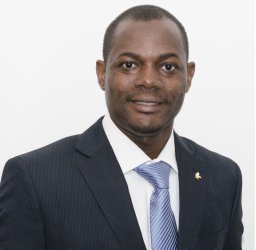 John P. Abraham合作论文数Laboratory of Heat Transfer Practice, University of Minnesota2Madhusudan Gujral合作论文数1Christopher Churas合作论文数Univ Calif San Diego, Dept Med, La Jolla, CA 92093 USA1
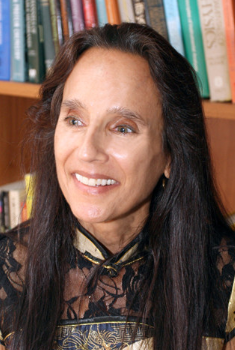 Kim Baldridge合作论文数School of Pharmaceutical Science and Technology, Tianjin University1
 Shiyong Lu (吕世勇)合作论文数Big Data Research Laboratory Department of Computer Science Wayne State University1Jing Chen合作论文数1
 Ann Q. Gates合作论文数The University of Texas at El Paso1
 Weizhong Li合作论文数J. Craig Venter Institute1
 Jeffrey Grethe合作论文数SPARC.Science;Center for Research in Biological Systems, University of California, San Diego;SciCrunch Inc1Shulei Sun合作论文数1Ramil Manansala合作论文数1
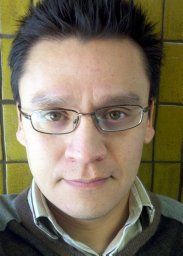 Leonardo Salayandia合作论文数Computer Science Department, University of Texas at El Paso1
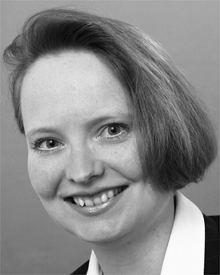 Wibke Sudholt合作论文数1Agnieszka Wesolowski合作论文数1
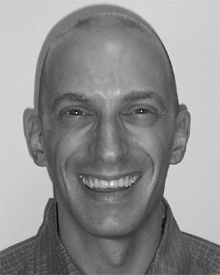 Adam Birnbaum合作论文数1
 Mark Ellisman合作论文数Center for Research in Biological Systems, University of California, San Diego;National Center for Microscopy and Imaging Research1Mayya Sedova合作论文数San Diego Supercomputer Center, University of California San Diego1
 Eric Gonzalez合作论文数Department of Chemistry, The University of Texas - Pan American1
 Yohann Potier合作论文数1Abel W. Lin合作论文数University of California at San Diego1




