Wayfinding in unfamiliar environments can pose a challenge to anyone but can be particularly challenging to someone who has some sort of visual loss. In this paper, we describe an indoor navigation aid that uses Bayesian statistics to localize and guide an individual from an unspecified location within a building to a specific destination. We also present three studies investigating the efficacy of this system as a low-vision navigation aid. Two studies were conducted in virtual indoor buildings using desktop virtual reality (VR) and one study was conducted in a real building. All three studies investigated navigation performance with versus without the navigation aid. In all three studies, subjects traveled a shorter distance with the navigation aid than without it. In the VR studies, the navigation aid actually improved performance over navigating with normal vision.
A survivable agent system depends on the incorporation of many recovery features. However, the optimal use of these features requires the ability to assess the actual state of the agent system accurately at a given time. This paper describes an approach for the estimation of the state of an agent system using Partially-Observable Markov Decision Processes (POMDPS). POMDPS are dependent on a model of the agent system - components, environment, sensors, and the actuators that can correct problems. Based on this model, we define a state estimation for each component (asset) in the agent system. We model a survivable agent system as a POMDP that takes into account both environmental threats and observations from sensors. We describe the process of updating the state estimation as time passes, as sensor inputs are received, and as actuators affect changes. This state estimation process has been deployed within the agent system that runs the Ultralog application and tested using Ultralog's survivability tests on a full-scale (1000+) agent system. This test successfully ran a long-running logistics application in an unstable environment with high failure rates.
In this paper, we bring techniques from operations research to bear on the problem of choosing optimal actions in partially observable stochastic domains. In many cases, we have developed new ways of viewing the problem that are, perhaps, more consistent with the AI perspective. We begin by introducing the theory of Markov decision processes (Mdps) and partially observable Markov decision processes Pomdps. We then outline a novel algorithm for solving Pomdps off line and show how, in many cases, a finite-memory controller can be extracted from the solution to a Pomdp. We conclude with a simple example.
In an agent-based system, where di erent agents form dynamic associations for the purposes of collaborative processing, there is a basic need for agents to be able to describe themselves to other agents. This allows agents to locate other agents that can provide them with needed capabilities to accomplish speci c tasks at a given time. An agent may describe itself in terms of its interfaces, the services it can provide, the tasks it can accomplish, the data it can provide, etc. Practical, implemented systems that perform some of this functionality include those based on corba and other distributed object services, but their representation is too limited to function e ectively in an agent system with many agents that serve similar functions. At the other end of the spectrum are research systems that allow an agent to specify its capabilities in terms of reasonably complete formal logic speci cations; however these descriptions have the potential to be very unwieldy and error-prone and may require too much computation for it to be practical in a large, diverse
cedmos is the Composite Event Detection and MonitoringSystem developed for DARPA by MCC. cedmos recognizespatterns of events called complex events according to user--authored event specifications. cedmos is a general event processingtechnology that includes:ffl a core infrastructure for event detection which implementsa general, efficient event procesing model;ffl a graphical programming environment for the creation andmanipulation of composite event specifications;ffl a...
Collaboration management involves capturing the collaboration process, coordinating the activities of the participating applications and humans, and/or providing awareness, i.e., information that is highly relevant to a specific role and situation of a process participant. We propose an awareness provisioning solution that allows customization of the awareness delivered to each process participant. Unlike existing collaboration management technologies (such as workflow and groupware) that provide only a few built-in awareness choices, the proposed awareness solution allows the specification of what information is to be given to what users and at what time. To support this advanced level of awareness, we require the definition of awareness roles and the specification of corresponding awareness descriptions. Awareness roles can be dynamically created and associated with any process scope. Awareness descriptions define what information is to be given to users in an awareness role. Since awareness roles are created or become visible when they are needed, the existence of an awareness role also determines the appropriate time interval during which the information specified in the awareness description can be delivered. This customized awareness provisioning approach minimizes information overloading and allows the combination of process-relevant information with external information as needed by the process participants. The proposed awareness provisioning solution is employed by the Collaboration Management Infrastructure (CMI), a federated system for collaboration process management. Examples from the crisis management domain are presented
An increasing number of researchers in many ar- eas are becoming interested in the application of the partially observable Markov decision process (pomdp) model to problems with hidden state. This model can account for both state transition and observation uncertainty. The majority of re- cent research interest in the pomdp model has been in the articial intelligence community and as such, has been applied in a limited range of domains. The main purpose of this paper is show the wider applicability of the model by way of sur- veying the potential application areas for pomdps. from simple heuristics (?) to approximate forms of dy- namic programming (?) to tighter upper and lower bounds for search heuristics (?). This paper surveys some of the application areas where pomdp models can be applied. They range from smaller problems where the current technology may be sucient to large-scale problems that are well beyond the range of the existing algorithms. Our grouping of the application areas is somewhat arbitrary due to the overlapping nature of the problems that need to be solved in the various domains.
Most exact algorithms for general partially observable Markov decision processes (POMDPs) use a form of dynamic programming in which a piecewise-linear and convex representation of one value function is transformed into another. We examine variations of the "incremental pruning" method for solving this problem and compare them to earlier algorithms from theoretical and empirical perspectives. We find that incremental pruning is presently the most efficient exact method for solving POMDPS.
We examine the problem of performing exact dynamic-programming updates in partially observable Markov decision processes (POMDPs) from a computational complexity viewpoint. Dynamic-programming updates are a crucial operation in a wide range of POMDP solution methods and we find that it is intractable to perform these updates on piecewise-linear convex value functions for general POMDPs. We offer a new algorithm, called the witness algorithm, which can compute updated value functions efficiently on a restricted class of POMDPs in which the number of linear facets is not too great. We compare the witness algorithm to existing algorithms analytically and empirically and find that it is the fastest algorithm over a wide range of POMDP sizes.
In this paper, we describe the partially observable Markov decision process (POMDP) approach to finding optimal or near-optimal control strategies for partially observable stochastic environments, given a complete model of the environment. The POMDP approach was originally developed in the operations research community and provides a formal basis for planning problems that have been of interest to the AI community. We found the existing algorithms for computing optimal control strategies to be highly computationally inefficient and have developed a new algorithm that is empirically more efficient. We sketch this algorithm and present preliminary results on several small problems that illustrate important properties of the POMDP approach.
The main objective of this report is to provide implementation details for the more popular exact algorithms for solving finite horizon partially observable Markov decision processes (POMDPs). Along with the existing algorithms, a new algorithm, Witness, is proposed that has empirically been faster than the existing exact techniques. In addition to algorithmic details, the basic formulas and concepts of POMDPs are presented, as well as explanations and discussion about the basic form of POMDP solutions. This document is aimed at those who do not have a lot of experience with the techniques or concepts of POMDPs.
In an agent-based system, where dieren t agents form dy- namic associations for the purposes of collaborative process- ing, agents must be able to locate other agents that can provide them with needed capabilities to accomplish spe- cic tasks at a given time. This implies a need for agents to be able to describe themselves to other agents, perhaps in terms of its interfaces, the services it can provide, the data it can provide, etc. To be practical, these descriptions cannot be as complex as a formal specication; neither can they be a simplistic as the distributed object systems use. This pa- per presents an example of the approach to agent capability description and matching that we have implemented in the InfoSleuth system. This approach is expressive enough to capture complicated agent functionality, yet simple enough to be scalable to large and diverse agent systems. It relies on shared, focused ontologies that provide a common vocab- ulary for describing information and services. An agent can then advertise itself in terms of the focused ontologies, and query about other agents using these same ontologies.
 Michael L. Littman合作论文数Department of Computer Science, Brown University6
 Leslie Pack Kaelbling合作论文数Department of Electrical Engineering and Computer Science, Massachusetts Institute of Technology4
 Marian Nodine合作论文数4
 Mosfeq Rashid合作论文数2
 Nevin L. Zhang (張連文)合作论文数Department of Computer Science and Engineering, School of engineering, Hong Kong University of Science and Technology2
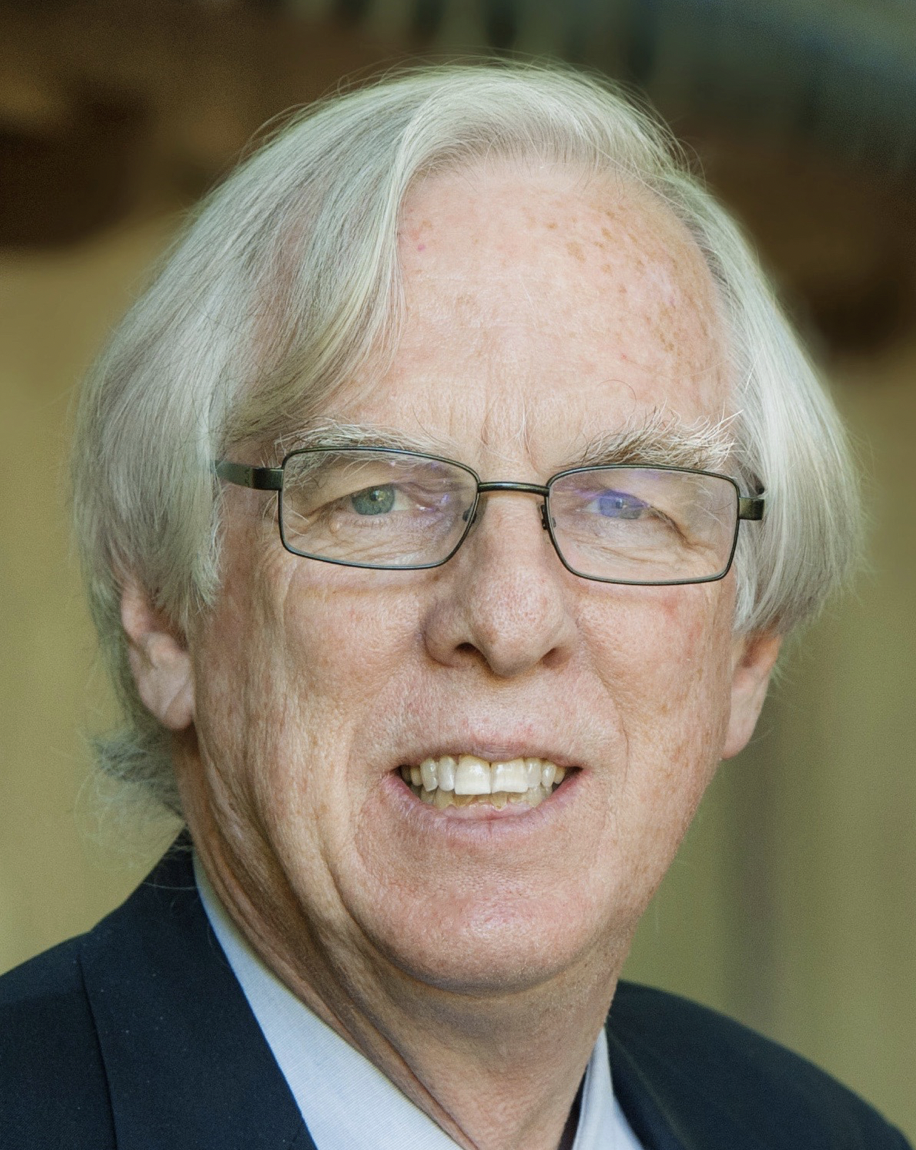 Donald Baker合作论文数Department of Asian Studies, Faculty of Arts, The University of British Columbia2Damith Chandrasekara合作论文数2David L. Wells合作论文数1Matthew McCabe合作论文数1William Bohrer合作论文数1
 Anne Hee Hiong Ngu合作论文数Department of Computer Science, College of Science and Engineering, Texas State University1Shilpa Bondale合作论文数1
 Hans Schuster合作论文数Microelectronics and Computer Technology Corporation (MCC), 3500 W. Balcones Center Drive, Austin, TX 78759. Hans.Schuster@consileon-gmbh.de
1Leslie Pack Kaelblingt合作论文数1Michael L. Littmant合作论文数1Steve Ford合作论文数1
Hans Schuster合作论文数Microelectronics and Computer Technology Corporation (MCC), 3500 W. Balcones Center Drive, Austin, TX 78759. Hans.Schuster@consileon-gmbh.de
1Leslie Pack Kaelblingt合作论文数1Michael L. Littmant合作论文数1Steve Ford合作论文数1 Dimitrios Georgakopoulos合作论文数Department of Computing Technologies, School of Science, Computing and Engineering Technologies, Swinburne University of Technology;ARC Research Hub for Future Digital Manufacturing, Swinburne University of Technology1
 Andrzej Cichocki合作论文数Peraton Labs;Systems Research Institute Polish Academy of Sciences1
 Brian J. Stankiewicz合作论文数University of Texas at Austin1




