The one-step synthesis of the first homoleptic metallomacrocycle is reported. Characterization of the Os-II complex, along with its Fe-II and Ru-II analogues, was accomplished by NMR spectroscopy, ESI-MS, TWIM-MS, gradient tandem-MS, CV, luminescence and UV/Vis spectroscopy. Center-of-mass collision energies, derived from gradient tandem-MS, reveal that the -based structures are more stable than those of .
Medium-sized cyclic oligomeric phosphazenes [PCl2N]m (where m = 5-9) that were prepared from the reaction of PCl5 and NH4Cl in refluxing chlorobenzene have been isolated by a combination of sublimation/extraction and column chromatography from the predominant products [PCl2N]3 and [PCl2N]4. The medium-sized rings [PCl2N]m have been characterized by electrospray ionization-mass spectroscopy (ESI-MS), their (31)P chemical shifts have been reassigned, and their T1 relaxation times have been obtained. Crystallographic data has been recollected for [PCl2N]5, and the crystal structures of [PCl2N]6, and [PCl2N]8 are reported. Halogen-bonding interactions were observed in all the crystal structures of cyclic [PCl2N]m (m = 3-5, 6, 8). The crystal structures of [P(OPh)2N]7 and [P(OPh)2N]8, which are derivatives of the respective [PCl2N]m, are also reported. Comparisons of the intermolecular forces and torsion angles of [PCl2N]8 and [P(OPh)2N]8 with those of three other octameric rings are described. The comparisons show that chlorophosphazenes should not be considered prototypical, in terms of solid-state structure, because of the strong influence of halogen bonding.
The self-assembly of the o-carborane-based, bisterpyridyl monomer, 1,2-bis[4'-(4-ethynylphenyl)-2,2':6',2''-terpyridine]-o-carborane, utilizing either Zn(II) or Fe(II) in a precise metal : ligand ratio (1 : 1), generated a family of metallomacrocycles that were studied via ESI-TWIM-MS, (1)H NMR, and 2D NMR (COSY, NOESY). Under kinetic control, via formation of Fe(II) complexes, the main cyclic product was triangular, as is typical of 60°-based bisligands. Under thermodynamic control using more labile transition metal complexes, e.g. Zn(II), the ratio of cyclic species was found to be concentration and temperature dependent, and under an adequate entropic driving force, the cyclic dimer was formed. This system was probed via variable temperature NMR to reveal dynamic equilibrium between the entropically favored dimer and enthalpically favored trimer.
We report the self-assembly and isolation of two metallamacromolecular constitutional isomeric pairs based on connectivity. Utilizing a robust dimer with varying substitution to the core benzene ring resulted not only in the isolation of the expected 60°-oriented tetramer and 120°-oriented hexamer but also in the unexpected isolation of a 60°-oriented hexamer and a 120°-oriented tetramer. These isomers were characterized by 1H NMR spectroscopy and mass spectrometry (ESI-travelling wave ion mobility), which revealed significant structural differences. Molecular modeling was utilized to aid in characterization.
Where there's a wheel, there's a way: The terpyridine-based title system has been synthesized through a facile self-assembly process. Two tris(terpyridine) ligands possessing angles of either 120° or 60° between adjacent tpy units were mixed with a stoichiometric amount of Zn(2+) (2:6:12) to generate the desired coordination-driven bicycle-like wheel (90 % yield).
The advent of dendritic chemistry has facilitated materials research by allowing precise control of functional component placement in macromolecular architecture. The iterative synthetic protocols used for dendrimer construction were developed based on the desire to craft highly branched, high molecular weight, molecules with exact mass and tailored functionality. Arborols, inspired by trees and precursors of the utilitarian macromolecules known as dendrimers today, were the first examples to employ predesigned, 1 → 3 C-branched, building blocks; physical characteristics of the arborols, including their globular shapes, excellent solubilities, and demonstrated aggregation, combined to reveal the inherent supramolecular potential (e.g., the unimolecular micelle) of these unique species. The architecture that is a characteristic of dendritic materials also exhibits fractal qualities based on self-similar, repetitive, branched frameworks. Thus, the fractal design and supramolecular aspects of these constructs are suggestive of a larger field of fractal materials that incorporates repeating geometries and are derived by complementary building block recognition and assembly. Use of terpyridine-M2+-terpyridine (where, M = Ru, Zn, Fe, etc) connectivity in concert with mathematical algorithms, such as forms the basis for the Seirpinski gasket, has allowed the beginning exploration of fractal materials construction. The propensity of the fractal molecules to self-assemble into higher order architectures adds another dimension to this new arena of materials and composite construction.
Taking advantage of the coordination strength of a ruthenium(II) bisterpyridine complex, G. Newkome, C. Wesdemiotis, A. Schultz, and co-workers in their Communication on page 11569 ff. have successfully synthesized a series of novel tetrameric macrocycles based on a 60°-oriented bisterpyridine ligand, resulting in folded architectures. Resembling the graceful giant manta ray, these folded metallomacrocycles, termed Dondorff rings after the first to report these rays, were characterized photophysically, as well as by ESI-TWIM-MS and molecular modeling.
Square feat: The synthesis, isolation, and characterization of five novel bisterpyridine-based metallomacrocycles, possessing a folded tetrameric configuration is reported (see figure). The initial dimeric building block with the stable linear {tpy-Ru(II)-tpy} connectivity circumvents the formation of the thermodynamically favored molecular triangles.
Two novel macromolecular constitutional isomers have been self-assembled from previously unreported terpyridine ligands in a three-component system. The terpyridine ligands were synthesized in high yields via a key Suzuki coupling. Restrictions of the possible outcomes for self-assembly ultimately provided optimum conditions for isolation of either a molecular bowtie or its isomeric butterfly motif. These isomers have been characterized by ESI-MS, TWIM-MS, (1)H NMR, and (13)C NMR. Notably, these structural isomers have remarkably different drift times in ion mobility separation, corresponding to different sizes and shapes at high charge states.
A series of trimeric, Zn(II)- and Cd(II)-metallocycles is reported. Structural characterization of the highly stable triangles was supported by traveling-wave ion mobility-mass spectrometry (TWIM-MS) and gradient tandem mass spectrometry (gMS(2)). Their unique photophysical properties and self-assembly to form nanofibers are also described.
Angewandte Chemie International EditionVolume 49, Issue 37 p. 6539-6544 Communication Hexameric Palladium(II) Terpyridyl Metallomacrocycles: Assembly with 4,4′-Bipyridine and Characterization by TWIM Mass Spectrometry† Sujith Perera Dr., Sujith Perera Dr. Department of Polymer Science, Department of Chemistry, The University of Akron, 302 Buchtel Common, Akron, OH 44325 (USA), Fax: (+1) 330-972-2368 http://www.dendrimers.com These authors contributed equally to this work.Search for more papers by this authorXiaopeng Li Dr., Xiaopeng Li Dr. Department of Polymer Science, Department of Chemistry, The University of Akron, 302 Buchtel Common, Akron, OH 44325 (USA), Fax: (+1) 330-972-2368 http://www.dendrimers.com These authors contributed equally to this work.Search for more papers by this authorMonica Soler Dr., Monica Soler Dr. Department of Polymer Science, Department of Chemistry, The University of Akron, 302 Buchtel Common, Akron, OH 44325 (USA), Fax: (+1) 330-972-2368 http://www.dendrimers.comSearch for more papers by this authorAnthony Schultz, Anthony Schultz Department of Polymer Science, Department of Chemistry, The University of Akron, 302 Buchtel Common, Akron, OH 44325 (USA), Fax: (+1) 330-972-2368 http://www.dendrimers.comSearch for more papers by this authorChrys Wesdemiotis Prof. Dr., Chrys Wesdemiotis Prof. Dr. [email protected] Department of Polymer Science, Department of Chemistry, The University of Akron, 302 Buchtel Common, Akron, OH 44325 (USA), Fax: (+1) 330-972-2368 http://www.dendrimers.comSearch for more papers by this authorCharles N. Moorefield Dr., Charles N. Moorefield Dr. Department of Polymer Science, Department of Chemistry, The University of Akron, 302 Buchtel Common, Akron, OH 44325 (USA), Fax: (+1) 330-972-2368 http://www.dendrimers.comSearch for more papers by this authorGeorge R. Newkome Prof. Dr., George R. Newkome Prof. Dr. [email protected] Department of Polymer Science, Department of Chemistry, The University of Akron, 302 Buchtel Common, Akron, OH 44325 (USA), Fax: (+1) 330-972-2368 http://www.dendrimers.comSearch for more papers by this author Sujith Perera Dr., Sujith Perera Dr. Department of Polymer Science, Department of Chemistry, The University of Akron, 302 Buchtel Common, Akron, OH 44325 (USA), Fax: (+1) 330-972-2368 http://www.dendrimers.com These authors contributed equally to this work.Search for more papers by this authorXiaopeng Li Dr., Xiaopeng Li Dr. Department of Polymer Science, Department of Chemistry, The University of Akron, 302 Buchtel Common, Akron, OH 44325 (USA), Fax: (+1) 330-972-2368 http://www.dendrimers.com These authors contributed equally to this work.Search for more papers by this authorMonica Soler Dr., Monica Soler Dr. Department of Polymer Science, Department of Chemistry, The University of Akron, 302 Buchtel Common, Akron, OH 44325 (USA), Fax: (+1) 330-972-2368 http://www.dendrimers.comSearch for more papers by this authorAnthony Schultz, Anthony Schultz Department of Polymer Science, Department of Chemistry, The University of Akron, 302 Buchtel Common, Akron, OH 44325 (USA), Fax: (+1) 330-972-2368 http://www.dendrimers.comSearch for more papers by this authorChrys Wesdemiotis Prof. Dr., Chrys Wesdemiotis Prof. Dr. [email protected] Department of Polymer Science, Department of Chemistry, The University of Akron, 302 Buchtel Common, Akron, OH 44325 (USA), Fax: (+1) 330-972-2368 http://www.dendrimers.comSearch for more papers by this authorCharles N. Moorefield Dr., Charles N. Moorefield Dr. Department of Polymer Science, Department of Chemistry, The University of Akron, 302 Buchtel Common, Akron, OH 44325 (USA), Fax: (+1) 330-972-2368 http://www.dendrimers.comSearch for more papers by this authorGeorge R. Newkome Prof. Dr., George R. Newkome Prof. Dr. [email protected] Department of Polymer Science, Department of Chemistry, The University of Akron, 302 Buchtel Common, Akron, OH 44325 (USA), Fax: (+1) 330-972-2368 http://www.dendrimers.comSearch for more papers by this author First published: 28 July 2010 https://doi.org/10.1002/anie.200906198Citations: 69 † We thank the National Science Foundation for generous financial support (grant nos. CHE-0517909 and 0833087 to C.W., no. DMR-0705015 to G.R.N., and no. DMR-0821313 for the purchase of the instrument for the TWIM-MS studies). We gratefully acknowledge the expertise of Dr. Mingming Guo, Solid State NMR Manager at The University of Akron for his help with the 2D-DOSY NMR experiments. We are grateful to Dr. Thomas Wyttenbach and Prof. Michael T. Bowers for helpful discussions on collision cross sections in ion-mobility experiments. TWIM=traveling wave ion mobility. Read the full textAboutPDF ToolsRequest permissionExport citationAdd to favoritesTrack citation ShareShare Give accessShare full text accessShare full-text accessPlease review our Terms and Conditions of Use and check box below to share full-text version of article.I have read and accept the Wiley Online Library Terms and Conditions of UseShareable LinkUse the link below to share a full-text version of this article with your friends and colleagues. Learn more.Copy URL Graphical Abstract TWIM peaks: A macrocycle containing 12 PdII terpyridyl centers was assembled using 4,4′-bipyridyl ligands and characterized by NMR and traveling wave ion mobility mass spectrometry (TWIM-MS). The macrocyclic architecture was also examined by tandem mass spectrometry and collisionally activated dissociation (CAD) experiments (see picture; C gray, N blue, Pd orange), and the resulting fragments were monitored by time-of-flight mass analysis. References 1I. Eryazici, P. Wang, C. N. Moorefield, M. Panzer, M. Durmas, C. D. Shreiner, G. R. Newkome, Dalton Trans. 2007, 626– 628. 2R. Trokowski, S. Akine, T. Nabeshima, Chem. Commun. 2008, 889– 890. 3S.-H. Hwang, C. N. Moorefield, F. R. Fronczek, O. Lukoyanova, L. Echegoyen, G. R. Newkome, Chem. Commun. 2005, 713– 715. 4F. M. Romero, R. Ziessel, A. Dupont-Gervais, A. Van Dorsselaer, Chem. Commun. 1996, 551– 553. 5E. C. Constable, C. E. Housecroft, C. B. Smith, Inorg. Chem. Commun. 2003, 6, 1011– 1013. 6J. D. Crowley, A. J. Goshe, B. Bosnich, Chem. Commun. 2003, 2824– 2825. 7R. D. Sommer, A. L. Rheingold, A. J. Goshe, B. Bosnich, J. Am. Chem. Soc. 2001, 123, 3940– 3952. 8J. D. Crowley, I. M. Steele, B. Bosnich, Eur. J. Inorg. Chem. 2005, 3907– 3917. 9A. J. Goshe, B. Bosnich, Synlett 2001, 0941– 0944. 10S. H. Hwang, P. Wang, C. N. Moorefield, L. A. Godinez, J. Manriquez, E. Bustos, G. R. Newkome, Chem. Commun. 2005, 4672– 4674. 11G. R. Newkome, T. J. Cho, C. N. Moorefield, P. P. Mohapatra, L. A. Godínez, Chem. Eur. J. 2004, 10, 1493– 1500. 12G. R. Newkome, T. J. Cho, C. N. Moorefield, R. Cush, P. S. Russo, L. A. Godínez, M. J. Saunders, P. Mohapatra, Chem. Eur. J. 2002, 8, 2946– 2954. 13G. R. Newkome, T. J. Cho, C. N. Moorefield, G. R. Baker, M. J. Saunders, R. Cush, P. S. Russo, Angew. Chem. 1999, 111, 3899– 3903; Angew. Chem. Int. Ed. 1999, 38, 3717– 3721. 14I. Eryazici, C. N. Moorefield, S. Durmus, G. R. Newkome, J. Org. Chem. 2006, 71, 1009– 1014. 15T. Mutai, J. D. Cheon, S. Arita, K. Araki, J. Chem. Soc., Perkin Trans. 2 2001, 1045– 1050. 16 16aP. Wang, G. R. Newkome, C. Wesdemiotis, Int. J. Mass Spectrom. 2006, 255–256, 86– 92; 16bK. Ghosh, J. Hu, H. S. White, P. J. Stang, J. Am. Chem. Soc. 2009, 131, 6695– 6697; 16cM. Wang, Y. R. Zheng, K. Ghosh, P. J. Stang, J. Am. Chem. Soc. 2010, 132, 6282– 6283; 16dS. Sakamoto, M. Fujita, K. Kim, K. Yamaguchi, Tetrahedron 2000, 56, 995; 16eS. Sato, Y. Ishido, M. Fujita, J. Am. Chem. Soc. 2009, 131, 6064– 6065; 16fC. A. Schalley, T. Müller, P. Linnartz, M. Witt, M. Schäfer, A. Lützen, Chem. Eur. J. 2002, 8, 3538– 3551; 16gM. Engeser, A. Rang, M. Ferrer, A. Gutiérrez, H. T. Baytekin, C. A. Schalley, Int. J. Mass Spectrom. 2006, 255–256, 185– 194; 16hW. Jiang, A. Schäfer, P. C. Mohr, C. A. Schalley, J. Am. Chem. Soc. 2010, 132, 2309– 2320; 16iB. Bocquet, G. Bernardinelli, N. Ouali, S. Floquet, F. Renaud, G. Hopfgartner, C. Piguet, Chem. Commun. 2002, 930– 931. 17S. D. Pringle, K. Giles, J. L. Wildgoose, J. P. Williams, S. E. Slade, K. Thalassinos, R. H. Bateman, M. T. Bowers, J. H. Scrivens, Int. J. Mass Spectrom. 2007, 261, 1– 12. 18 18aM. T. Bowers, P. R. Kemper, G. von Helden, P. A. M. van Koppen, Science 1993, 260, 1446– 1451; 18bD. E. Clemmer, M. F. Jarrold, J. Mass Spectrom. 1997, 32, 577– 592; 18cC. S. Hoaglund-Hyzer, A. E. Counterman, D. E. Clemmer, Chem. Rev. 1999, 99, 3037– 3079; 18dG. F. Verbeck, B. T. Ruotolo, H. A. Sawyer, K. J. Gillig, D. H. Russel, J. Biomol. Tech. 2002, 13, 56– 61; 18eL. S. Fenn, J. A. McLean, Anal. Bioanal. Chem. 2008, 391, 905– 909; 18fB. T. Ruotolo, J. L. P. Benesch, A. M. Sandercock, S.-J. Hyung, C. V. Robinson, Nat. Protoc. 2008, 3, 1139– 1152; 18gA. B. Kanu, P. Dwivedi, M. Tam, L. Matz, H. H. Hill, J. Mass Spectrom. 2008, 43, 1– 22; 18hS. Trimpin, D. I. Plasencia, D. E. Clemmer, Anal. Chem. 2007, 79, 7965– 7974; 18iS. Trimpin, D. E. Clemmer, Anal. Chem. 2008, 80, 9073– 9083; 18jG. R. Hilton, A. T. Jackson, K. Thalassinos, J. H. Scrivens, Anal. Chem. 2008, 80, 9720– 9725; 18kA. P. Gies, M. Kliman, J. A. McLean, Macromolecules 2008, 41, 8299– 8301. 19Y.-T. Chan, X. Li, M. Soler, J.-L. Wang, C. Wesdemiotis, G. R. Newkome, J. Am. Chem. Soc. 2009, 131, 16395– 16397. 20S. H. Hwang, C. N. Moorefield, P. Wang, J. Y. Kim, S. W. Lee, G. R. Newkome, Inorg. Chim. Acta 2007, 360, 1780– 1784. 21J. Wang, Analytical Electrochemistry, Wiley, New York, 2006. 22K. Thalassinos, M. Grabenauer, S. E. Slade, G. R. Hilton, M. T. Bowers, J. H. Scrivens, Anal. Chem. 2009, 81, 248– 254. 23Available at http://www.indiana.edu/∼nano/software.html. 24Available at http://bowers.chem.ucsb.edu/theory_analysis/cross-sections/index.shtml. 25Software for the analysis of ion mobility data, available from Waters Inc., Milford, MA (http://www.waters.com/). 26 26aR. G. Cooks, D. Zhang, K. J. Koch, F. C. Gozzo, M. N. Eberlin, Anal. Chem. 2001, 73, 3646– 3655; 26bZ. Takats, S. C. Nanita, G. Schlosser, K. Vekey, R. G. Cooks, Anal Chem. 2003, 75, 6147– 6154; 26cP. Yang, R. Xu, S. C. Nanita, R. G. Cooks, J. Am. Chem. Soc. 2006, 128, 17074– 17086; 26dS. C. Nanita, R. G. Cooks, Angew. Chem. 2006, 118, 568– 583; Angew. Chem. Int. Ed. 2006, 45, 554– 569; 26eA. E. Counterman, D. E. Clemmer, J. Phys. Chem. B 2001, 105, 8092– 8096. 27A. A. Shvartsburg, B. Liu, K. W. M. Siu, K.-M. Ho, J. Phys. Chem. A 2000, 104, 6152– 6157. 28L. Barloy, R. Gauvin, J. Osborn, C. Sizun, R. Graff, N. Kyritsakas, Eur. J. Inorg. Chem. 2001, 1699– 1707. 29E. M. Ratilla, H. M. Brothers, N. M. Kostic, J. Am. Chem. Soc. 1987, 109, 4592– 4599. 30H. M. Brothers, N. M. Kostic, Inorg. Chem. 1988, 27, 1761– 1767. 31W. Zhang, C. Bensimon, R. J. Crutchley, Inorg. Chem. 1993, 32, 5808– 5812. Citing Literature Supporting Information Detailed facts of importance to specialist readers are published as "Supporting Information". Such documents are peer-reviewed, but not copy-edited or typeset. They are made available as submitted by the authors. Filename Description anie_200906198_sm_miscellaneous_information.pdf676.9 KB miscellaneous_information Please note: The publisher is not responsible for the content or functionality of any supporting information supplied by the authors. Any queries (other than missing content) should be directed to the corresponding author for the article. Volume49, Issue37September 3, 2010Pages 6539-6544 ReferencesRelatedInformation
 Charles N. Moorefield合作论文数11
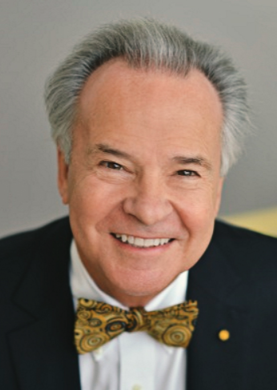 George Newkome合作论文数Center for Molecular Biology and Biotechnology, Florida Atlantic University;College of Arts & Sciences, University of Akron11
 Chrys Wesdemiotis合作论文数Department of Chemistry, Buchtel College of Arts & Sciences, The University of Akron11
 Xiaopeng Li (李霄鹏)合作论文数Shanghai Institute of Organic Chemistry, Chinese Academy of Sciences8James M. Ludlow合作论文数2Lu Xiaocun合作论文数2
 Sarkar Rajarshi合作论文数The Maurice Morton Institute for Polymer Science, The University of Akron2
 Yan Cao (曹艳)合作论文数Institute for Advanced Study, Shenzhen University2
 Catherine E Mccusker合作论文数Department of Chemistry &Center for Photochemical Sciences, Bowling Green State University;Department of Chemistry & Center for Photochemical Sciences, Bowling Green State University2
 Stephen Z. D. Cheng合作论文数Department of Polymer Science, College of Polymer Science and Polymer Engineering, The University of Akron2
 Phil Castellano合作论文数Department of Chemistry, College of Sciences, North Carolina State University2David J. Bowers合作论文数1Brendan C. Dutmer合作论文数1
 Masato Tominaga合作论文数1Matthew Panzner合作论文数1
 Marc J. Adler合作论文数Department of Chemistry and Biology, Ryerson University1Scionti Vincenzo合作论文数1Guo Zaihong合作论文数1Thome Benjamin S合作论文数1
 Mingjun Huang (黄明俊)合作论文数School of Emergent Soft Matter, South China University of Technology;South China Advanced Institute for Soft Matter Science and Technology, South China University of Technology1
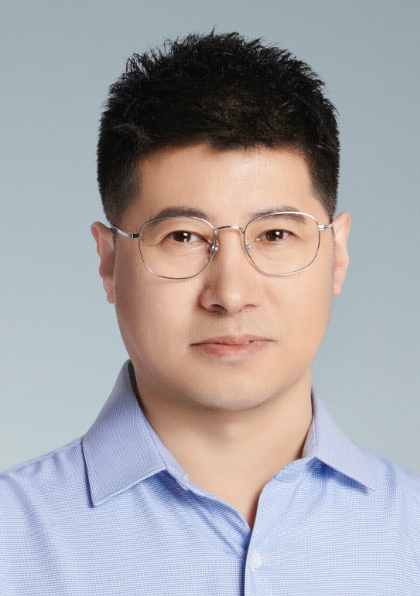 Jinliang Wang (王金亮)合作论文数School of Chemistry and Chemical Engineering, Beijing Institute of Technology1
 Peter L. Rinaldi合作论文数Department of Chemistry, The University of Akron1Eric B. Twum合作论文数1Linlin Li合作论文数1Gilbert Thomas M合作论文数1
 Yoshiki Chujo合作论文数Department of Polymer Chemistry, Graduate School of Engineering, Kyoto University1
 Kai Guo (郭凯)合作论文数College of Biotechnology and Pharmaceutical Engineering, Nanjing Tech University;Institute of Nanjing Advanced Biomaterials & Processing Equipment1Brian D. Wright合作论文数International Food Policy Research Institute;University of California;International Food Policy Research Institute, University of California , Berkeley1
 Wiley J. Youngs合作论文数Department of Chemistry, The University of Akron1
 Balaka Barkakaty合作论文数The Graduate School of Environmental Science, Okayama University1Bryan C. Katzenmeyer合作论文数1Sujith Perera合作论文数1Ting-Zheng Xie合作论文数Renmin University of China, Renmin University of China1
 Claire Adrienne Tessier合作论文数Department of Chemistry, The University of Akron1
 Monica Soler合作论文数Department of Chemistry, University of Florida1




