We compute ionic free energy adsorption profiles at an aqueous graphene interface by developing a self-consistent approach. To do so, we design a microscopic model for water and put the liquid on an equal footing with the graphene described by its electronic band structure. By evaluating progressively the electronic and dipolar coupled electrostatic interactions, we show that the coupling level including mutual graphene and water screening permits one to recover remarkably the precision of extensive quantum simulations. We further derive the potential of mean force evolution of several alkali cations.
To date, the scalable synthesis of elemental two-dimensional materials beyond graphene still remains elusive. Here, we introduce a versatile chemical vapor deposition (CVD) method to grow borophenes, as well as borophene heterostructures, by selectively using diborane originating from traceable byproducts of borazine. Specifically, metallic borophene polymorphs were successfully synthesized on Ir(111) and Cu(111) single-crystal substrates and conjointly with insulating hexagonal boron nitride (hBN) to form atomically precise lateral borophene-hBN interfaces or vertical van der Waals heterostructures. Thereby, borophene is protected from immediate oxidation by a single hBN overlayer. The ability to synthesize high-quality borophenes with large single-crystalline domains in the micrometer scale by a straight-forward CVD approach opens up opportunities for the study of their fundamental properties and for device incorporation.
Predicting the three-dimensional (3D) structure of a protein from its primary sequence of amino acids is known as the protein folding (PF) problem. Due to the central role of proteins' 3D structures in chemistry, biology and medicine applications (e.g., in drug discovery) this subject has been intensively studied for over half a century. Although classical algorithms provide practical solutions, sampling the conformation space of small proteins, they cannot tackle the intrinsic NP-hard complexity of the problem, even reduced to its simplest Hydrophobic-Polar model. While fault-tolerant quantum computers are still beyond reach for state-of-the-art quantum technologies, there is evidence that quantum algorithms can be successfully used on Noisy Intermediate-Scale Quantum (NISQ) computers to accelerate energy optimization in frustrated systems. In this work, we present a model Hamiltonian with $\mathcal{O}(N^4)$ scaling and a corresponding quantum variational algorithm for the folding of a polymer chain with $N$ monomers on a tetrahedral lattice. The model reflects many physico-chemical properties of the protein, reducing the gap between coarse-grained representations and mere lattice models. We use a robust and versatile optimisation scheme, bringing together variational quantum algorithms specifically adapted to classical cost functions and evolutionary strategies (genetic algorithms), to simulate the folding of the 10 amino acid Angiotensin peptide on 22 qubits. The same method is also successfully applied to the study of the folding of a 7 amino acid neuropeptide using 9 qubits on an IBM Q 20-qubit quantum computer. Bringing together recent advances in building gate-based quantum computers with noise-tolerant hybrid quantum-classical algorithms, this work paves the way towards accessible and relevant scientific experiments on real quantum processors.
Two-dimensional materials such as graphene (G) and hexagonal boron nitride (BN) have demonstrated potential applications in membrane science and in particular for the harvesting of blue energy. Although pure G and BN atomic layers are known to remain inert towards neutral water, one may wonder about the aqueous reactivity of hybridized monolayers formed by joining BN and G sheets in a planar fashion. Here, we perform ab initio molecular dynamics calculations of liquid water in contact with all possible planar heterostructures. Remarkably, we could observe the spontaneous chemisorption and dissociation of the interfacial water molecule into its self-ions at one specific and non-standard one-dimensional border. Our simulations predict that this type of heterostructure is prone to ionize liquid water in the absence of any electrical gating.
We report the on-surface synthesis of a nonmetal porphyrin, namely, silicon tetraphenylporphyrin (Si-TPP), by the deposition of atomic silicon onto a free-base TPP layer on a Ag(100) surface under ultrahigh vacuum (UHV) conditions. Scanning tunneling microscopy provides insights into the self-assembly of the TPP molecules before and after Si insertion. Silicon coordinates with all four nitrogen atoms of the TPP macrocycle and interacts with a silver atom of the substrate as confirmed by scanning tunneling spectroscopy, X-ray photoelectron spectroscopy, and complementary density functional theory calculations. The Si-TPP complex presents a saddle-shaped conformation that is stable under STM manipulation. Our study shows how protocols established for the on-surface metalation of tetrapyrroles can be adopted to achieve nonmetal porphyrins. Complementary experiments yielding Si-TPP and Ge-TPP on Ag(111) highlight the applicability to different main group elements and supports. The success of our nonmetal porphyrin synthesis procedure is further corroborated by a temperature-programmed desorption experiment, revealing the desorption of Ge-TPP. This extension of interfacial complex formation beyond metal elements opens promising prospects for new tetrapyrrole architectures with distinct properties and functionalities.
Hybrid quantum/classical variational algorithms can be implemented on noisy intermediate-scale quantum computers and can be used to find solutions for combinatorial optimization problems. Approaches discussed in the literature minimize the expectation of the problem Hamiltonian for a parameterized trial quantum state. The expectation is estimated as the sample mean of a set of measurement outcomes, while the parameters of the trial state are optimized classically. This procedure is fully justified for quantum mechanical observables such as molecular energies. In the case of classical optimization problems, which yield diagonal Hamiltonians, we argue that aggregating the samples in a different way than the expected value is more natural. In this paper we propose the Conditional Value-at-Risk as an aggregation function. We empirically show -- using classical simulation as well as quantum hardware -- that this leads to faster convergence to better solutions for all combinatorial optimization problems tested in our study. We also provide analytical results to explain the observed difference in performance between different variational algorithms.
Liquid state theories such as integral equations and classical density functional theory often overestimate the bulk pressure of fluids because they require closure relations or truncations of functionals. Consequently, the cost to create a molecular cavity in the fluid is no longer negligible, and those theories predict incorrect solvation free energies. We show how to correct them simply by computing an optimized Van der Walls volume of the solute and removing the undue free energy to create such volume in the fluid. Given this versatile correction, we demonstrate that state-of-the-art solvation theories can predict, within seconds, hydration free energies of a benchmark of small neutral drug-like molecules with the same accuracy as day-long molecular simulations.
Liquid state theories such as integral equations and classical density functional theory often overestimate the bulk pressure of fluids because they require closure relations or truncations of functionals. Consequently, the cost to create a molecular cavity in the fluid is no longer negligible and those theories predict wrong solvation free energies. We show how to correct them simply and efficiently. Our pressure correction relies on (i) computing an optimized Van der Walls volume of the solute, and (ii) removing the undue free energy to create such volume in the fluid. We show that pressure-corrected predictions of hydration free energies of a benchmark of small neutral drug-like molecules in the hyper-netted chain approximation in few tens of seconds are within 0.47 kcal/mol to free energy calculations requiring day-long molecular dynamics or Monte Carlo simulations.
 Marie-Laure Bocquet合作论文数Département de Physique, Laboratoire de Physique de l'Ecole Normale Supérieure4
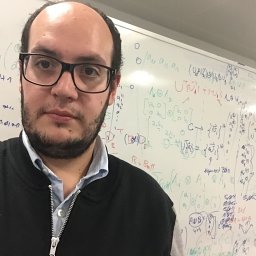 Panagiotis Kl. Barkoutsos合作论文数IBM Quantum, IBM Res Europe3
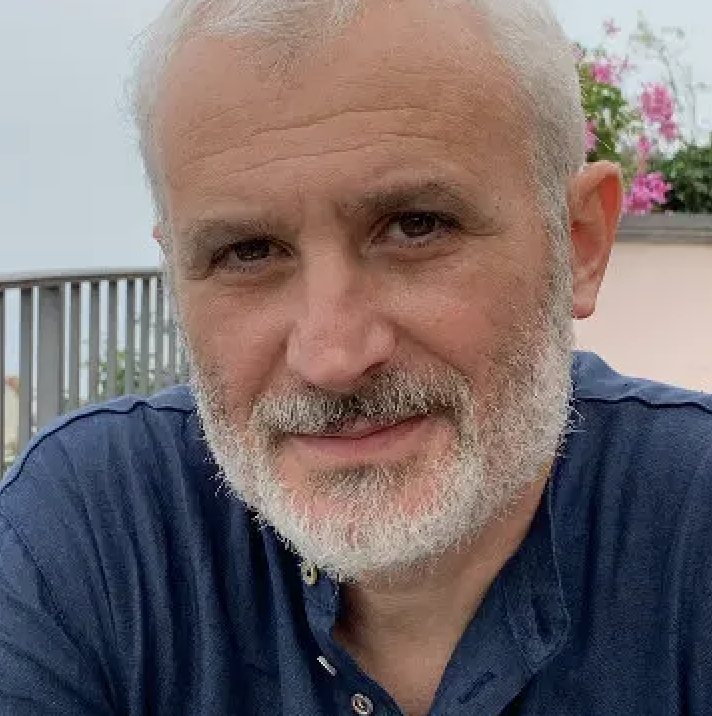 Ivano Tavernelli合作论文数IBM Research3
 Sohvi Luukkonen合作论文数Leiden Academic Centre for Drug Research, Leiden University2
 Stefan Woerner合作论文数IBM Research Europe – Zurich2
 Wilhelm Auwärter合作论文数Department of Physics, School of Natural Sciences, Technische Universitat Munchen2
 Maximilien Levesque合作论文数École Normale Supérieure - PSL Research University, Sorbonne Universités - UPMC Univ. Paris 062
 Giacomo Nannicini合作论文数LIX, École Polytechnique2
 Knud Seufert合作论文数Phys Dept E20, Tech Univ Munich2Felix Haag合作论文数Physics Department E20, Technical University of Munich1
 Aleksandr Baklanov合作论文数Phys Dept E20, Tech Univ Munich1Johannes T. Küchle合作论文数1
 Marc G. Cuxart合作论文数M.G.C and D.P. contributed equally to this work.1Benoit Grosjean合作论文数UPMC Univ Paris 06, PSL Res Univ, Sorbonne Univ, Ecole Normale Super,Dept Chim,UMR PASTEUR 8640, 24 Rue Lhomond, F-75005 Paris, France1
 Paul T P Ryan合作论文数Dept Mat, Imperial Coll1Valeria Chesnyak合作论文数1Vuilleumier Rodolphe合作论文数Dept Chim, Ecole Normale Super1
 Garnica Manuela合作论文数1Hermann Sachdev合作论文数1
 Helene Berthoumieux合作论文数Laboratory de Physicochimie theorique1
 Georg Duesberg合作论文数Institute of Physics, EIT 2, Faculty of Electrical Engineering and Information Technology, Universitat der Bundeswehr Munchen1
 Francesco Allegretti合作论文数School of Natural Sciences, Technische Universität München1




